
A joint initiative by


 Published on 2026-04-14Updated on 2026-04-14
The story of Bengal is written in its thread. Malavika Banerjee, a partner at Byloom — one of Kolkata’s most beloved handloom stores — has spent the past 15 years championing the state’s weaving traditions. Speaking to Bengal Soulfully Yours, she points to what sets Bengal’s textiles apart: an incredible softness, especially in cottons that breathe effortlessly in humid climates, making them ideal for everyday luxury.
These textiles pulse with history: from weavers resisting Manchester imports during colonial times to the Swadeshi movement of 1905. The region's textile traditions encompass weaving, embroidery and the beloved kantha work, but it is the weaves, each rooted to a specific geography, that form the living backbone of Bengali cloth. Here are five weaves from Bengal that deserve to be known.
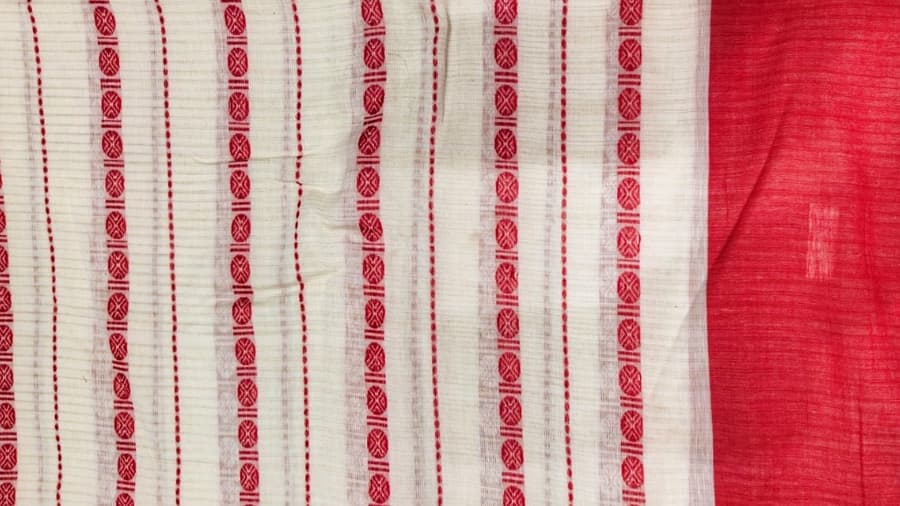
Barely an hour and a half outside Kolkata lies the weaving village of Dhonekhali, home to one of Bengal's most distinctive cotton traditions. The Dhonekhali sari is recognisable by its rich bands of design — flowers, fish, geometric motifs — alternating with stretches of the finest plain cotton, creating a tapestry kind of weave. Despite their incredible craftsmanship, they are exceptionally well-priced, ranging from as little as Rs 900 to Rs 30,000. It is a masterpiece of slow fashion that looks fabulous without a high-couture price tag. Recent revivals at spots like Biswa Bangla highlight its stunning value.
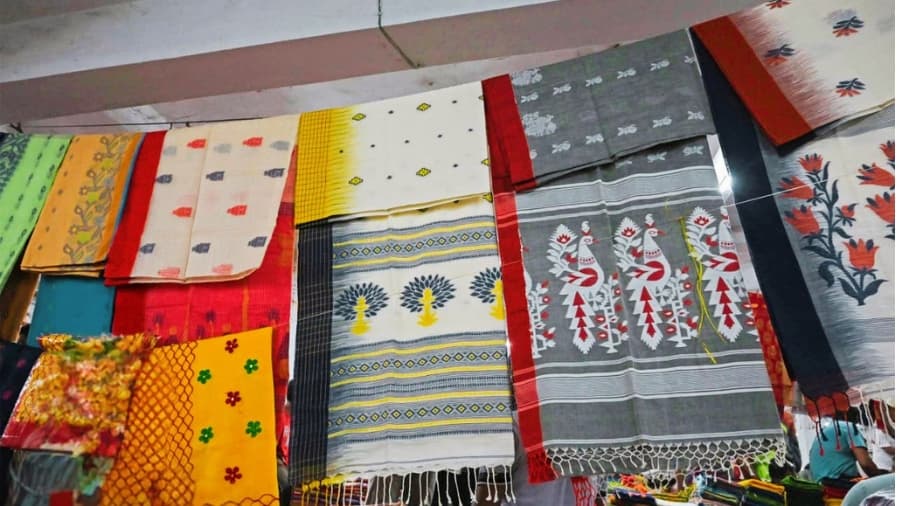
Shantipur is synonymous with high-count, fine cottons that are finished with the iconic nakshi paad (patterned borders). The artistry here is in the storytelling within the borders. Look for the aash paar, which mimics the scales of a fish, or the latai paar, inspired by the lines of a kite spool. Traditionally, these saris include a pachha pere, an extra border placed near the hip (or pachha), showcasing the playful and practical nature of Bengali design. Each name carries a story, sometimes irreverent, always rooted in the intimate vocabulary of Bengali life.
(Shutterstock)
(Picture by Atudu, Wikimedia Commons)
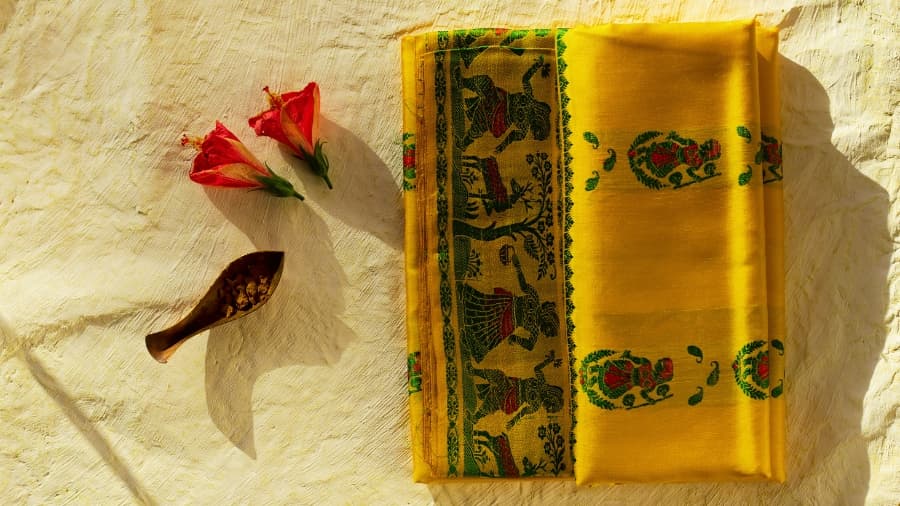
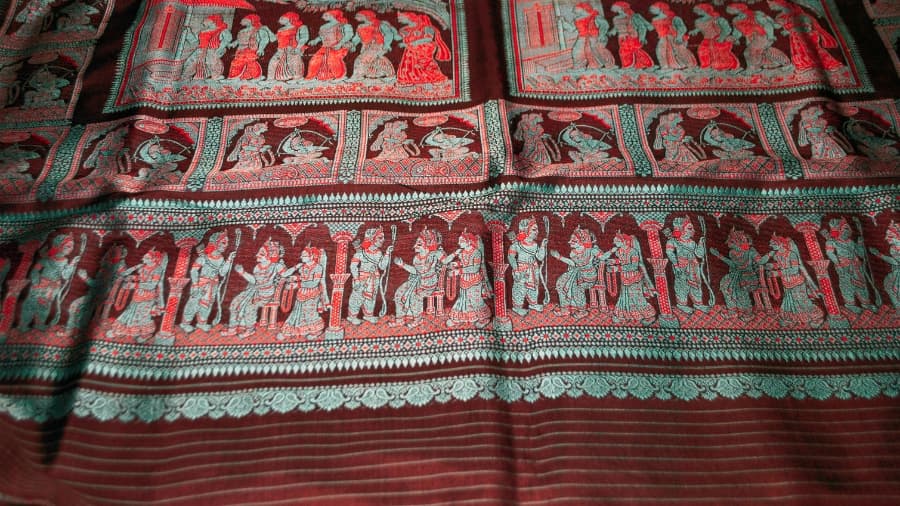
If Dhonekhali and Shantipur belong to the world of cotton, Baluchari is silk's most theatrical offering. Originating in Murshidabad, this tradition transforms the border and the aanchal, the sari's decorative end, into a canvas for storytelling. Scenes from The Ramayana, folk tales, courtly figures: are all woven in with a level of flair and extravagance that sets the Baluchari apart from almost any other Indian textile. The tradition has spread widely, today some of the finest Balucharis are woven in Banaras, but a revival in Bengal has brought renewed attention to the original tradition. For a visitor seeking to bring home something that is simultaneously textile and narrative, a Baluchari is extraordinary.
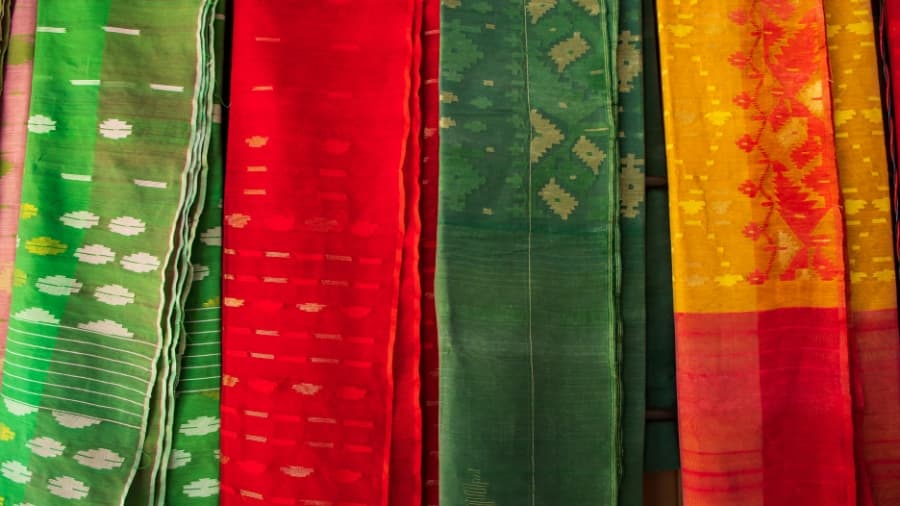
(Shutterstock)
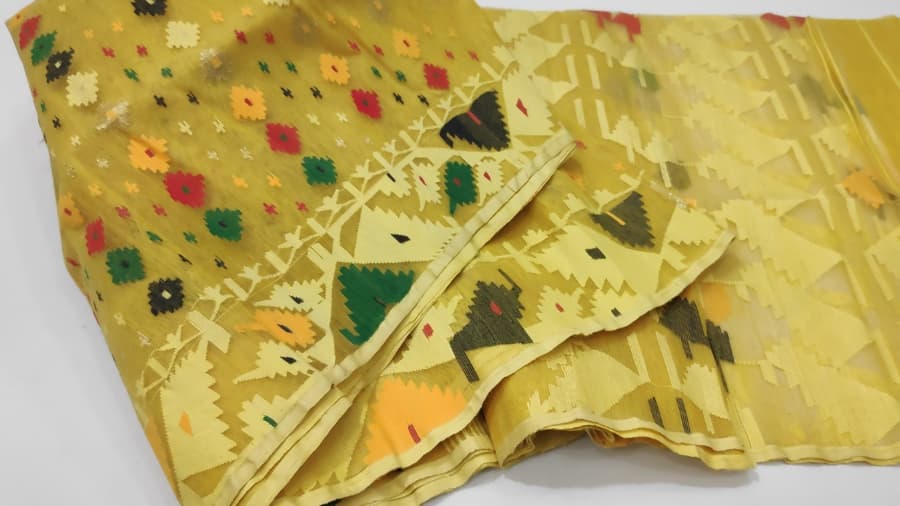
(Shutterstock)
No list of Bengal weaves can avoid Jamdani, though it needs a little explaining. The Dhakai Jamdani, with its ethereal quality and the GI tag now held by Bangladesh, is often called the gold standard of Bengal weaves. But West Bengal has its own living Jamdani traditions and they are quite distinct. In Burdwan and Phulia, areas where the weaving culture remained continuous after Partition, Jamdani is made on both cotton and silk, with geometric designs arranged in horizontal bands and small blocks. Elegant, intricate and different in character from the Dhakai version, these West Bengali Jamdanis reward those who seek them out.
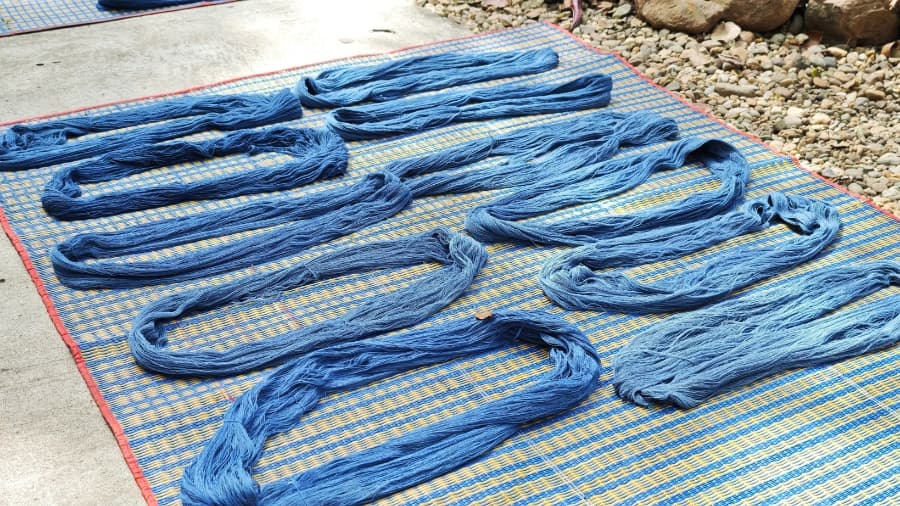
(Shutterstock)
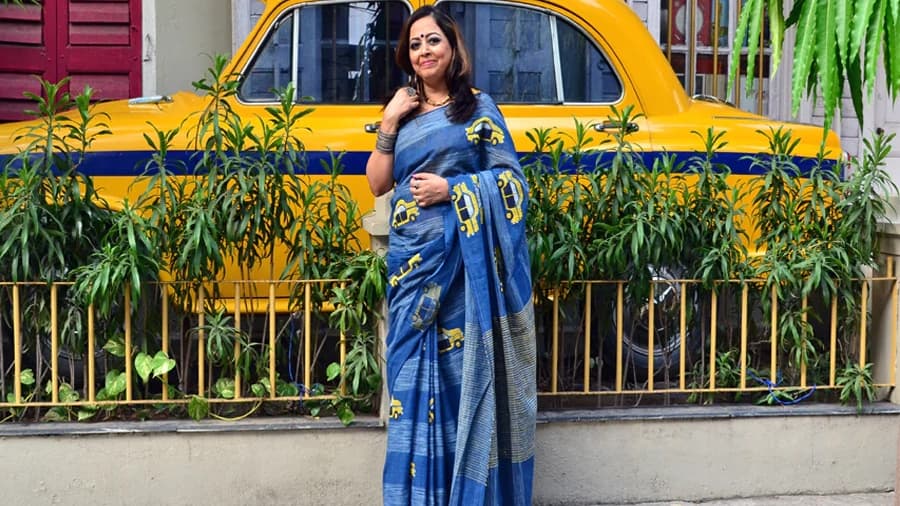
(Picture by Byloom)
Indigo is more than a colour in Bengal; it is a symbol of resistance.The indigo revolts of the 19th century, immortalised in Dinabandhu Mitra's play Nil Darpan, are part of the very fabric of the region's resistance to colonial exploitation. Today, a generation of weavers is returning to natural indigo dyeing, reclaiming both the colour and its history. The result is a range of cotton weaves with an authenticity that is, quite literally, worn on the sleeve. The true indigo might “rub off” on the wearer initially, a sign of its botanical authenticity that many connoisseurs actually cherish as a mark of a living fabric. Weavers now experiment boldly; the earthy blues pair perfectly with Bengal's cottons for a timeless, sustainable vibe.
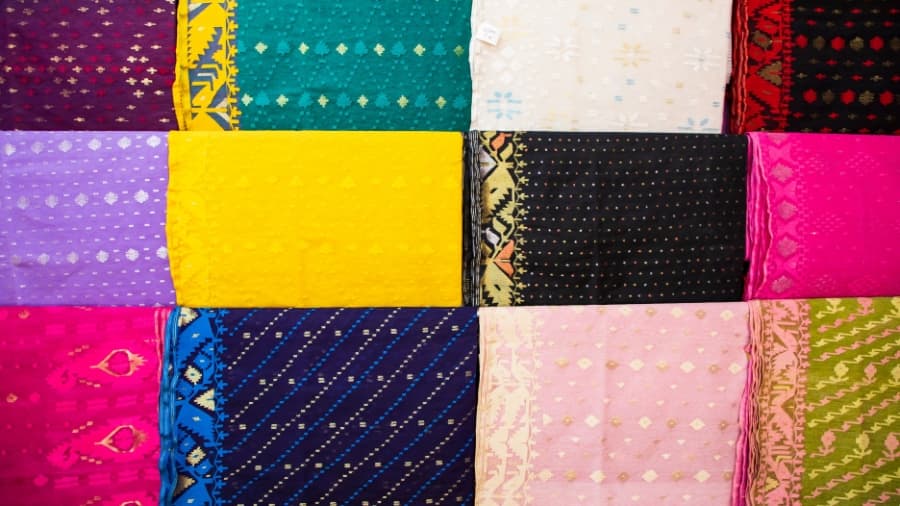
(Shutterstock)
What to Understand: When you encounter Bengal handloom for the first time, understand that it is arguably the softest cotton you will ever touch. It is designed specifically to breathe, making it the ideal companion for warmer climates.
Where to Buy: Kolkata is the natural starting point. Byloom is one of the city's most respected handloom destinations, with a curated selection across Bengal's major weaving traditions. The Gariahat neighbourhood has several long-established sari stores with excellent selections at honest prices. The state government's retail initiative has a particularly strong representation of Dhonekhali and other rural Bengal weaves.
Care Instructions: Bengal cottons are the definition of "slow fashion". The cotton weaves, Shantipur and Dhonekhali in particular, are meant to be worn and washed, not locked away. Handwash them gently; if you prefer a crisp finish, starch the cotton ones. These are age beautifully with use. Silk saris like Baluchari benefit from more careful storage, fold with muslin between layers and keep away from direct sunlight. Indigo-dyed pieces may transfer colour when new, so wash them separately the first few times and treat any rubbing as a feature rather than a flaw.
What to look for: Price is not a reliable guide to quality in Bengal handloom. A Dhonekhali at Rs 1,500 may outshine many saris costing 10 times more. Look instead for the quality of the cotton, the clarity of the weave and the integrity of the border. Protect this heritage by choosing local over imports, your wardrobe (and conscience) will thank you.
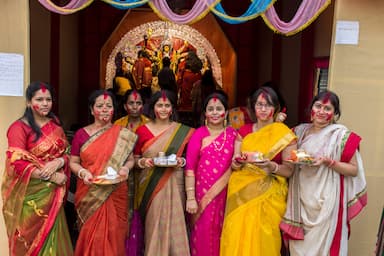
Phulia to Bishnupur and Dhonekhali to Santiniketan — travel to weaver hubs. (Shu...
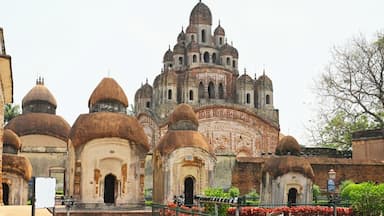
Explore aatchala-style 108 Shiva temples sculpted in terracotta and shop for the...

Stalls, snacks and small indulgences


