
A joint initiative by



 Published on 2025-09-06Updated on 2025-09-06
The history of a place is written in its yarns. Every state, every region of India has its own unique handloom. Bengal has a rich tapestry of weaves showcased in the six yards. When you take back a sari from Bengal, you don’t just take a piece of clothing with you but a part of its heritage.
Know the different textures, designs and weaving techniques that are a pride of Bengal before you buy one (or more, for you surely can’t resist these exquisite works of art).
All or most of these Bengal weaves are found in shops, boutiques and exhibitions across the city but visiting their hubs, watching the artisans at work and buying directly from them is an entirely different experience.
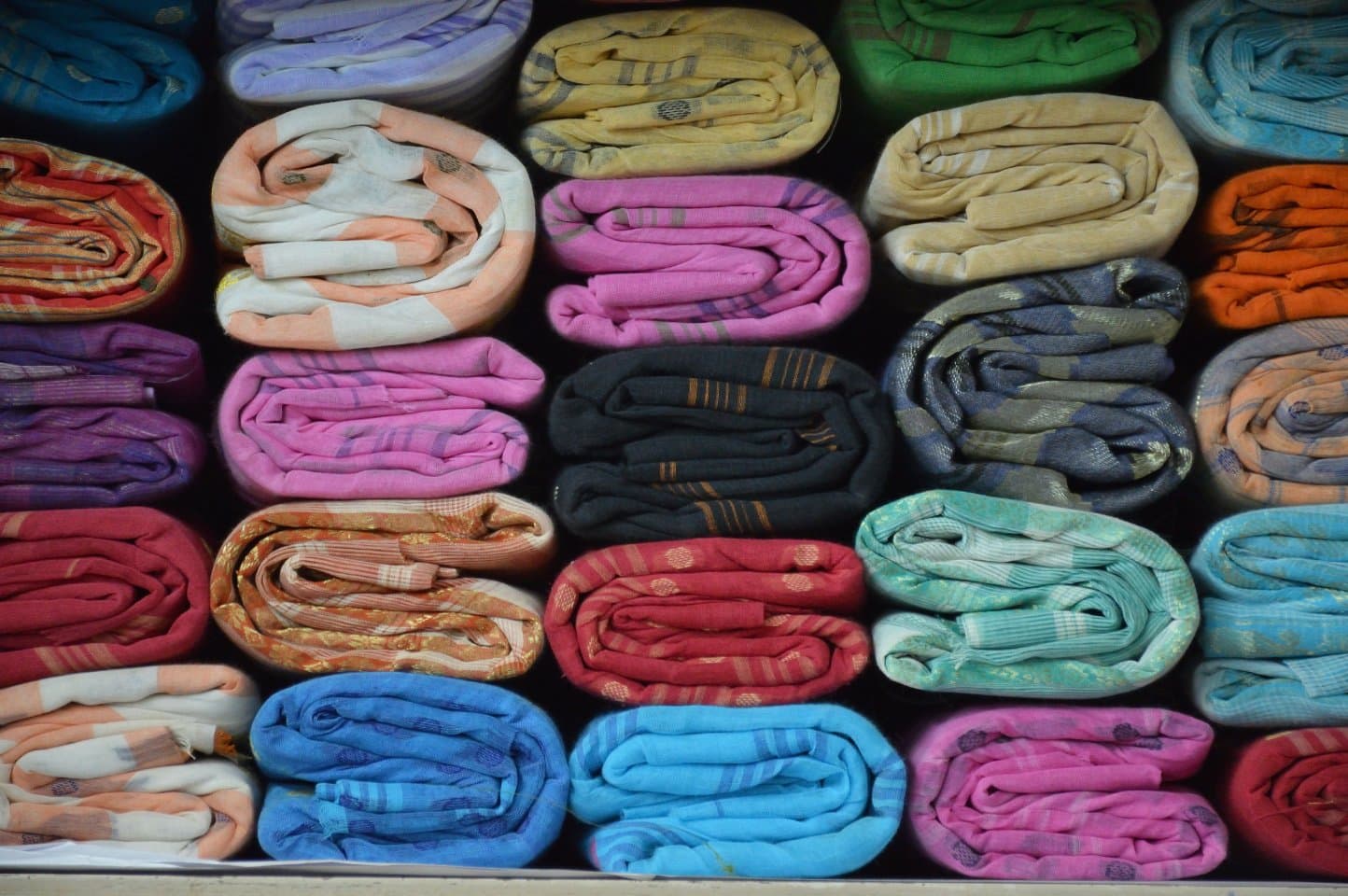
Tangail saris are traditionally sold in a unique narrow fold. (Picture by Biswarup Ganguly, Wikimedia Commons)
Phulia in Nadia district is the hub of Tangail saris, popularly known as Phulia taant. The name Tangail comes from a region, now in Bangladesh, known for its weaving community. After the partition of Bengal, weavers from Tangail started to migrate and many of them settled down in Phulia. Here, they started weaving the same saris and the name Tangail remained.
Fine cotton saris, light and airy, Tangails are traditionally sold and worn starched and crisp. Floral motifs and small butis (dot-like ornamental designs, can be circular, squares or diamond-shaped) are found in traditional Tangails. Weavers and designers experimenting with weaving techniques and thread counts have given birth to newer textures, widely marketed as Phulia sari. The price range for Tangails starts at Rs 500.
Distance from Kolkata to Phulia: 95km
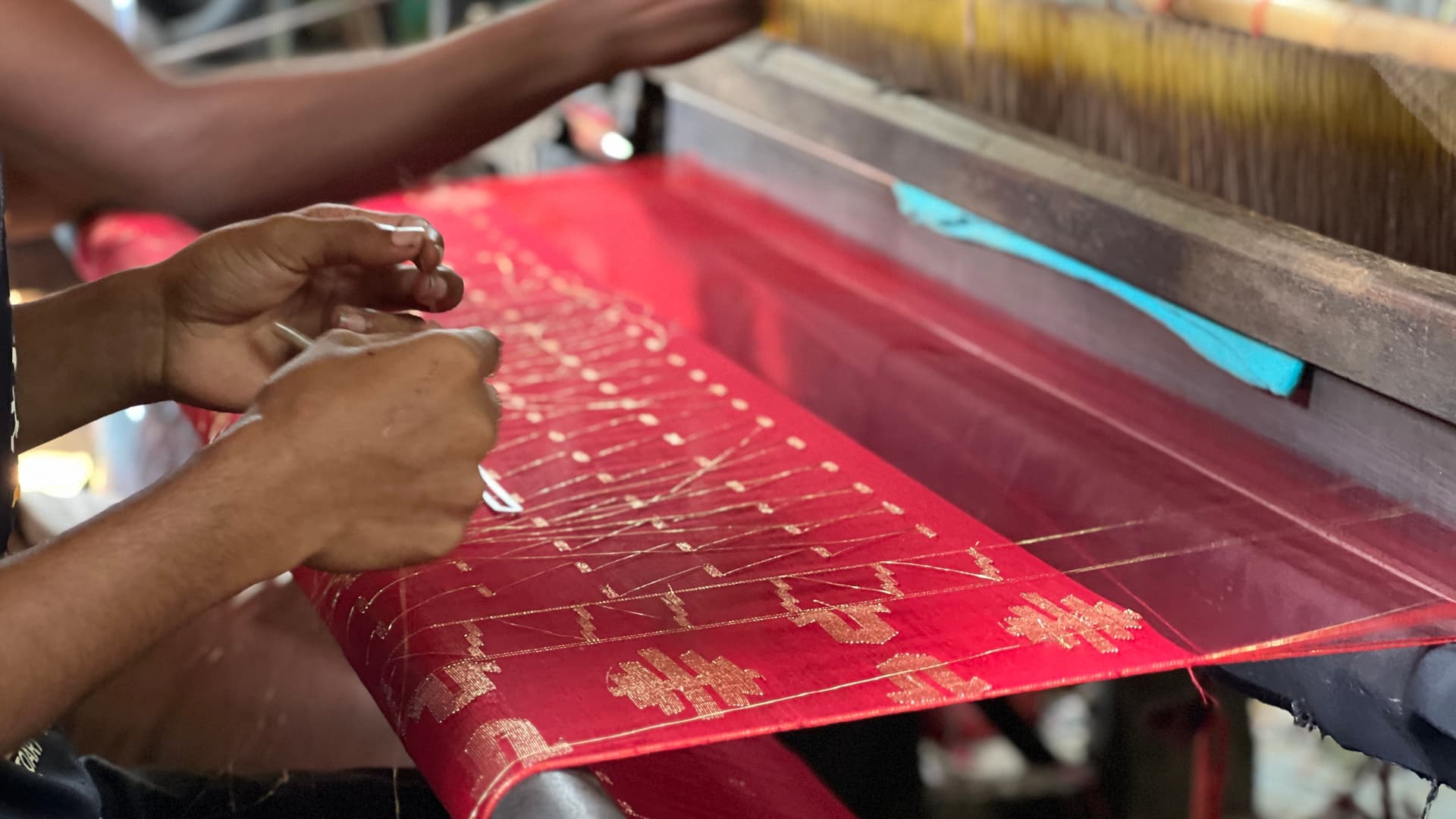
It takes at least 10 to 15 days to weave a single Jamdani sari. (Shutterstock)
An intricately woven sheer cotton or muslin fabric with vivid patterns, the technique of weaving Jamdanis is known only to a few expert weavers. It takes at least 10 to 15 days to weave a single Jamdani sari. Jamdanis also have their origin in Bangladesh. Historically, Mughal rulers patronised this craft. Master weaver Biren Kumar Basak is the man behind the resurrection of Jamdani and Tangail saris in Phulia and has been awarded the Padma Shri for his work. Jamdani has been inscribed by UNESCO on the Representative List of the Intangible Cultural Heritage of Humanity. Jamdanis range from upwards of Rs 2,000.
Distance from Kolkata to Phulia: 95km
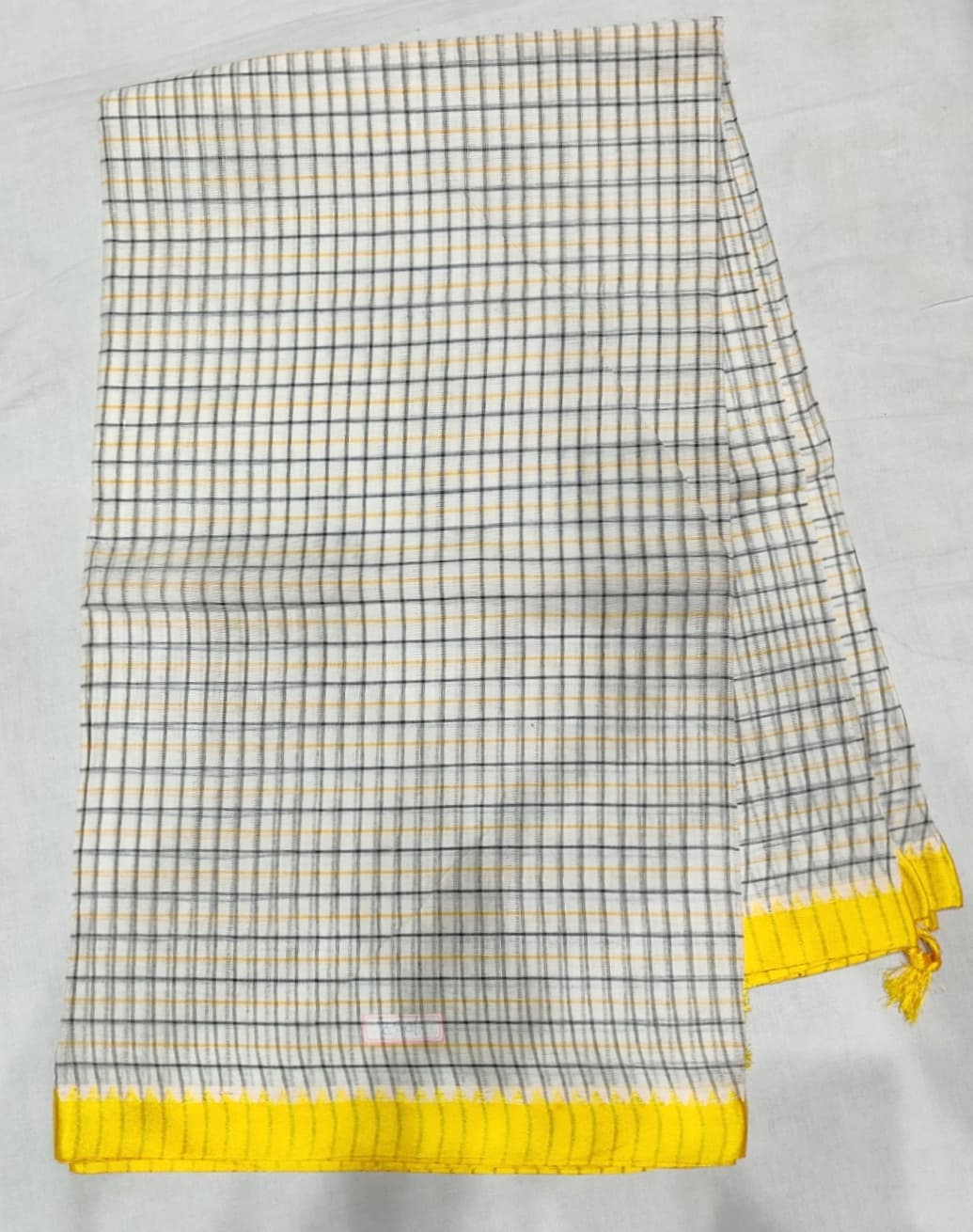
Stripes and checks are common in Dhonekhali saris.
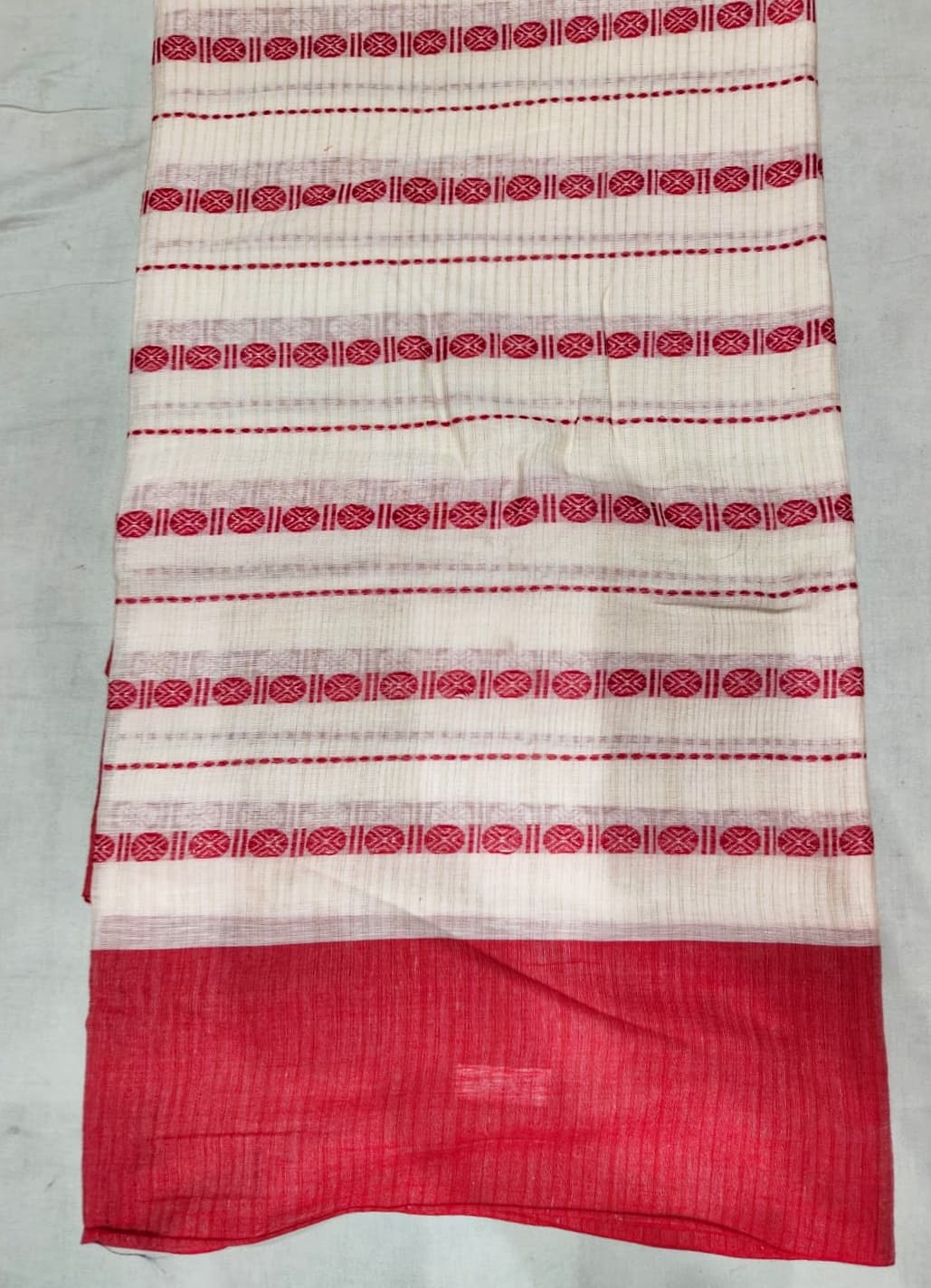
Stripes and checks are common in Dhonekhali saris.
Often mistaken for Tangail, the Dhonekhali owes its name to a place called Dhonekhali in Chinsurah subdivision of Bengal’s Hooghly district. Known for their lasting texture, the handloom cotton saris of this region have recently seen a revival as everyday wear. The matapaar (selvedge) and the khejur chhori (date palm) motifs on the weft of the pallu sets the GI-tagged Dhonekhali apart. The trademark laal paar (red border), machch dure (fish stripe), barfi daant dure (diamond-shaped temples) are some of the traditional designs. Originally woven in white and grey and heavily starched, softer unstarched saris with contemporary designs are also available now. Dhonekhali saris are easy on the pocket with prices starting at Rs 350.
Another attractive option is the Begumpuri. Usually found in bold, vibrant colours with bright contrasting borders, these cotton saris can be identified by the serrated stripes woven across the body. The yarn used for Begumpuri saris is usually coarser than other varieties of taant. Saris are priced at Rs 1500 onwards.
Distance from Kolkata to Dhonekhali: 60km
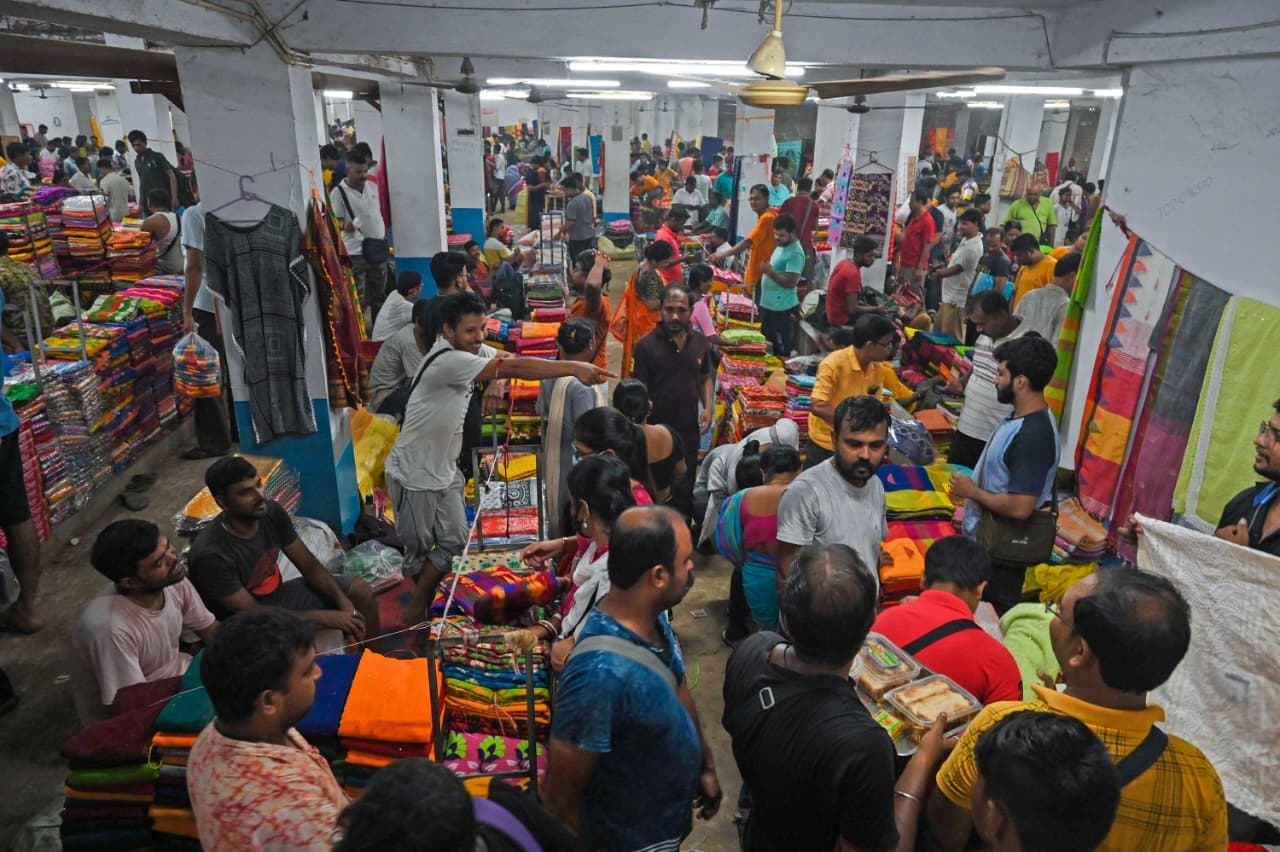
The Sunday haat in Shantipur is where you can buy saris at very affordable prices.
The weaving hub in Shantipur, Nadia, dates back to the 15th century. The cotton saris of this region are lightweight, with intricate designs. One of the most famous saris of the region is the Neelambari sari, so named for its deep navy blue hue almost like the blue sky. The saris have a fine texture and are woven in such a way that they look the same from both sides. If you are looking for budget-friendly buys, Shantipuri saris should be your pick. The Sunday haat at Shantipur is a crowd-puller, especially during the festive season. You can get saris at Rs 300 or even less.
Distance from Kolkata to Shantipur: 101km
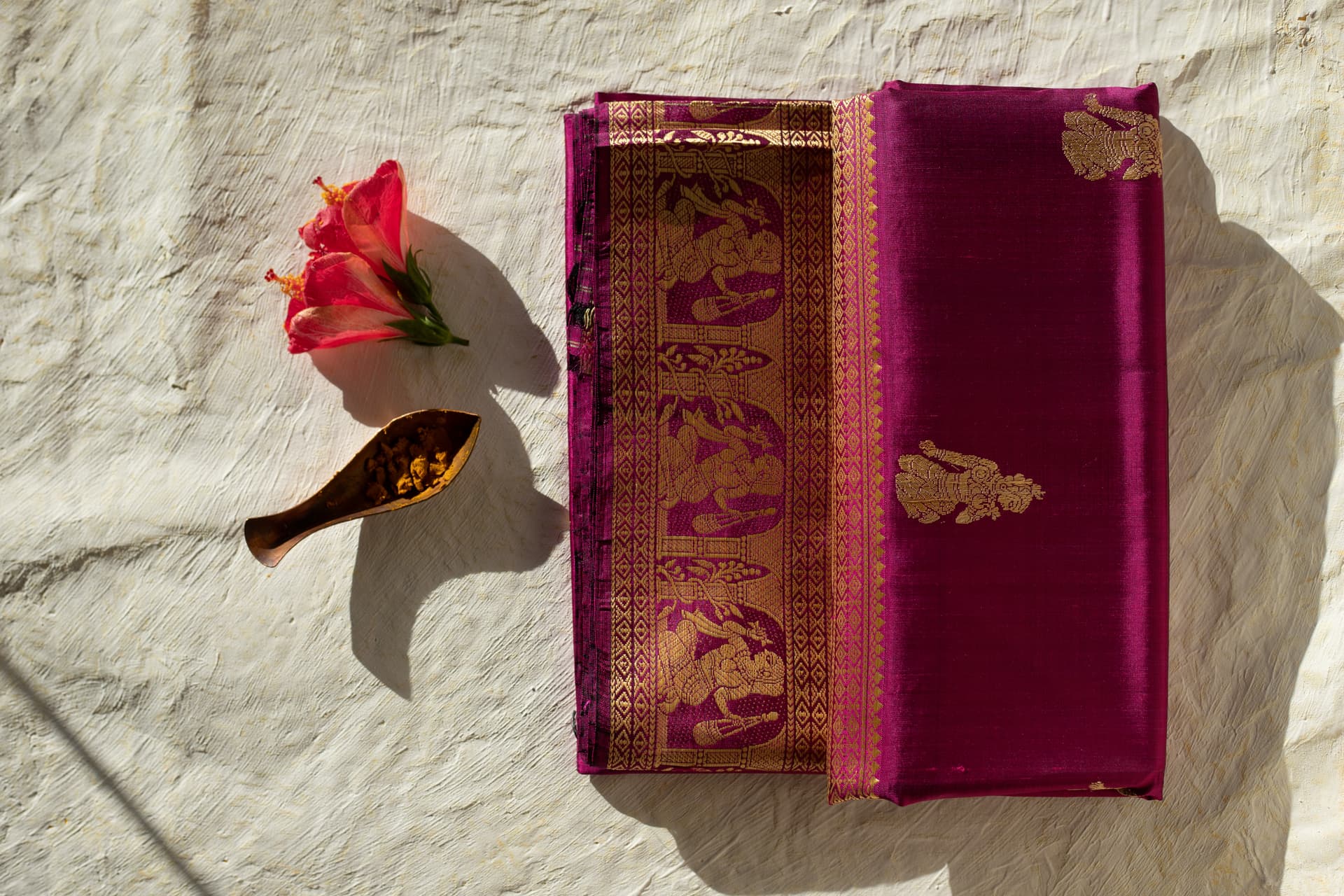
The border and pallu motifs in Baluchari saris depict stories from mythological epics. (Shutterstock)
One of the most coveted saris of Bengal are the Baluchari and Swarnachari of Bishnupur, Bankura. The history of the Baluchari goes back to the times of the Nawabs. Though Bishnupur is currently the largest producer of Baluchari saris, it was first woven in a place named Baluchar in Murshidabad. Nawab Murshid Quli Khan brought the weaving tradition to Bengal from present-day Bangladesh in the 18th century. He helped establish a weaving community in Baluchar village on the bank of Bhagirathi river in Murshidabad. However, with the advent of the British Raj, the Nawabi patronage dwindled and the production of Balucharis experienced challenges. Frequent floods forced the community to move to Bishnupur, where the Baluchari regained its lost fame in the first half of the 20th century. The borders and intricately woven pallus of Baluchari saris usually feature and narrate mythological stories from the Ramayana, Mahabharata or other epics. The motifs in the original Baluchari saris, however, depicted the lives of the nawabs. The designs are woven with resham (silk) threads. To give the saris a more gorgeous look, weavers sometimes use golden zari for the designs — these saris are called Swarnachari saris. Baluchari saris are priced at Rs 7,000 onwards and Swarnachari saris at Rs 8,500 and above.
Distance from Kolkata to Bishnupur: 140km
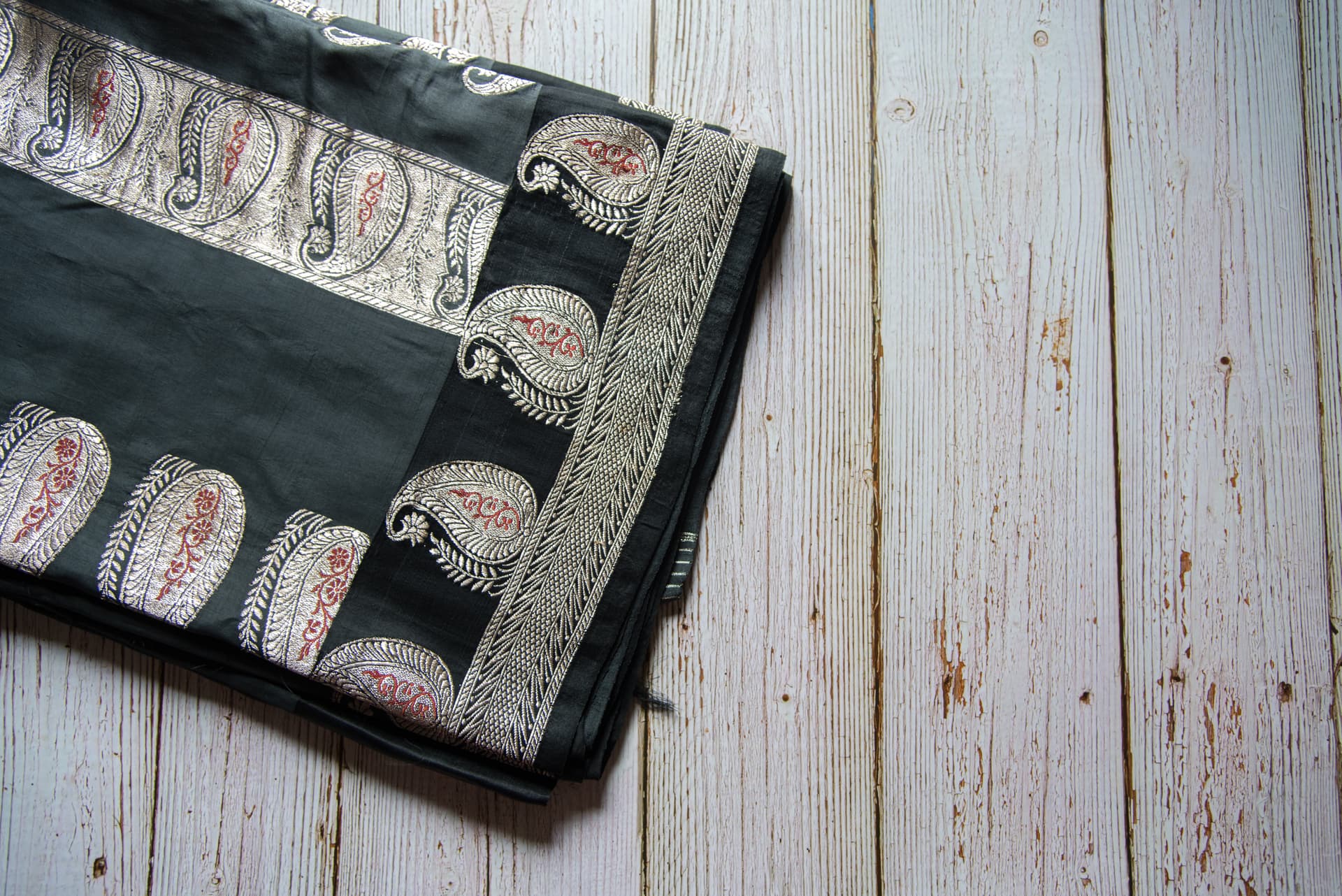
Bishnupuri silk is lightweight, soft and easy to drape. (Shutterstock)
Bishnupur is also known for its pure mulberry silk. The saris are lightweight, easy to drape and come with a sheen. Bishnupuri silk saris either come in solid colours or with block prints and are priced at Rs 4,000 or more.
Distance from Kolkata to Bishnupur: 140km
Murshidabad, too, is famous for its mulberry silk saris with their fine texture. These lightweight saris have an airy, clingy drape. Prices start at Rs 3,000 onwards.
Distance from Kolkata to Murshidabad: 217km
Sonamukhi in Bankura is known for its silk — slightly richer and weightier than the other varieties of silk weaves in Bengal, tussar and Garad (raw, uncoloured silk).
Distance from Kolkata to Sonamukhi: 155km
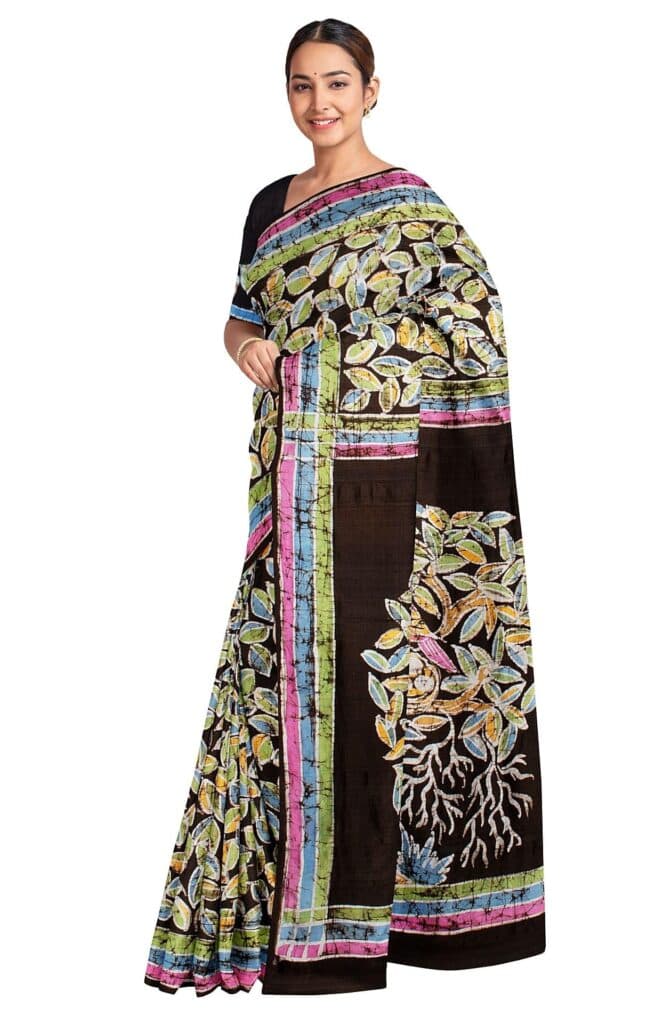
Batik art was popularised in Bengal by Tagore. (Biswa Bangla website)
Batik, a dyeing technique using wax resist, has its origin in Indonesia. Rabindranath Tagore brought batik to Santiniketan and introduced its study at Visva-Bharati. The technique from Java was blended with Indian aesthetics and designs. Batik saris in Santiniketan thus often have alpana-like designs. One can see batik being done on the Sriniketan campus of Visva-Bharati and at the workshops in Amar Kutir Society for Rural Development on the banks of Kopai river. Saris with hand batik on cotton are priced at Rs 1,000 and more and silk batik at Rs 3,000 or more.
Distance from Kolkata to Santiniketan: 165km
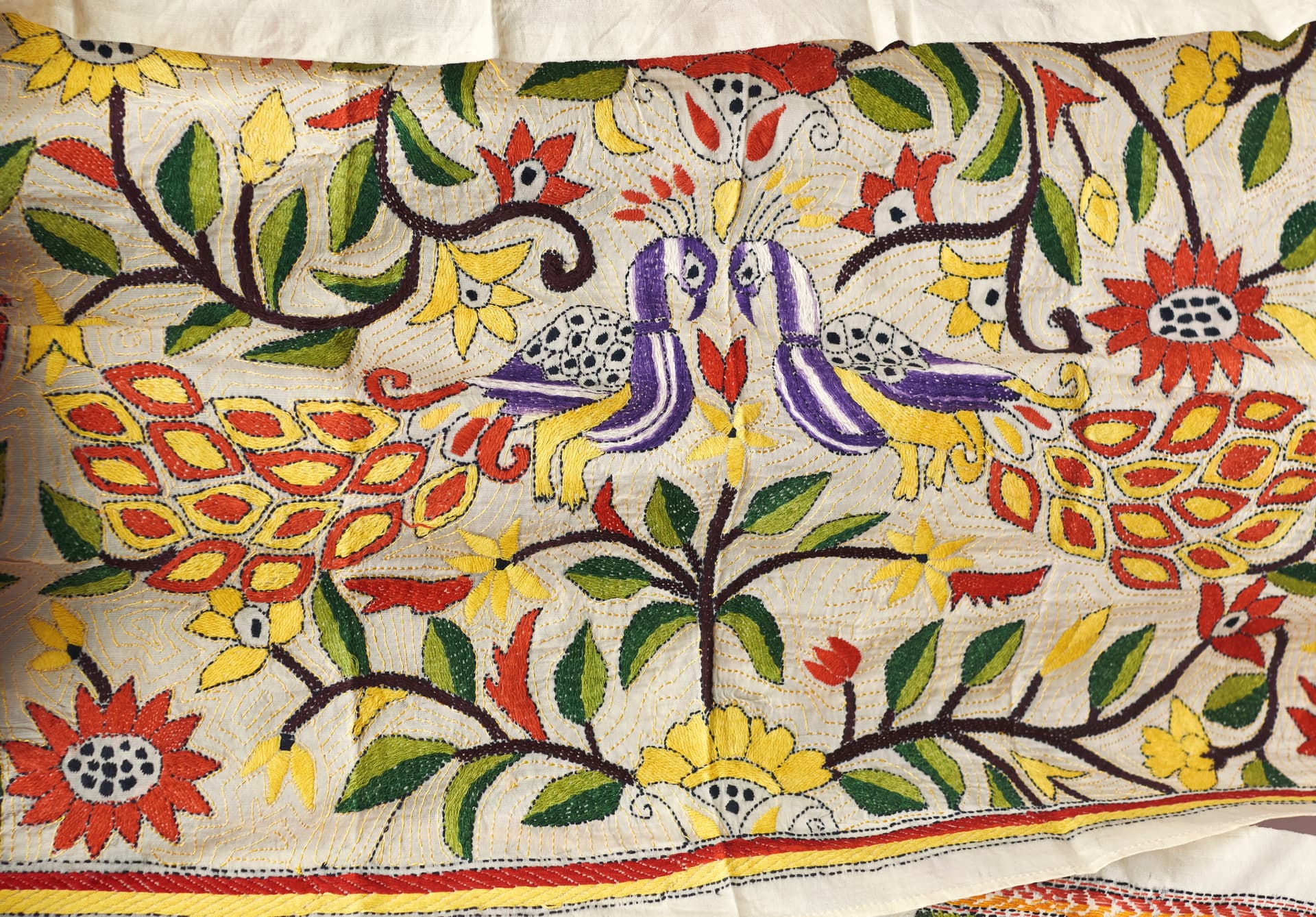
Kantha saris have intricate embroidered patterns. (Shutterstock)
Kantha stitch embroidery has its origins in throws and quilts made out of old saris. Women would stitch the saris together to create layers and make designs with simple run stitch. This simple art of recycling and repurposing old items of clothing was getting lost in time till Rabindranath’s daughter-in-law, Protima Devi, revived it. Saris became a canvas for intricate kantha embroidery, where designs vary from traditional motifs of nature and mythological characters to more contemporary designs and geometric patterns. The more intricate the work, the more expensive the sari. Kantha work can be done on cotton, silk or tussar.
Distance from Kolkata to Santiniketan: 165km


