
A joint initiative by



 Published on 2026-04-22Updated on 2026-04-22
The quiet lanes of Ambika Kalna, about 90km from Kolkata, treasure a secret more than 2,000 years old. Here, weavers spin magic to create a fabric as thin as air — muslin.
The rhythmic clacking of handlooms greets you as you walk into the nondescript tanti para (weavers’ hamlet). Enter and you can witness a spectacle no less than magic — an entire sari being passed through a small ring with ease.
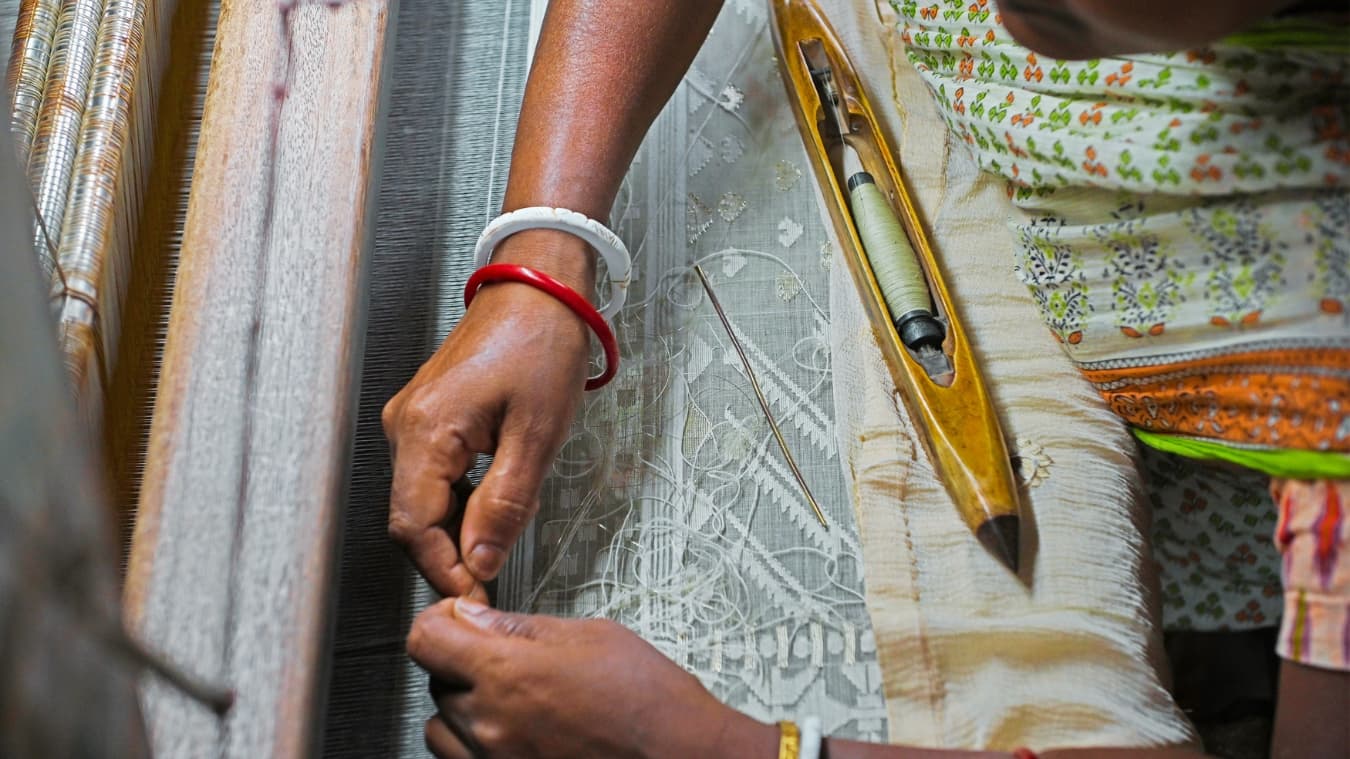
“Right from spinning the threads from raw cotton to weaving the sari, everything is done by hand. Pure muslin and jamdani saris cannot be woven on a machine,” Jyotish Debnath reveals.
Once prized by royalty and aristocrats across the world, Bengal’s muslin earned the Geographical Indication (GI) tag in 2024 while master weaver Jyotish Debnath was awarded the Padma Shri in 2026. Long before such formal recognition came its way, muslin was considered as precious as gold and the preferred choice of fabric for Mughals. The fine textile also found pride of place in 18th- and 19th-century European high fashion.
Stories abound about the origin of muslin. Some claim that muslin originated in Mosul, Iraq, while others suggest that it has its roots in Dhaka.
So intricate is the weaving pattern that it takes a weaver no less than four to five months to finish just one sari. “Right from spinning the threads from raw cotton to weaving the sari, everything is done by hand. Pure muslin and jamdani saris cannot be woven on a machine,” Jyotish Debnath reveals.
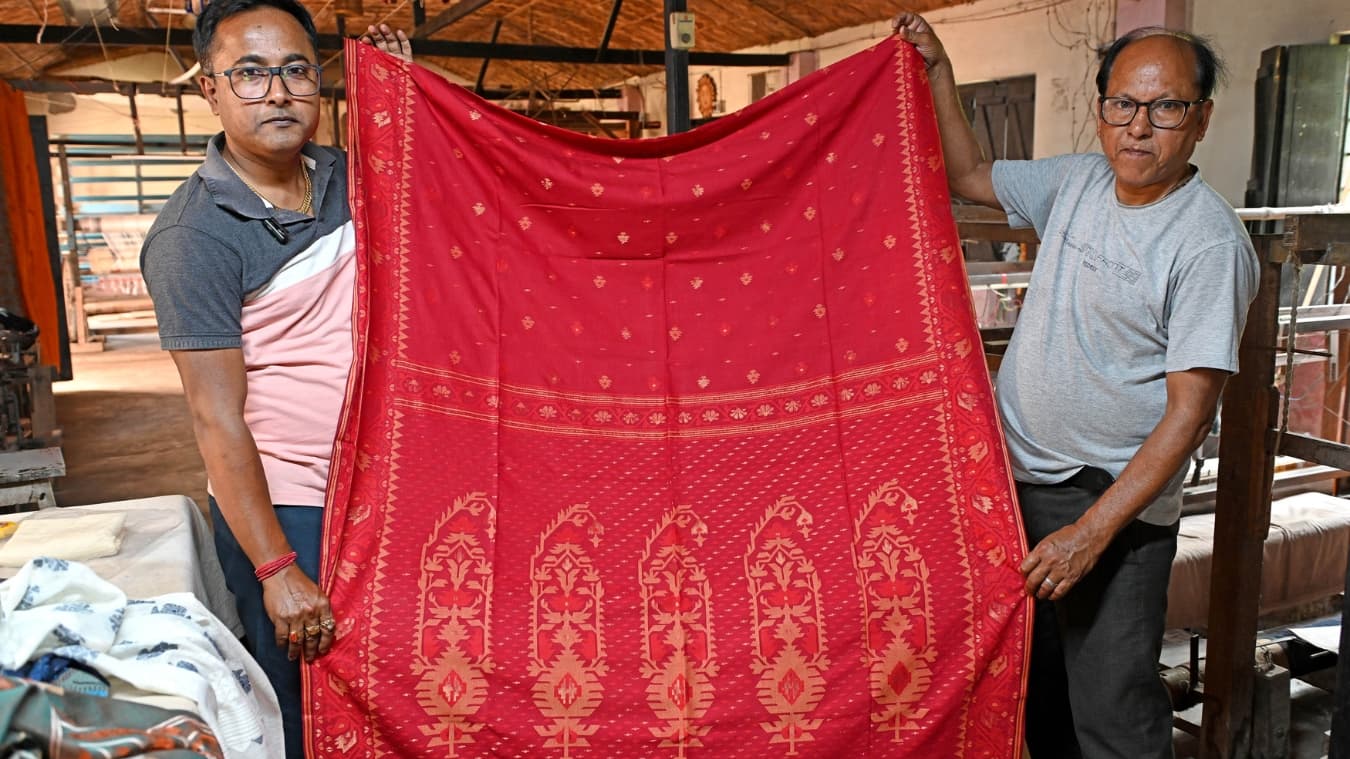
The average thread count of muslin woven in Kalna is now 300, making it remarkably fine.
The first step in the weaving of muslin involves processing the cotton from which the threads are spun. Earlier, muslin was woven exclusively from Phuti Karpas — a special cotton variety that grows along the Meghna river in Bangladesh. Processing this fine cotton was an art in itself and involved the use of catfish jawbones to clean it. The cloth was spun atop small boats during the most humid parts of the day by young women since elders could not see the yarn clearly enough to handle it.
Debnath and fellow weavers in Kalna now source most of the cotton from other states like Maharashtra. But Debnath is also trying to cultivate cotton on a small parcel of land near Kalna. Artisans spin raw cotton by hand to produce fine threads. “The loom that weaves saris requires skilled labour. The coordination between the tana (warp) and bana (weft) needs to be perfect. The tana keeps the threads stationary and stretched out, while the bana inserts threads crosswise to create the fabric. Only an expert weaver can create a sari with a thread count of around 300,” explains Debnath.
The average thread count of muslin woven in Kalna is now 300, making it remarkably fine. The delicate fabric demands careful handling at every stage. Muslin with thread counts between 400 and 600 require even greater craftsmanship and control and are not easily found.
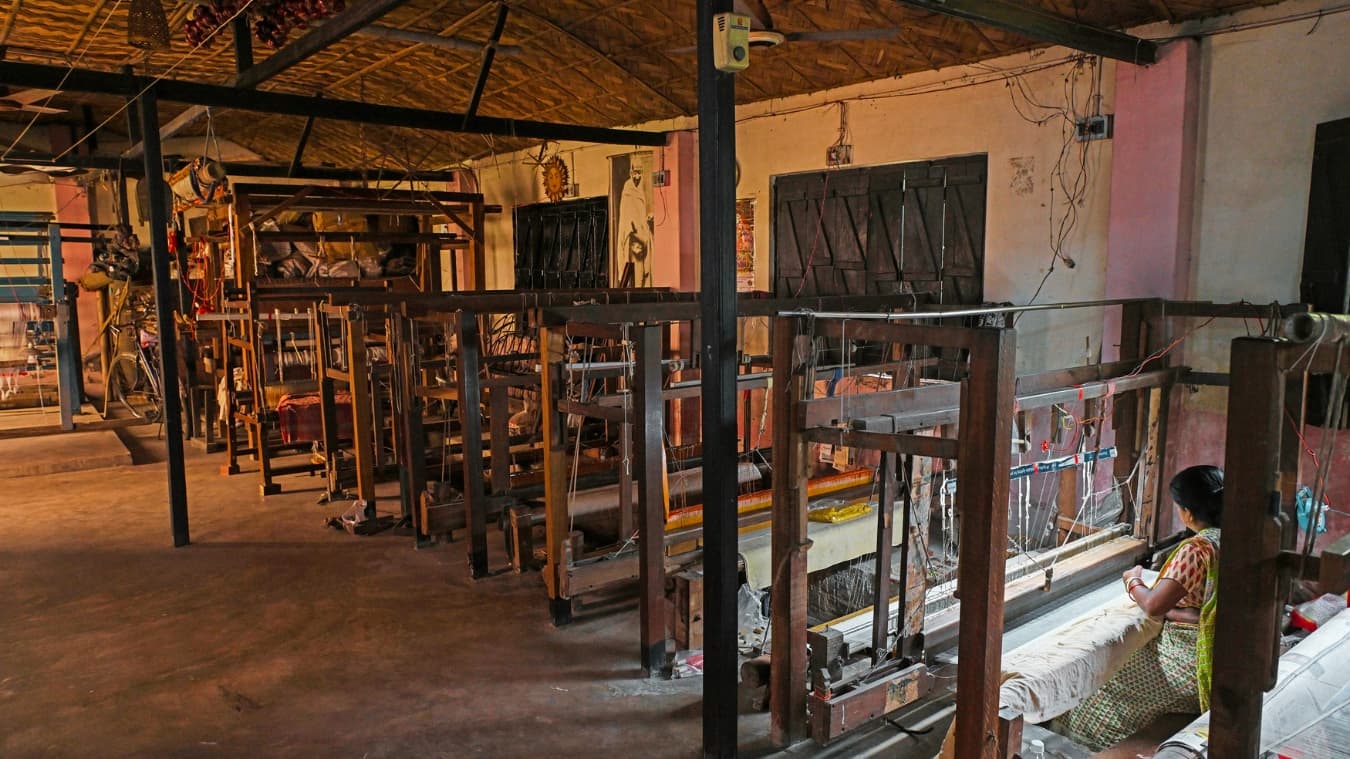
The entire process requires the weaver to sit with legs hanging from the loom pit for an extended period of time.
Artisans and weavers often draw on their experience to place motifs directly onto the loom by hand. “Each design is positioned thread by thread. Although sometimes we place sketches under the loom for reference, in most cases it is done from muscle memory,” the master weaver says.
Jamdani — a decorative weaving technique commonly used on muslin — may appear like printed designs from afar but a trained eye and closer inspection reveal intricate artistry. Floral elements are common in jamdani saris — delicate blooms that seem to float within the fabric. There are vines, leaves and abstract natural forms, the edges often softened by the fragile weave. Some jamdani designs also feature geometric patterns.
The motifs and designs, although largely traditional in nature, are evolving with experimentation and innovation. Muslin weavers in Kalna subtly alter the scale of motifs to introduce variations, thus reinterpreting classic forms. The entire process requires the weaver to sit with legs hanging from the loom pit for an extended period of time. It is a strenuous exercise and a test of one’s endurance and patience. “The constant movement of the bana, along with its characteristic click-clack sound, is almost therapeutic for us,” Debnath adds.
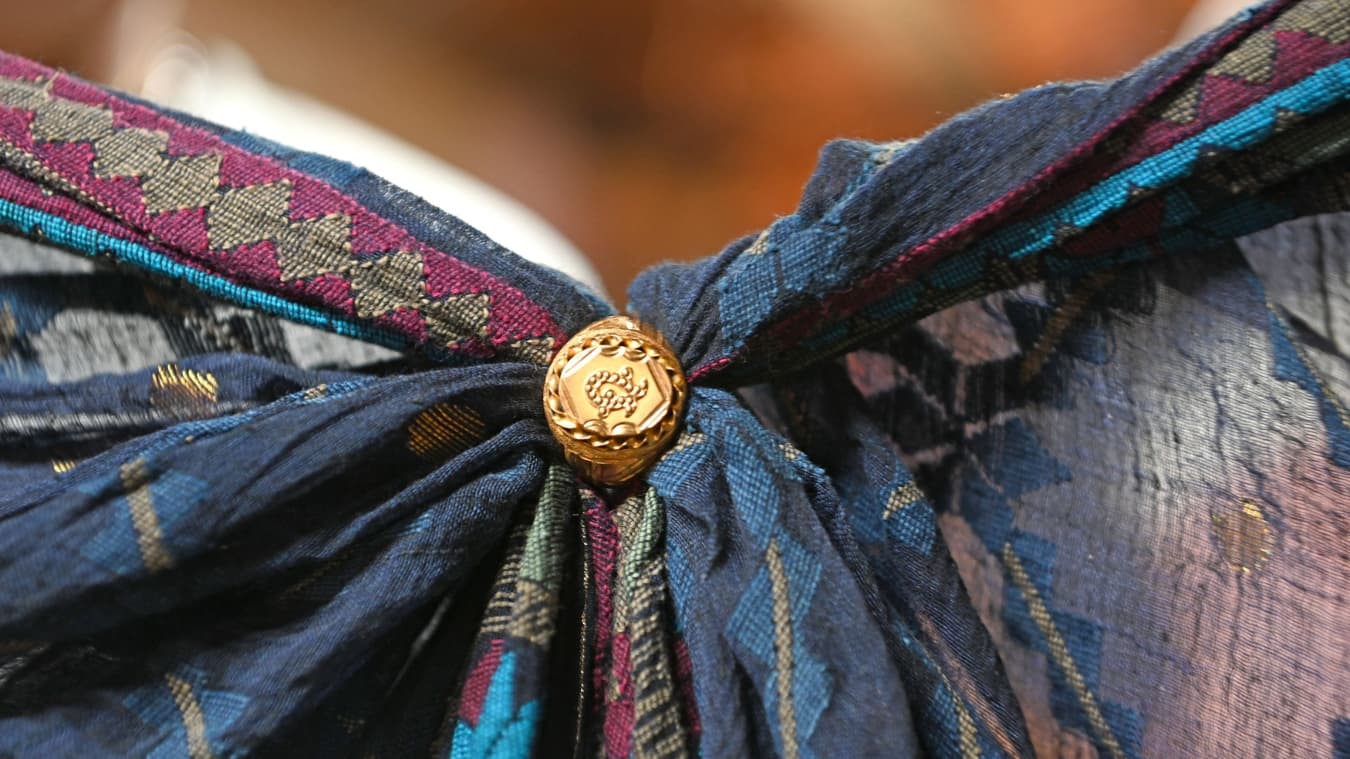
An entire sari being passed through a small ring with ease.
The art is also moving beyond saris. On offer are stoles, dupattas and fabric that can be tailored into garments. A stole will set you back by Rs 2,000-3,500. Dupattas are priced at Rs 3,000 or more. Fabric is sold at around Rs 3000 a metre.
Rajib Debnath, who helps his father Jyotish at the workshop, feels innovation is essential for survival. “We have introduced newer designs. We are also experimenting with garments that are now popular. Keeping in mind that many women prefer salwar kameez and kurtas, we have started weaving dress materials,” he says. The prices of muslin saris start at around Rs 25,000 and can go up to several lakhs.
“Muslin is incredibly light and perfect for Indian weather. Once you start wearing it, muslin is almost addictive,” Debnath senior signs off.
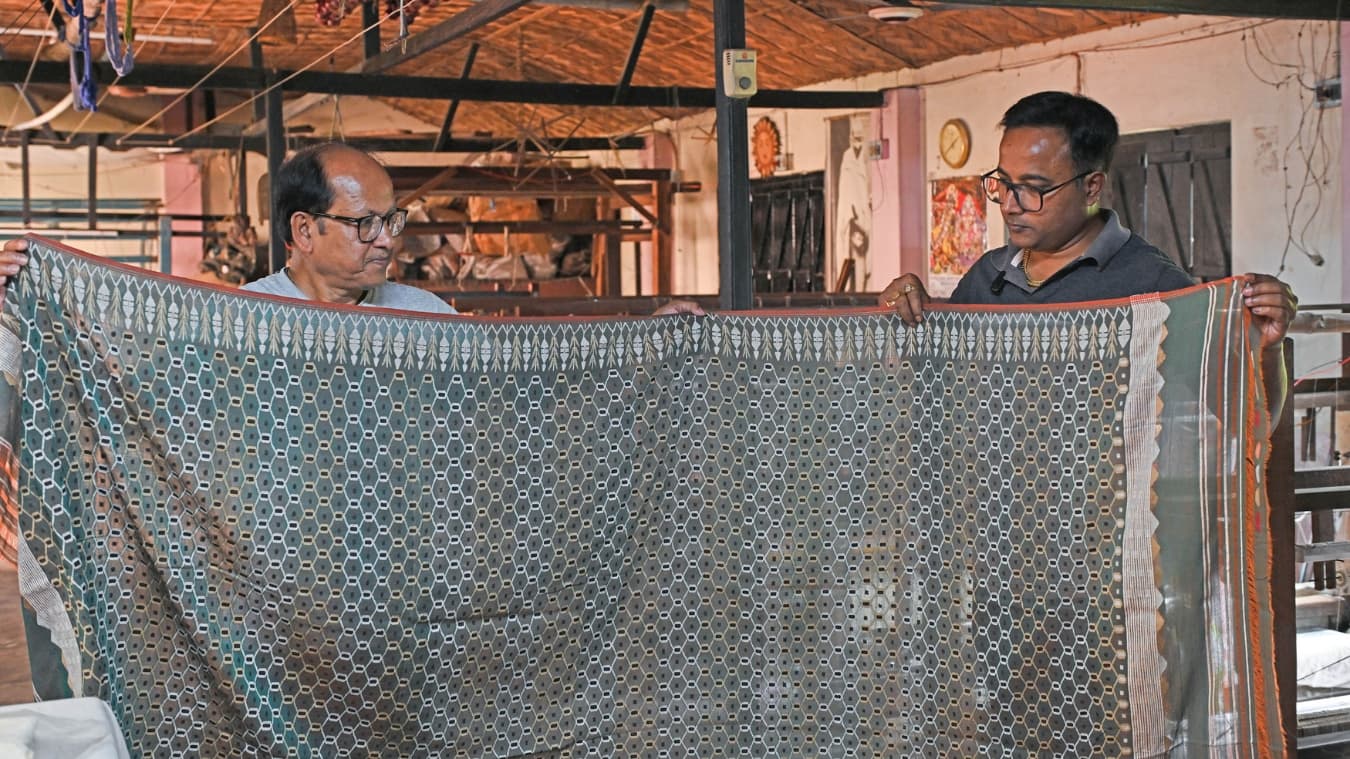
Rajib Debnath, who helps his father Jyotish at the workshop, feels innovation is essential for survival.
The Debnaths’ workshop, Tantajo, conducts curated visits, where one can also buy muslin directly from the weavers.
How to go

Phulia to Bishnupur and Dhonekhali to Santiniketan — travel to weaver hubs. (Shu...
Planning a trip to Bengal? Here's a list of some must-buys for you

Explore aatchala-style 108 Shiva temples sculpted in terracotta and shop for the...


