
A joint initiative by



 Published on 2025-09-05Updated on 2025-09-05
West Bengal is a land of art and literature, flora and fauna, food, festivals and fashion. It serves as a perfect tourist destination because there is something for everybody to savour — and shop.
From Darjeeling tea to Dokra craft, from silk saris to sweetmeats — the options are abundant. So why not take home a few authentic pieces of Bengal?
Also known as patachitra, the Kalighat style of painting emerged in 19th-century Calcutta, distinct from the Odisha style. Scroll painters called patuas sat outside the ancient Kalighat Kali Temple, hand-drawing patachitras using vegetable dyes. These paintings narrate mythological tales, depict Hindu deities and capture scenes from daily life. Originally created on scrolls, Kalighat painting now adorns everything from wall hangings to apparel. These make perfect souvenirs and can be bought from most handicraft stores. Notable artists of this genre of painting are Jamini Roy, Nandalal Bose and Bhawanipur Sitaldas.
In the mid-19th century, China held a monopoly over tea. That's when British colonisers (East India Company) began developing tea plantations across the Darjeeling district, particularly in the now-famous Makaibari estate. Since then, the Queen of Hills has been celebrated not just for its breathtaking views, but for its exceptional tea. In fact, the term Darjeeling tea received its GI tag in 2004.
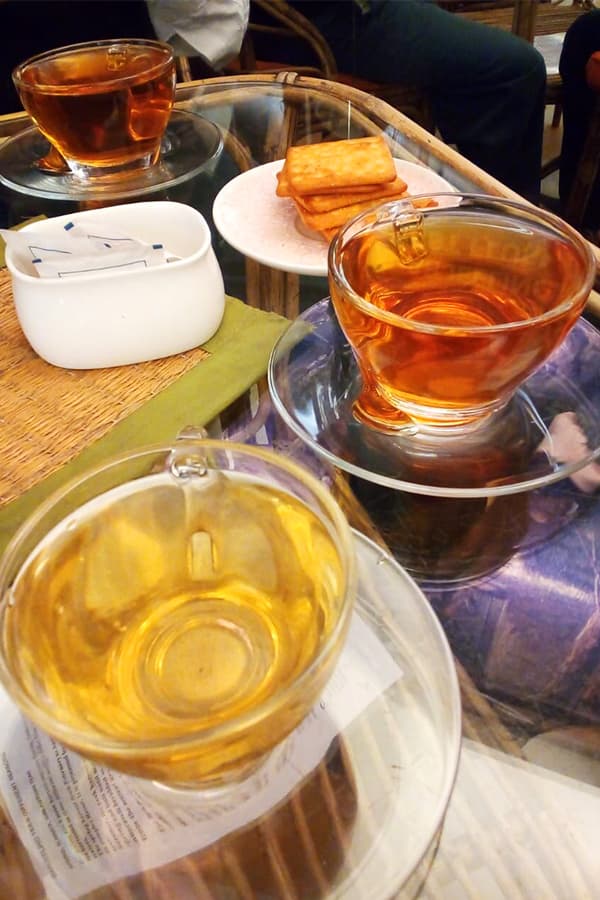
Cups of warm Darjeeling Tea at Golden Tips. (Picture by Debasree1983, Wikimedia Commons)
Primarily black, Darjeeling tea also comes in green, white and oolong varieties. The beverage offers four distinct flushes, each with unique aromas tied to their harvest seasons. So if you happen to be in north Bengal, savour some hot Darjeeling tea amidst the cool green hills at Nathmulls Tea Room, Golden Tips and Goodricke Teapot before packing some (loose leaves or tea bags) for home — it's liquid gold in a cup. If you are only touring Kolkata and its surroundings, you can still get your Darjeeling tea fix at the Golden Tips showrooms in New Town and south Kolkata. Dolly’s Tea in Dakshinapan is worth a try as well.
A trip to Bengal is incomplete without sari shopping. From delicate cottons to luxurious silks, Bengal’s handwoven saris are unmatched. From the intricate thread-work Balucharis to simple, daily-wear cotton Taant from Phulia, these six-yard wonders are Bengal's bestsellers. Jamdani's intricate weaving on muslin fabric is attractive to all age groups. Silks like 'katan' and those from Murshidabad district and Bishnupur town are equally coveted. And for that quintessential “Bengali look” don't miss the lal-perey shada sari (white with red border) — the hallmark of traditional Bengali grace.
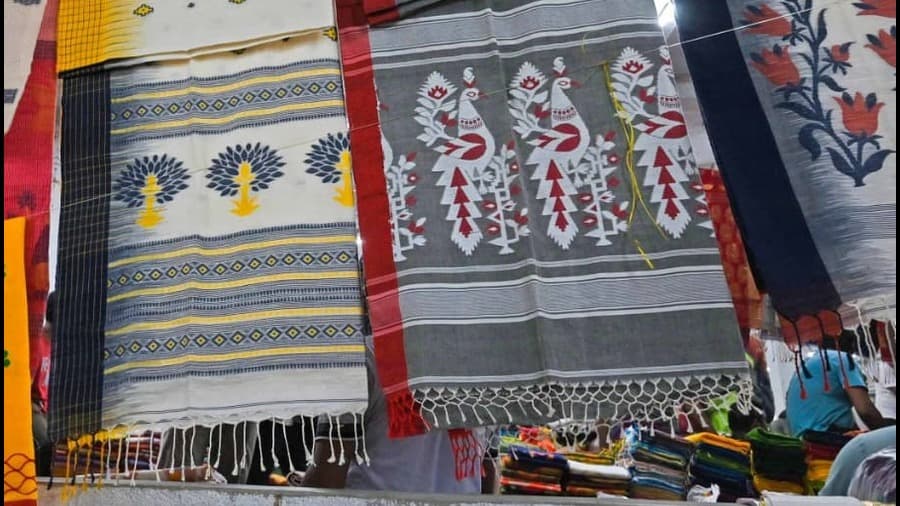
Colourful handloom saris on sale.
If your visit to Bengal coincides with mango season (April–June), you're in for a treat. Eastern India, particularly Bengal, grows exceptional mangoes across several districts. For instance, Malda is known for its golden, reddish Lakshmanbhog and densely pulpy Fazli mangoes, noted for their impressive size. Gulab Khaas, as the name suggests, offers a rosy flavour in a smaller package.
Murshidabad district, otherwise renowned for its silk sarees, also produces varieties like Kishan Bhog, Nawabpasand and Begumpasand. However, it's best known for Bengal's most coveted mango: Himsagar. This yellowish-orange, non-fibrous variety is a local delicacy with an extended shelf life – perfect for travellers.

“The king of fruit” on sale at a Mango Utsav held during the mango season. (Picture by Biswarup Ganguly, Wikimedia Commons)
Bengal's Kantha (Bengali for quilt) work is now globally recognised for its sophisticated, intricate style. Originally used to stitch fabrics into quilts and cushions, Kantha embroidery today graces saris, scarves, bags and more. Hence the name. For those looking to carry a quintessential piece of grassroots Bengal with them, buying Kantha stitch items is a must. You will find Kantha saris, scarves and tops in most local apparel shops.

Kantha work is now used to embellish other items such as coasters, scarves and napkins. (Shutterstock)

Kantha work is now used to embellish other items such as coasters, scarves and napkins. (Shutterstock)
As India's leading jute producer, Bengal naturally excels in jute products. Jute baskets, mats, bags, planters and home décor items are tourist favourites. Not only are they easy on the eyes and the pocket, they are also eco-friendly. A wide variety of jute products are available in local shops and popular at handicraft fairs, commonly called 'Hastashilpa Mela'.
Adult collectors and travelling families will love Bengal's diverse doll collection. They come in various shapes, sizes, designs and materials and are perfect as gifts for loved ones back home. Wooden dolls from Natungram and Bardhaman showcase vivid colours, often shaped as Goddess Lakshmi and owl figurines.
Clay dolls from Krishnanagar, Nadia and Joynagar-Majilpur, South 24 Parganas, depict rural Bengal scenes. Types include Tusu, Jhulan, Sasthi, Jo and Kanthalia. Bengal's dolls are also crafted from Dokra, jute, shellac, palm leaves, metal, porcelain and terracotta.
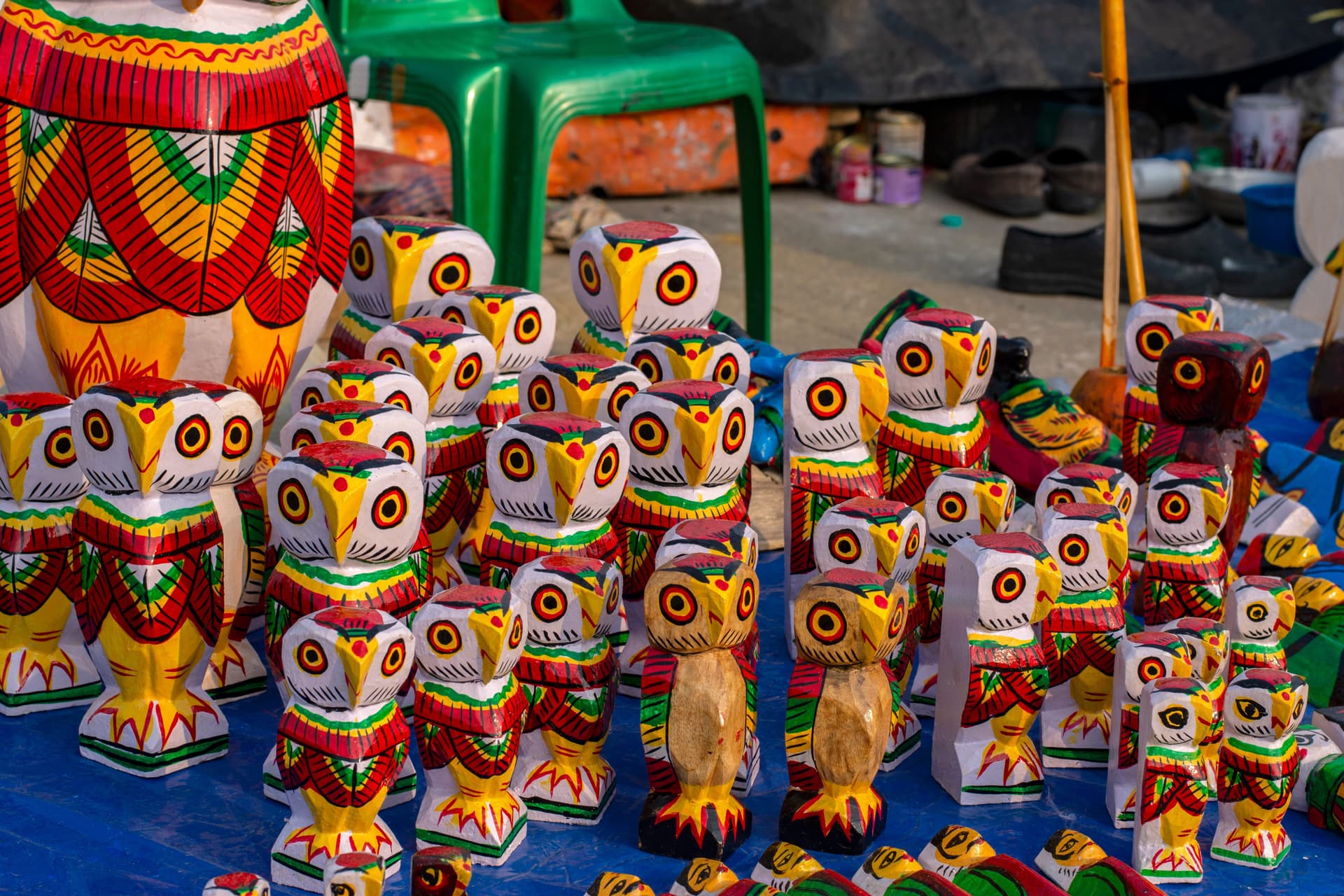
West Bengal's unique wooden dolls on display at a fair. (Shutterstock)
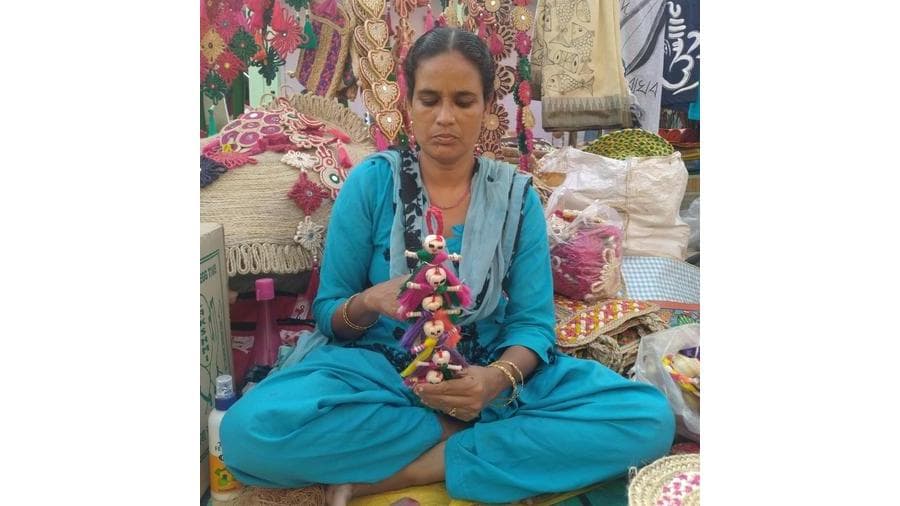
An artist handcrafts Murshidabadi jute dolls. (Picture by Duttasubha88, Wikimedia Commons)
Terracotta — hard, reddish-brown burnt clay or unglazed earthenware — traces back to the 7th century's Malla dynasty. Originally used by potters and construction workers, it's now found across Bankura district, especially Panchmura (considered terracotta's birthplace) and Bishnupur. The latter features terracotta temples dedicated to Lord Vishnu, depicting scenes from The Ramayana and The Mahabharata. You even get terracotta jewellery and home decor.
From terracotta horses and human figurines to temple-style sculptures, these artefacts — found at most local handicraft stores and even roadside stalls — make wonderful collectibles and souvenirs.

Brightly painted terracotta pots on sale at a handicraft fair. (Shutterstock)
Dokra (also 'Dhokra') is a non-ferrous, lost-wax metal casting technique dating back over 4,000 years. It can be traced to the Indus Valley civilisations, including the iconic ‘Dancing Girl’ statue. Named after the Dokra Damar tribes of Chhattisgarh, the artisans now span across states in eastern India, including Bengal.
From Purulia and Burdwan to Midnapore and Bankura, Dokra jewellery is now crafted across the state. Tourists should definitely purchase Dokra jewellery, such as earrings, necklace and bangles, as well as decorative artefacts. You can find them at most handicraft stores and local artisanal fairs.
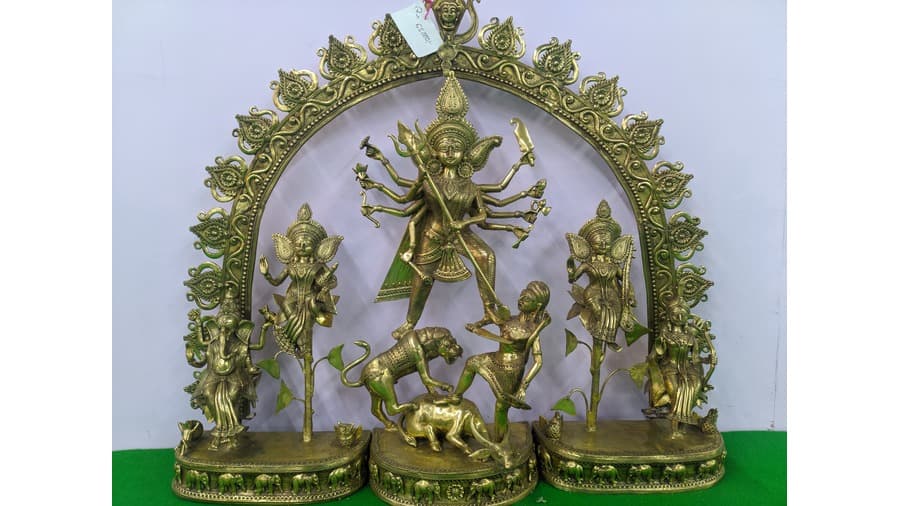
A Dokra Durga statue made by skilled hands. (Picture by Duttasubha88, Wikimedia Commons)
Rightly called the “Land of Rosogolla”, Bengal is synonymous with all things sweet — whether sugary or full of jaggery! Sweet shops abound in every corner of the state selling delicious sweetmeats made from kheer (thickened sweet milk) or chhana (unsalted Indian soft cheese).
For those visiting in the winter, don't forget to try the season's special Nolen Gur sandesh (date palm jaggery sweets) both in their norom paak (soft) and kara paak (hard) forms.
Joynagarer Moa has a long shelf life and is travel-friendly – as are tinned Rosogollas and Pantuas. Sandesh of most varieties can be packed and transported easily, though kara paak has a longer shelf life.
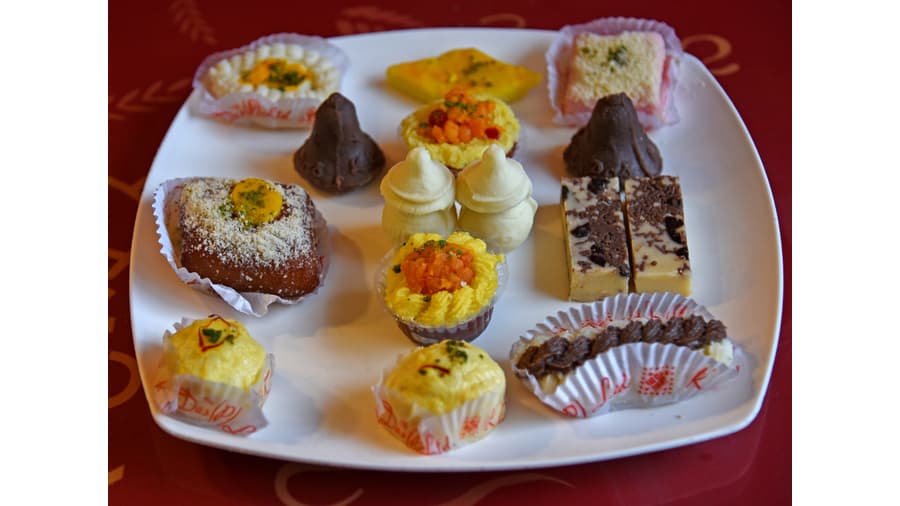
A platter of beautifully crafted and delicious sweets. (Shutterstock)
So, visit West Bengal and let it serve as your latest retail tourism destination.
Pro tip: For a one-stop shop for your retail needs, look up West Bengal Tourism’s Biswa Bangla outlets, which carry a range of exclusive handicraft and food items from Bengal. They even have outlets at airports, making last-minute shopping easy and convenient. You can also check out Manjusha outlets.
If you want a more authentic shopping experience go to local markets, craft fairs and haats like the one at Sonajhuri in Santiniketan.


