
A joint initiative by



 Published on 2026-03-02Updated on 2026-03-02
Come spring and nature is on fire in Bengal, with trees blazing in bright orange, red and yellow hues, just like flames burning furiously. This is the season of palash (Flame of the Forest), ashok (Ashoka), shimul (silk cotton flower) and krishnachura (gulmohur). The best place in Bengal to enjoy the most enchanting views of palash in full bloom is Purulia, where trees all around are aflame with a riot of colours.
Here is a first-hand account of a Purulia tour in palash season:
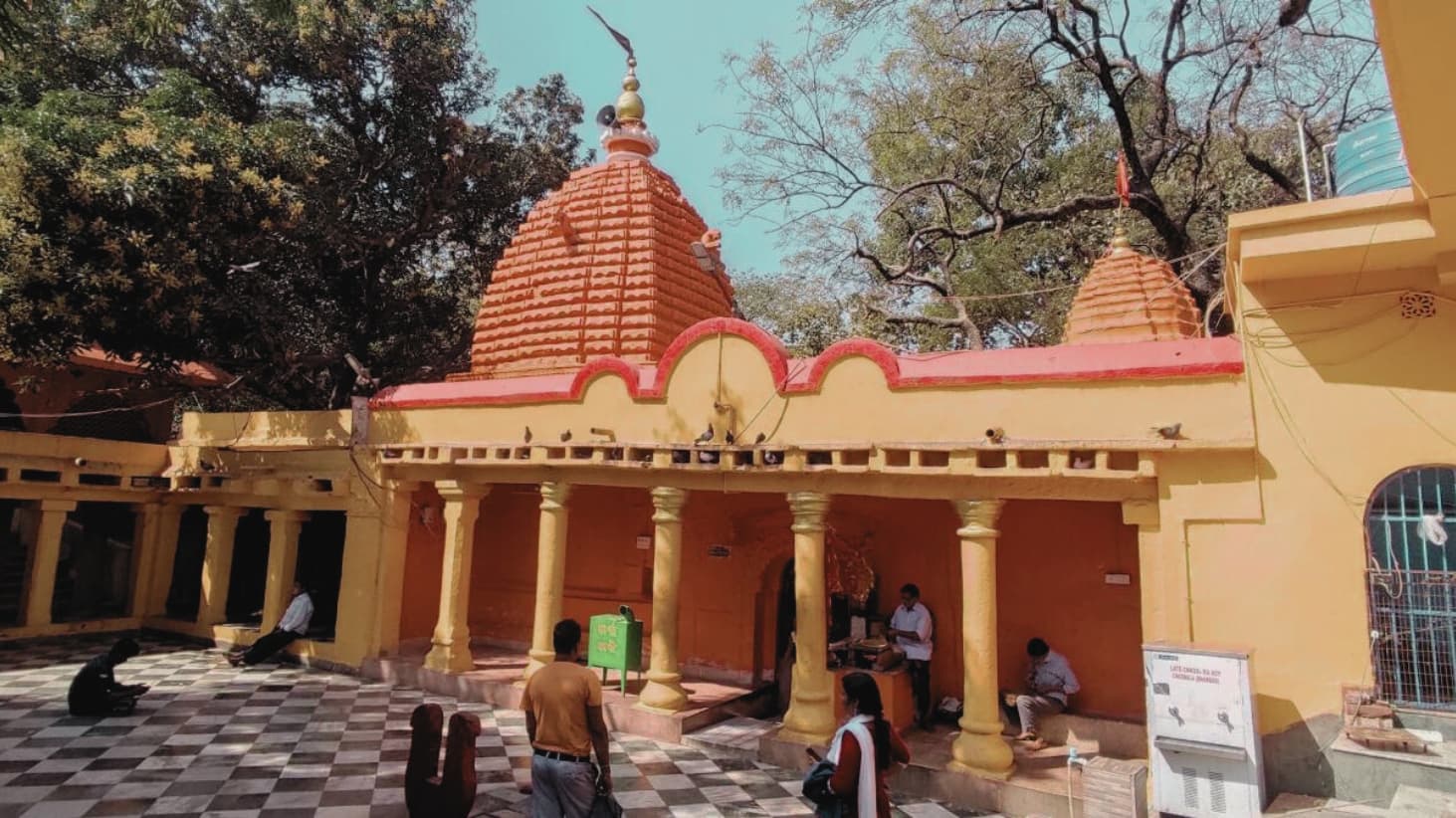
The Kalyaneswari Temple
It was just half past 8 in the morning when we stepped off the Gaya Vande Bharat Express at the busy station of Asansol, in the month of March last year. Three friends and I had planned to visit some of Purulia's heritage sites during spring, when palash flowers paint the region a vivid orange-red. Scientifically known as Butea monosperma, these vibrant blooms are commonly called the Flame of the Forest.
After a quick breakfast, we made our way to the Kalyaneswari Temple near Maithan Dam. The presiding deity is an incarnation of goddess Durga, and the astadhatu idol is said to be over 500 years old. The temple is built in the Rekha Deul style, with its characteristic tall, curvilinear tower and spire.
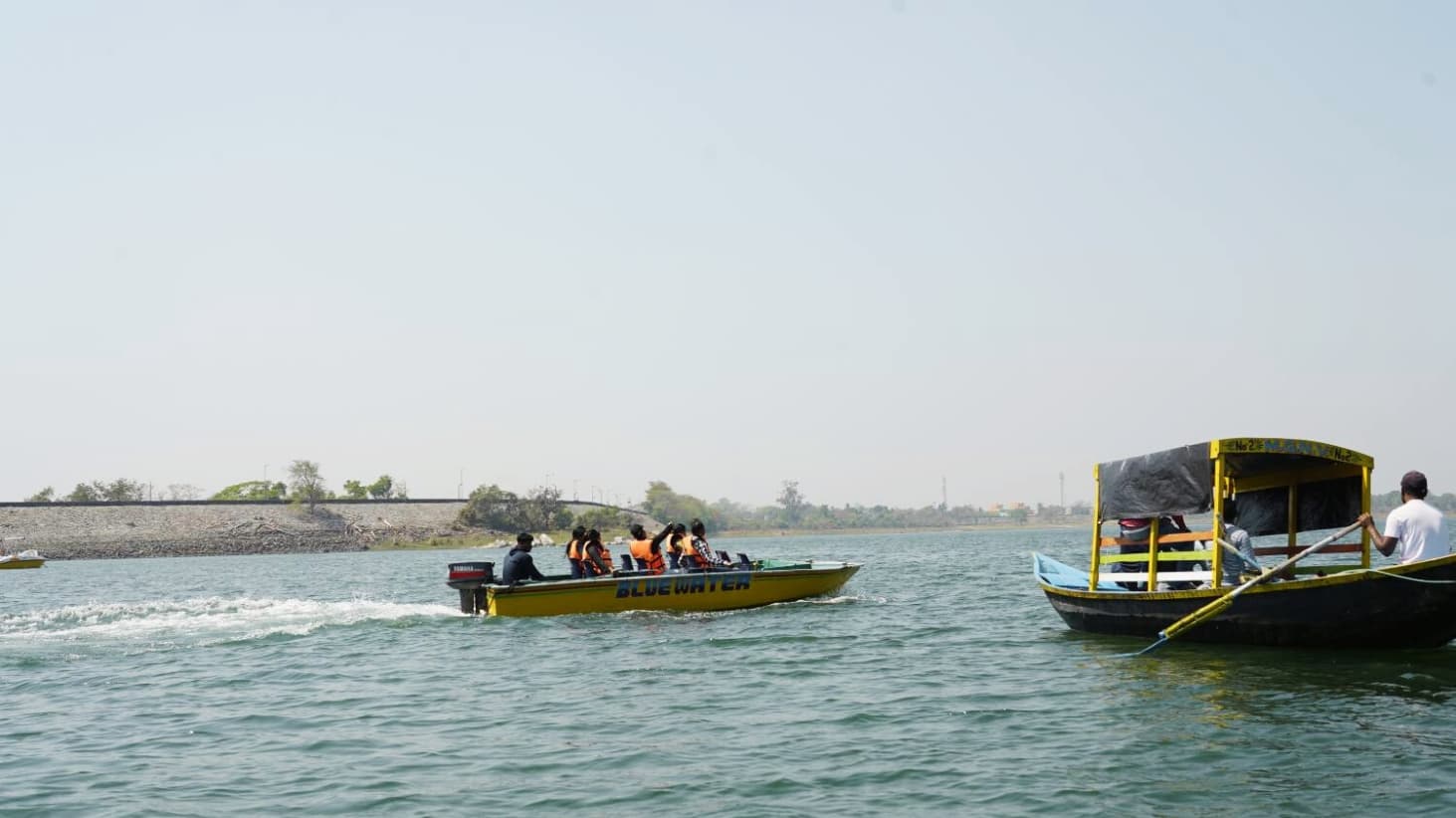
Boat rides on the lake adjoining Maithan Dam.
A boat ride on the lake adjoining Maithan Dam followed. Speedboats offer 30-minute rides across waters ringed by low hillocks, with life jackets provided for safety.
From Maithan, we drove to Garh Panchakot, known for its 5-pinnacled terracotta temple. Nestled in the lap of the Panchet hills in the north-east of Purulia district, the temple had fallen into ruin before being restored by the West Bengal Heritage Commission. Nearby stand the ruins of other structures raised by the Panchakot Kings around 1600 AD, including a Jor Bangla temple and a tower.
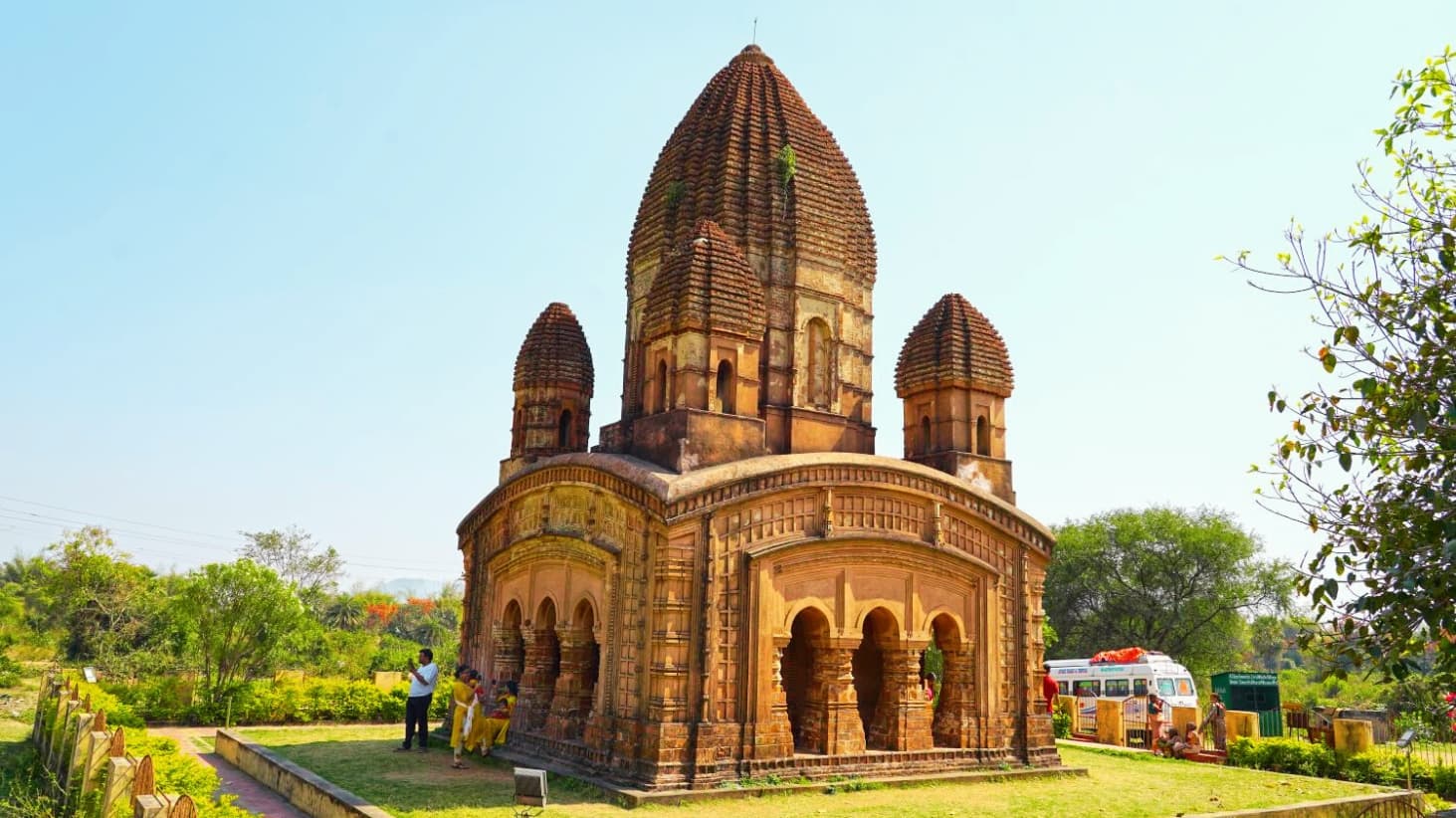
The 5-pinnacled terracotta temple at Garh Panchakot.
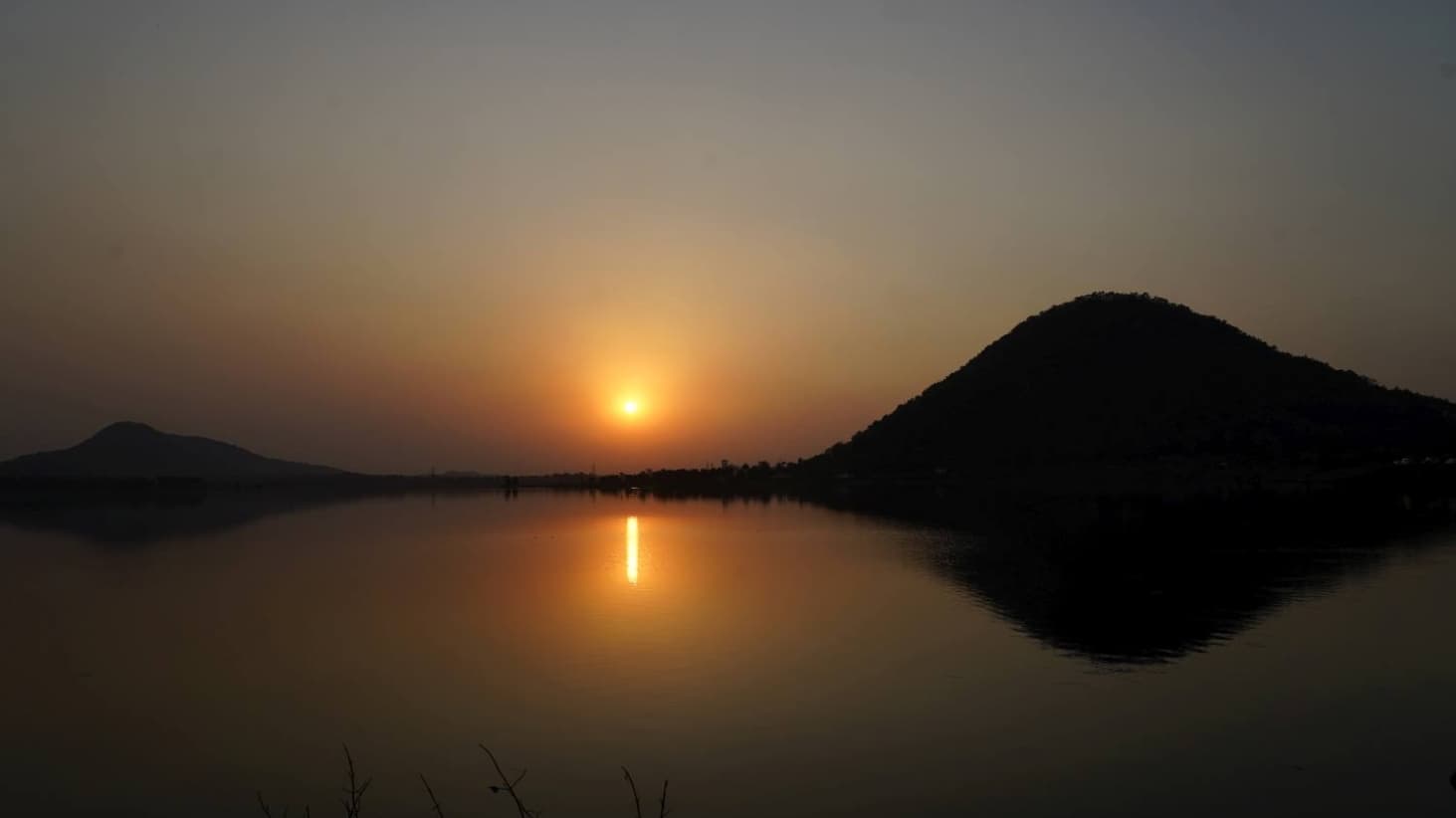
Sunset at Baranti Lake.
The palash trees came into their own on the road to Garh Panchakot, with branch after branch heavy with bloom. The finest window for witnessing this spectacle runs from the second to the fourth week of March and we arrived at the start of that period. At Garh Panchakot itself, we worked our way through the heritage complex, skipping only the temple atop Panchet hills, which demands a strenuous climb. Near the main complex, a crumbling stone structure is believed to mark the site of the original Kalyaneswari Temple.
We returned to our guesthouse in Baranti for lunch, then headed out again in the afternoon to Baranti Lake, where the mesmerising sunset draws large crowds at this time of year. It did not disappoint.
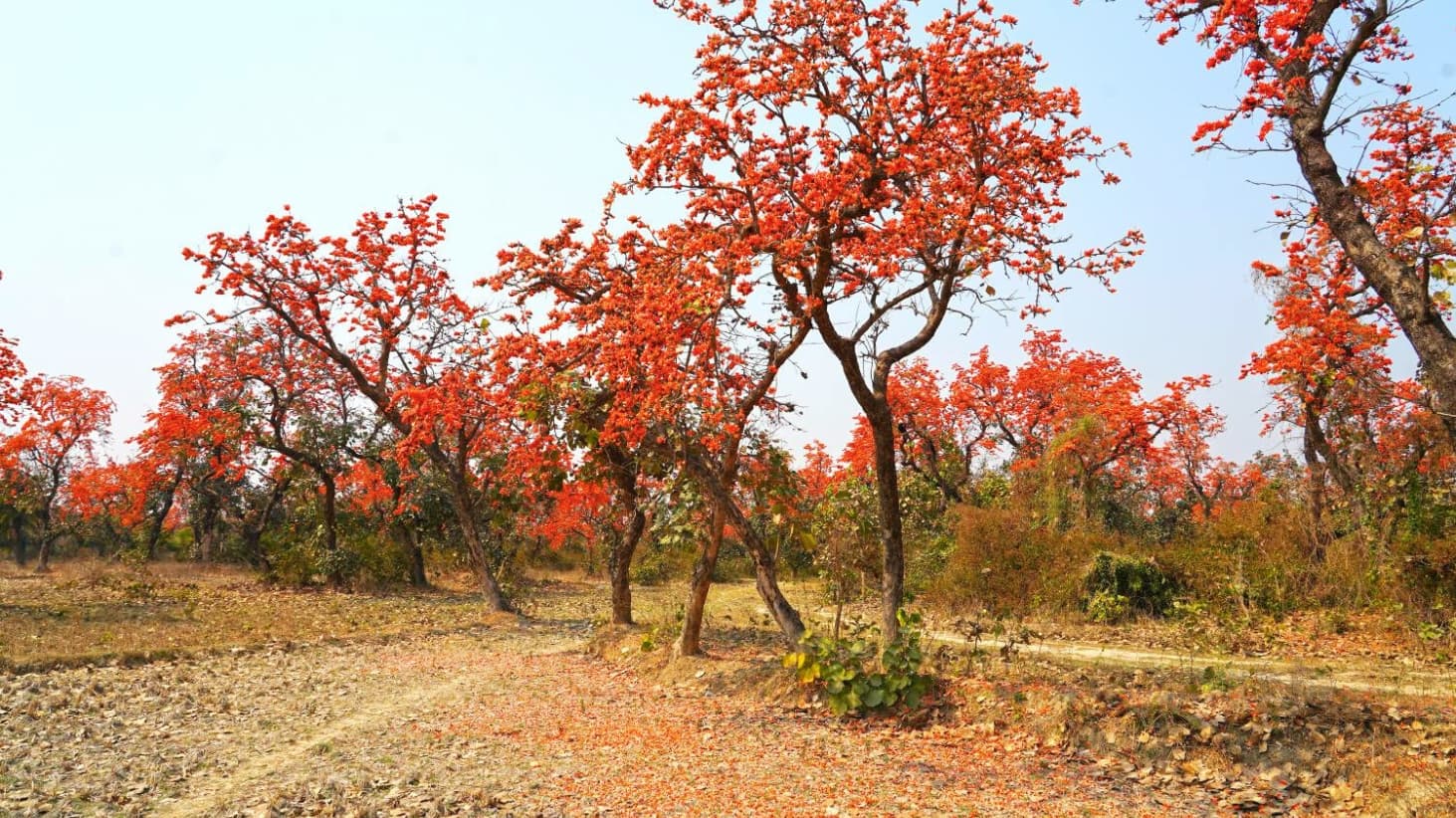
A cluster of palash trees.
After breakfast, we checked out of Baranti and set off towards Telkupi, with a planned stop at Achkoda along the way.
Telkupi, in the Raghunathpur subdivision of Purulia, was once a flourishing temple town on the banks of the Damodar. Known in earlier times as Tailakampi, it served as the capital of a local ruler named Rudrasikhara in the 11th century. Under the Pala dynasty, between the 8th and 12th centuries, it grew renowned for its Jain and Hindu temples, whose intricate carvings spoke to a refined tradition of sacred artistry. By the 1870s, British archaeologist J.D. Beglar had documented over 40 temples at the site.
In 1959, the construction of Panchet Dam brought an end to all of that. Rising waters swallowed the complex, and today only three temples remain even partially visible above the reservoir. Two can be reached by country boat throughout the year; the third reveals only its topmost section during the height of summer.
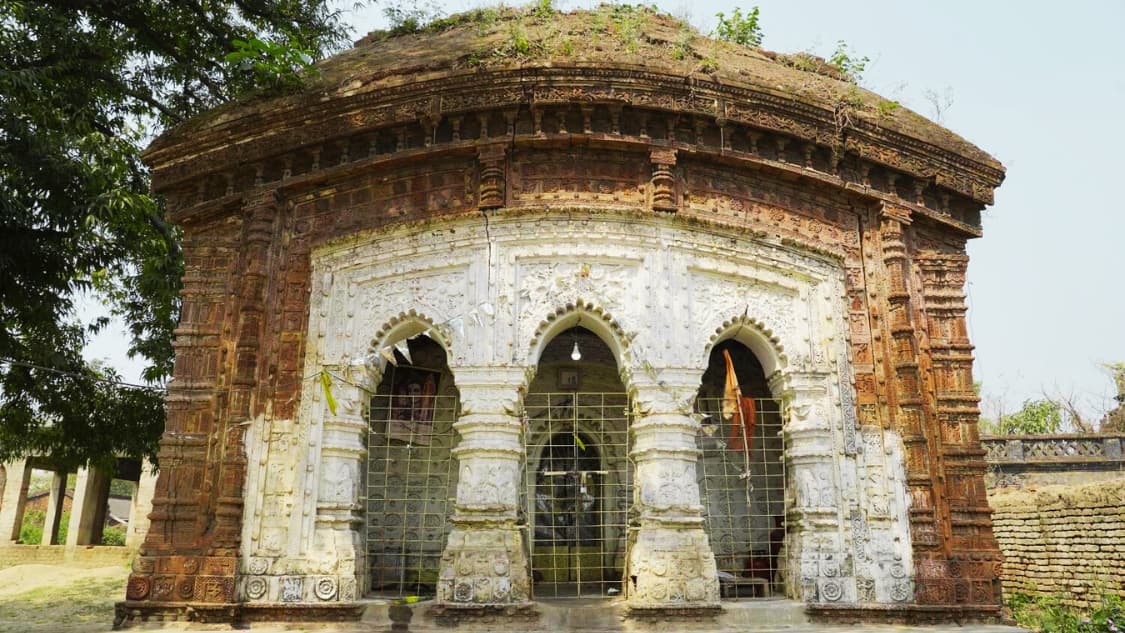
The Charchala Raghunath Temple
Achkoda is a non-descript village under Neturia CD block in the Raghunathpur subdivision of Purulia. It is known for the Charchala Raghunath Temple, which is arguably the most beautiful terracotta temple of Purulia district. There are two other charchala-styled temples inside the premises of Raghunath Temple.
We stopped first at the Achkoda temple complex, which left us with mixed feelings. The Charchala Raghunath Temple, stood intact, protected by the West Bengal Heritage Commission. But two of the memorial temples on the premises had collapsed during monsoon floods, reduced to rubble. The contrast was sobering.
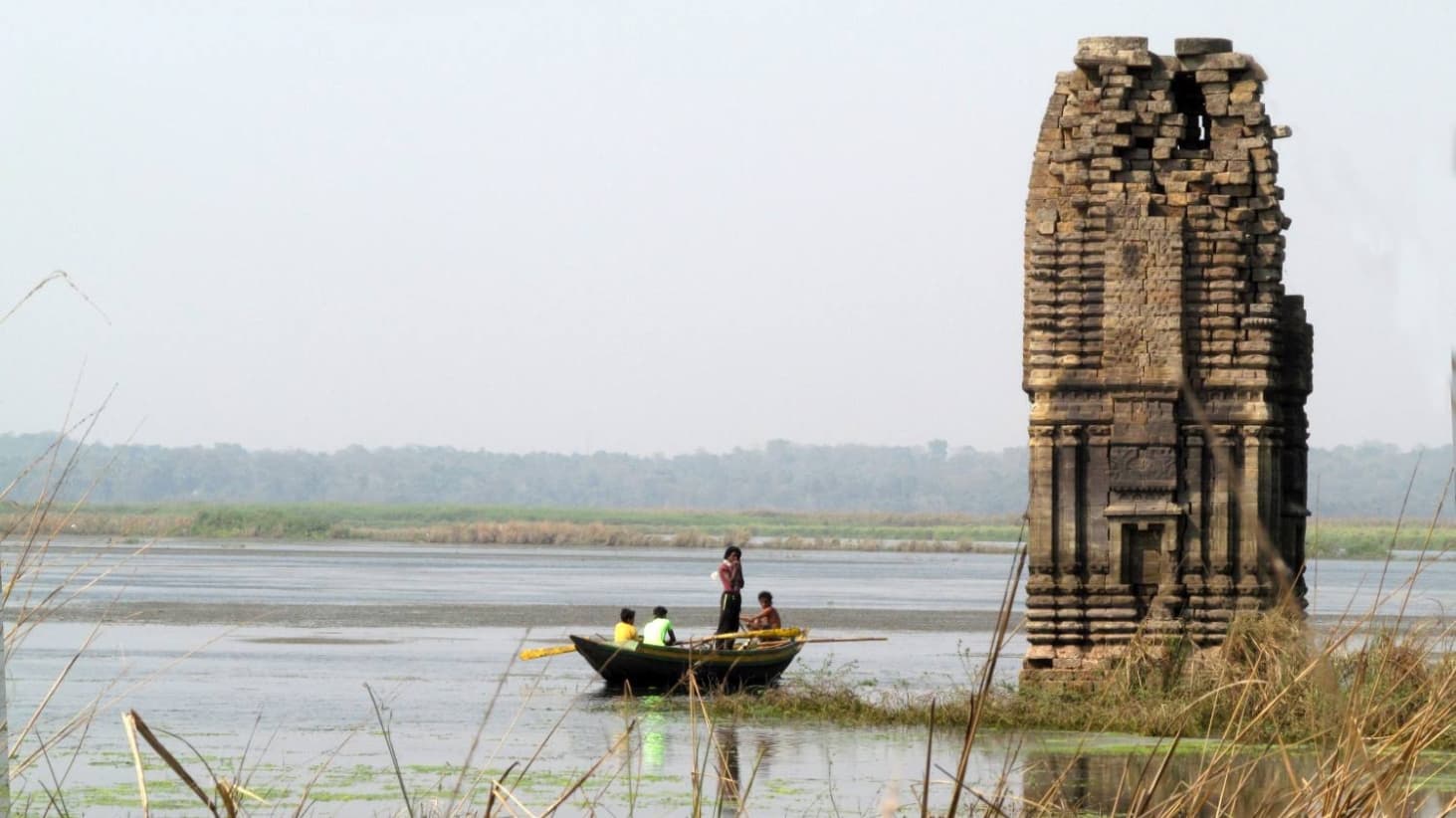
Boat ride to one of the submerged temples at Telkupi.
From Achkoda, we made our way to the Telkupi viewing points. The first is near the Bhairabnath Temple in Gurudih village, where deities rescued from the submerged temples have been housed. A village track leading north-west from there brings you to a deul-styled temple that rises from swampy ground, approachable on foot only when the surrounding water has receded completely. The second temple is accessed from Lalpur Ghat, where country boats can ferry visitors out to the ruins. At higher water levels, a single boat ride covers both temples, though boatmen must be arranged in advance. The main structure of the temple we visited was still standing.
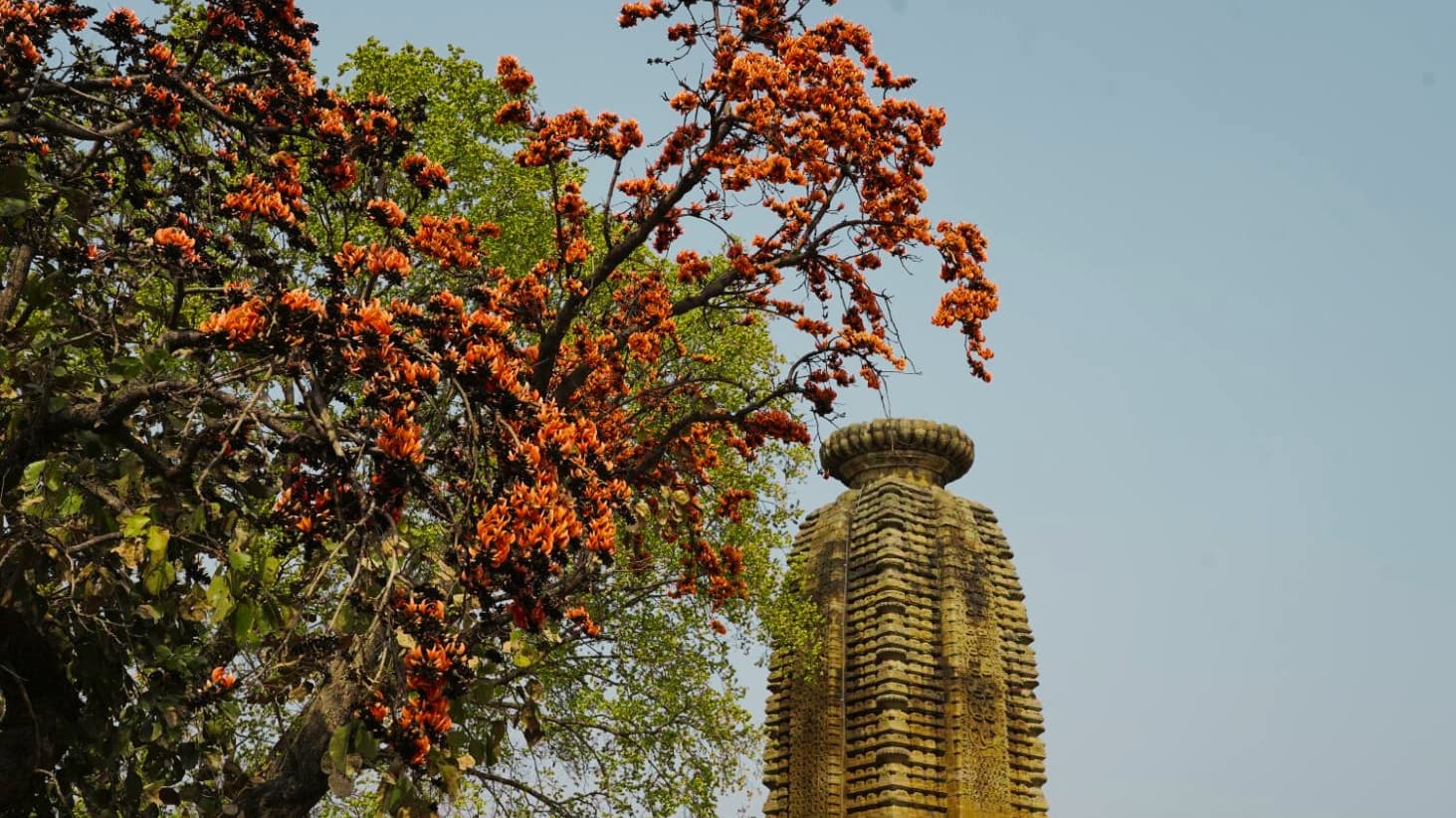
The Deul of Banda
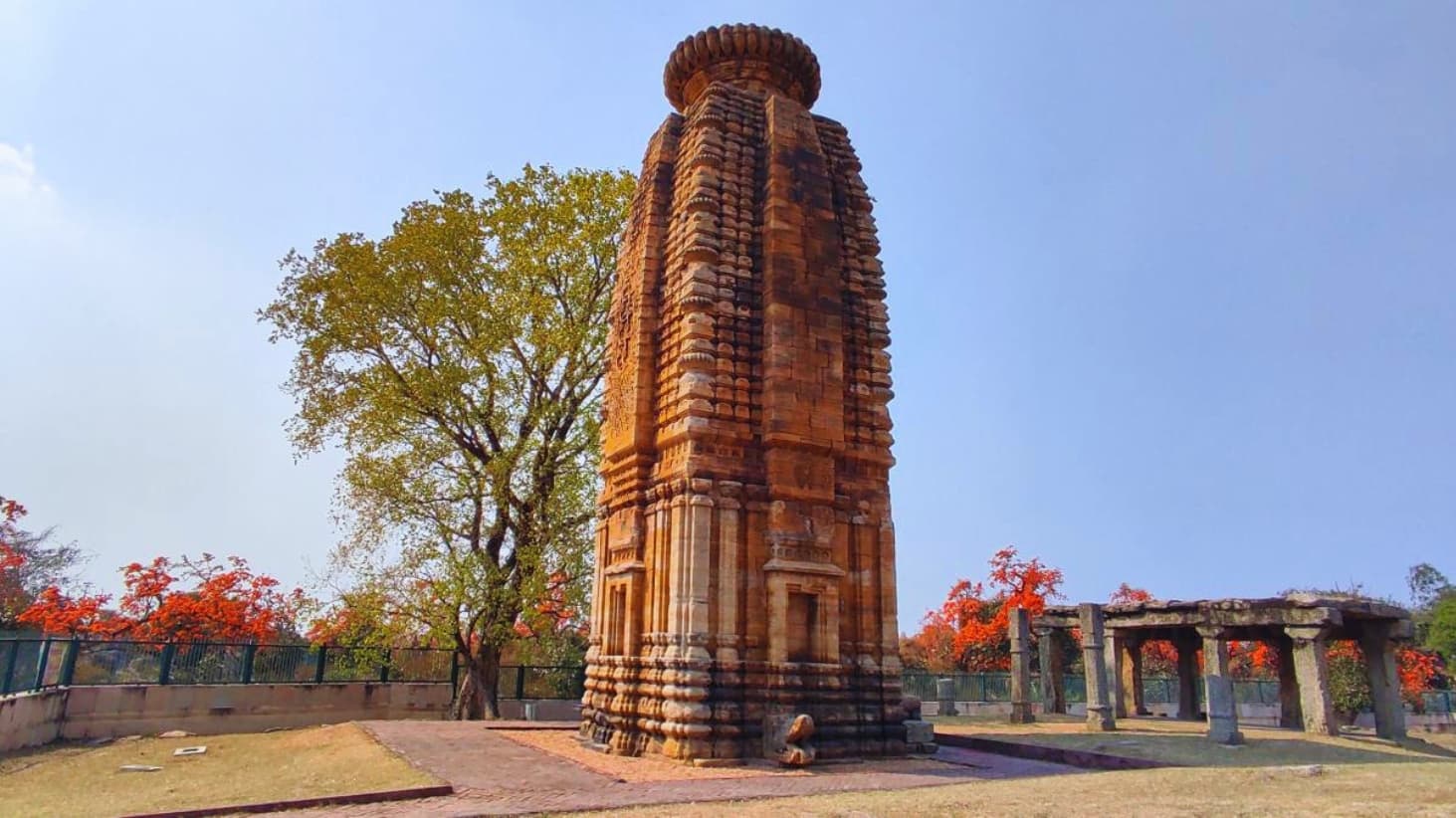
The Deul of Banda
Our next stop was Banda, home to the grandest deul temple in Purulia. The drive there was a feast in itself, with palash trees lining the road and their canopies blazing against the dry spring-blue sky. The temple is built entirely of stone, with a small pillared pavilion at its entrance, and its decorative carvings remain remarkably well preserved. The Archaeological Survey of India, which protects the site, has recently enclosed it. We slipped down a narrow earthen track beside the temple and found ourselves deep among palash trees, their petals carpeting the ground.
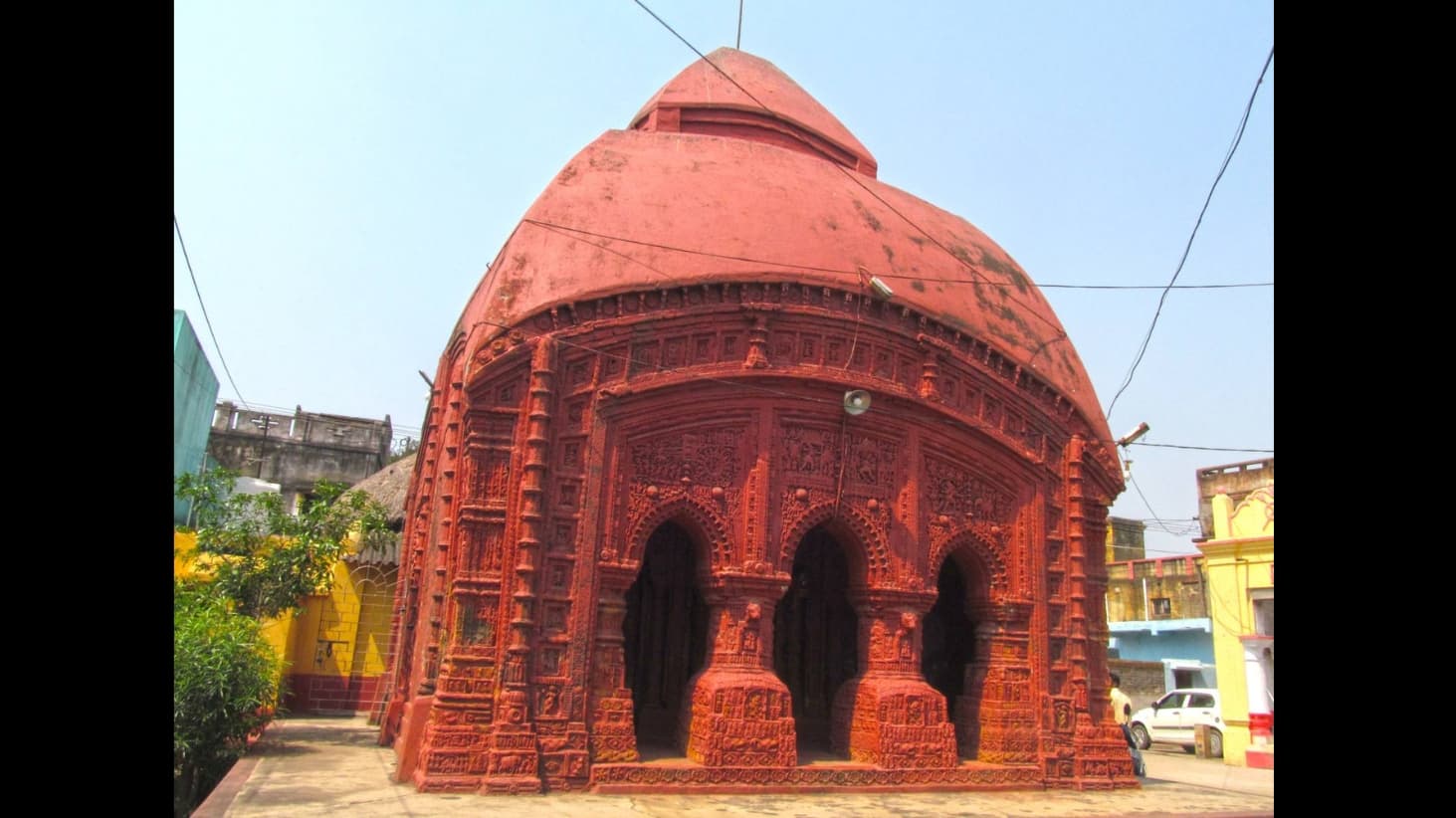
The Radha Binod terracotta temple
Our final stop was the Radha Binod terracotta temple in Cheliyama, about 3km north-west of Banda. Built in the aatchala style, it has unfortunately been repainted in recent years, a heavy-handed intervention that sits in poor contrast to the untouched elegance of Achkoda. Still, the terracotta panels along the triple-arched entrance are worth study: Koka Mukhi Kali, the battle of Ram and Ravan, the Raschakra and the vastraharan, all rendered with unmistakable skill.
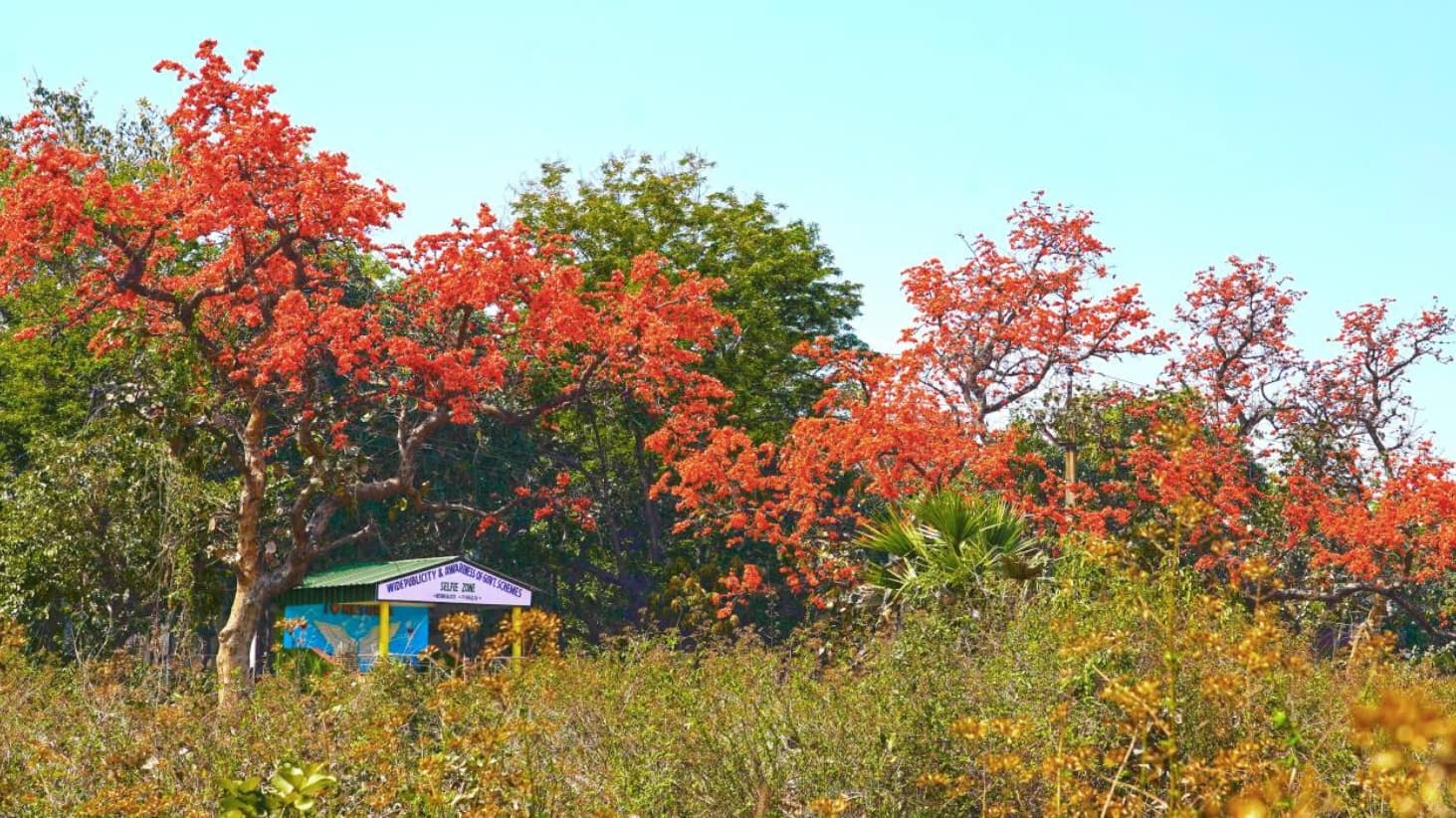
Palash flowers en route.
We left Cheliyama at around half past 2 and covered the 63km to Asansol in time for a late lunch, boarding the Gaya Vande Bharat Express back at a quarter to seven. A weekend dose of palash in bloom and ancient stone left us rejuvenated.
Best time to visit: Second to fourth week of March, for peak palash bloom
Base: Baranti offers convenient access to all sites across both days
Telkupi boats: Arrange boatmen at Lalpur Ghat ahead of your visit, as they are rarely available on the spot.
Explore “Gram Bangla” — swap the city's bustle for nature getaways
For treks, birdwatching or simply some quiet time

Palaces, museums, river cruises and a boutique hotel stay


