
A joint initiative by



 Published on 2025-09-06Updated on 2025-09-06
There is nothing quite like exploring a place on a two-wheeler. And, if you have your best buddy for company, then it becomes an experience to remember for a lifetime. The undeniable joy of slow travel and an immersive local experience was evident as Arijit Singh took Ed Sheeran around the narrow lanes of Jiaganj and Azimganj in Murshidabad for the video of their collaborative number Sapphire.
To recreate the Sapphire experience, hop onto the Hazarduari Express from Kolkata station (6.50am every day) and reach Murshidabad Junction at 10.20am or board the Sealdah-Lalgola MEMU (10.28am every day) and reach Murshidabad Junction a little after 2pm. If you prefer road travel, an AC Volvo bus ride would take you around six to seven hours while a car ride would take you less than five hours.
The twin towns of Jiaganj and Azimganj are around a half-hour’s drive away from Murshidabad town.

Walking through narrow lanes. (Still from Ed Sheeran's YouTube channel)
The alleyways of Jiaganj and Azimganj captured in the video of Sapphire offer a perfect balance of quaintness with bustle. Political slogans spray-painted on the walls, people enjoying leisurely adda sessions and architecture that references both a colonial and Mughal past remain untouched by time. If you enjoy slow walks where you can take in history, this is the perfect destination for you.
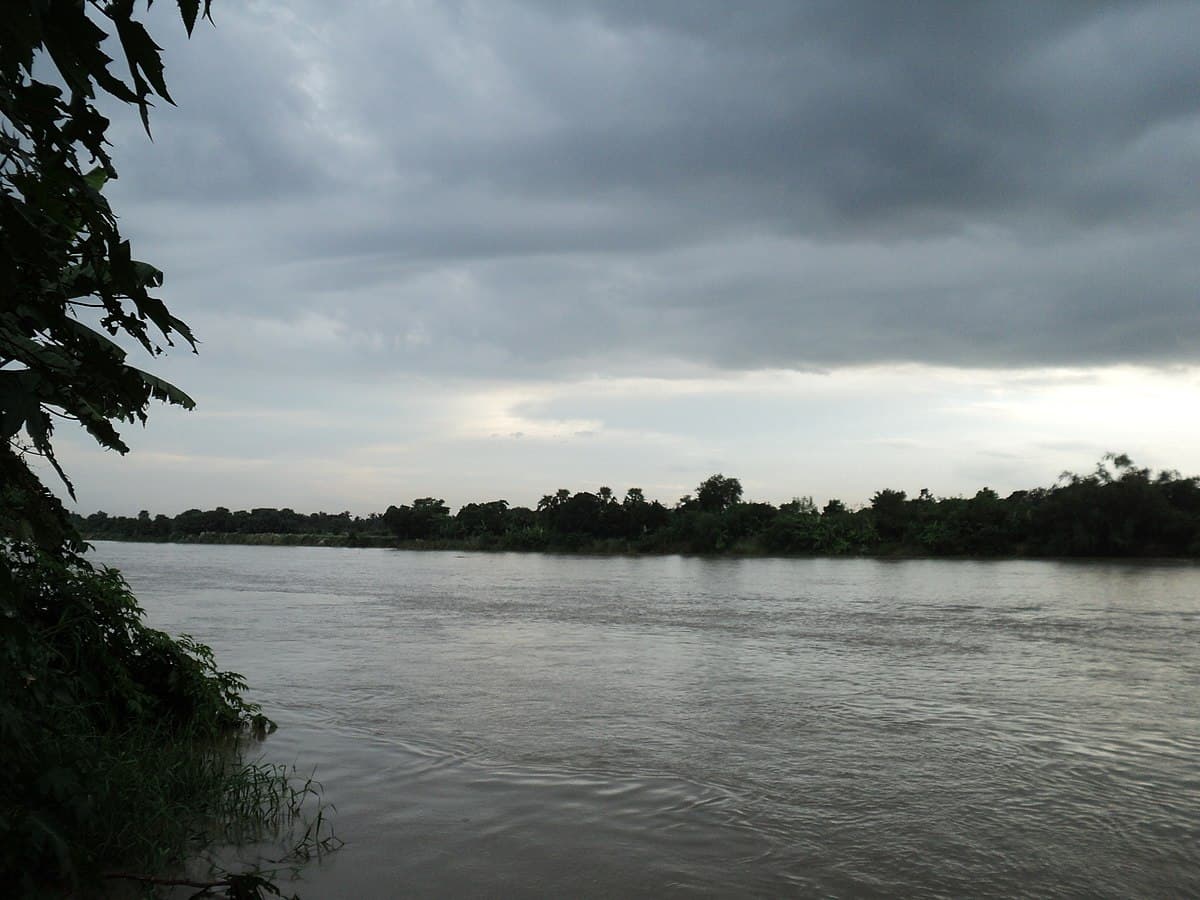
Enjoy a quiet cruise on the Bhagirathi river. (Picture by PP Yoonus, Wikimedia Commons)
Featured prominently in the music video is the Bhagirathi river. Jiaganj and Azimganj lie on opposite banks of the river and are connected by ferry. The proximity to the river had allowed trade to flourish in Murshidabad, bringing in business not just from England, but also Portugal and France. There are several cruises of varying durations on offer which allow you to enjoy the scenic beauty of the banks, soak in the sunset and history of the place. Check out Sampan River Cruise by Jalchhabi Hotel and Pandaw Cruise.
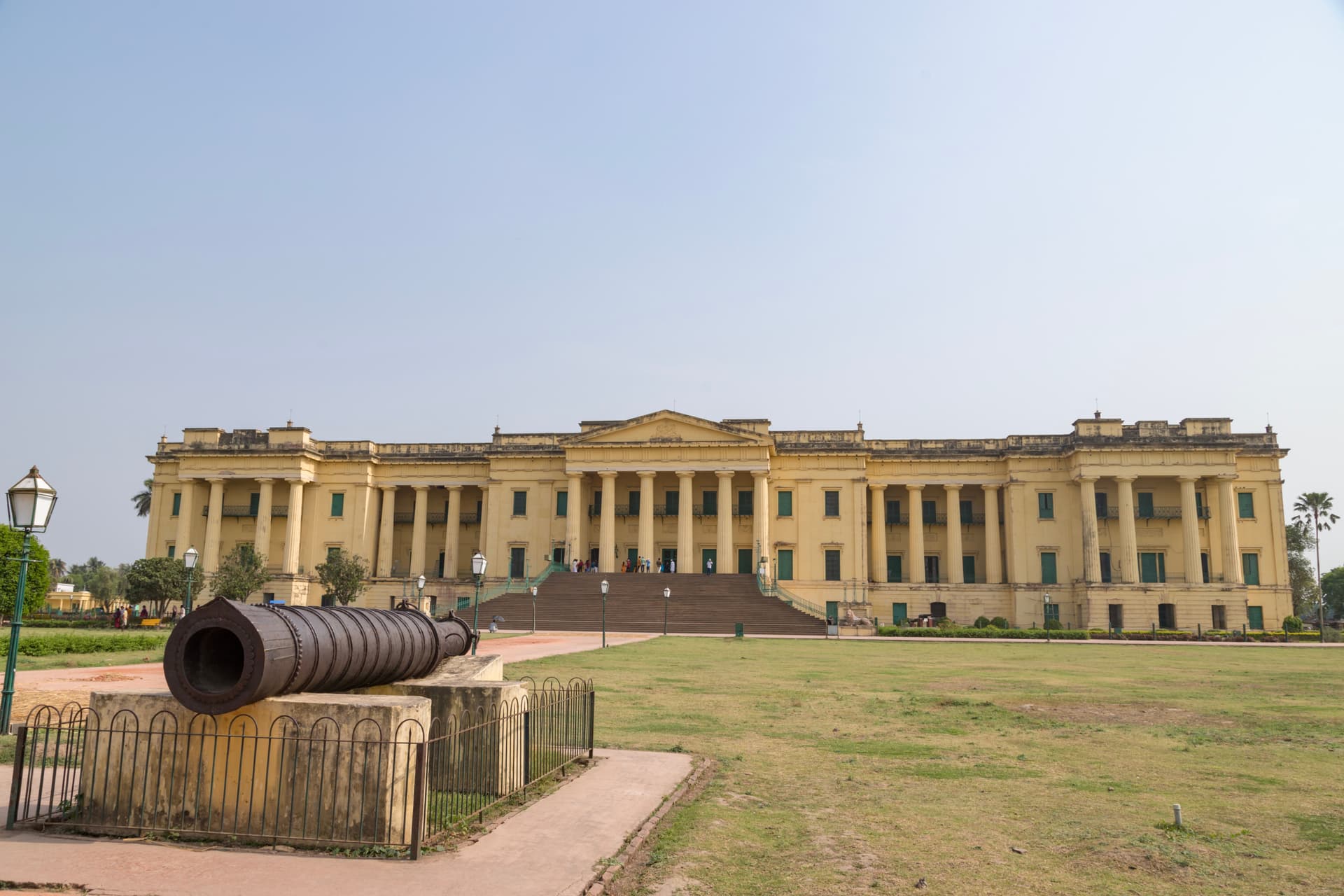
Hazarduari Palace in Murshidabad was built by Nawab Nazim Humayun in the 19th century. (Shutterstock)
If you are in Murshidabad, the Hazarduari Palace (palace of a thousand doors), around 40 minutes away from Jiaganj-Azimganj, is a must-visit. Fun fact: A hundred of the doors are fake to confound enemies and dacoits. The majestic 19th-century architectural marvel built by Nawab Nazim Humayun and designed by a Scottish architect now houses a museum with an exquisite collection of armour, paintings, rare books and ivory, porcelain and marble artefacts. The museum is open from 9am to 5pm and closed on Fridays.
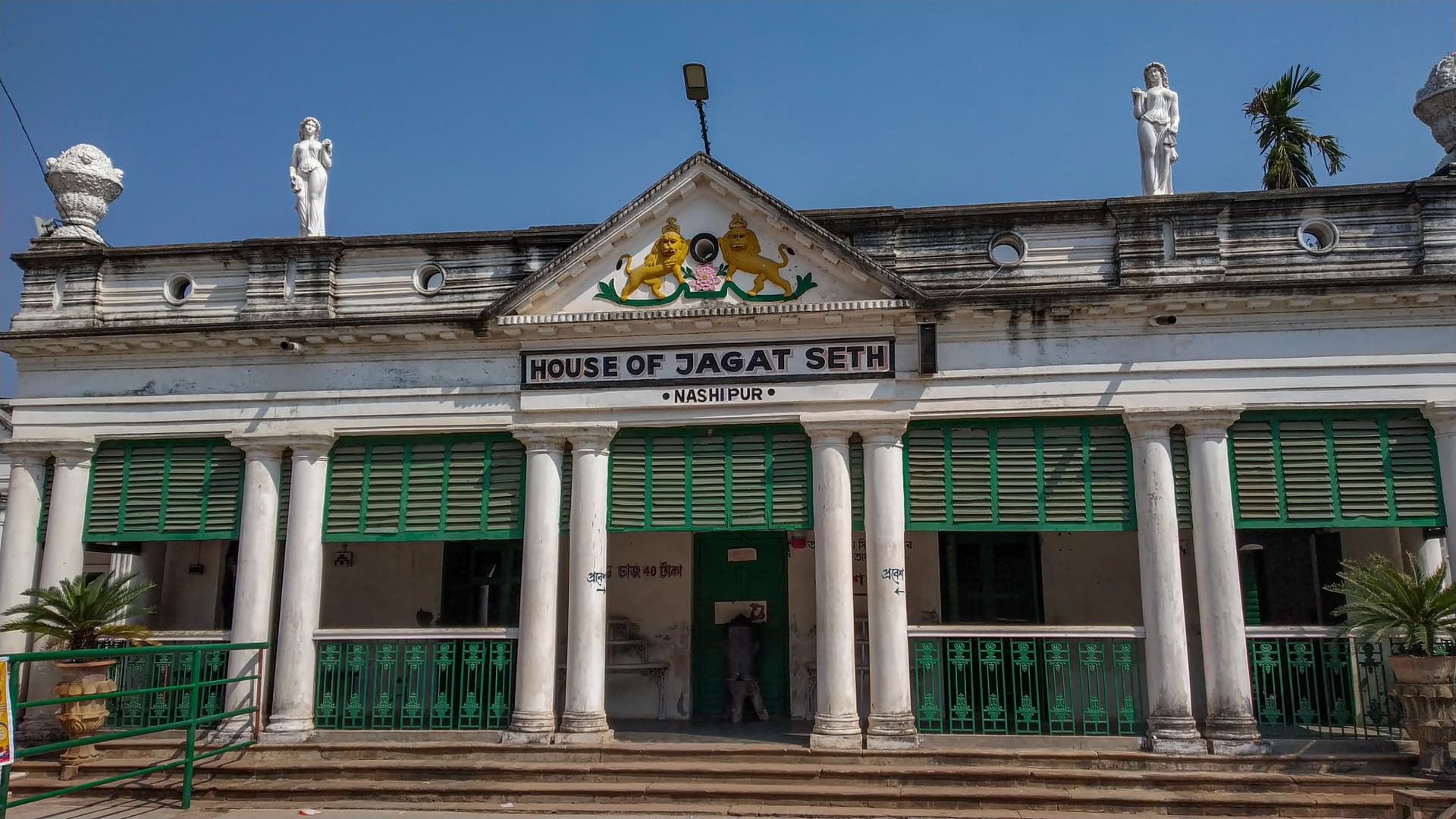
Browse the museum, explore secret underground tunnels and hidden chambers at the House of Jagat Seth. (Picture by Paramanu Sarkar, Wikimedia Commons)
Another notable address in Murshidabad is the House of Jagat Seth — home to a wealthy and influential merchant family of the 18th century who received the title Jagat Seth or Banker of the World. The family also played a key role in the political conspiracy against Nawab Siraj-u-daulah in the Battle of Plassey. Visitors can explore secret underground tunnels and hidden chambers, where once conspiracies were hatched. The mansion is now a museum with a huge collection of antique coins, muslin textiles and Banarasi saris embroidered with gold and silver threads.
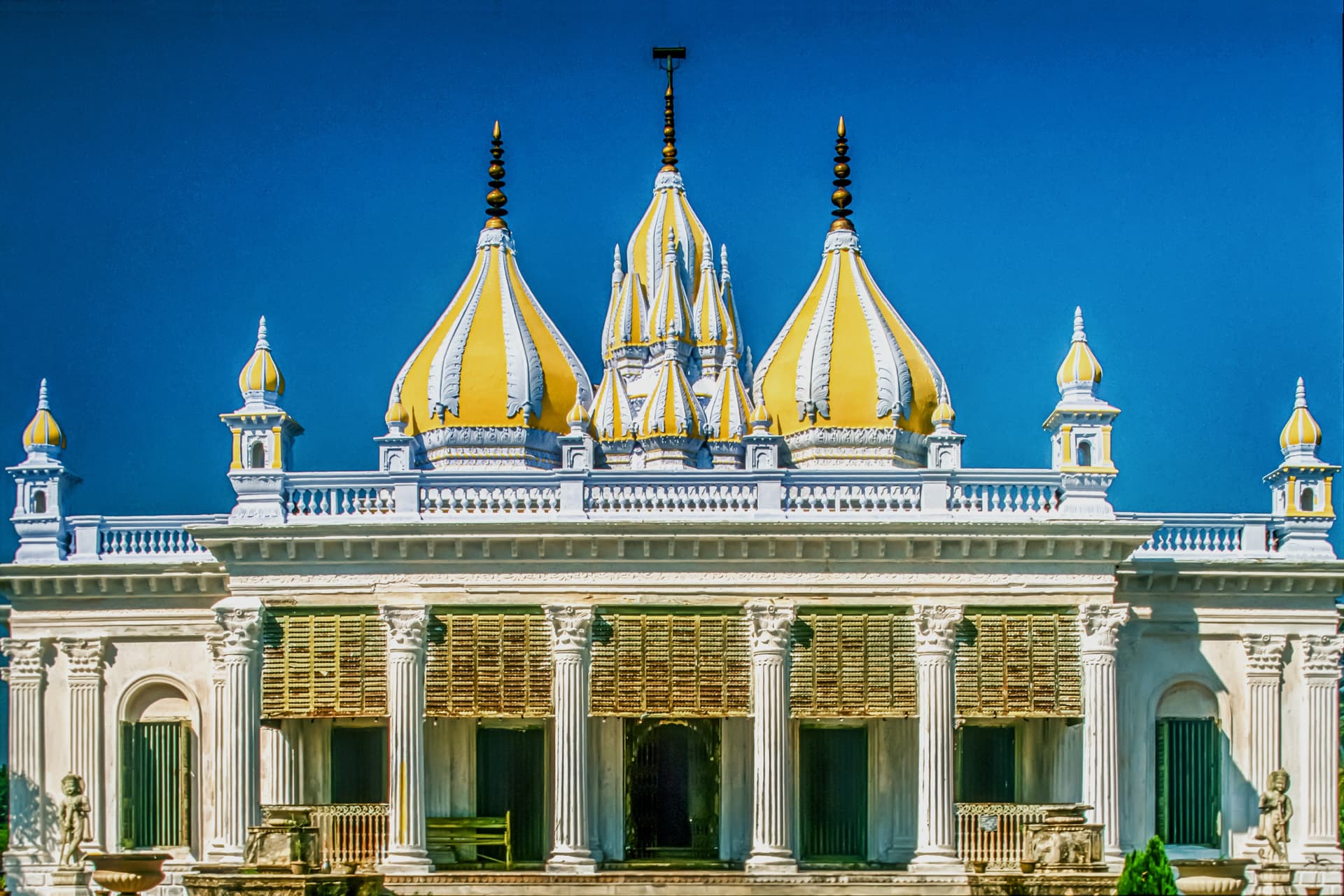
Jain temples in Murshidabad are a unique blend of Mughal, colonial and Jain architecture. (Shutterstock)
In the 18th century, these twin towns became a hub for the Jain community, with bustling trade and commerce. As a result, 14 Jain temples came up in Jiaganj-Azimganj, on either side of the Bhagirathi river. Owing to the cultural context of that time, these temples comprise a unique blend of Mughal, colonial and Jain architecture. Among the most beautiful ones are the Neminath Bhagwan Jinalay, which has three shikharas (spires) and French windows; the Chintamani Parshwanath Jinalay, which houses idols approximately 500 years old; and the Sambhavnathji Jinalay, which is the largest temple in the area with a massive idol.
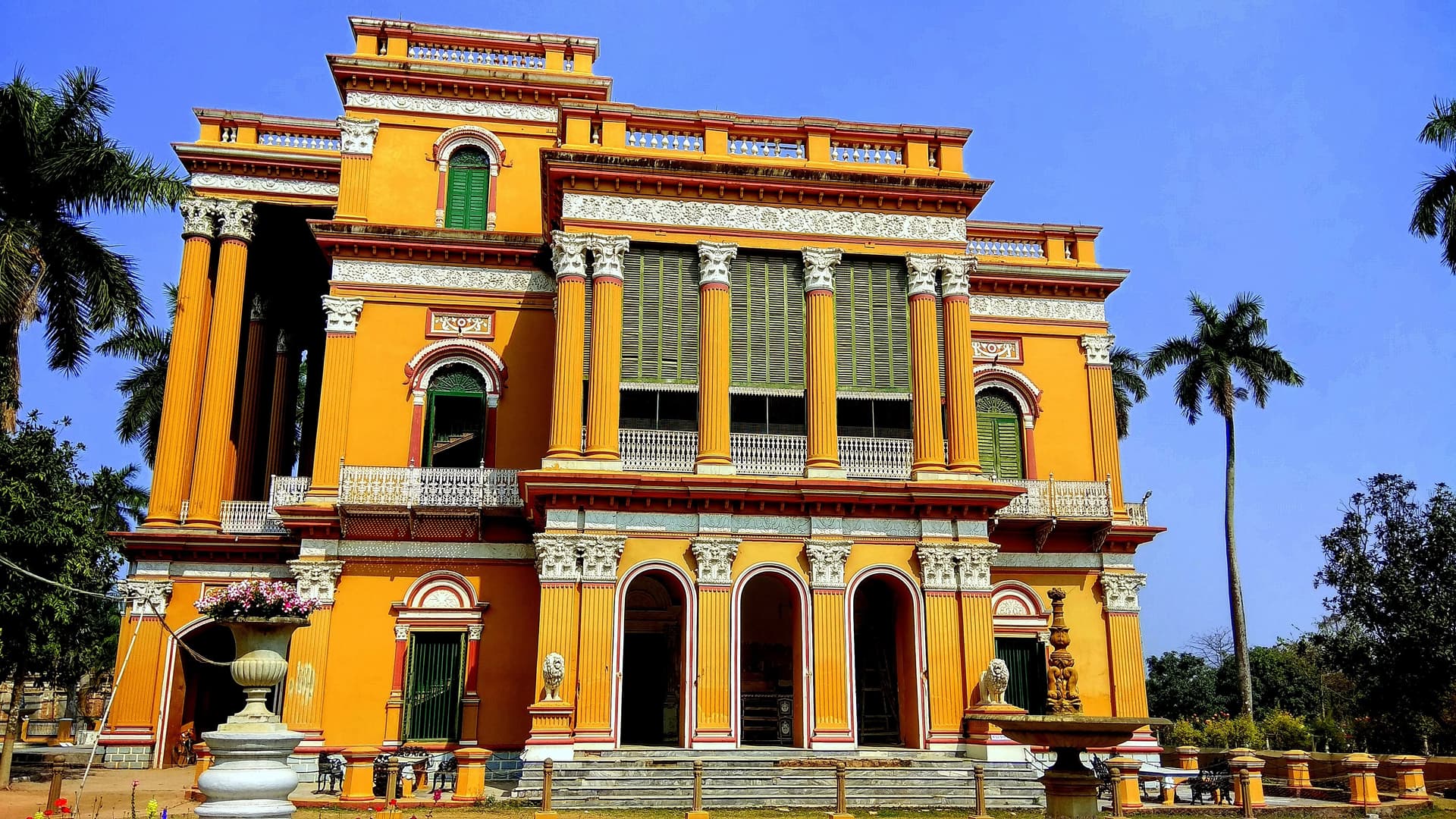
Kathgola Palace was built by the Dugar family in 1873. (Picture by Subrata Ghose, Wikimedia Commons)
The Kathgola Palace is another reminder of Murshidabad’s Jain legacy. Built by the Dugar family in 1873, this palace marries art and architecture with its sprawling gardens, elaborate facade and celebrated history. It owes its name to the wooden roses (kath golap) that once adorned it. The palace boasts ornate art pieces from around the world, like Victorian lions, a statue of Michelangelo and cast iron chairs. It also has a number of Hindu and Jain temples on its premises and apparently also had a zoo at one point. If you’re interested in exploring the power wielded by Murshidabad’s rich, the Kathgola Palace is the place to start!
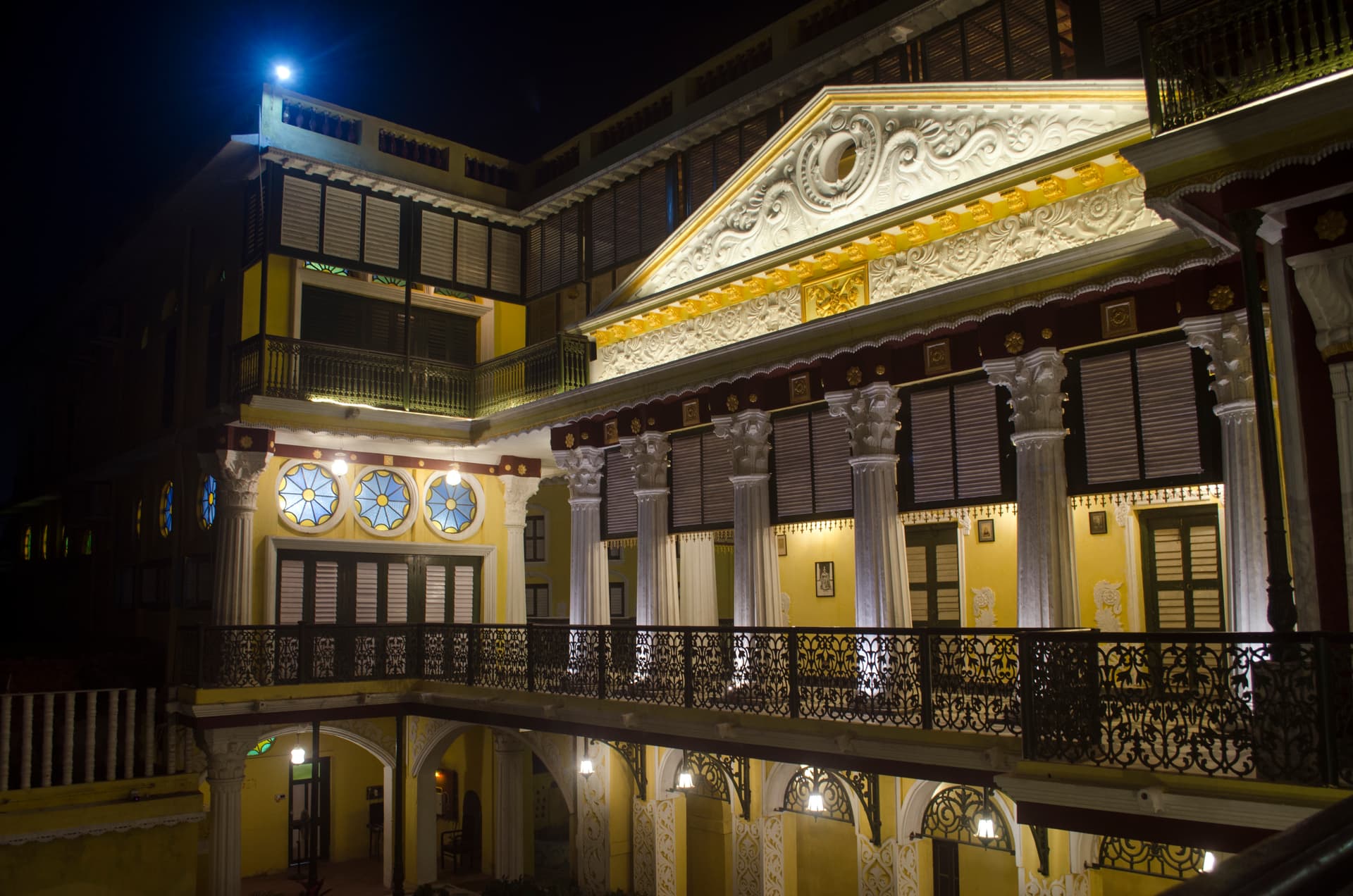
Put your tired feet up at the luxurious Bari Kothi. (Picture by Rangan Datta, Wikimedia Commons)
The prosperous history of Murshidabad calls for a regal stay option. Bari Kothi, the heritage hotel on the banks of Bhagirathi river in Azimganj, gives you a taste of what it is like to live in true luxury. The 18th-century mansion was built by the Dudhoria family, part of the Sheherwali community who made Murshidabad their home and lived in opulence. The house had fallen into ruin before it was restored a decade ago and transformed into a magnificent hotel. Guests get to enjoy the experience of living in an 18th-century mansion, which has preserved its essence from the antique furniture to the ornate carvings. The hotel also packs in several boutique experiences, including storytelling sessions, stargazing, tea on the riverbank, live baul music and a tour of a nearby weavers’ village. If you want to feel like Jiaganj-Azimganj’s royalty, a stay at Bari Kothi needs to be on your list!


