
A joint initiative by



 Published on 2026-04-03Updated on 2026-04-03
When it comes to looking for a mountain getaway in North Bengal, most visitors choose Darjeeling. Its famous tea gardens and well-known landmarks have become time-tested staples that never disappoint. But beyond Darjeeling’s bustling town life, there are equally rewarding places waiting to be explored.
Pedong is one of them — quieter, unhurried and with a distinct character of its own.
Nestled in the hills of West Bengal, Pedong is a small town within the Kalimpong subdivision, resting at an elevation of around 1,240 metres (4,070 feet), close to the Sikkim border. It takes its name from a centuries-old pine tree — “Pe” meaning pine and “Dong” meaning tree — that stands tall at the heart of the town. It is home to a number of fascinating spots, each offering its own glimpse into the town’s heritage.
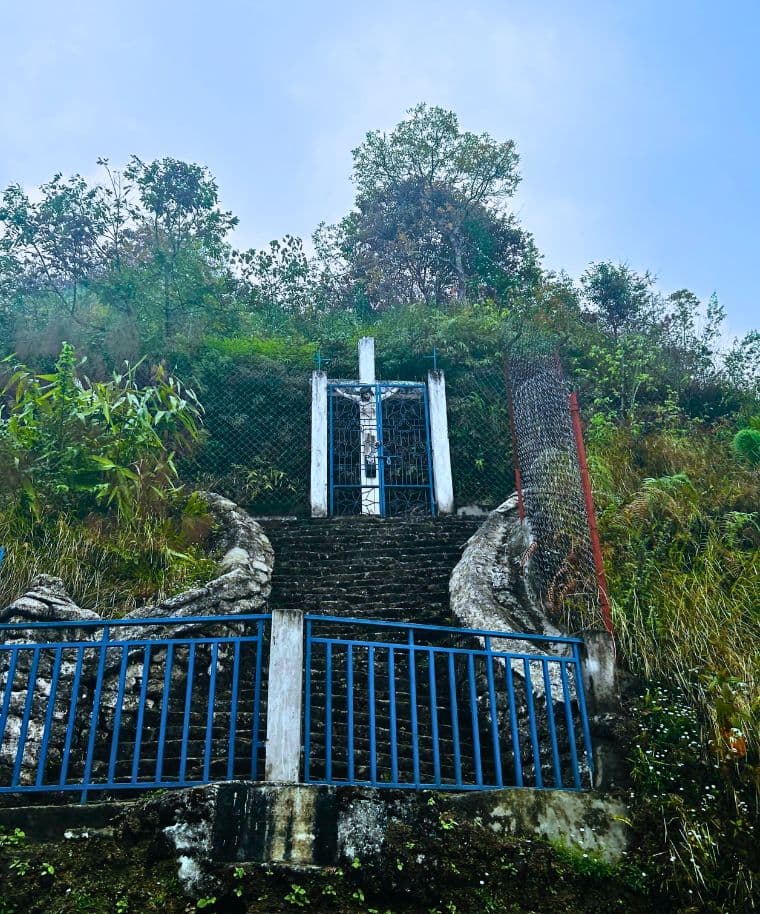
Cross Hill is named after a crucifix constructed by Christian missionaries who once unsuccessfully attempted to reach Tibet. (Picture by Ronald Tamang)
Cross Hill is a well-known pilgrimage spot that invites visitors to pause and reflect. The site is named after the sacred crucifix that crowns its summit, constructed by Christian missionaries who once attempted to reach Tibet but were unable to complete their mission. They left behind this crucifix, now facing towards Tibet, as a symbol of their faith and perseverance. Beyond its spiritual significance, Cross Hill also serves as a window to a breathtaking view of Kanchenjunga.
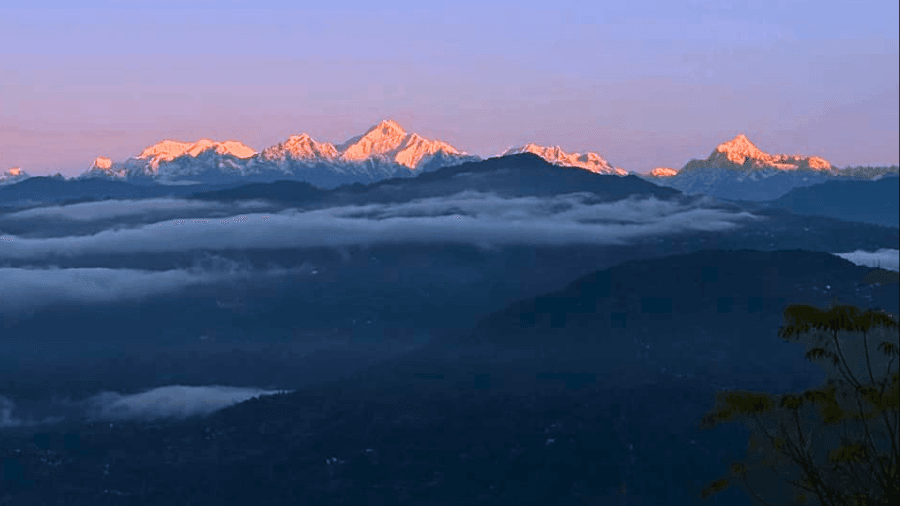
A blazing Kanchenjunga glimpsed from Milan Top. (Picture by Ronald Tamang)
Perched at an elevation of about 4,880 feet, Milan Top is one of the less trodden destinations in Kalimpong district. It is a newly discovered site that offers a striking view of Kanchenjunga in all its grandeur.
Walking along the trail built there, one can take in a panoramic view of the surrounding landscape — a lush alpine forest and, in the morning, a magnificent sunrise over the mountain peaks.
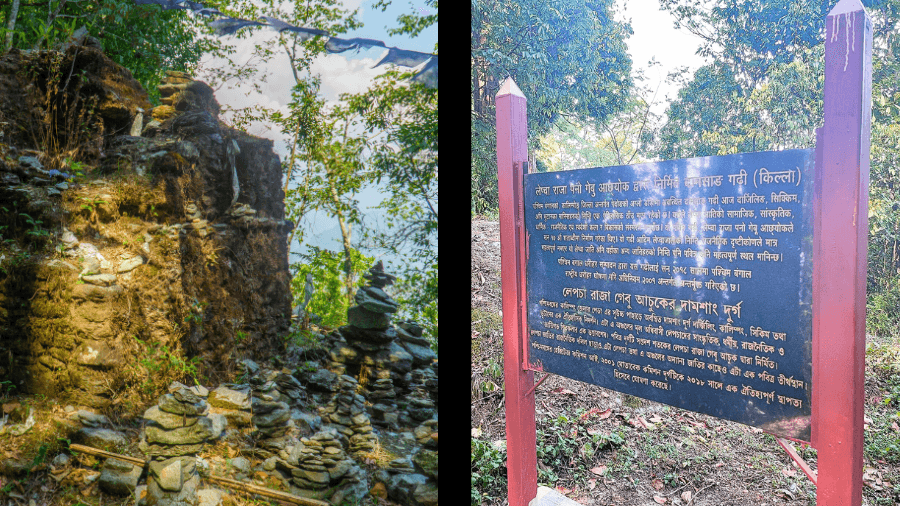
Ruins of Damsang Fort (left); a plaque describing the site's historic significance (right). (Pictures by Sumit Surai, Wikimedia Commons)
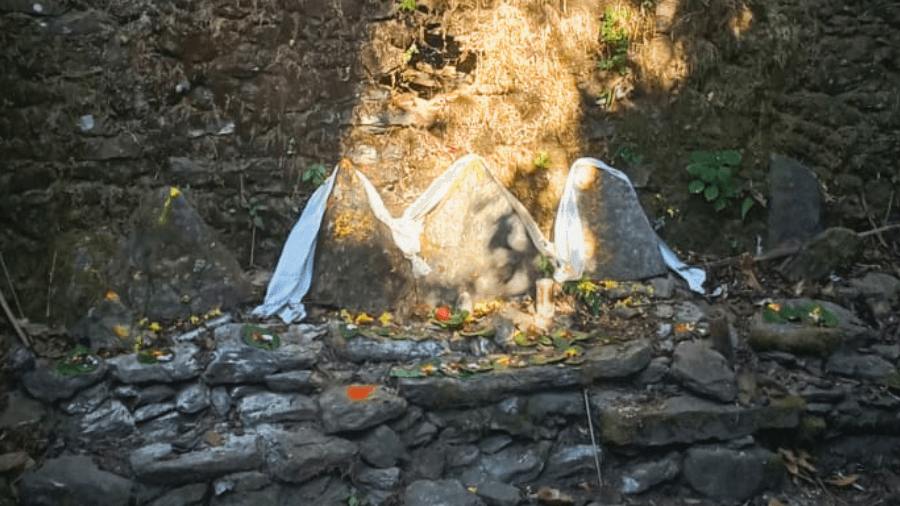
Offerings left at the site in memory of the last Lepcha King. (Picture by Ronald Tamang)
Locally known as Damsang Gadi, Damsang Fort is a historic 17th-century ruin situated on a ridge near Sillery Gaon. Built in 1690 by the last Lepcha king, Pano Gyabo Achuk, the fort served as a strategic defence against both the Bhutanese and the British. It was the centre of power for the Lepcha kingdom before being seized by the Bhutanese and subsequently by the British after the 1864 Anglo-Bhutanese War.
Today, visitors can explore the remnants of the fort’s old structures, including a stable, the king’s palace and a natural spring used by the queen, along with concrete platforms that were added later. The local Lepcha community holds an annual gathering in December to mark the birth anniversary of their king. The site was declared a heritage site by the West Bengal Heritage Commission in 2018.
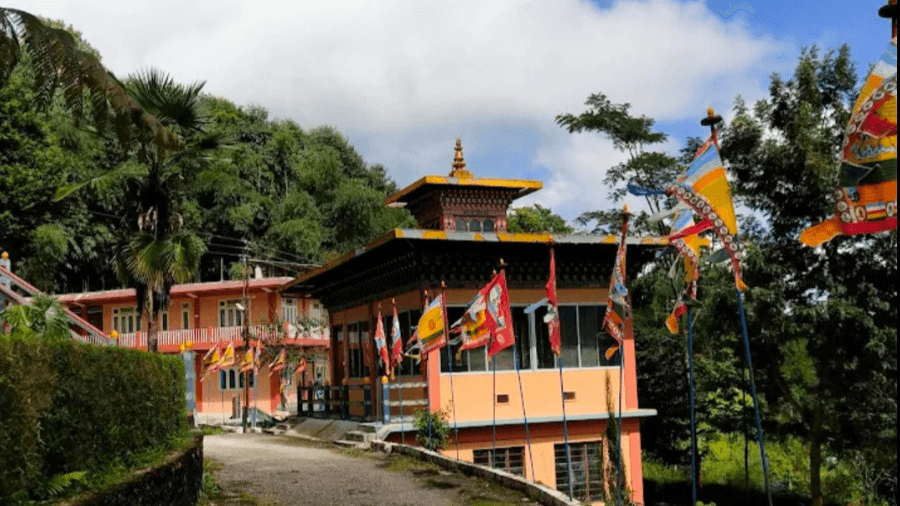
Pedong Monastery, with its fresco paintings and the mummified remains of a respected Bhutanese monk, is a major draw for Bhutanese visitors. (Picture by Ronald Tamang)
Also popularly known as Pedong Monastery, Sangchen Dorjee Monastery is a Bhutanese monastery on the outskirts of Pedong. Established around the early 1700s under the Bhutanese regime, it is a centuries-old treasure that provides an insight into the culture and traditions of the place and its surrounding areas. During the Anglo-Bhutanese War of 1864, the valuables from the now-ruined Damsang Fort were safeguarded here when the fort was demolished.
The best time to visit is in April or May, when one can witness the vibrant traditional Cham dance — the Mask Dance — and take in the rich cultural spirit. The monastery is also adorned with exquisite fresco paintings depicting Tantric Buddhism. Another significant attraction is the mummified remains of the last Shabdrung Rinpoche, the famous Bhutanese priest. The monastery has become a major pilgrimage site for Bhutanese visitors.
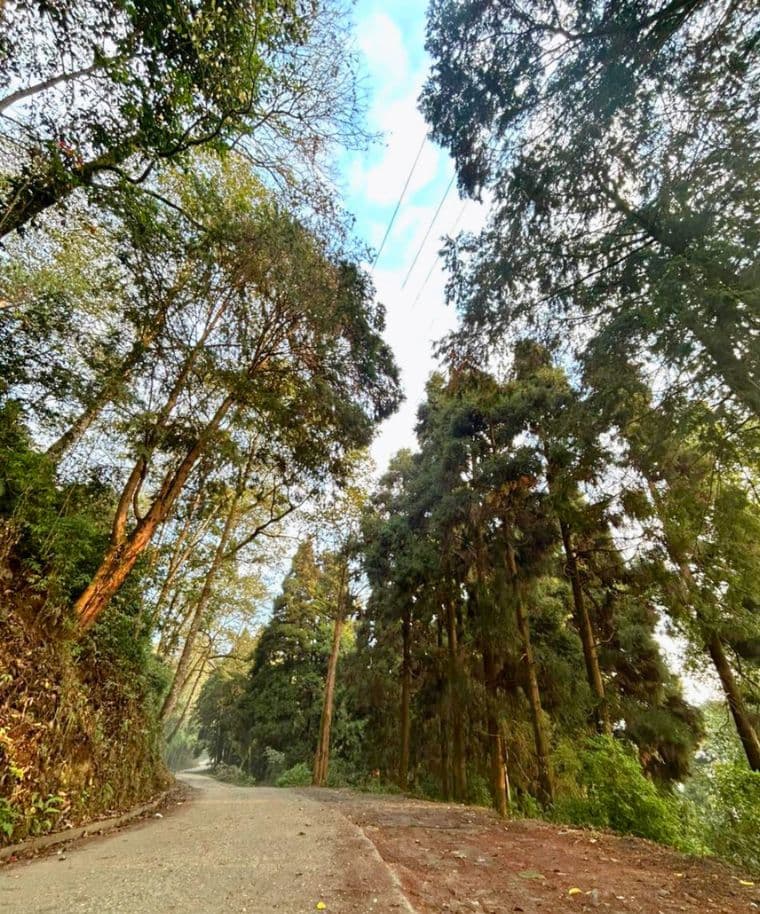
The path leading to the Silent Valley is as picturesque as the destination itself. (Picture by Ronald Tamang)
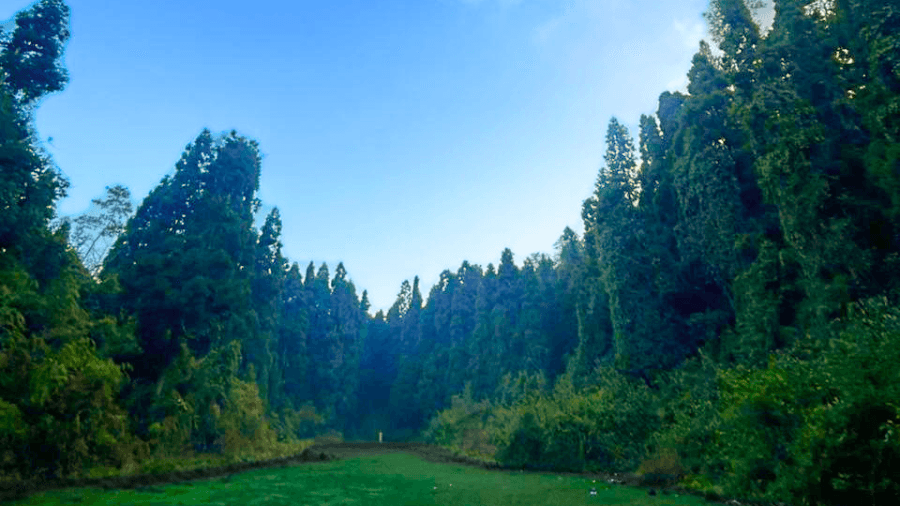
The lush meadow surrounded by towering pines is a perfect picnic spot. (Picture by Ronald Tamang)
Located just two kilometres from Damsang Fort, Silent Valley is a vast green meadow encircled by tall pine trees — a natural spot for camping and picnics.
It is a wide tract of green pasture where cattle come to graze. The only sounds that break the stillness are the soft whispers of the breeze and the distant chirping of birds. During the monsoon, the place transforms entirely: a verdant lake named Siyal Pokhari appears, shimmering with new life amid the lush landscape.
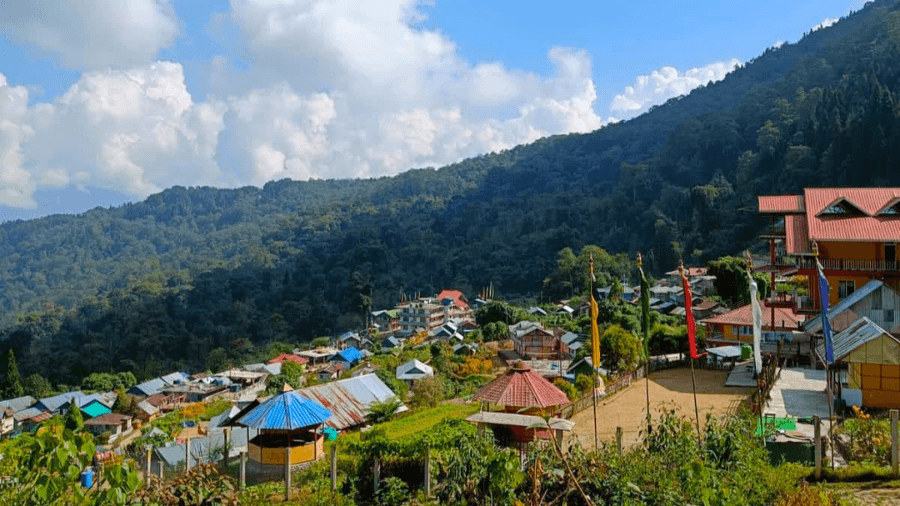
Sillery Gaon is often called ‘New Darjeeling’ due to its growing popularity. (Picture by Ronald Tamang)
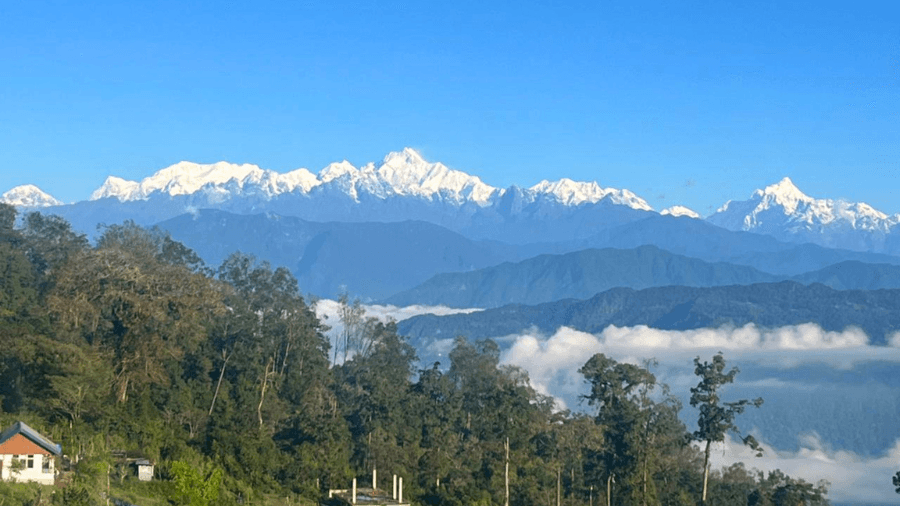
This village, surrounded by mountains and valleys, offers stunning views all year round. (Picture by Ronald Tamang)
Far beyond Damsang Fort and deeper still past Silent Valley lies Sillery Gaon, a picture-perfect hamlet hidden amidst dense woodland. Often referred to as ‘New Darjeeling’ due to its growing popularity among tourists, Sillery Gaon sits at an altitude of 6,000 feet.
This charming village draws its sustenance largely from tourism and its thriving homestay culture. For those worn by the loud and frenetic pace of city life, this is the sort of place where you can unwind the quiet seclusion of nature.
The village is surrounded by quiet mountains and lush valleys. It is a peaceful haven where one can connect with nature through slow-paced long walks and rediscover the joys of simple living.
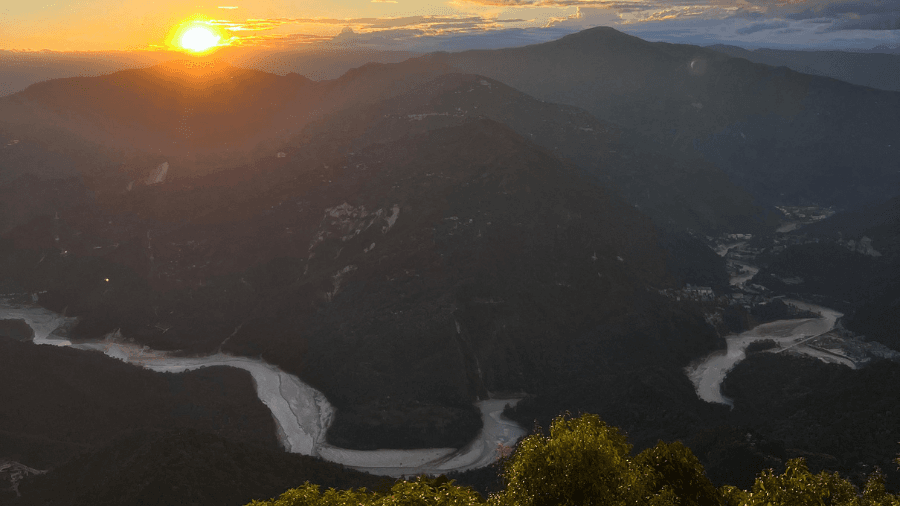
From this spot you can see the Kanchenjunga towering above and fourteen bends of the Teesta flowing below. (Picture by Ronald Tamang)
Ramitey Viewpoint, located just three kilometres from Sillery Gaon, can be reached by a short trek. It is one of the most stunning vantage points in the Pedong area and a highlight of the region’s tourism. From here, one can see Kanchenjunga towering above and the Teesta River flowing below at its own pace. With nearly fourteen bends visible at a glance, it offers perhaps the finest view of the Teesta in the entire region. On a clear day, the sweeping panorama stretches from Teesta Bazaar to Majhitar in Sikkim — the kind of view worth the trek on any clear morning.
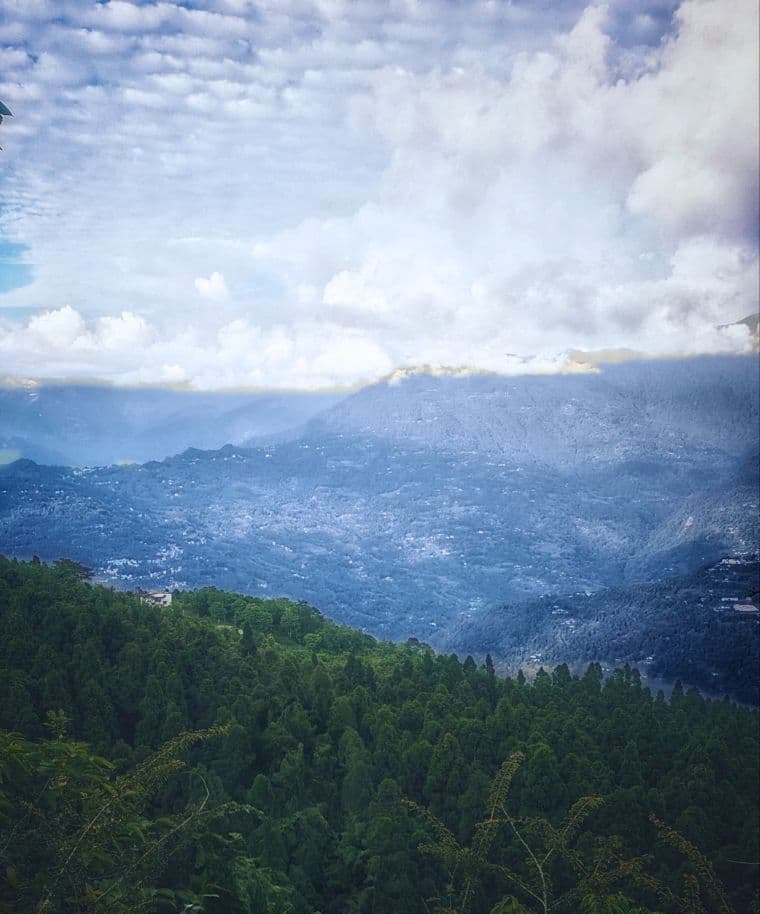
Tinchuley Viewpoint provides a 360-degree panorama of the Himalayas, the Nathula and Jelep La passes. (Picture by Ronald Tamang)
Tinchuley is one of the top viewpoints near Sillery Gaon. Any hilltop where three ridges meet tends to be referred to as Tinchuley by the locals. This particular one is the highest point in the region, with an excellent view of almost the entire mountain range of Darjeeling and Sikkim, including parts of Bhutan and Tibet. It is also an ideal hike along the ridge and provides a 360-degree panoramic view of the Himalayas, the Nathula and Jelep La passes. From this viewpoint, one can also admire the village of Kashyong, thick pine groves and terraced fields swaying with green paddy.
Nearest airport: Bagdogra (roughly 95 km away).
Nearest bus stop: Kalimpong (roughly 20 km away), is the nearest major bus stop.
Nearest train station: – New Jalpaiguri (NJP), the closest railway station.
You can take a private or a shared taxi from any of these places to reach Pedong by road.


