
A joint initiative by



 Published on 2026-02-04Updated on 2026-02-04
The name Gariahat is a simple nod to its past: “hat” meaning market and “Garia,” referring to the ancient settlement and creek this road once led to. Long ago, this stretch served as a vital link for traders moving goods into the heart of the city. Today, that legacy of commerce continues, though village paths have given way to a sprawling bazaar where one can buy just about everything imaginable.
To walk through Gariahat is to witness the rhythmic pulse of South Kolkata. It's a place where the scent of fresh marigold mingles with the aroma of deep-fried kobiraji and where the call of a hawker is often underscored by the crackle of a vinyl record. This route takes you from the academic quiet of Basanti Devi College to the bustling circle of Golpark.
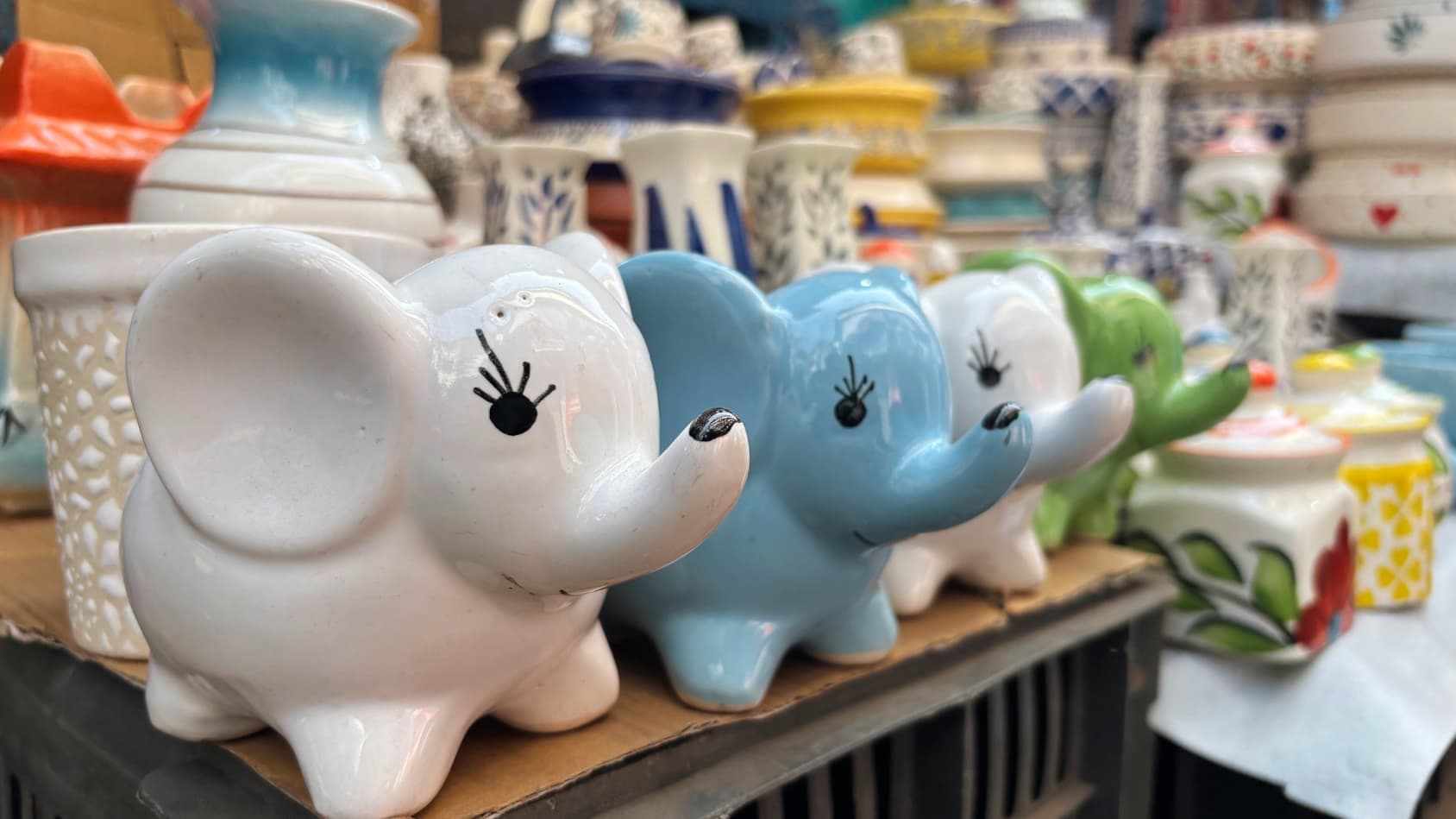
Ceramic elephant containers stand shoulder to shoulder.
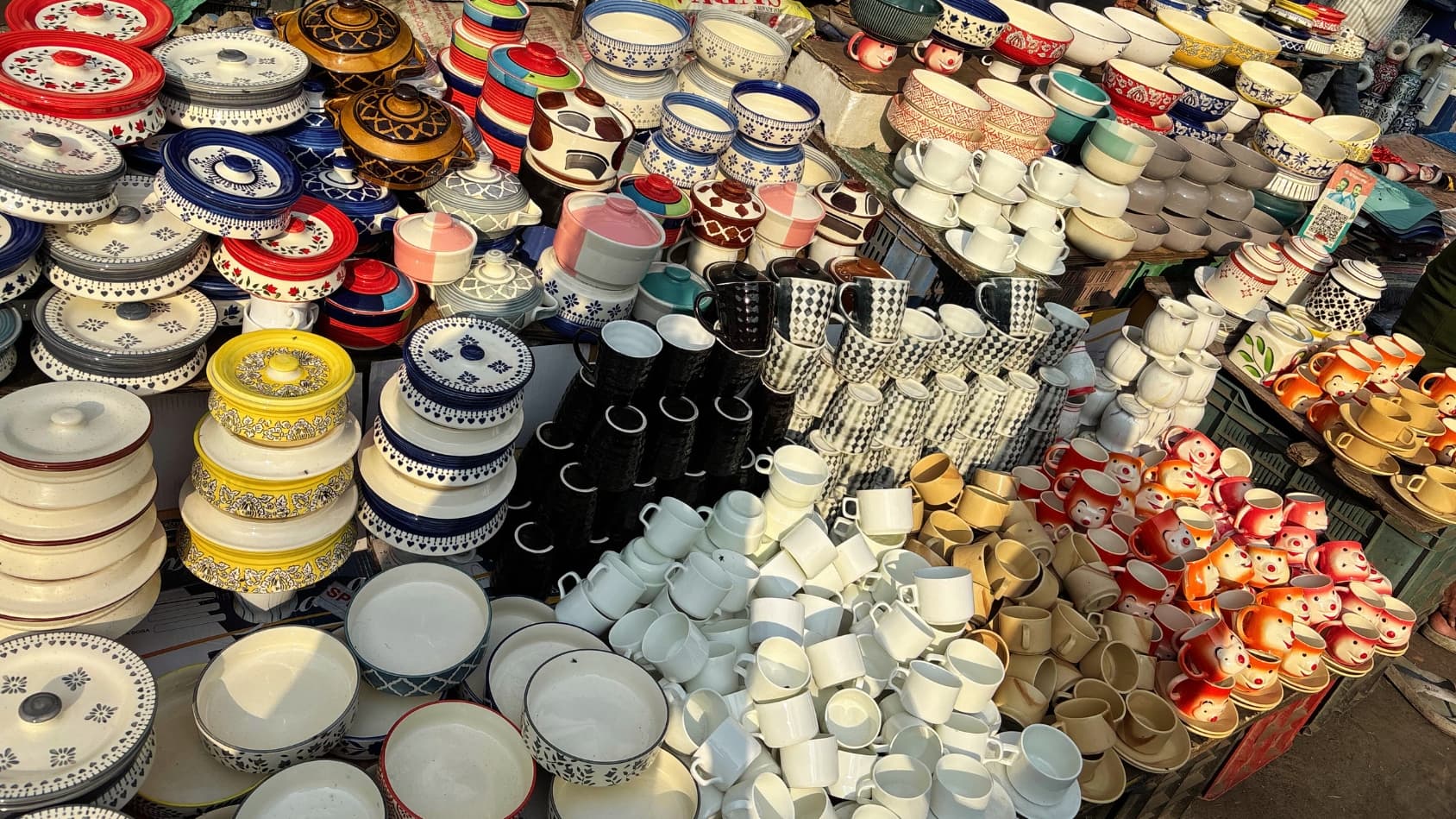
A riot of ceramic cups, bowls, and casseroles spills onto the pavement.
As I begin my walk around the corner of CitiStyle near Triangular Park, the first stalls pull me in with colour and utility. You can find ceramics starting at Rs 50, including cheerful blue and green bowls, geometric-patterned cups, quirky napkin holders, teapots, stationery stands and intricately designed vases. Stacked high and gleaming in the sun, the range moves from simple white dinner sets to hand-painted serving dishes, petite succulent planters, decorative vases and masala boxes with snug-fitting lids.
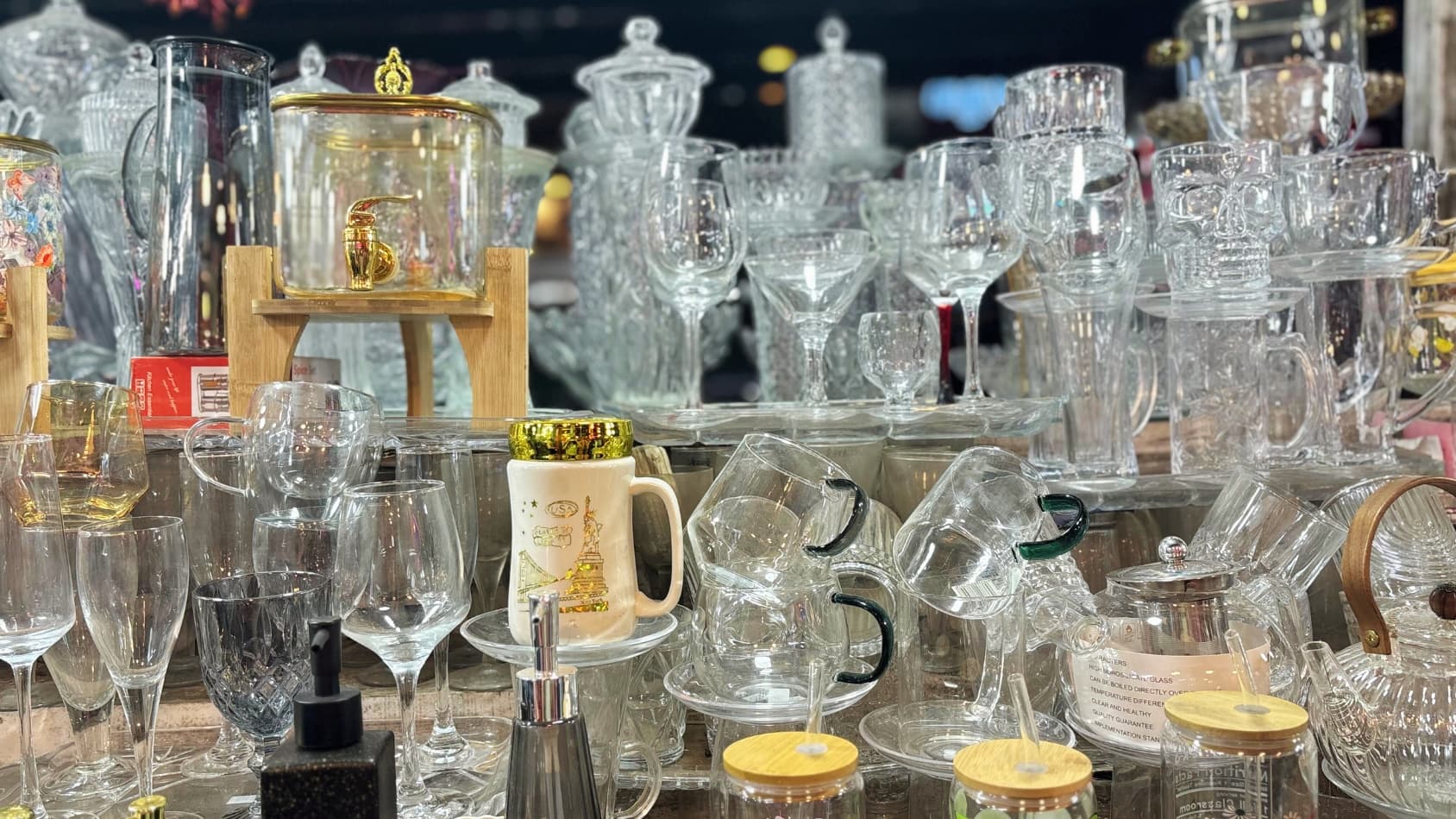
Glassware such as wine glasses, mugs and jars glints under shop lights.
Nearby, glass and wooden kitchenware sit side by side. Long-handled ladles, storage jars in every size, wooden serving spoons worn smooth with use and chopping boards in mango wood and sheesham fill the stalls. These are practical things, chosen with care, often by people furnishing a home slowly and adding pieces over months rather than buying everything at once.
Pro Tip: If you are buying ceramics, ask for full sets rather than individual pieces. Vendors are often happy to offer a better price when plates or bowls are bundled together.
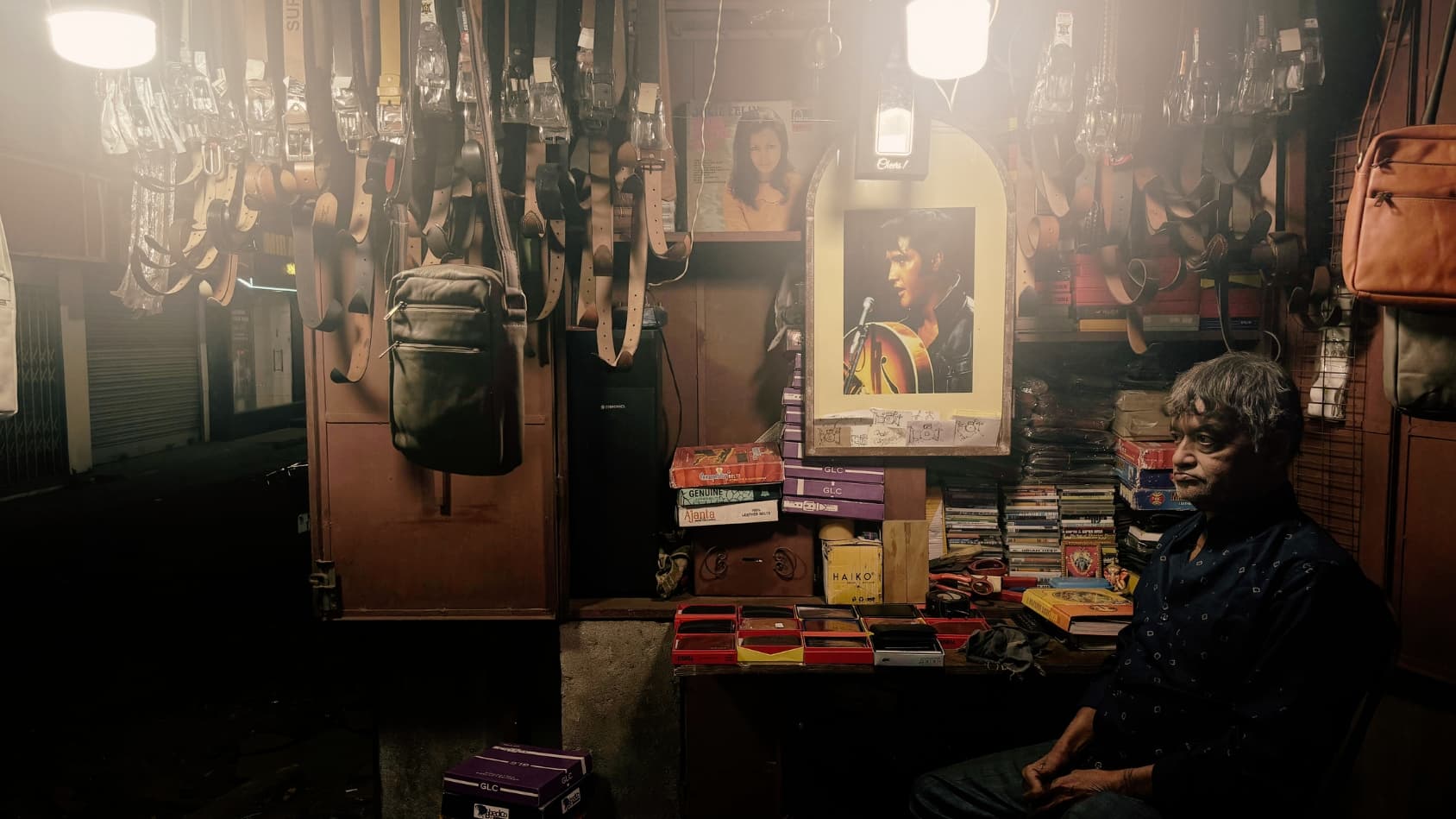
A gentleman sells rugged leather wallets, belts and sling bags alongside an unexpected collection of old cassettes and CDs.
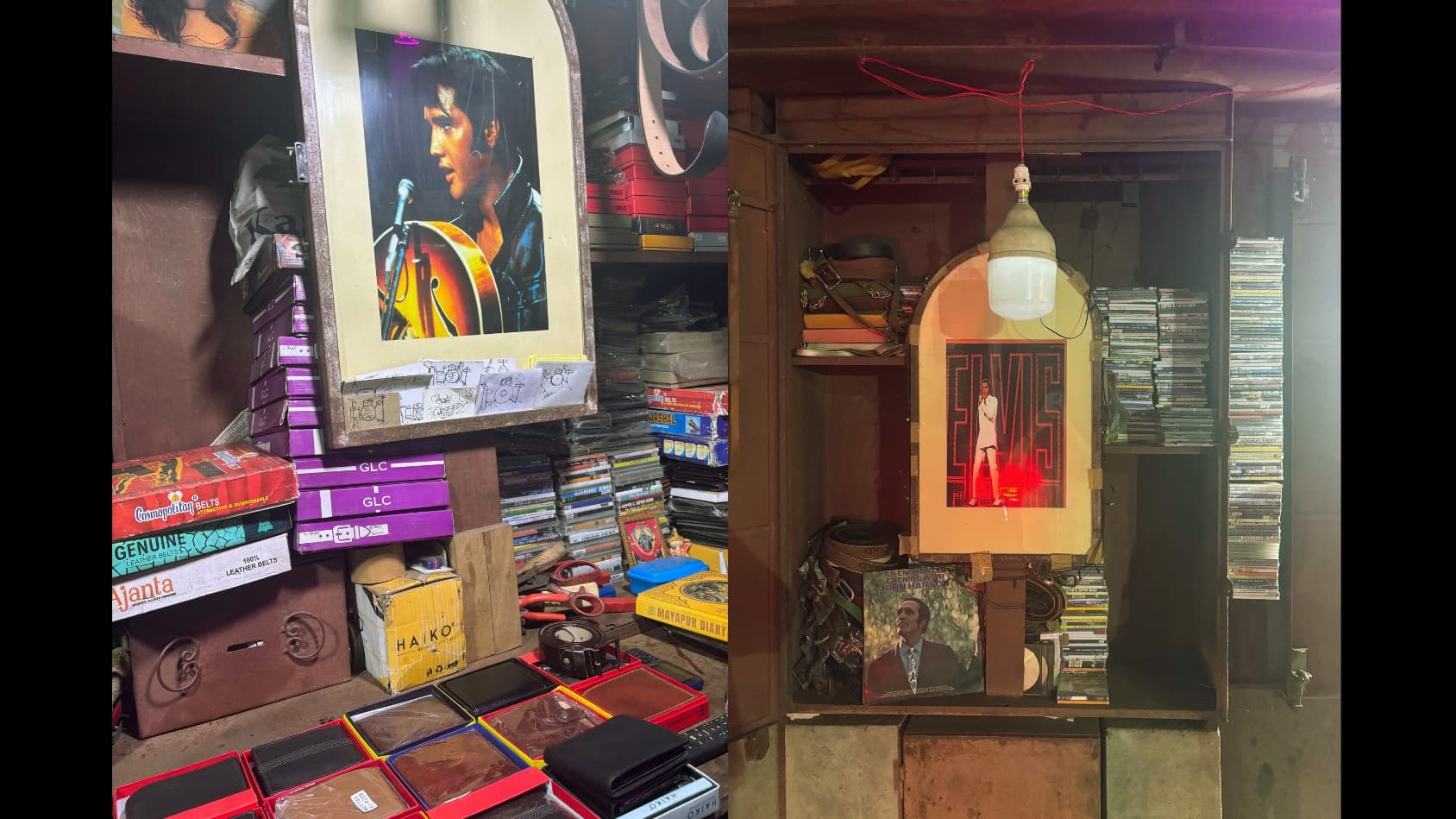
Elvis appears twice! If you look closely, you will find intricate little doodles hidden in the margins of the frames.
Walking further ahead, just after you cross Basanti Devi College, keep an ear out for the smooth baritone of Frank Sinatra. You will likely find a gentleman whose stall feels like a bridge between two worlds. He sells rugged leather wallets, belts and sling bags alongside an unexpected collection of old cassettes and CDs. The collection is a labour of love, adorned with pictures of Elvis Presley. If you look closely at the frames, you will find intricate little doodles hidden in the margins.
Shopping Tip: Ask him about the records and his face lights up. A simple question about the cassettes or records often turns the transaction into a story, and you leave with a glimpse of the passion behind the stall.
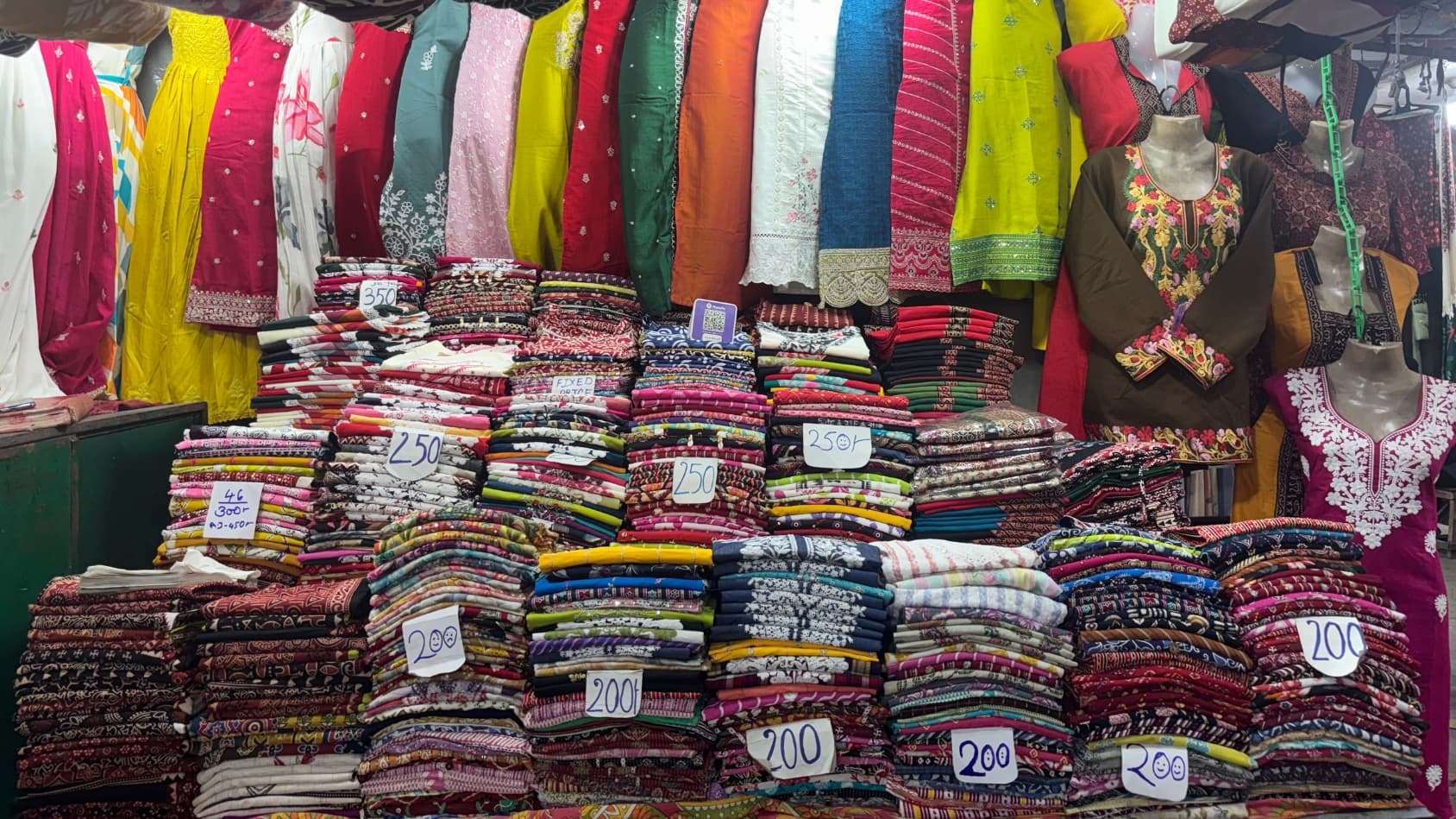
Towers of printed kurtis are stacked with their prices scribbled by hand.
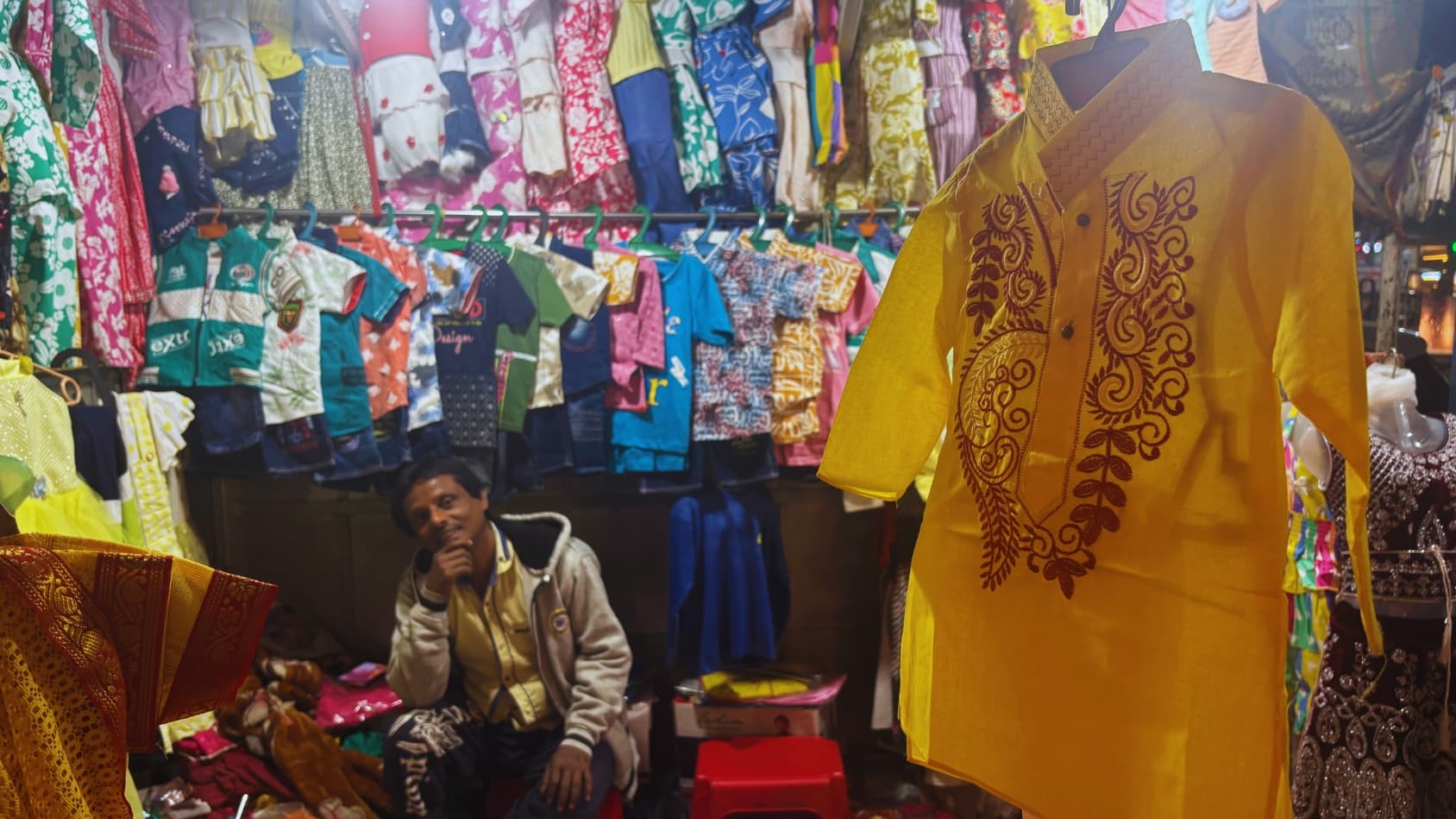
Stalls spill over with children's clothing, from tiny kurtas and frocks to festive lehengas.
Gariahat dresses everyone. Its reputation is woven firmly into textiles and it shows. From Boamin Cafe & Restaurant to the main Gariahat crossing, air-conditioned stores sit beside pavement hawkers, together offering clothes for every age, budget and occasion.
Stalls spill over with children's clothing, from tiny kurtas and frocks to festive lehengas made for weddings and birthdays. A little further on, the colours soften into everyday tones. Cotton kurtas, indigo dresses, block-printed tops and easy silhouettes appear, made for Kolkata summers.
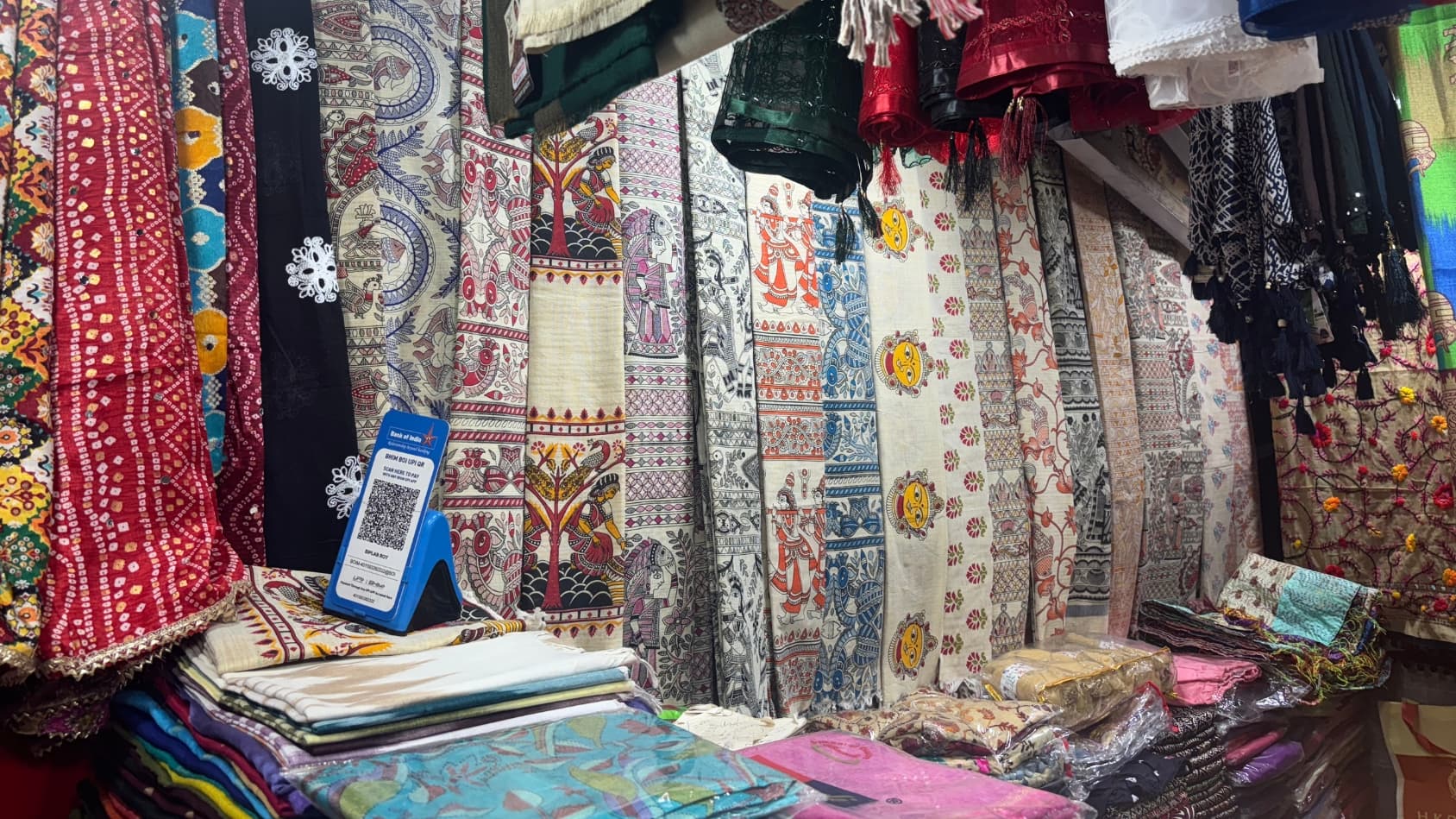
Different kinds of dupattas line the walls in dense rows.
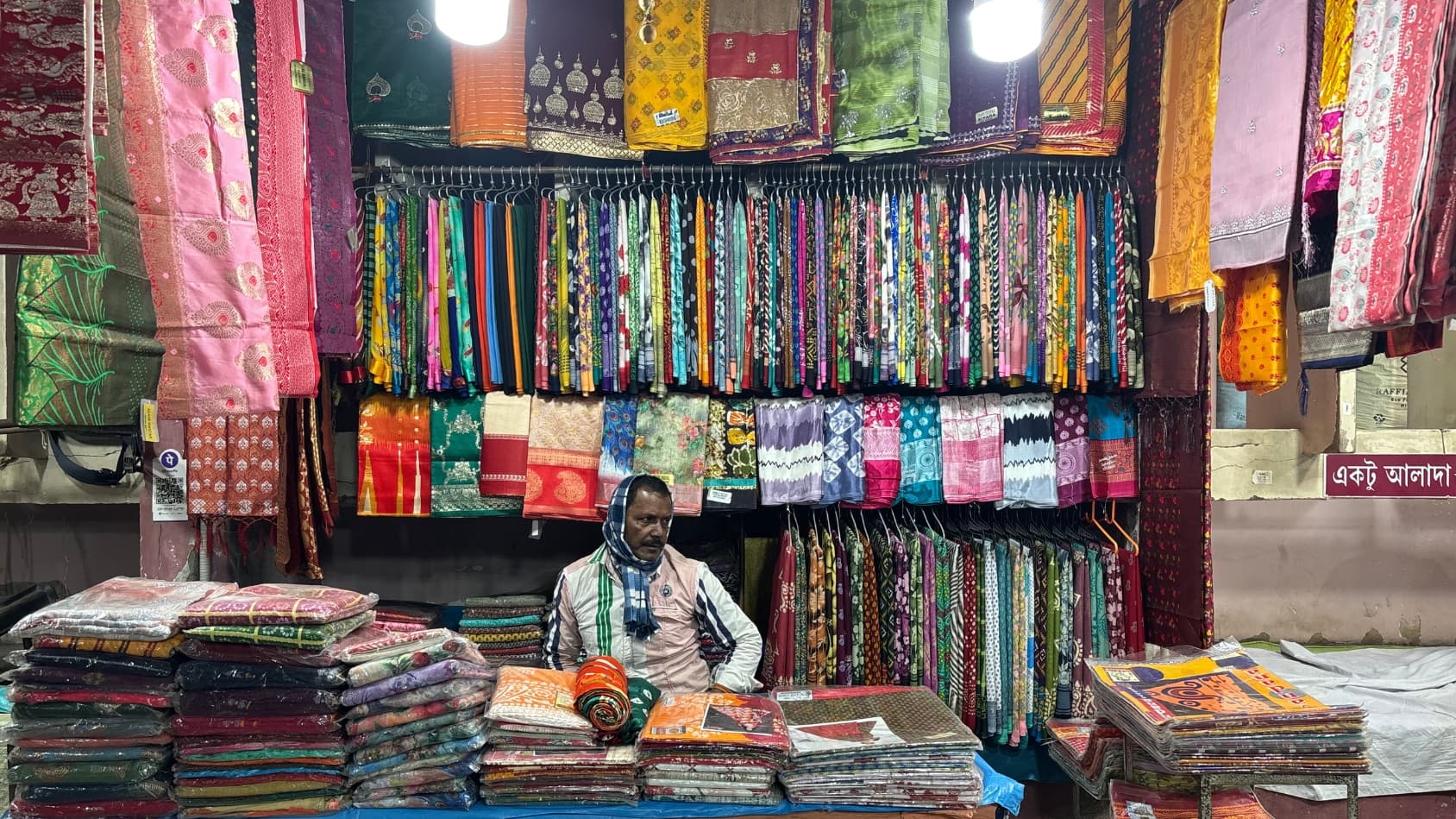
A vendor selling saris, the soul of Gariahat.
Among my favourite finds are the dupattas. Madhubani dupattas starting at Rs 150 share space with Phulkaris from Amritsar, Kashmiri pieces and Bolpur cottons. Woollen sweaters, starting at Rs 50, make an appearance too.
Many consider saris the soul of Gariahat. This is where generations come for wedding saris, puja saris and everyday comfort. Walk through the market and you will find nearly every fabric and weave imaginable, from tant, Jamdani and Baluchari to silks such as Benarasi, Kanjivaram, Murshidabadi and Bishnupuri, alongside tussar, matka silk, cotton silk, linen, georgette, organza, tissue, kosa, katan, pashmina, satin and khadi. Prices range from simple cotton saris costing a few hundred rupees, to batik and ajrak from Rs 800, khadi and muslin from Rs 2,000, original Dhakai Jamdani from Rs 8,000 and wedding saris heavy with zari work that cost far more.
Pro tip: Always open the sari fully before buying. Check that it is a single, unstitched piece, that the print or weave is consistent throughout, and that there are no hidden joins or colour mismatches.
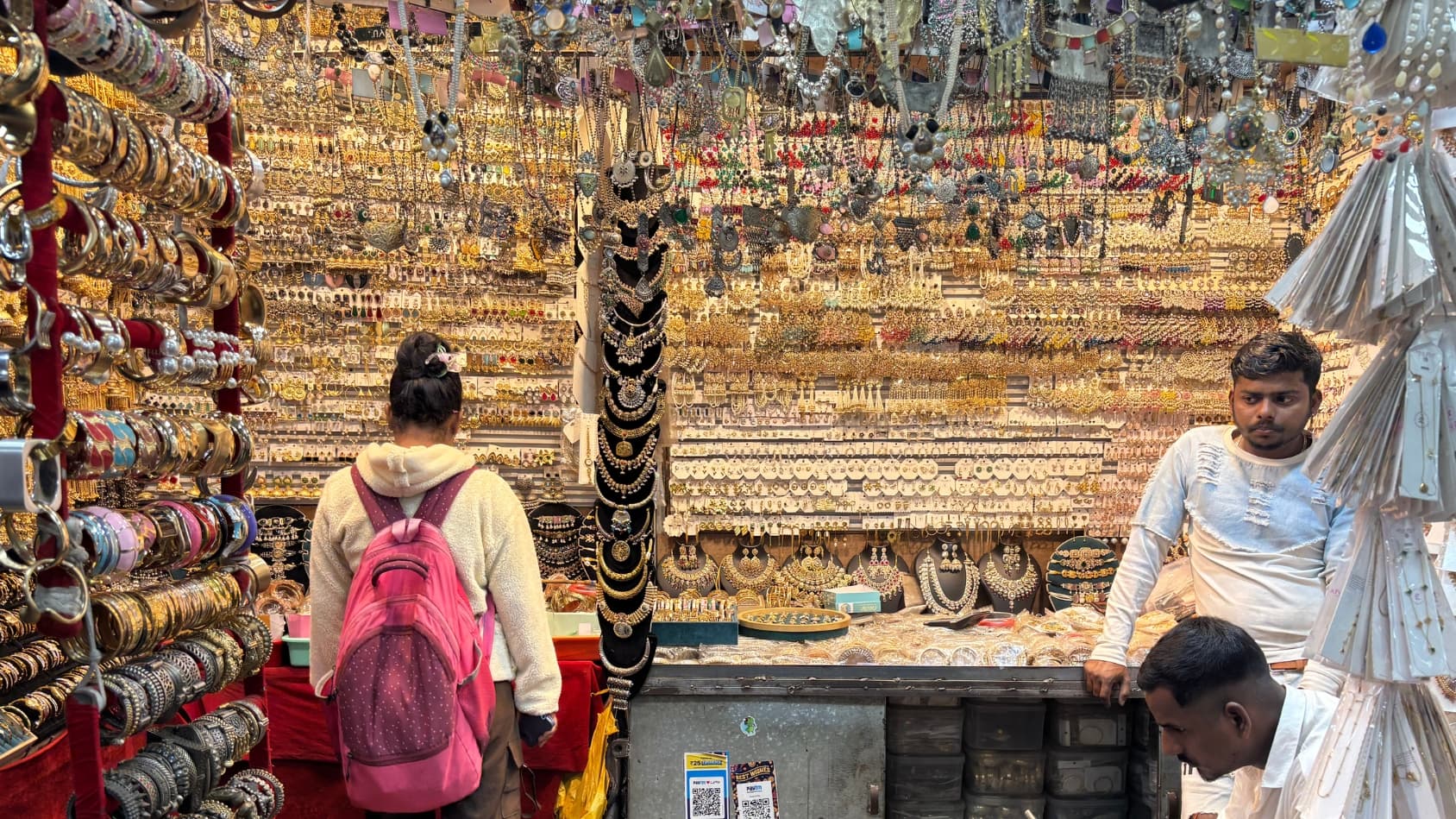
A dazzling wall of gold-toned earrings and necklaces.
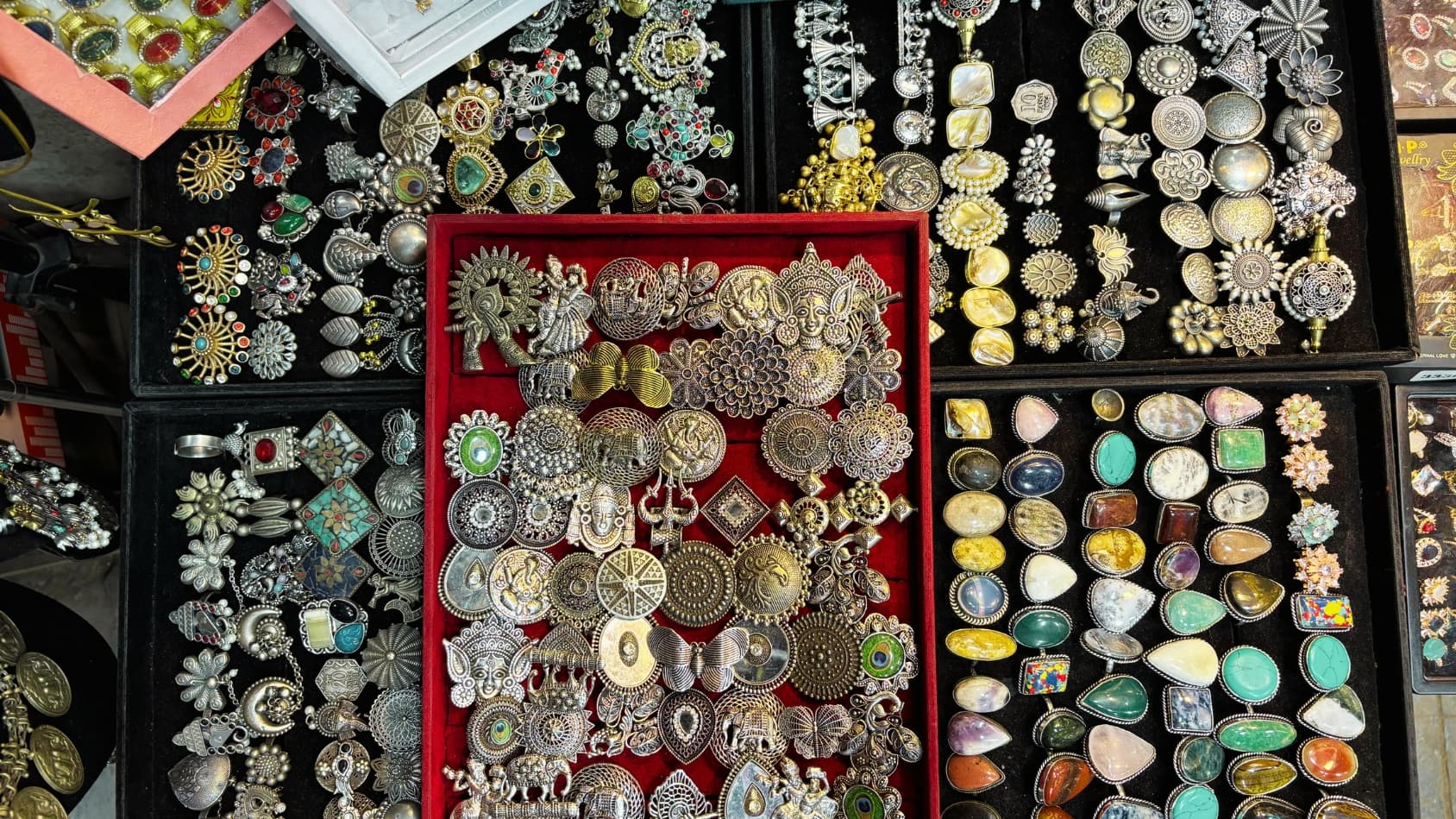
Intricately crafted metal and oxidised rings.
Dotted between the textile stores, the pavement begins to glitter. Stalls overflow with jhumkas, bangles and statement neckpieces that blur the line between traditional ethnic and modern chic. Under the tarpaulin ceilings, you'll find everything from oxidised pieces to vibrant Meenakari work, with earrings starting at a modest Rs 40. Whether it's a delicate ring for daily wear or a chunky necklace meant to turn heads, these treasures are designed for everyday indulgence.
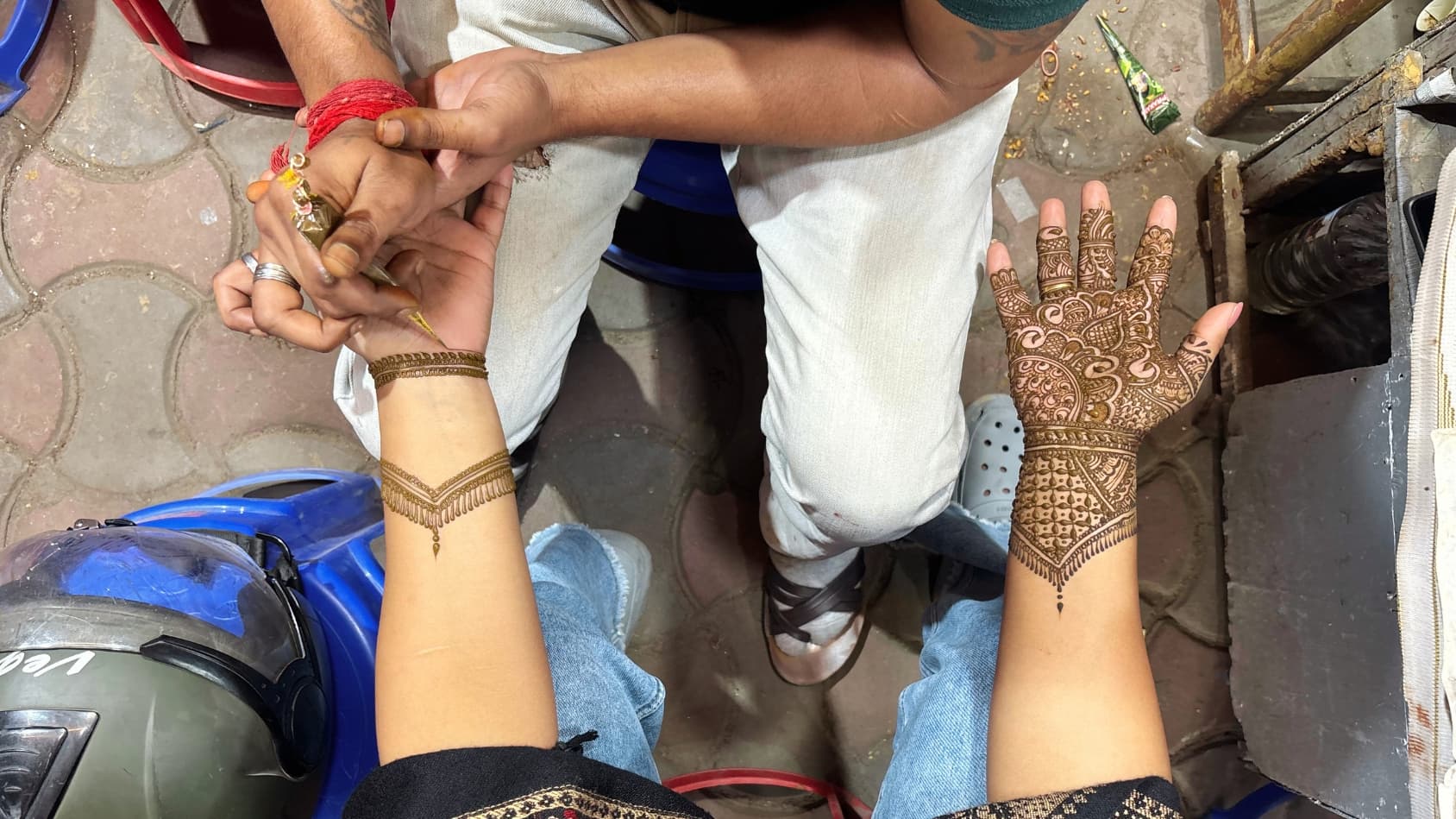
A skilled artist applies Mehendi patterns to a customer's hand.
Nearby, the frantic pace of Gariahat finds a rare, rhythmic pause. Mehendi artists sit ready with their cones, offering intricate designs starting at Rs 300 for both hands. As vines, paisleys and symmetrical patterns unfurl across palms, shoppers are forced into a moment of stillness while the rest of the market rushes by in a blur.
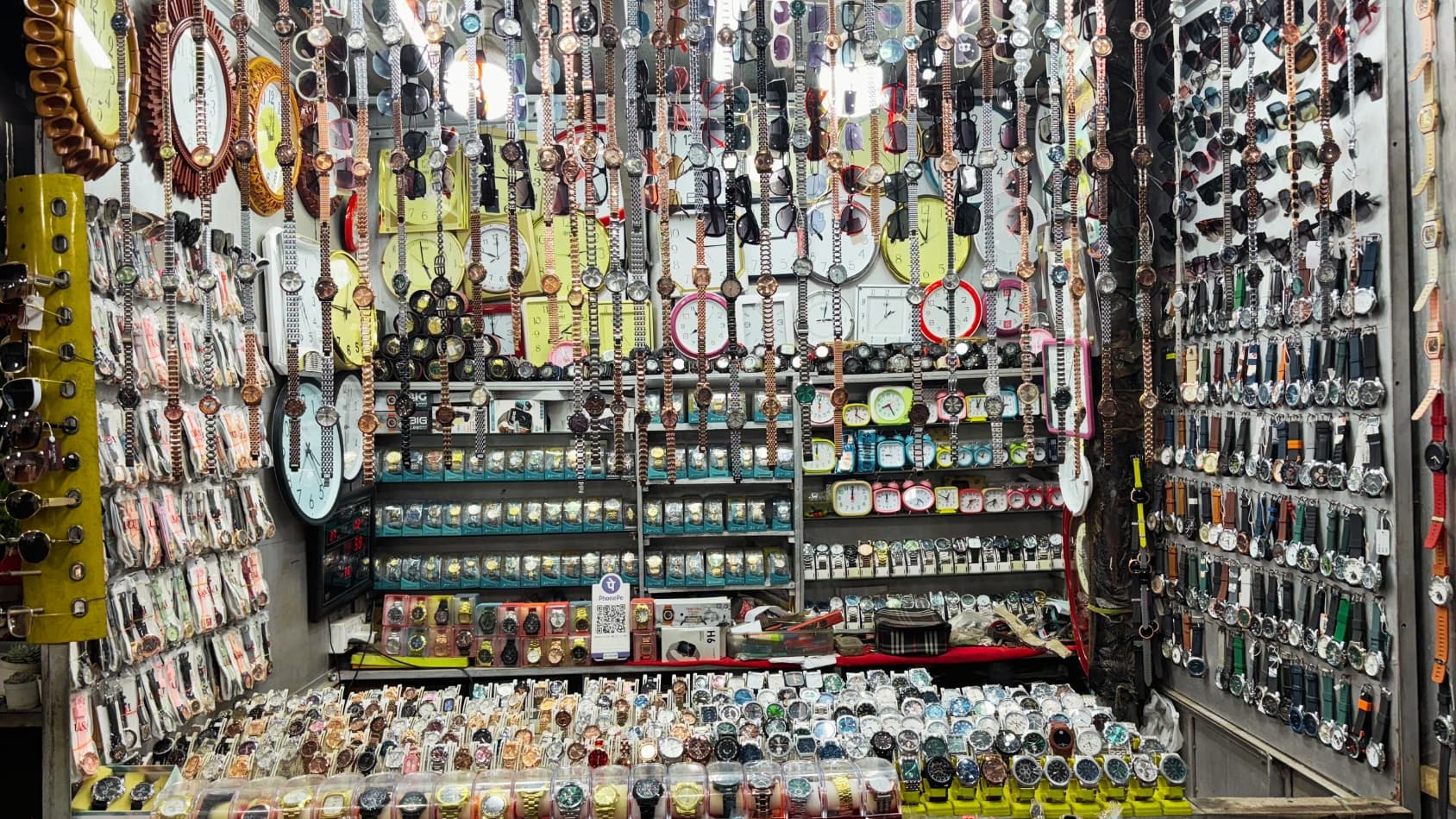
From classic wall clocks to rows of modern wristwatches, time is on display in every style imaginable.
Just a few steps away, time is literally for sale. Watches and clocks of every conceivable kind line the stalls: analogue wall clocks with bold numerals, delicate wristwatches with leather straps, digital alarm clocks that glow in the dark and quirky table clocks shaped like miniature landmarks. Here, time isn't measured by the second hand, but by how long you can hold your ground in a bargain. Pro tip: Check clasps, hooks and joints before buying. A quick look at how a piece is put together can save you from jewellery that lasts only one wear.
Tucked almost invisibly into this stretch is Timeco, a tiny, timeworn shop run by the Guha family for generations. Easy to miss and located next to Gariahat Bata, opposite Dover Lane, it is a quaint old shop filled with timeless wonders. Here, heirloom mechanical watches are serviced with care by expert hands, and vintage watches and clocks can sometimes be picked up at a bargain. They also repair and bring old mechanical clocks back to life. For horology enthusiasts, Timeco remains an institution, perhaps the only one of its kind in South Calcutta, and a treasure trove that most people walk past without ever noticing.
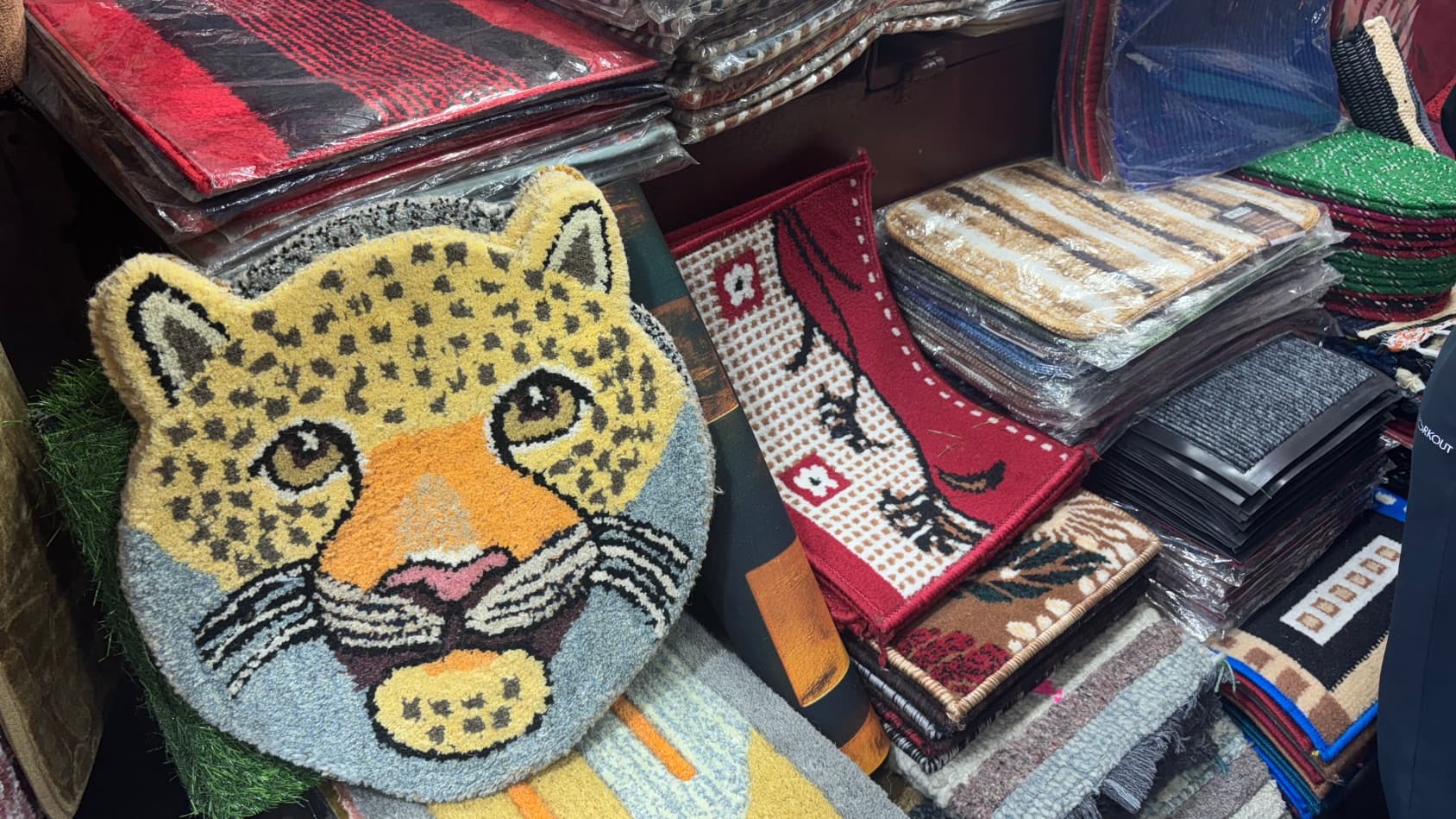
A bold, leopard-shaped rug adds a touch of wildlife-inspired charm to this collection of mats.
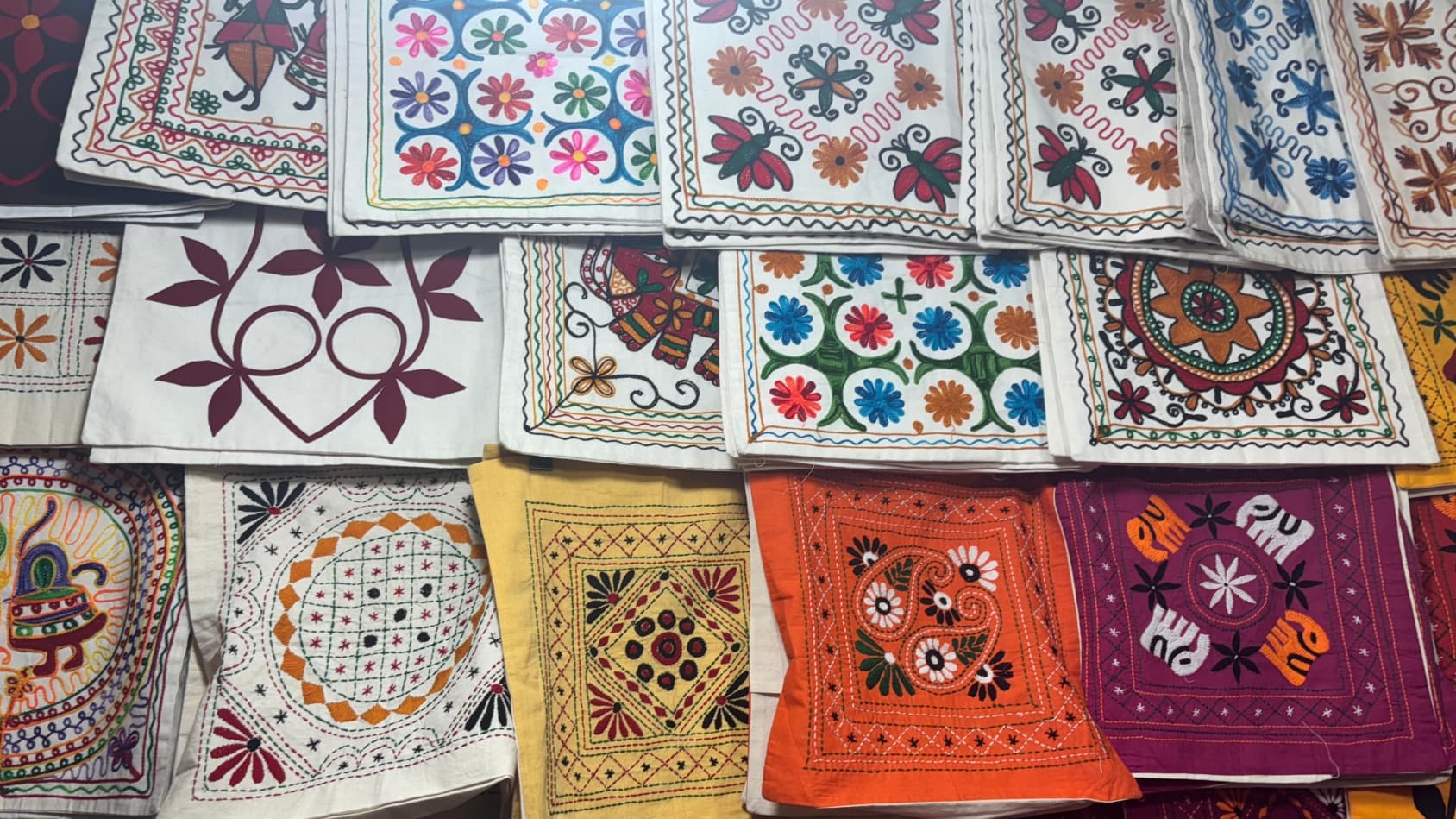
Bright, embroidered cushions and fabrics showcasing traditional floral and geometric patterns.
Between the fashion stalls and book towers, the market shifts into home furnishing. You'll find pillows and cushion covers splashed with vibrant kalamkari motifs, geometric weaves and bold florals, promising to breathe life into a tired sofa for a handful of notes. The inventory spills outward: hand-woven mats, plush carpets and heavy blankets are stacked high, turning the pavement into a textile maze.
Pro tip: Check stitching, zips and lining before buying cushion covers or bedding. Small details make a big difference, and vendors are usually happy to let you inspect things closely.
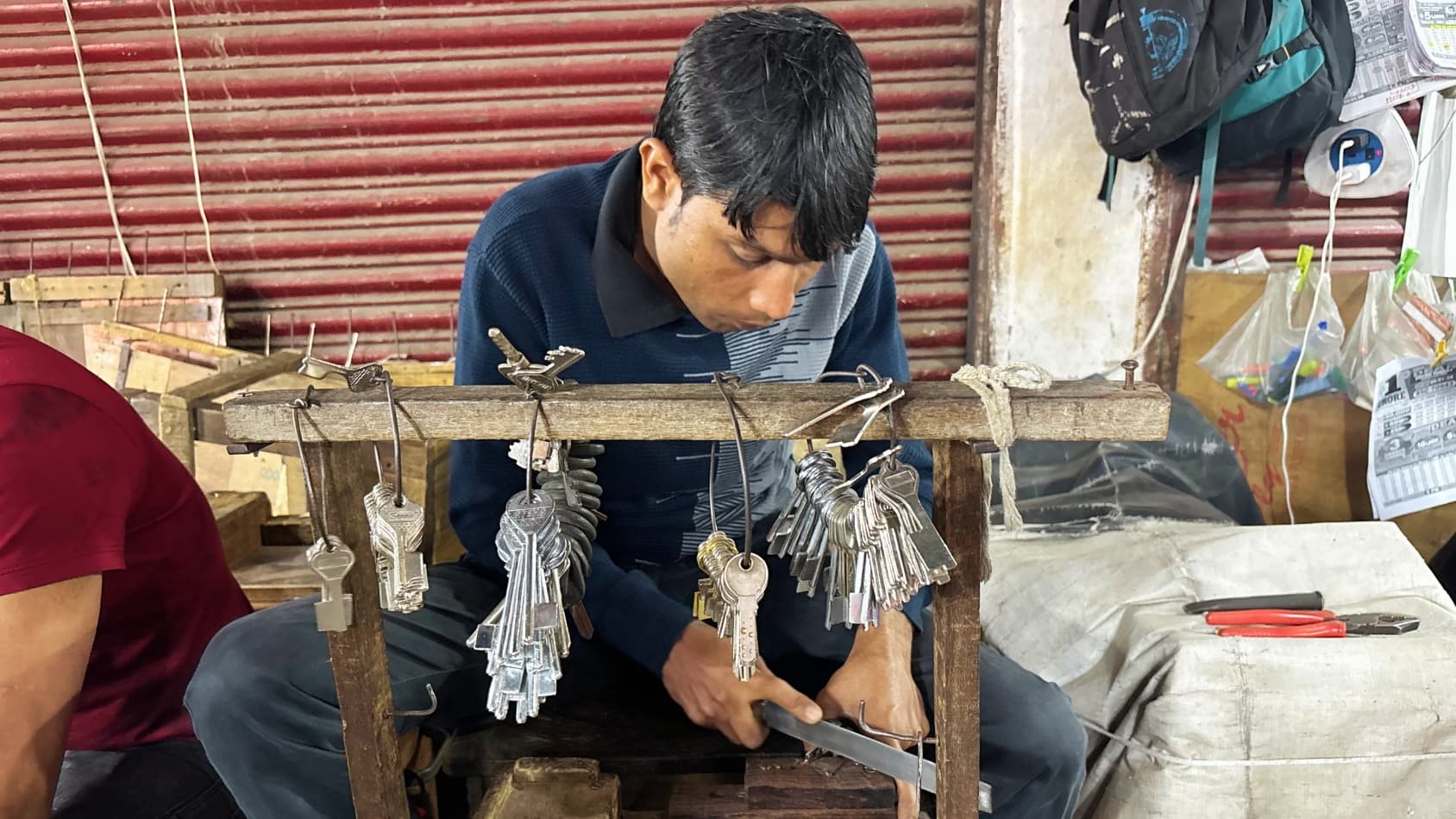
A local locksmith focuses intently on the craft of hand-filing a custom key.
Tucked among these soft comforts is the market's hard-edged utility. Rows of gleaming brass locks hang like heavy jewellery while locksmiths wait to guard new homes. For Rs 100, a spare key is cut on the spot. It is a tiny silver insurance policy that provides the literal security to match your domestic dreams.
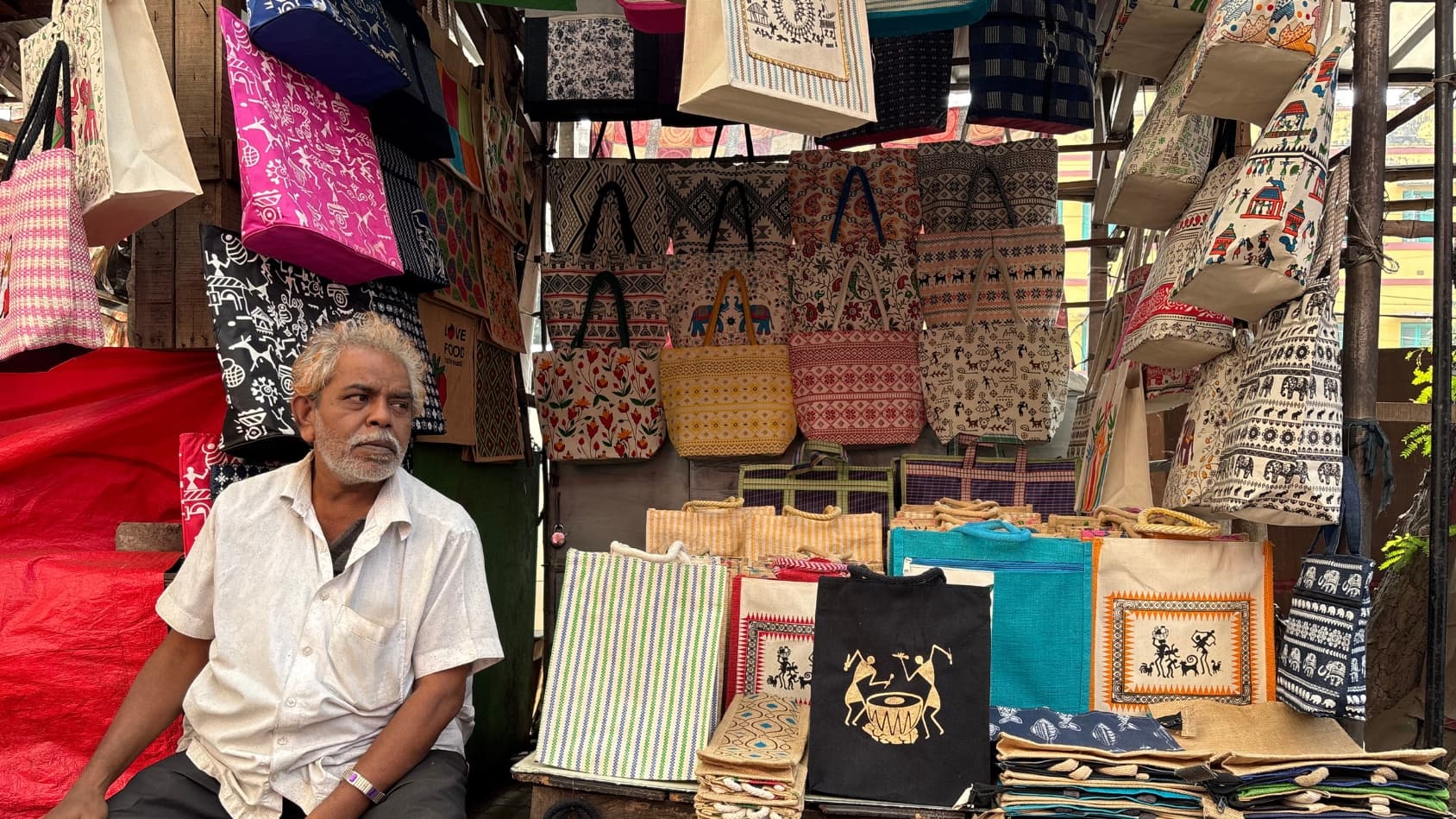
Jute and canvas bags featuring ethnic prints.
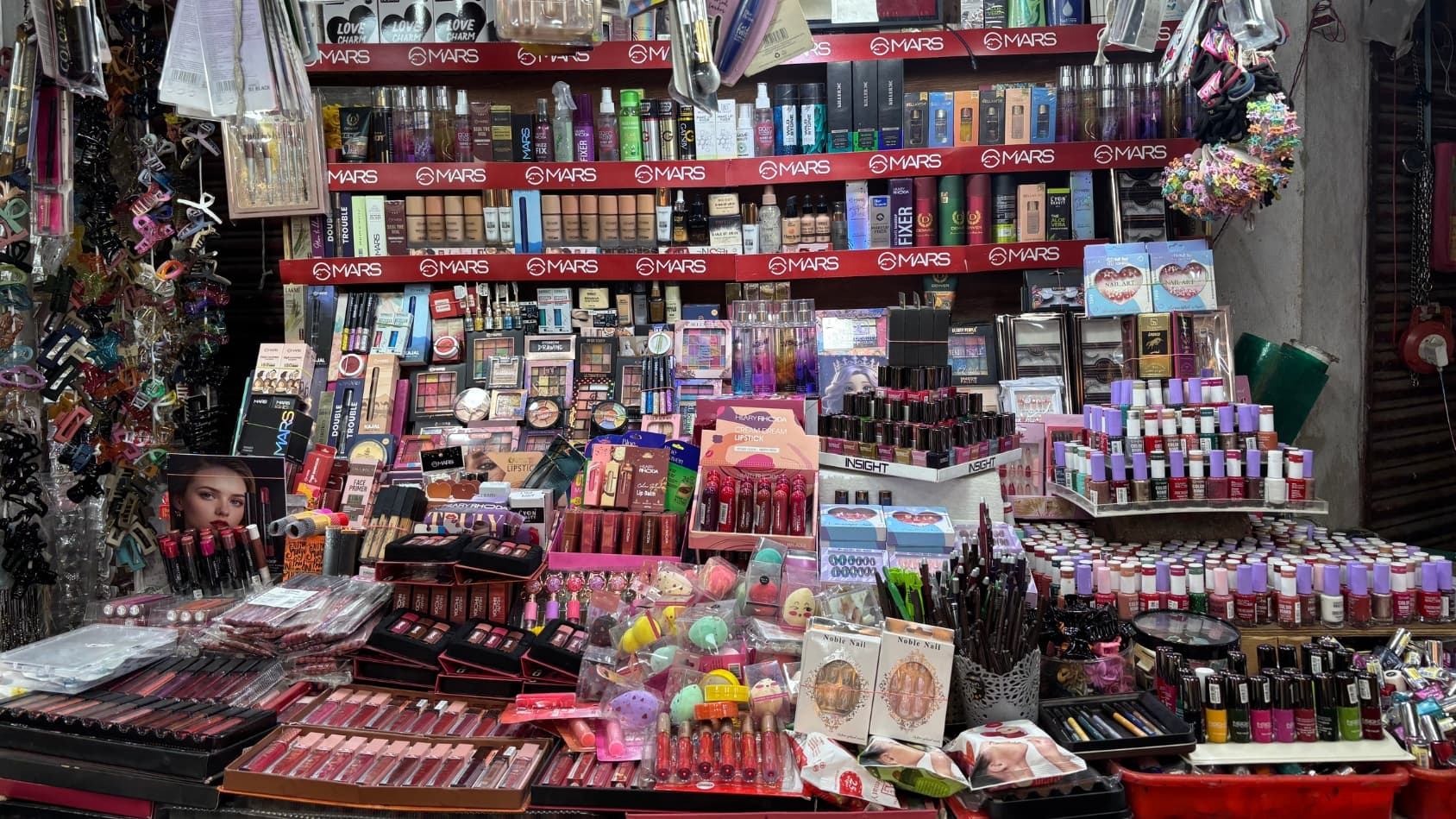
A colourful array of lipsticks, nail polishes, and makeup palettes.
If Gariahat is a marathon, your choice of footwear is the strategy. The stalls here offer a vast spectrum of soles, from the sturdy handcrafted leather of Kolhapuri chappals starting at Rs 350 to trendy platform heels and embellished wedding sandals. You'll find rows of colourful "ballerinas" for office commutes, rugged trainers for student budgets and the ever-reliable rubber flip-flops that survive a Kolkata monsoon.
The accessory game is just as diverse. Bags of every texture hang from hooks: sustainable jute totes, sleek faux-leather satchels and oversized fabric handbags built for a heavy grocery run. For students, the variety of rucksacks ranges from minimalist designs to the tech-ready, all built to withstand the daily local train or bus grind.
To finish the look, the makeup stalls act as high-street alternatives. With prices that make experimentation easy, you can find everything from deep kajal to long-wear lipsticks. It is a place where high-end trends meet street-side accessibility, allowing you to reinvent your style without breaking a single note.
Pro tip: Stick to sealed makeup products and check expiry dates carefully. Avoid testers that look overused.
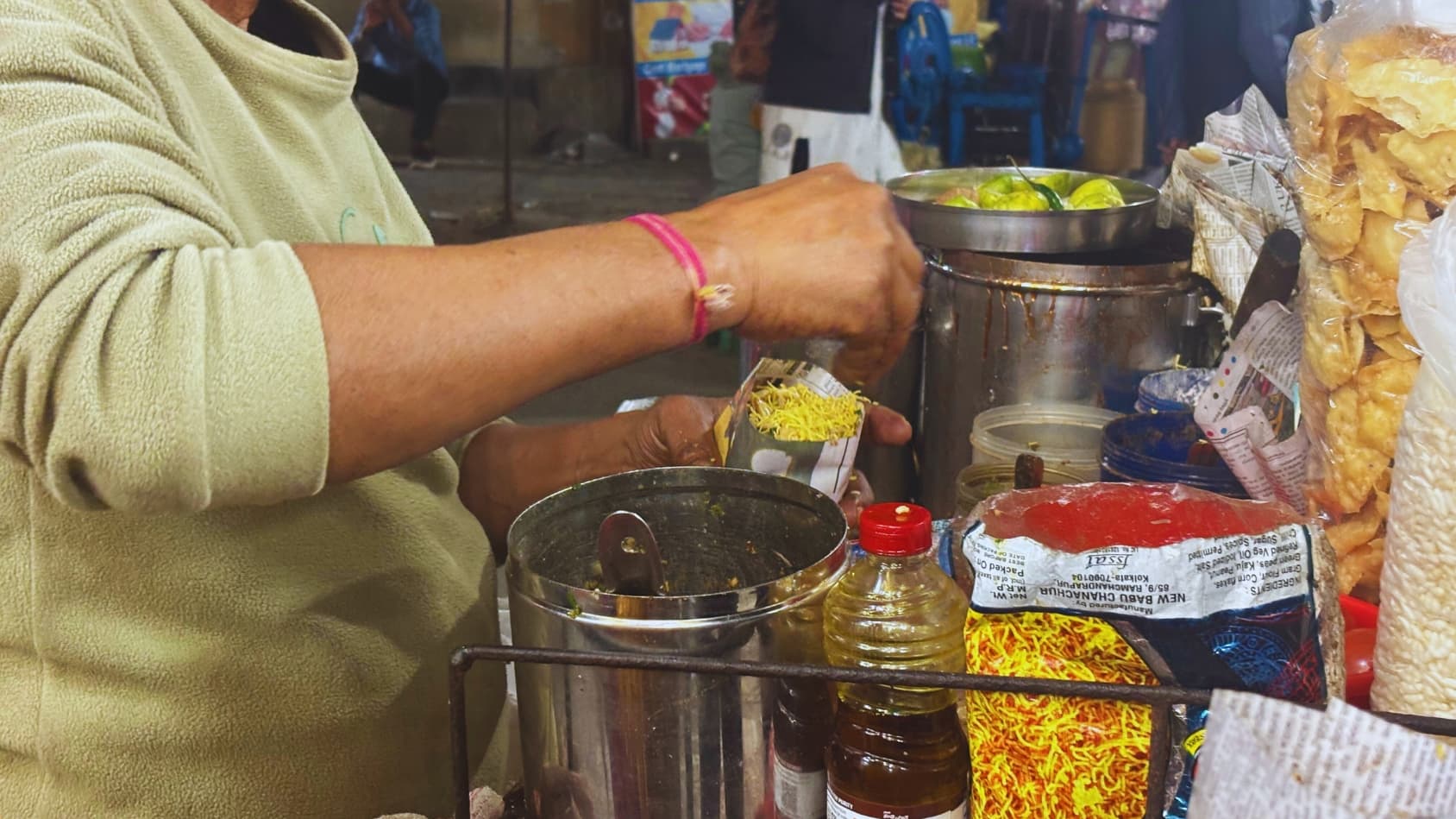
A vendor expertly assembles a fresh serving of jhalmuri.
Hunger in Gariahat is best satisfied in stages. It often begins outside Basanti Devi College, where a phuchkawala draws a steady crowd. The tamarind water is sharp and bracing; you can quickly gulp it down before melting back into the bustle.
A bit ahead, arm yourself with a Rs 30 cone of jhalmuri, sharp with mustard oil, eaten while navigating the crowd. Then, seek out Campari, an institution since 1979. This third-generation eatery is famous for its fish fry and rolls, which carry a refined continental influence. Between 4pm and 9pm, locals queue patiently for a taste of these crisp, legendary bites.
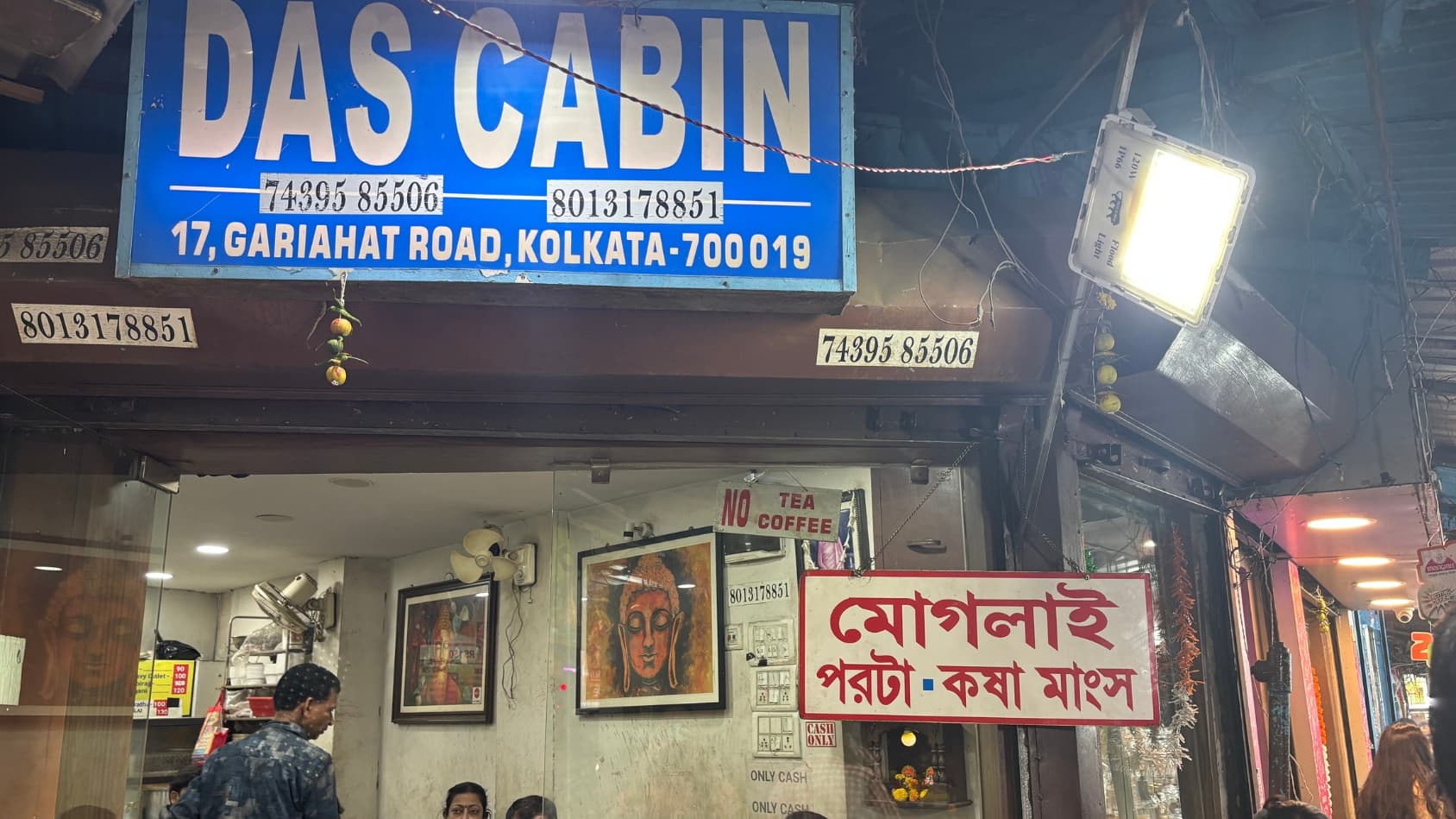
A glimpse of a traditional "cabin" on Gariahat Road.
The area is also famously lined with historic "cabins", nostalgic eateries defined by plywood partitions and curtained cubicles. Originally designed to offer privacy for women to dine away from public view, these spaces later served as secret meeting spots for freedom fighters and are now pillars of Kolkata's heritage. Das Cabin is a standout among them. Once a haunt for luminaries like Sunil Gangopadhyay, it remains famous for its soft, egg-filled Mughlai Paratha and the Chicken Kabiraji, a fillet enveloped in a delicate, golden egg-lace.
Beyond the classics, Gariahat offers a dense map of flavours. You can join the crowd around a street phuchkawallah at the crossing, pick up traditional sweets from Bachharam’s or duck into Bedouin for a more upscale Mughlai meal. Whether you are hunting for hidden cafés in the side lanes or grabbing a quick bite at Mithai, the market ensures nobody leaves on an empty stomach.
Pro Tip: Look beyond the main road. Some of the most charming cabins and cafés are tucked behind garment stacks or down side lanes, offering excellent people-watching and a pause from the crowds.
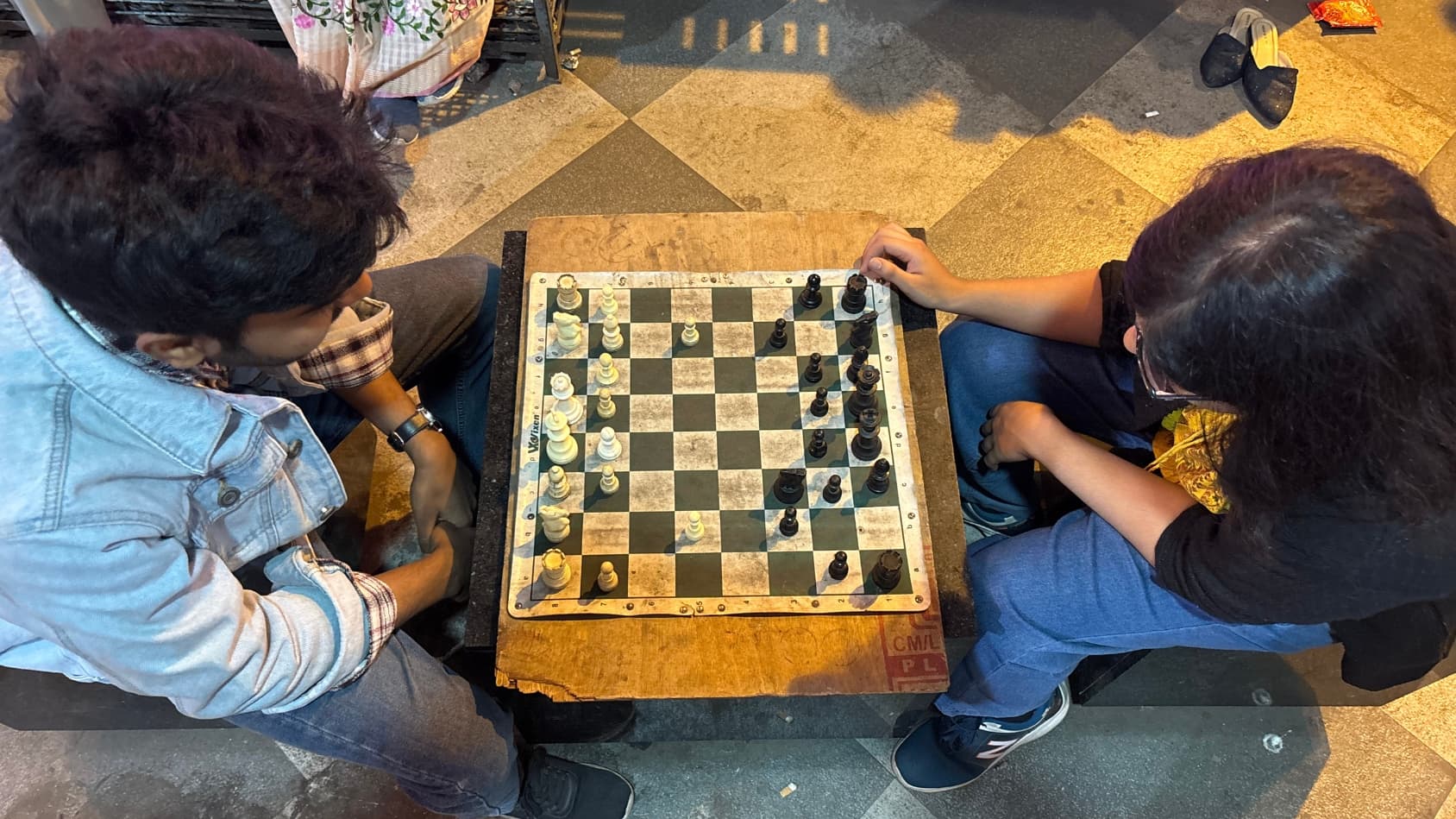
Two players engage in a focused game of chess under the Gariahat flyover.
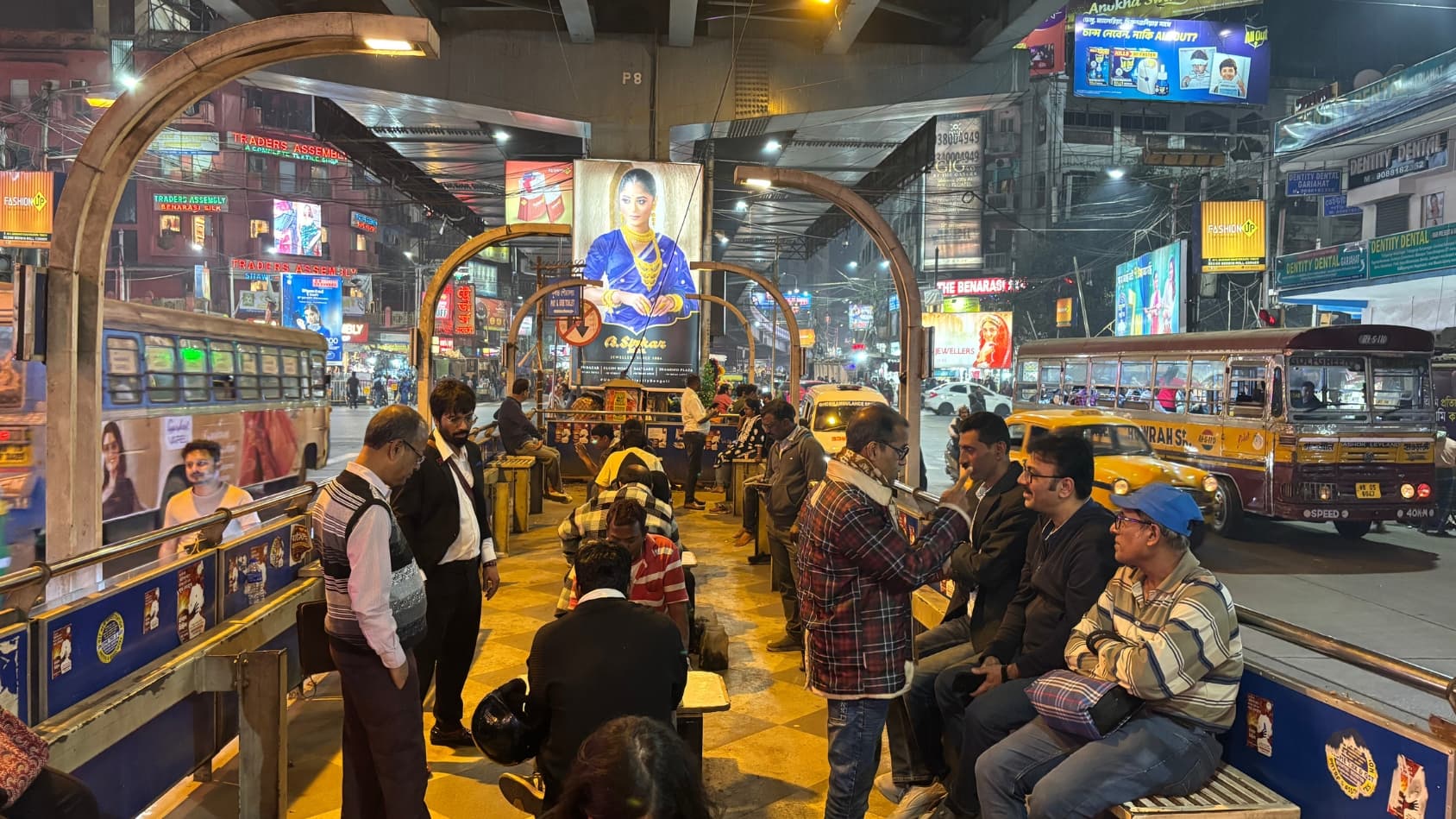
The chess club under the Gariahat flyover.
As I near Golpark, I pass the chess club under the bridge: men bent over boards, absorbed, time suspended. Lit by floodlights, a series of chess tables and chairs have transformed this utilitarian space into a public arena where people come to play. And it is completely free! It's become a championship spot for new and existing chess talent, a democratic space where those with a love for the game can sit down and make their move.
Pro Tip: Arrive before 5pm if you want a game. Later in the evening, the boards fill up quickly and you may have to wait your turn.
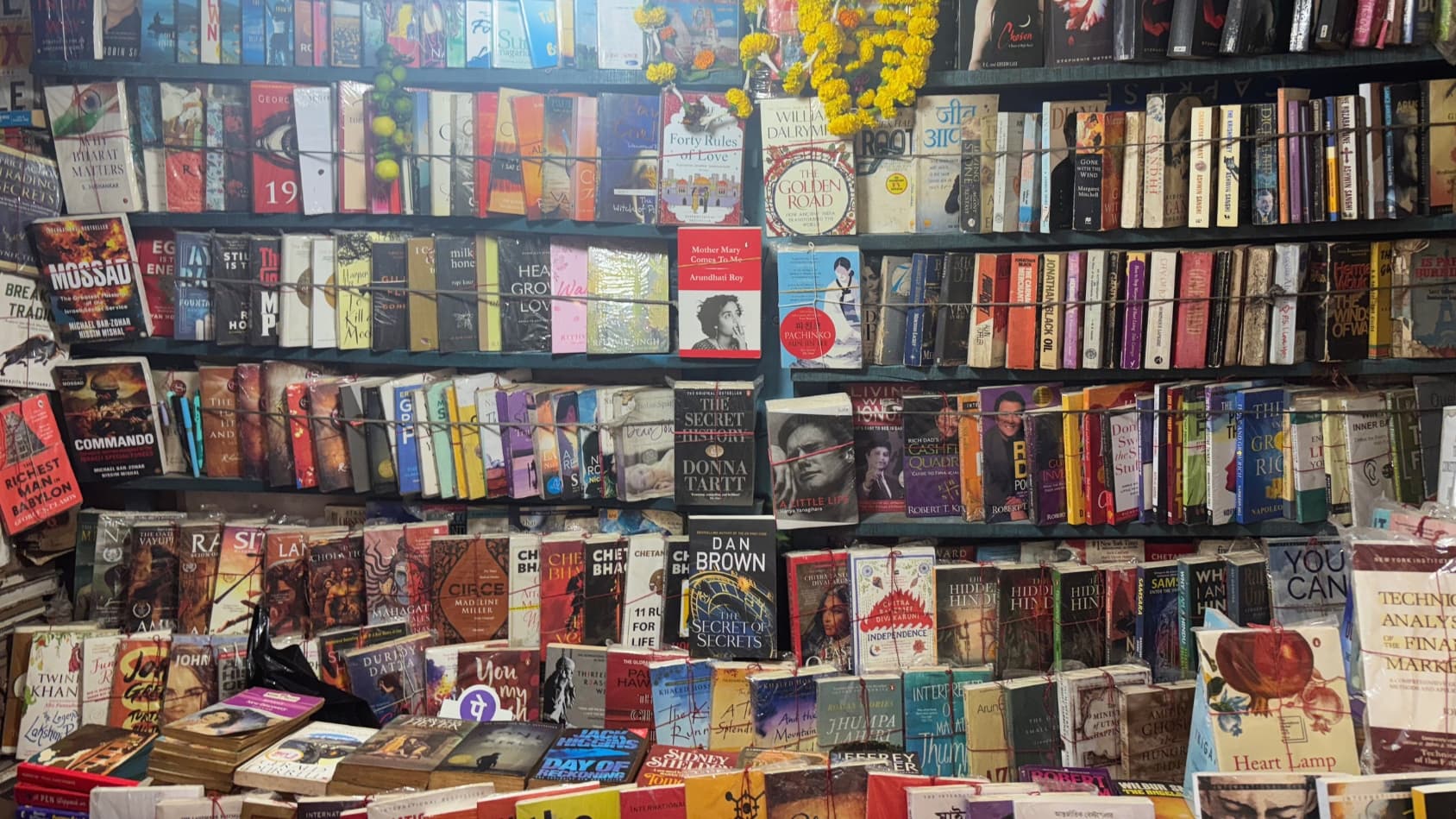
A dense wall of literature ranging from global thrillers to local Bengali classics.
In Gariahat, literature is the ultimate democracy. As you take a right from the flyover towards Golpark, you start seeing Towers of second-hand books lean precariously against one another, their spines sun-faded and pages marked by the ghosts of previous readers. Here, there is no hierarchy: Fitzgerald rubs shoulders with formulaic thrillers and a Rs 50 copy of The Great Gatsby keeps company with a Rs 20 Bengali periodical.
The stacks are a chaotic map of human interest. You'll find Dan Brown's Inferno sandwiched between vintage copies of Desh or Anandamela, while high-stakes competitive exam guides sit beside breezy romance novels. It's a place where "gatekeeping" doesn't exist, where the dream of cracking a government exam is just as valid as the pursuit of a classic.
Pro tip: For popular titles, check the print quality carefully as many new copies are pirated. Second-hand books are often a better choice. They are cheaper, better printed, and sometimes carry handwritten notes or inscriptions that make reading feel shared, almost personal.
A section on books in Gariahat remains incomplete without the mention of Ideal Bookstall. Established in 1945, it is one of the neighbourhood’s enduring literary landmarks, tucked away in an alley near Golpark. Stocking both English and Bengali titles, this old-world bookstore has long been where generations of readers have picked up their first classics, textbooks, and beloved paperbacks. For many in the city, it is a place tied to memory as much as to reading, a heritage shop where shelves carry not just books but decades of intellectual life in South Kolkata.
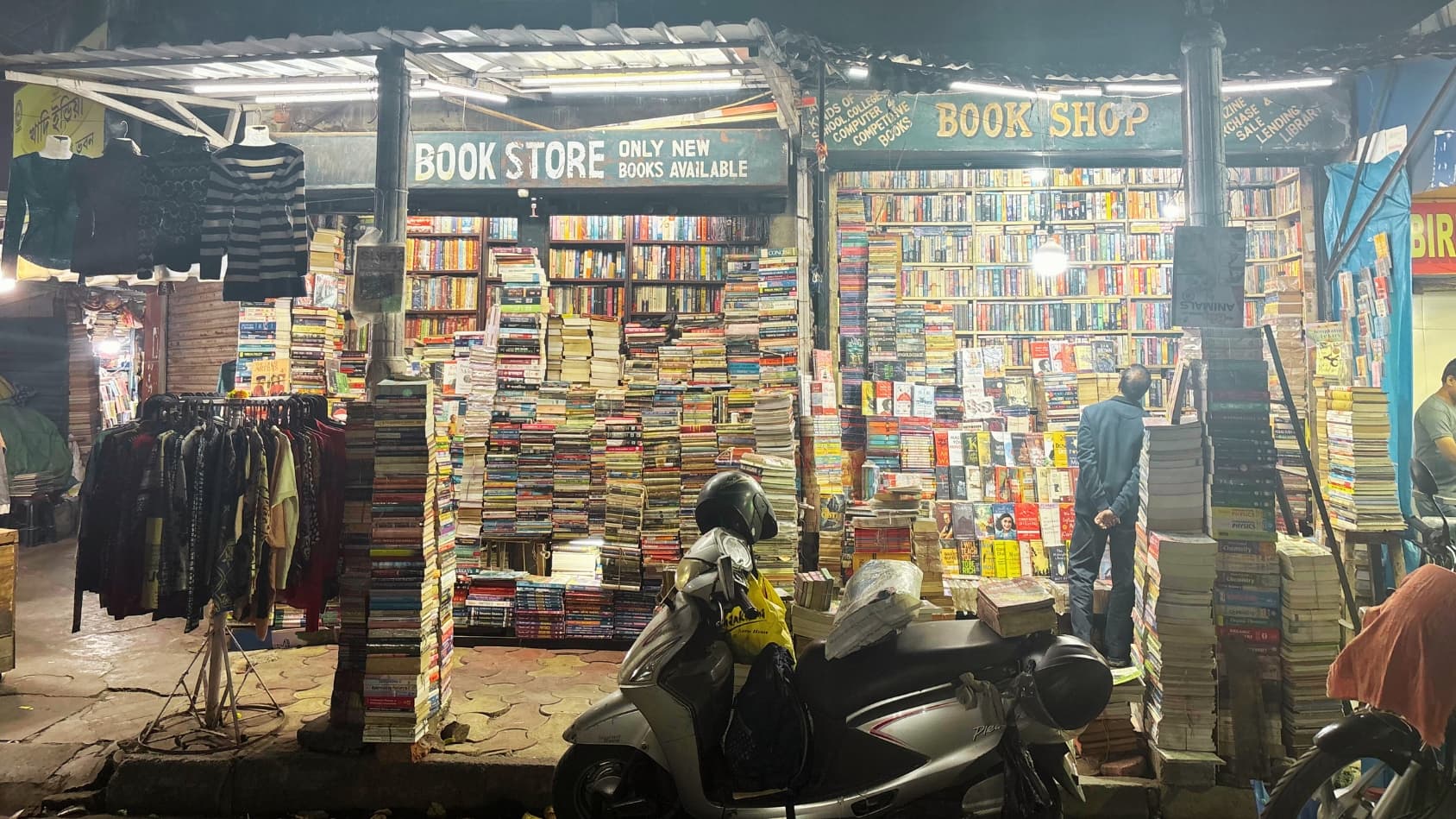
Towering stacks of books at two well-lit street-side bookstores.
As I wind my way towards the end of this walk, I realise that Gariahat is not just a market. It is a snapshot of Kolkata itself: layered, chaotic and surprisingly tender, where Elvis Presley and jhalmuri, chess and ceramics, vinyl records and vegetables co-exist within the same few square kilometres. It exists as a generous space that does not try to impress. You might arrive for a specific errand, but in this market, you always leave with more than you planned to buy.


