



The sweet-smelling ‘attar’ alleys of Burrabazar
From rose and rajnigandha to oudh and white musk, discover the scents soothing Kolkata’s soul for centuries

 Published on 2025-09-06Updated on 2025-09-06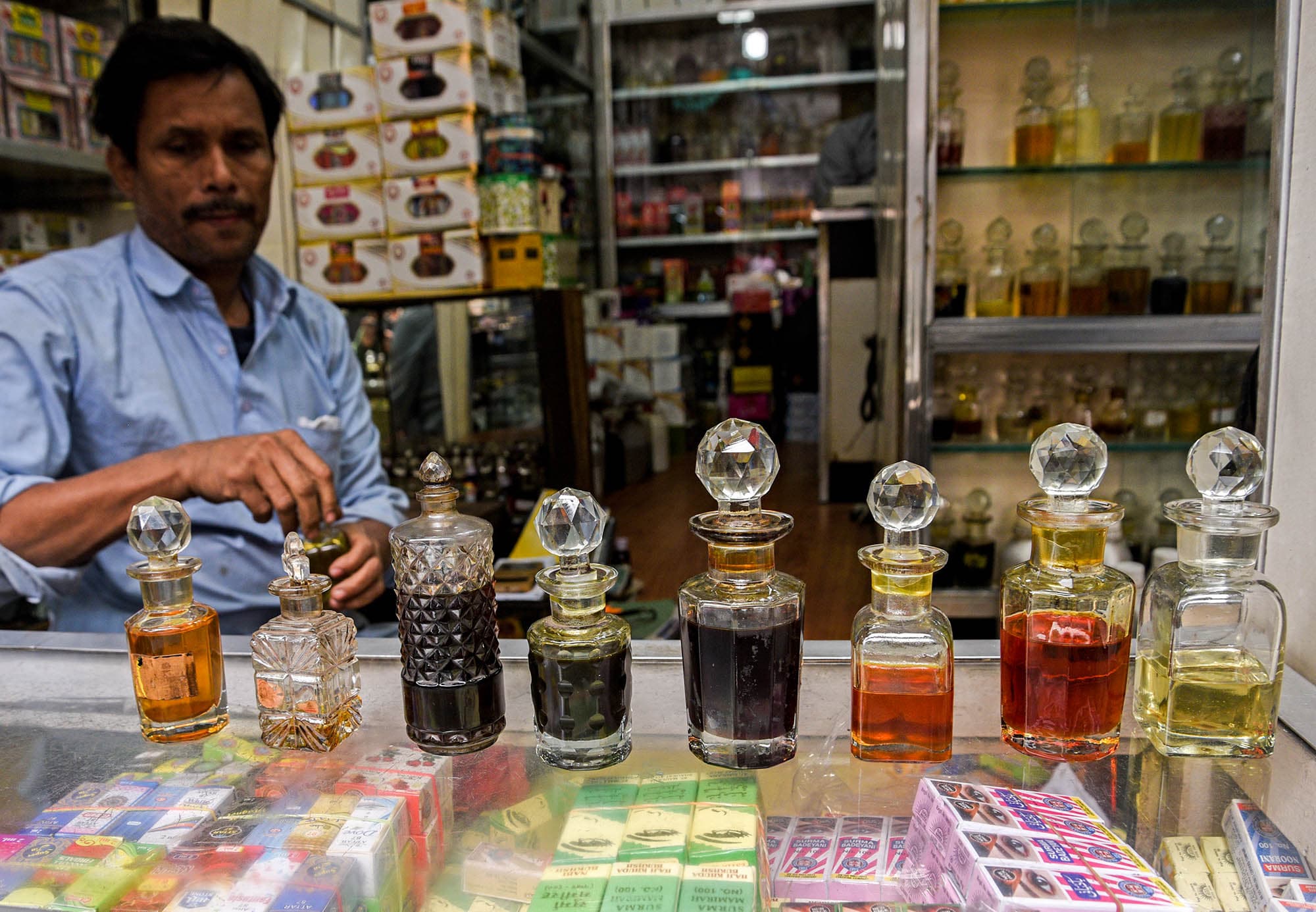
Old-world in its ways yet strikingly modern in its implications, attar is a part of Kolkata’s olfactory history.
Our sense of smell is nature’s most authentic time machine. A whiff of rain-soaked earth, a hint of sandalwood, or the delicate trace of rose oil can summon entire worlds of memory. And nowhere in Kolkata is this truth more vivid than in the attar shops of Burrabazar.
Tucked around the awe-inspiring Nakhoda Masjid, these unassuming stores are guardians of a tradition that predates modern perfumery. They are a living link to colonial Kolkata, Nawabi grandeur and the refined indulgences of Bengali babus. Step into their narrow lanes and you step into a city of scents — one that lingers on your skin, your clothes and your memory long after you leave.
Derived from the Persian itir, meaning perfume, attar is an essential oil distilled from flowers, herbs and spices into a base of sandalwood or other natural woods. Unlike chemical-based modern perfumes, attars are alcohol-free, natural and astonishingly long-lasting. “Attar has no side effects and can easily last for two to three days,” explains Neyazuddin Allah Buksh of Haji Khuda Buksh Nabi Buksh, a shop his family has run since 1824 after moving from Lucknow to Kolkata.
For centuries, attar has been revered in Islamic tradition, believed to attract angels and accompany Sufi saints on their spiritual quests. In Bengal, it became an inseparable part of culture, adorning babus on their way to jalshas and wafting through the grand gatherings of Kolkata’s elite.
Where Netaji Subhas Chandra Bose and Rabindranath Tagore got their attar
The Buksh family shop itself is a museum of glass decanters shimmering with iridescent liquids — Khus, Shama, Gulab, Hayati, Firdausi — each named like poetry bottled. “Netaji Subhas Chandra Bose, along with his aides, would drop by at our shop in the early 1940s, as he was a big admirer of attar. His favourites were rose and rajnigandha (tuberose),” Buksh recalls with quiet pride. Rabindranath Tagore, Kazi Nazrul Islam, Jawaharlal Nehru — all are remembered here not just for their place in history, but for their chosen scents. Members of the Tagore family still visit to this day.
Not far away, Asghar Ali Mohammed Ali Brothers, originally established in Lucknow in 1835, continues its Kolkata chapter. Here, fragrances are carefully divided between those for wear and those for food. Kewra and rose find their way into biryani and desserts, while Firdaus and Majmua remain favourites for the body. As manager Mohammed Asif puts it simply: “We have attar that costs as little as Rs 10, while the costlier ones can go up to Rs 1,000. Rose, Firdaus and Majmua sell the most.”
Across the lane at Raunaq, younger generations experiment with newer offerings. White musk, oudh and even a chocolate musk draw curious buyers. “Attar is like a fuel, a fuel for life. If you apply attar regularly, you tend to live longer and healthier,” says Faiyaz Ahmad with conviction, offering vials small enough to slip into a pocket, yet powerful enough to last for days.
And then there is Chand Star Surma, a pocket-sized shop dating back to the 1920s. Here, tradition meets playful innovation — the familiar rose and sandalwood sitting beside contemporary favourites like lavender or chocolate musk, designed to entice younger tastes.
The smell of heritage
A visit to Burrabazar’s attar alleys is not merely shopping; it is an immersion in heritage. The air itself seems perfumed, carrying whispers of Nawab Wajid Ali Shah’s Lucknow transplanted into Bengal, of addas long before the age of Instagram, of timeless rituals where a dab of scent was the final touch before a gathering.
In a world dominated by luxury perfume houses and synthetic sprays, attar offers something profoundly different. It is natural, personal and enduring — a fragrance that does not just sit on the skin but seems to become part of you.
On applying attar, you may find yourself surprised by its staying power: a couple of drops of oudh or gulab (rose) can last for days, refusing to be hurried away.
Attar is also a gesture of sustainability, obtained in eco-friendly ways that remain gentle on the environment. That is what makes it feel at once old-world and strikingly modern.
It is this very blend of traditional and contemporary appeal that awaits you in Kolkata. When you find yourself in the city next, step into the attar alleys of Burrabazar. With a single dab, you’ll carry centuries of history, fragrance and memory back with you.
Related Posts

Cycling through Bengal changed Shantanu Moitra
The music composer looks back on the last leg of his ‘Anantha Yatra’ in Bengal
How to make the most of your 48 hours in Digha
Discover Sri Sri Jagannath Mandir Cultural Center and more in just two days

Vir Sanghvi on flavours of Kolkata, his one-time home
The food critic on what the city has truly given to Indian cuisine


