
A joint initiative by



 Published on 2025-09-05Updated on 2025-09-05
For decades, Digha used to be Kolkata’s convenient escape — a modest weekend retreat with calm beaches and casuarina groves, nicknamed the “Brighton of the East” by early travellers, including by Warren Hastings, former Governor-General of India. That changed dramatically in April 2025, when the Rs 250-crore Sri Sri Jagannath Mandir Cultural Center opened its doors. The new shrine instantly elevated Digha into one of India’s most vibrant spiritual destinations. In the first fortnight alone, over two million devotees walked through its gates, including ISKCON pilgrims from as far as Russia. What was once a sleepy beach town is now a year-round magnet — a place where the sea meets sanctity and where faith is fuelling a civic and cultural revival.
If you have just 48 hours to spend here, this is how to experience Digha’s Sri Sri Jagannath Mandir Cultural Center at its fullest.
Once you step off the train at Digha railway station, you cannot possibly miss it — the 65-metre vimana (temple tower) of the Jagannath temple rising beside the tracks, its flag dancing in the coastal wind. Designed by architect Vivek Singh Rathore, an IIT Roorkee gold medallist, the Centre is not a replica of Puri’s shrine but a homage — faithful in spiritual geometry, modern in engineering.
Clad in pink sandstone from Rajasthan and cooled by Makrana marble within, the temple is built to endure cyclones of 200kmph as well as seismic tremors. Every stone block — some weighing four tonnes — has been slotted with Lego-like precision. Inside, black stone idols of Jagannath, Balabhadra and Subhadra radiate quiet power, while the shikhara glows with a golden Sudarshan Chakra visible from two kilometres away.
Allow at least two hours to explore the complex. Beyond the main sanctum, wander through the Sahasra Kund, a lotus-filled water body designed for reflection; linger in landscaped parks; or simply sit in the open courtyard where chants rise against the sea breeze.
The complex has seven gates, cloakrooms for belongings, wheelchair access and multilingual helpdesks. The organisation is world-class — you’ll be guided every step of the way.
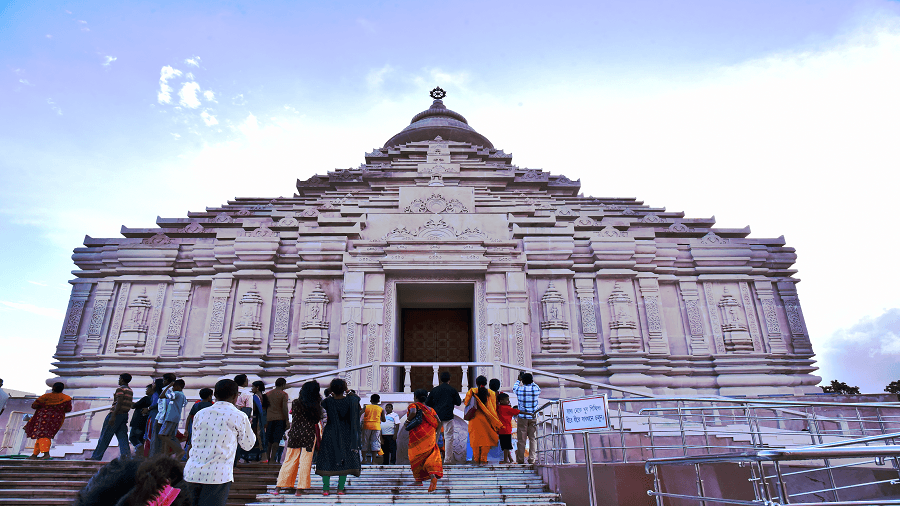
The Sri Sri Jagannath Mandir Cultural Center has attracted Jagannath devotees from all across the world.
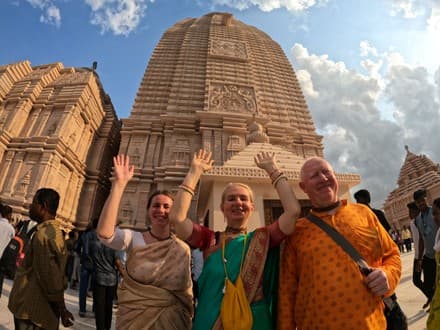
The Sri Sri Jagannath Mandir Cultural Center has attracted ISKCON members from abroad as well. (Shutterstock)
After darshan, head to the Prasadam Hall. The kitchen operations are massive, with local sweet-makers supplying ingredients across East Midnapore. Try the temple khichdi and the famous khoya-based sweets — prepared with strict hygiene, yet carrying the timeless taste of devotion.
Later, stroll down to New Digha Beach, now spruced up with stone seating, LED-lit promenades and designated vendor zones. Sip a cup of the cult favourite “Digha Amazing Lemon Tea” as you take in the glorious views of the sunset. Unlike the trash-strewn beaches of old, today’s Digha is disciplined and clean — a triumph of faith and civic cooperation.
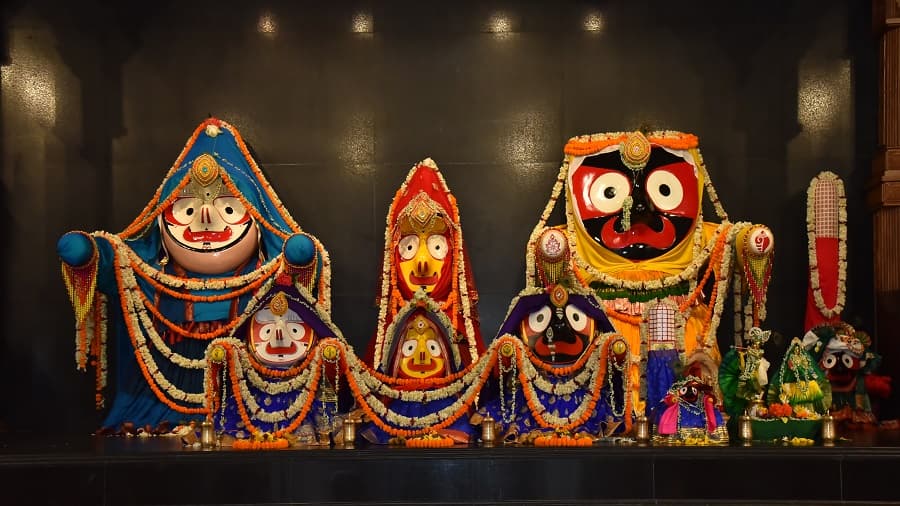
The deities at the Sri Sri Jagannath Mandir Cultural Center, Digha.
Return to the temple for the evening aarti. As the conch shells blow and lamps circle before the idols, the chants ripple through the marble halls, echoing across the campus. Even amidst tens of thousands, a serenity descends. Many describe it as the moment when the divine feels personal — when Jagannath seems to look straight into your soul.
Start your second day in Digha with a visit to the Chandaneswar Temple, a centuries-old Shiva shrine just across the Bengal-Odisha border. It complements the Jagannath experience, creating a spiritual circuit that fuses heritage with renewal.
On your way back, stop at local markets where temple souvenirs, toys and handicrafts are sold in abundance. The prasad economy alone now sustains hundreds of families, while artisans and shopkeepers report booming sales.
No trip to Digha is complete without seafood. Try crab curries and prawn malai at the town’s burgeoning boutique hotels, or stick to beachside fish fry served fresh from the catch. Prices have risen since the temple’s opening, but so has quality.
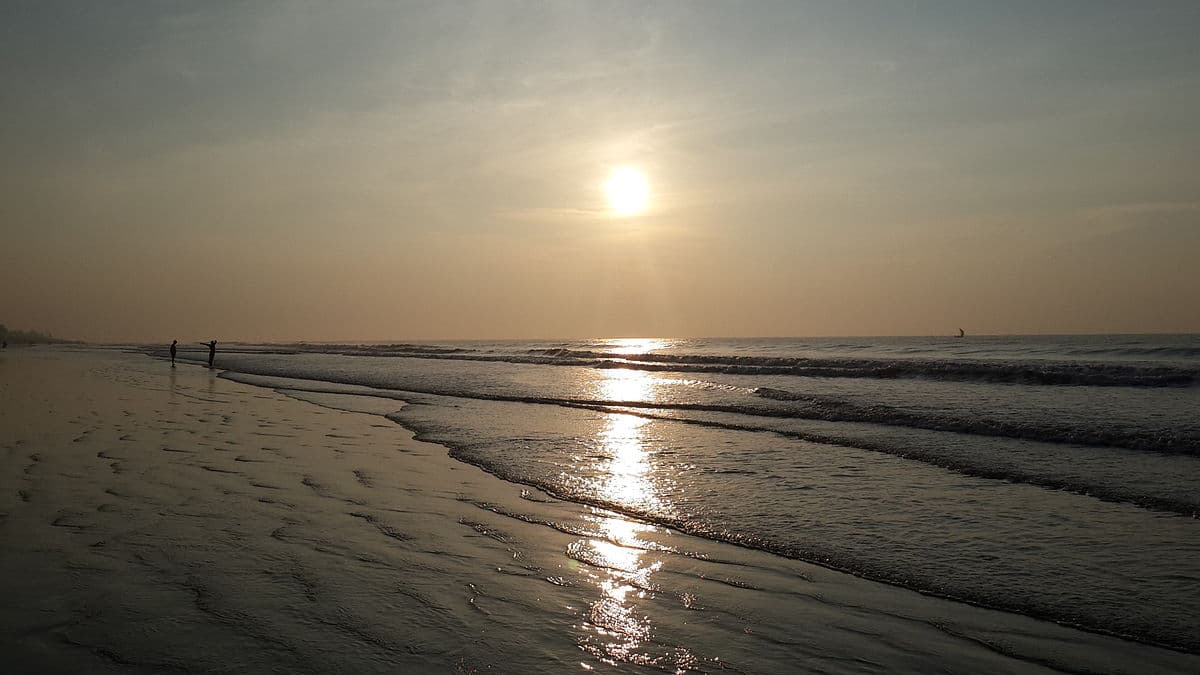
The serenity of the beach at Digha dovetails beautifully with the devotion for Jagannath (Picture by Swarnasubarna26, Wikimedia Commons)
For a quieter stretch of sand, drive anywhere between 15 minutes and half an hour to Shankarpur or Tajpur. The new coastal roads connecting these spots are part of East Midnapore’s rapid transformation. Here, away from the crowds, you can watch fishing boats dot the horizon or simply sink your feet into gentler waves.
Back in Digha, wrap up your 48 hours with a final temple visit. The shikhara glows in amber under layered lighting, visible even from the beachfront. Sit on the promenade benches, listen to the waves and let the mingling of sea air and incense settle into memory.
Before you leave, don’t forget to pick up packets of temple prasad — sweet, sacred and symbolic of the town’s new rhythm.
In just two days, Digha offers a spectrum few destinations can match: sunrise on the beach, sacred rituals in stone, prasad sweetened with centuries of devotion, seafood by the shore and sunsets glowing over a reborn promenade.


