
A joint initiative by



 Published on 2026-02-19Updated on 2026-02-19
Perched in the Himalayan foothills at an elevation of nearly 6,700 feet, Darjeeling is layered with history, spirituality and breathtaking mountain grandeur where the fragrance of world-famous tea drifts through crisp mountain air.
Its modern identity was forged in the mid-19th century when the British East India Company, seeking a "sanitarium" to escape the sweltering heat and diseases of the plains, secured the area from the Kingdom of Sikkim. What began as a sparsely populated ridge was meticulously transformed into a premier hill station.
Today, Darjeeling blends colonial-era nostalgia with the vibrant traditions of its Tibetan and Nepali communities. Its appeal is such that unlike most tourist spaces it hardly has an off-season.
From tea estates to monasteries, food joints to view points, iconic attractions beckon visitors year-round to enjoy the magic of this heritage town cradled in the lap of the Himalayas.
So, here are some must-visit spots that should be on your list if you are a first time visitor to the “Queen of the Hills”.
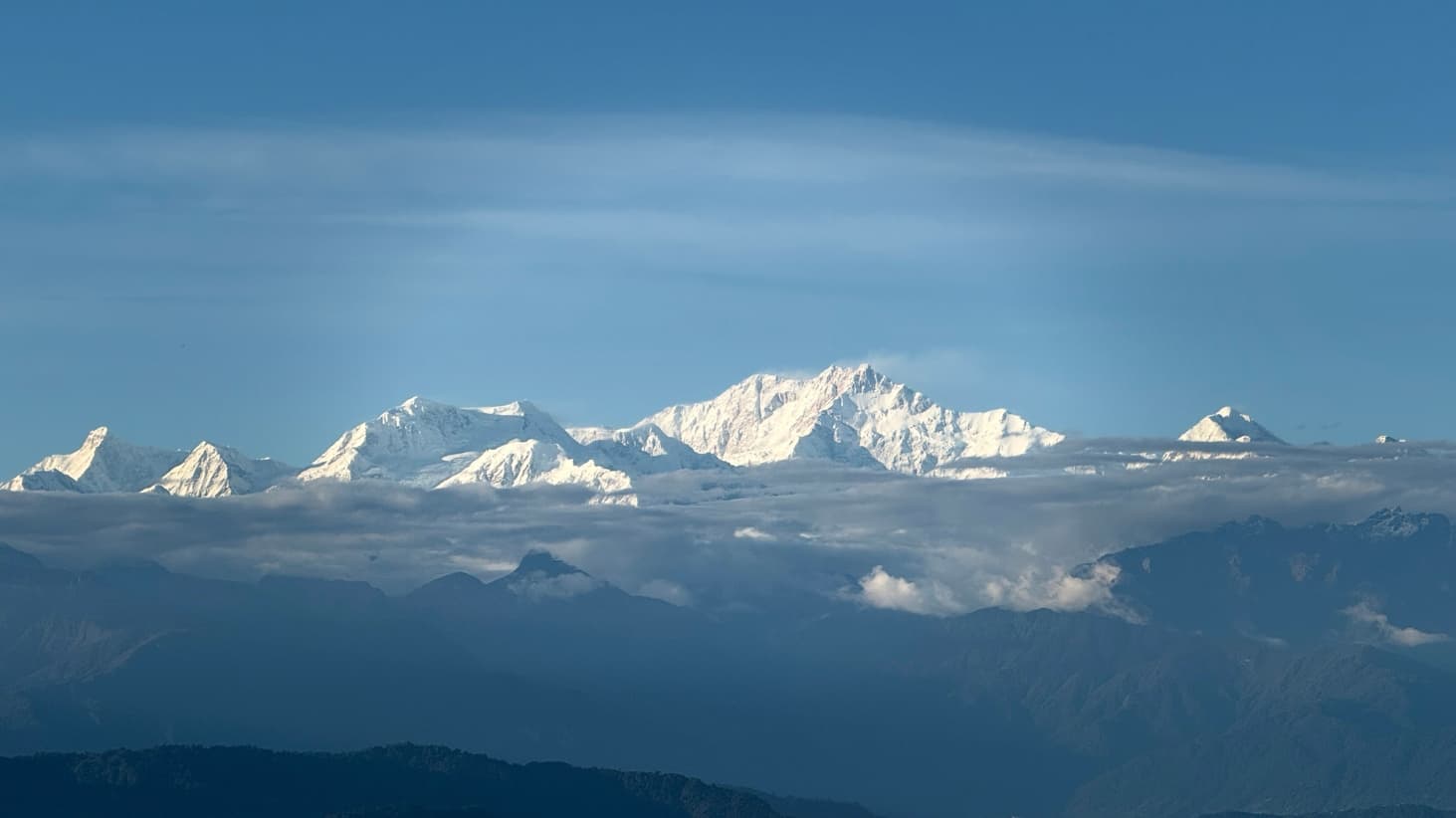
The view from the Observatory Hill.
Situated directly above the Mall, a gentle 10-minute walk uphill leads to Observatory Hill. As one ascends, the bustle of town gradually recedes, rewarding visitors with some of Darjeeling’s most expansive views. From the summit, panoramic vistas of Mount Kanchenjunga and its surrounding peaks unfold in breathtaking clarity. One can sit for hours watching the vast ranges in the changing light. If you visit at night, the mountains turn a deep poetic blue under the moon and stars.
How to get there: Begin at Chowrasta, the central promenade where four roads meet and locals gather. From there, walk along Nehru Road towards the back of the square, or take HD Lama Road from the left side; both routes lead to Observatory Hill. The area is vehicle-free, making the walk pleasant and unhurried.
Best time to visit: Early morning offers the clearest views and a quieter experience. So visit at off-times for a more peaceful moment with the mountains.
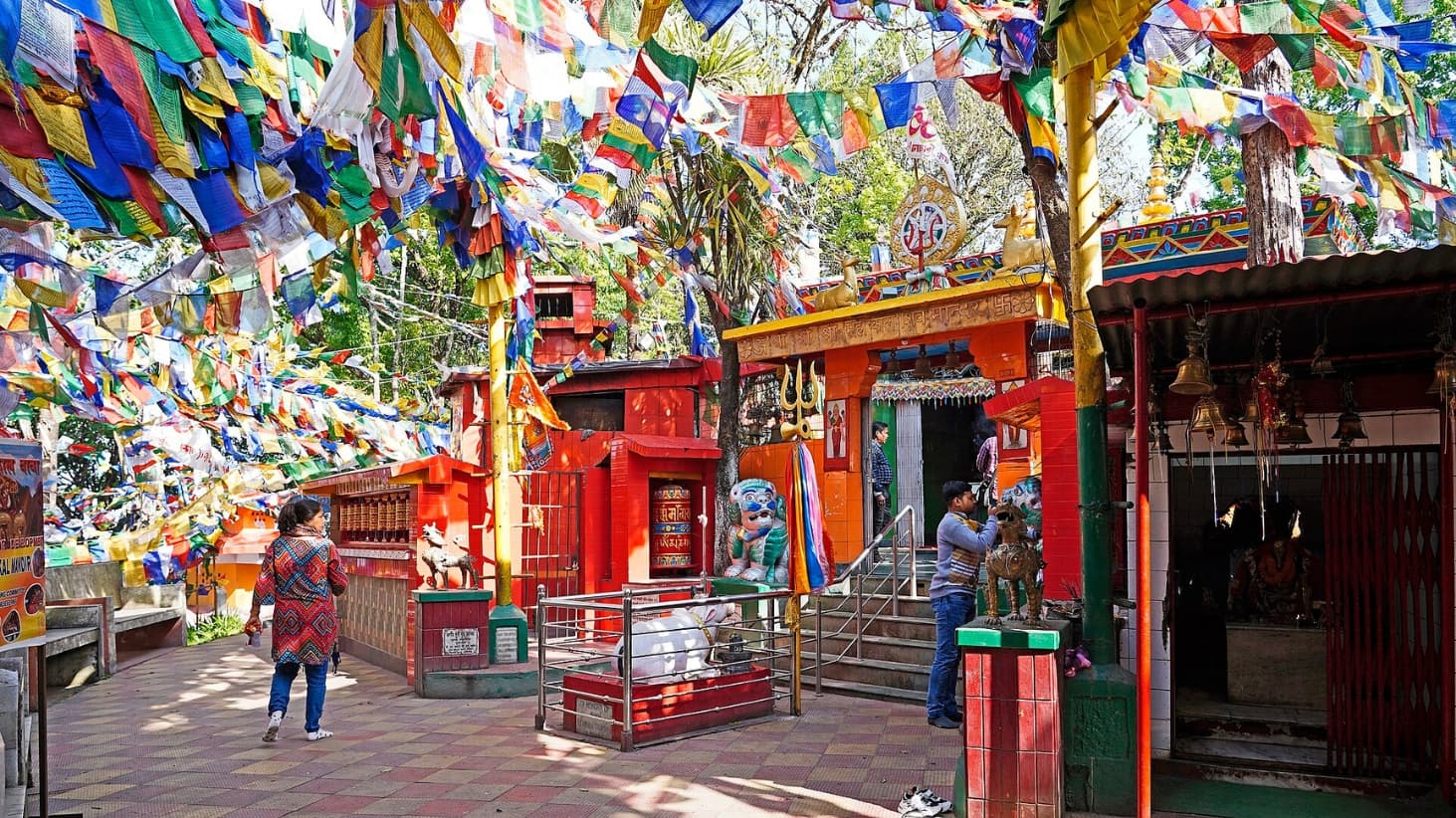
The entrance to the Mahakal Temple. (Picture by Amitabha Gupta, Wikimedia Commons)
This sacred old shrine is dedicated to Lord Shiva and carries a long history. Surrounded by tall coniferous pines, the temple is filled with Buddhist prayer flags and metal bells since a rare fusion of faiths exists here. Hindu priests and Buddhist monks perform rituals side by side.
According to historical evidence, before the arrival of the British, a monastery named Dorje-Ling (dorje meaning thunderbolt, ling meaning place or land) stood here. However, after three Shiva lingas self-manifested at the top, it was converted into the Mahakal Mandir. The Buddhist monastery was relocated just below, where it stands today in the Bhutia Busty. Both religions continue to perform their rituals and respect each other's space.
How to get there: Perched higher than the Observatory Hill, you need to walk for about 15 minutes and navigate some steep curves for about two minutes to reach the Mandir from Chowrasta.
Timings: Open from early morning until late afternoon. During festivals, it stays open throughout the day for jagrans and kirtans.
Pro tip: New regulations require modest, traditional dress. Those in Western attire can rent traditional clothing at the gate for Rs 50. Also, beware of monkeys.
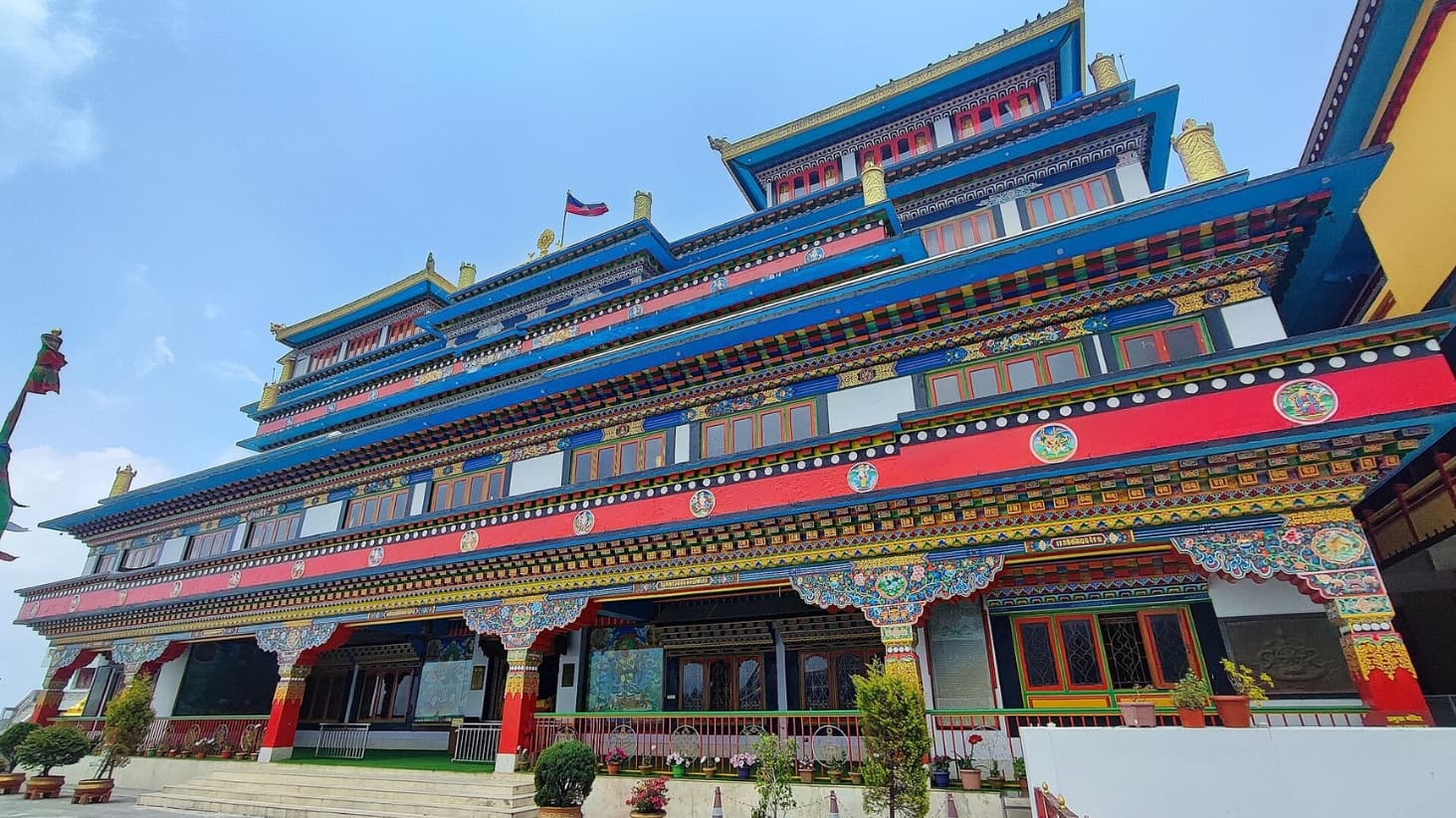
The Druk Sangag Choling Monastery, popularly known as Dali Monastery. (Picture by Sumitsurai, Wikimedia Commons)
Built in 1971, the Druk Sangag Choling Monastery, popularly known as Dali Monastery, is one of the most visually striking monasteries in the area. Located on a hillock between Ghoom and Darjeeling, it is painted in vibrant red and yellow hues. The monastery belongs to the Drukpa Kagyu sect and houses over 200 monks.
The monastery is known for its traditional Tibetan architecture, massive 6-foot prayer wheels and peaceful chanting sessions. His Holiness the Dalai Lama visited in 1993, adding spiritual significance to the site.
How to get there: The monastery sits on Hill Cart Road in the Dali area, approximately 10–15 minutes from central Darjeeling. A shared taxi costs Rs 30. Parking is available at the DRC multi-level car park nearby (Rs 50 for the first hour, Rs 20 for each additional hour).
Timings: 5am to 7pm. Entry is free.
Pro tip: Take a break and enjoy delicious Tibetan snacks, tea and coffee at the on-site cosy Konga Paljor Café.
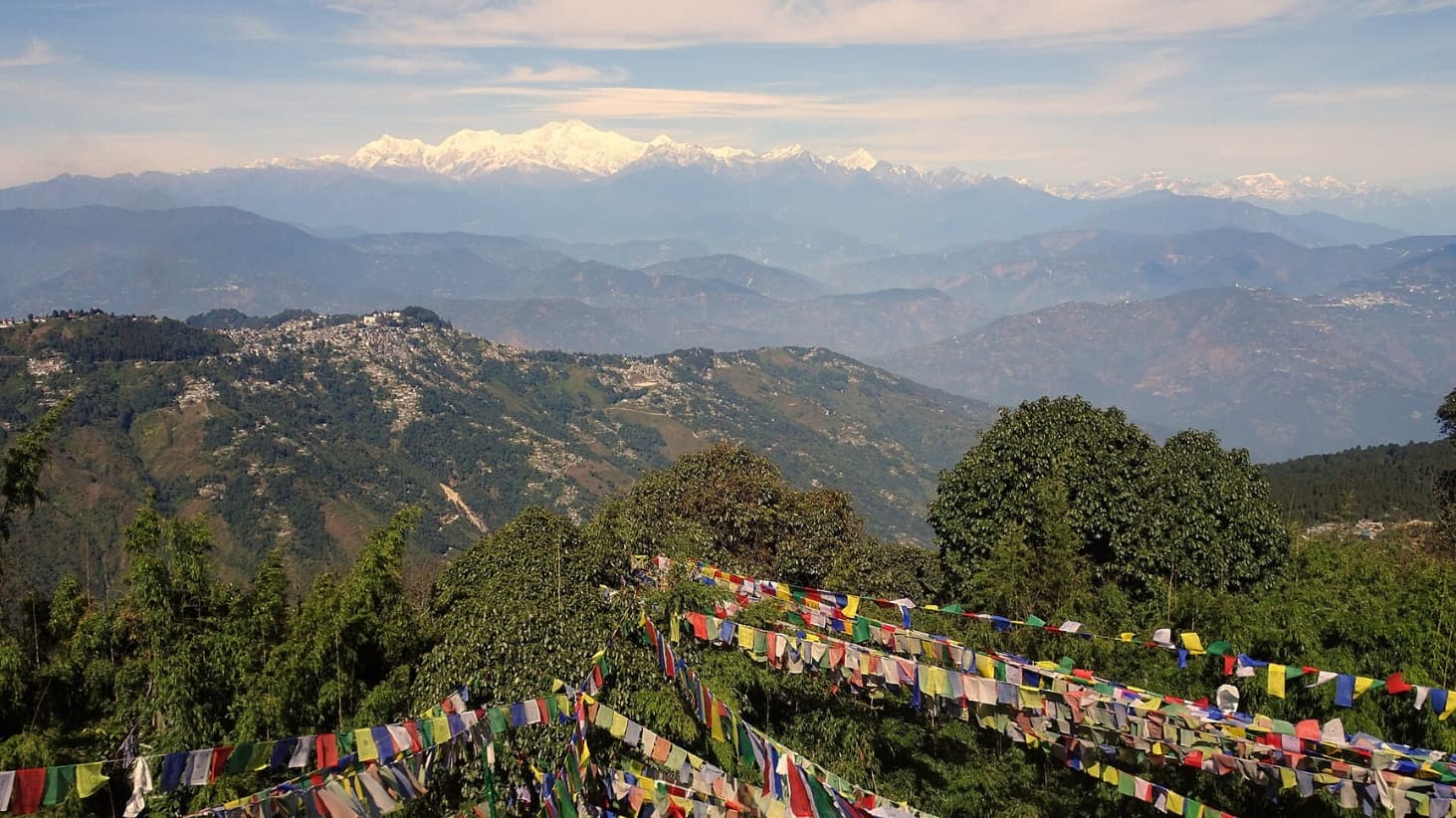
Prayer flags line the sweeping views from Tiger Hill. (Picture by DaLoetz, Wikimedia Commons)
Tiger Hill is Darjeeling’s most famous sunrise point. On clear mornings, the first rays of the sun illuminate Mount Kanchenjunga in gold and orange-pink hues and if one is lucky, even Mount Everest is visible appearing as a distant triangular peak. A short 200-metre walk from the viewpoint leads to the Sinchal Mandir. Locals and visitors alike often stop at this peaceful temple to offer prayers before heading back down the mountain.
Best time to visit: October to December or March to April
Timings: The area is most active at dawn and generally closes to visitors post 5pm.
How to get there: Tiger Hill is approximately 13km from the main town. To secure a good spot for the sunrise, one should aim to depart Darjeeling by 4am.
Pro-tip: Most hotels can arrange a full morning itinerary. Independent travellers may head to the Syndicate Taxi Stands near Nehru Road or Chowk Bazaar. From here, one can either share a taxi or hire an entire vehicle.
Note: If taking a private vehicle, there is a Rs 20 permit fee, plus a forest entry fee of Rs 20 per person. Parking charges are extra.
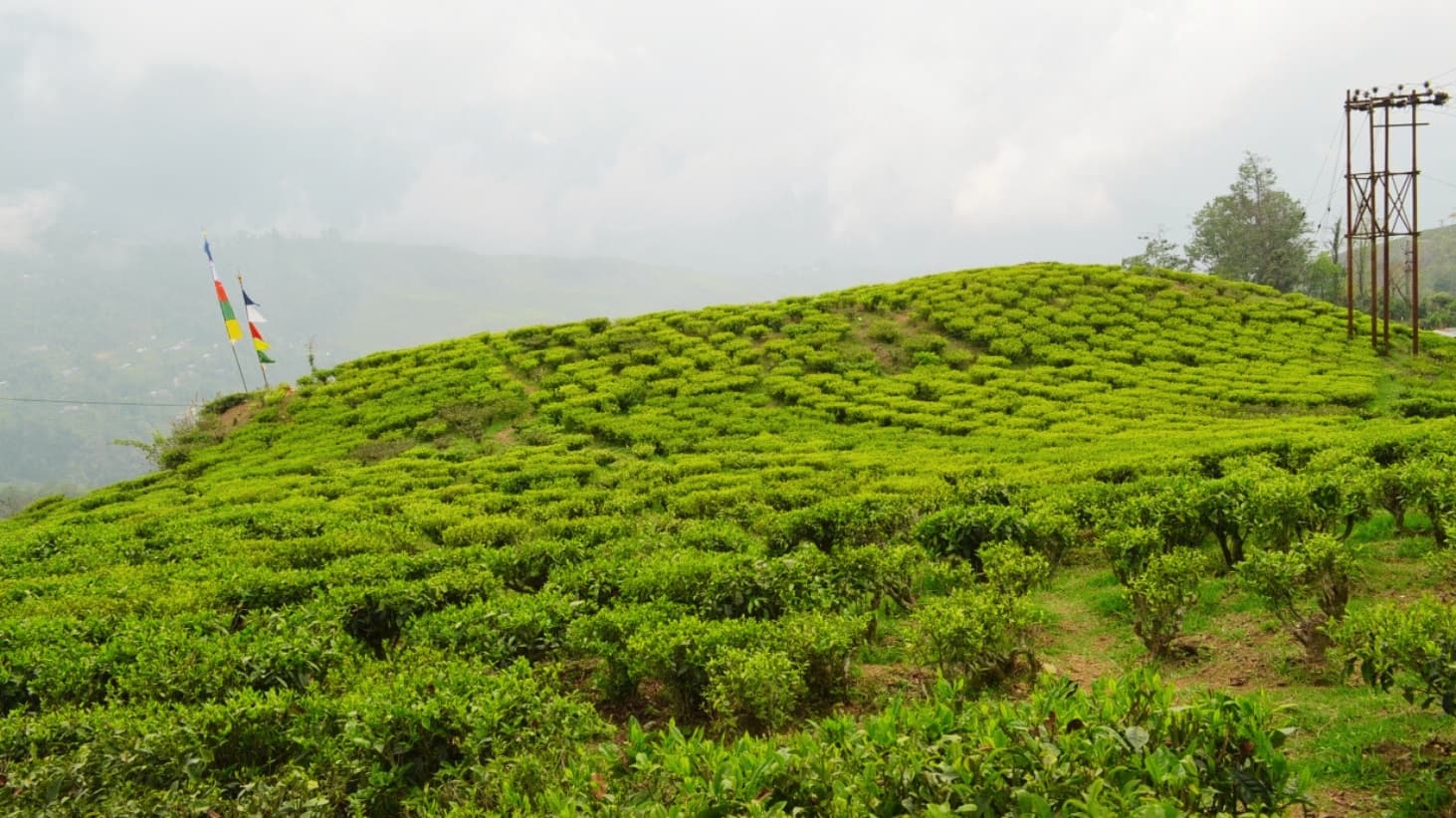
Happy Valley Tea Estate, Darjeeling's second-oldest tea garden. (Picture by Matt Stabile, Wikimedia Commons)
Established in 1854, Happy Valley is Darjeeling’s second-oldest tea estate. Spanning 177 hectares of lush, rolling hills, this "green blanket" produces some of the world's most prized organic teas. A visit here offers a deep dive into the art of tea making, from the delicate plucking in the fields to the rhythmic hum of the factory machinery.
While the estate is a place of learning and history, it also offers a touch of adventure. The downhill roads are a favourite for off-road cycling and scenic walks.
Best time to visit: Visitors can observe the tea-making process in action from March to November, when the factories are fully operational. Between December and February, plucking pauses and the machines fall silent for the winter dormancy. Even so, knowledgeable guides remain available to lead visitors through the estate’s historic grounds, offering insight into its heritage and traditions.
Pro Tip: The character of Darjeeling tea shifts beautifully with the seasons, offering a distinct experience depending on when you visit. If you’re planning to buy tea, begin with a guided tasting session. It helps you understand the subtle differences between the flushes — from aroma and body to finish — before making your selection.
How to get there: You can reach the estate via Lebong Cart Road or Lochnagar Road, both lead to TP Banerjee Road, which brings you directly to the property gates.
Timings: 8am–4pm (Tuesday to Saturday)
Cost: Approximately Rs 100–200 per person for the factory tour
Note: The estate is strictly monitored by security and the carriage or consumption of any intoxicants is strictly prohibited.
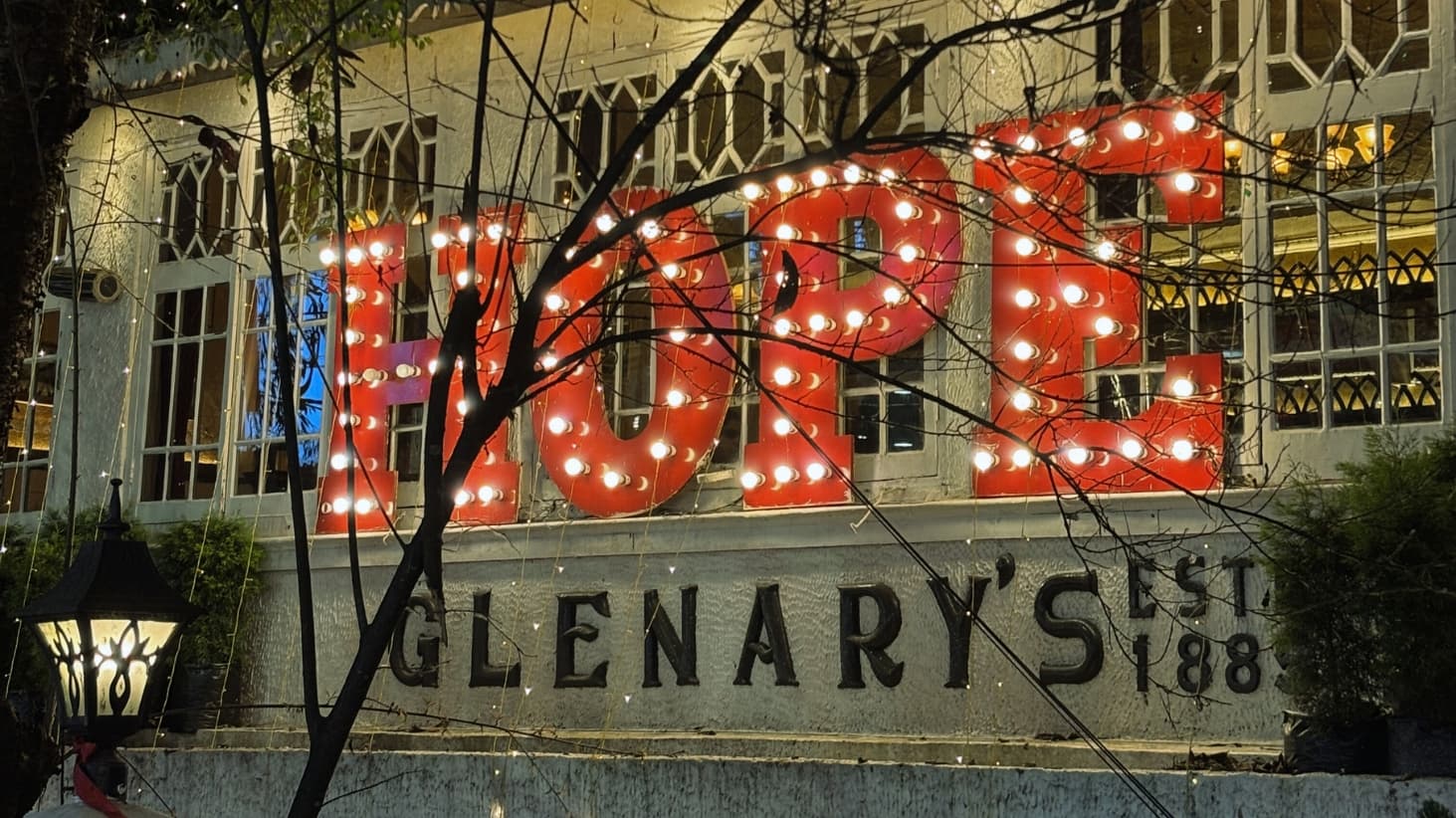
Glenary's has been serving delicious baked goods on Darjeeling Mall Road since 1885.
Both these eateries have become legacy destinations for all who visit Darjeeling. Chances are if you walk up the Mall Road the smell wafting from their kitchens will strike you with hunger pangs. Not only do they both serve some of the best food in town but they also serve up a slice of the town's colonial past.
While the “Full English” is a must-try here, Keventers opened in 1911, is also famous for its appearances in classic films and its unbeatable open-air terrace with Clock Tower views. People often begin queuing before 7am just to snag the perfect combo of an outdoor seat and the best English Breakfast platter in town.
As for Glenary’s, go there blindly for any of their baked goods, continental fare and unparalleled ambience. Established in 1885, this grand establishment has maintained its quality for over a century; together these two joints have become a rite of passage for all who visit the hill station.
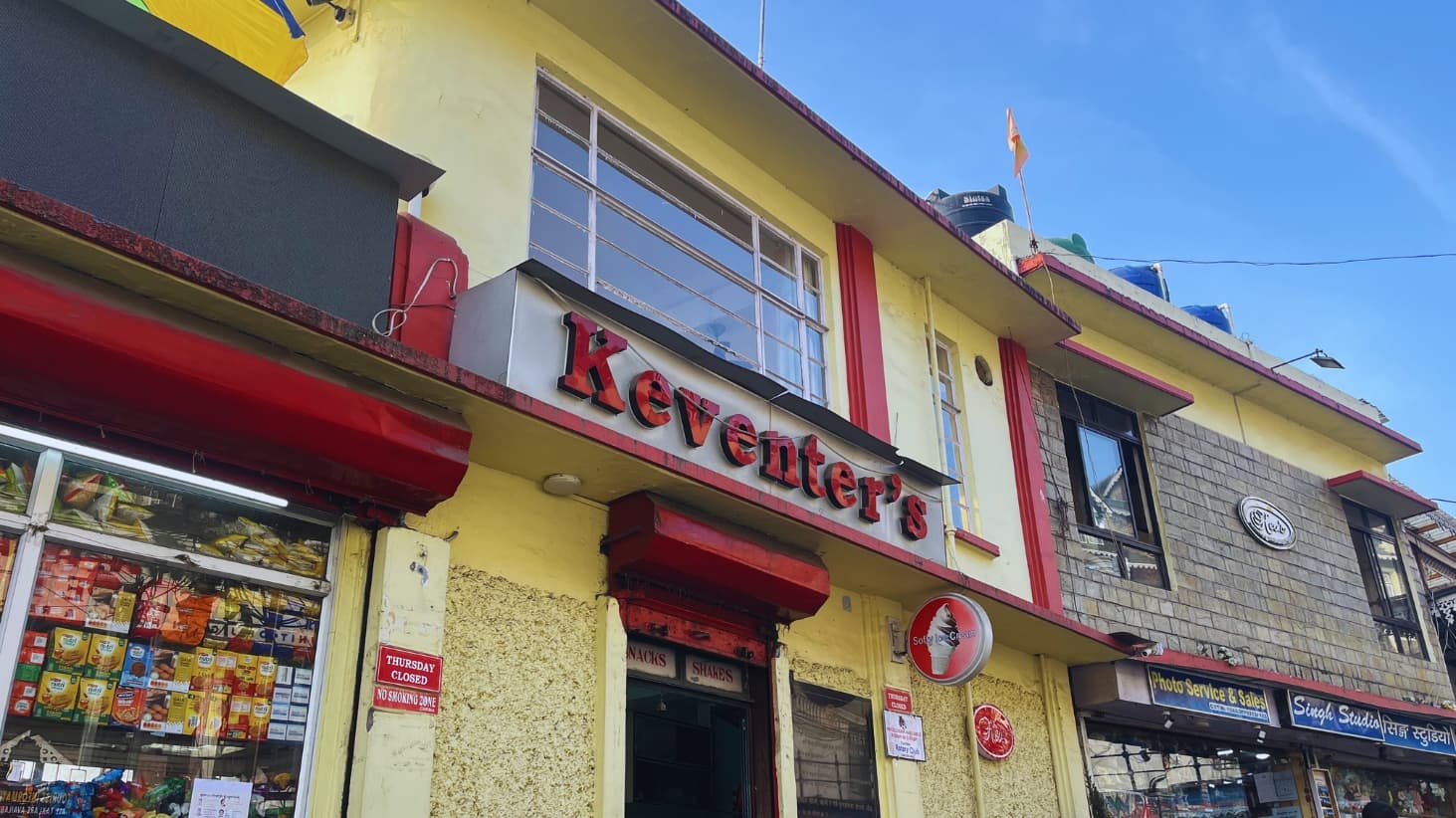
Keventer's is known to serve the best English Breakfast platter in town.
Glenary’s
Location: Nehru Road
Timings: 6am–9pm
Cost: Rs 200–600 per head
Keventer’s
Location: Nehru Road
Timings: 8am–6pm (Closed on Thursday)
Cost: Rs 200– 400 per head
Pro Tip: Don't leave without treating yourself to their famous Soft Serve Ice Cream sold at the ground floor window in Keventers. Try and grab a balcony seat at Glenary’s to get a full Kanchenjunga view.
Space out your visit so that these two can serve as the perfect rest/break spots between shopping sprees and your upward Mall Road trek.
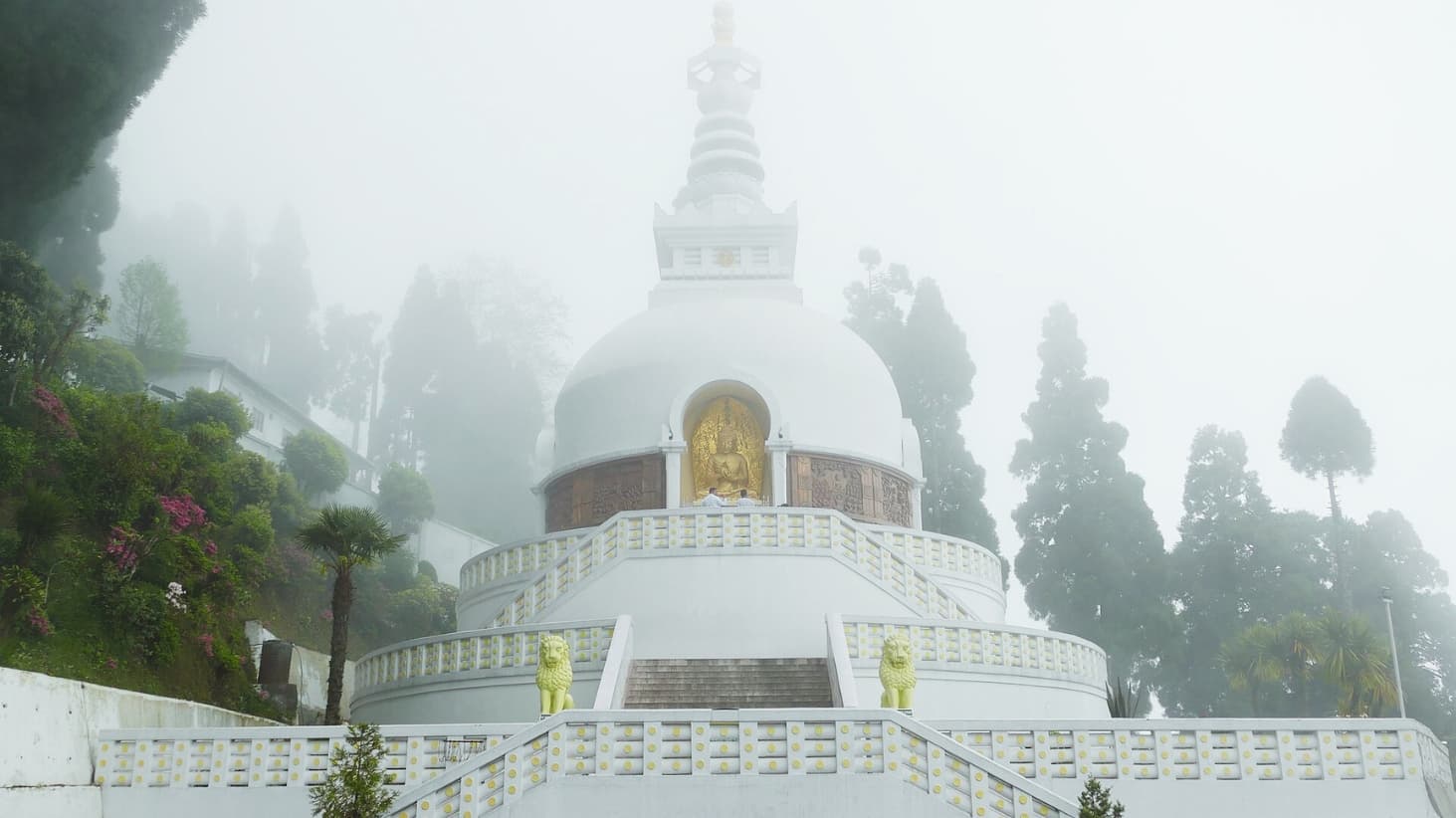
The Japanese Temple, originally known as Nipponzan Myohoji. (Picture by Ankur P, Wikimedia Commons)
Perched on the serene Jalapahar Hill, the Japanese Temple (originally known as Nipponzan Myohoji) is a stunning 1972 shrine built in traditional Japanese style. Its brilliant white walls symbolise peace and purity, offering a quiet escape where time seems to slow down. Beyond its architecture, the temple is known for its warm inclusivity.
Nearby stands the Peace Pagoda, offering panoramic views of the hills.
How to get there: The temple is located about 10–15 minutes from the Darjeeling town centre by car.
Best time to visit: To truly experience the temple's soul, time your visit with the daily prayer ceremonies (Morning: 4am–6am; Evening: 4.30am–6.30pm). Visitors are welcome to participate in chanting mantras, playing the traditional drums and receiving prasad (blessed sweets).
Note: Photography is strictly prohibited inside the prayer hall to maintain the sanctity of the ritual.
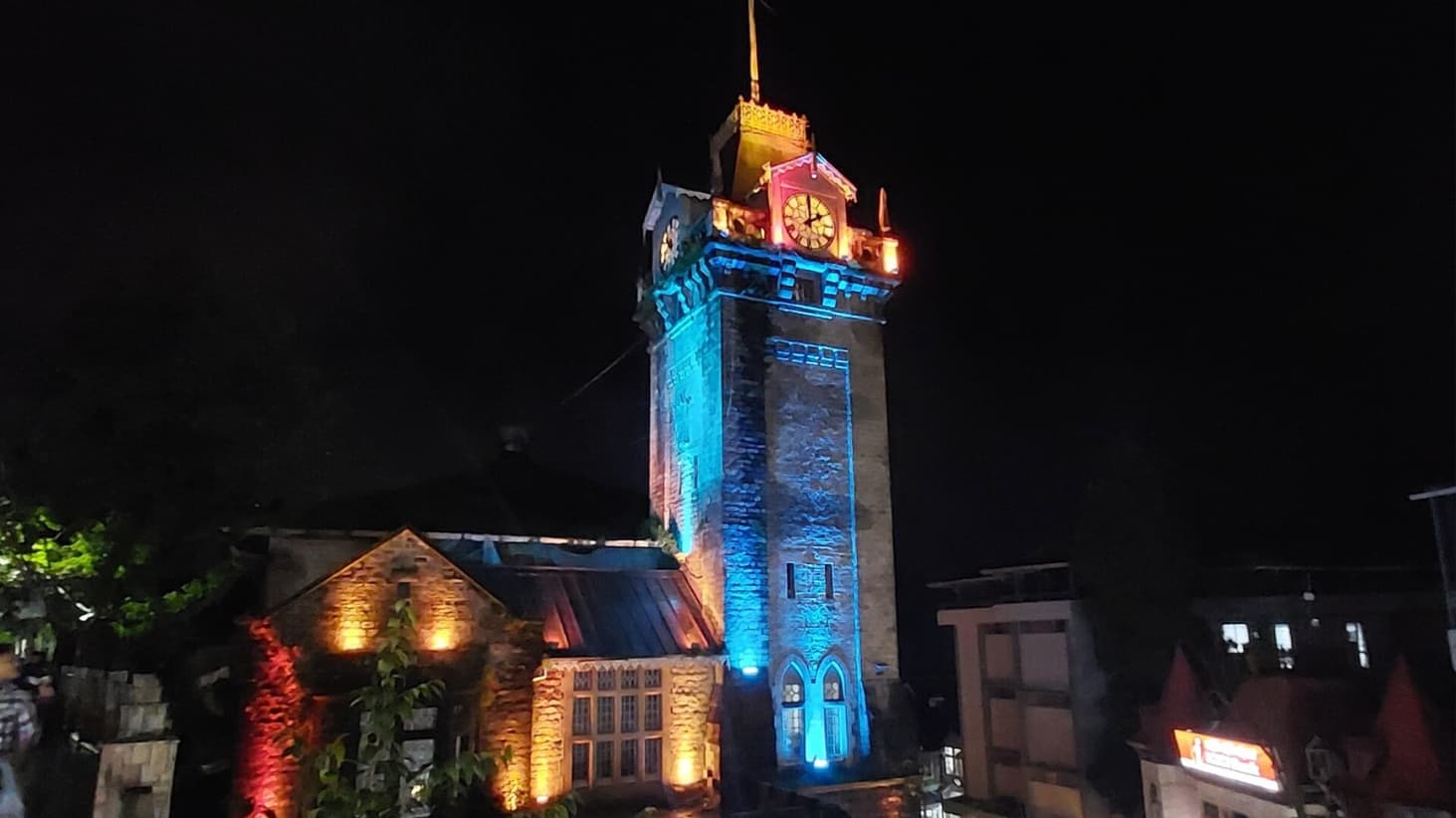
The Clock Tower, illuminated are night. (Picture by Pinakpani, Wikimedia Commons)
Before personal watches existed, clock towers served a vital function: telling time for entire communities while standing as monuments to architectural beauty and civic pride. Darjeeling's Clock Tower, with its neo-Gothic and neo-Classical inspiration, is a colonial masterpiece. Constructed around 1850, this 100-foot-tall stone structure is locally known as Ghanta Ghar, a name that gained wider recognition when the Bollywood film Barfi! was shot here.
Originally a central assembly point for important announcements and community gatherings, the tower now hosts seasonal book fairs and national and international exhibitions that showcase home-grown businesses and local craftsmanship.
Location: Laden La Road, Chowk Bazar.
How to get there: It is within easy walking distance from the Mall.
Pro tip: Visit in the afternoon when the mountain sun washes its stone walls golden, perfect for Instagram-worthy shots.
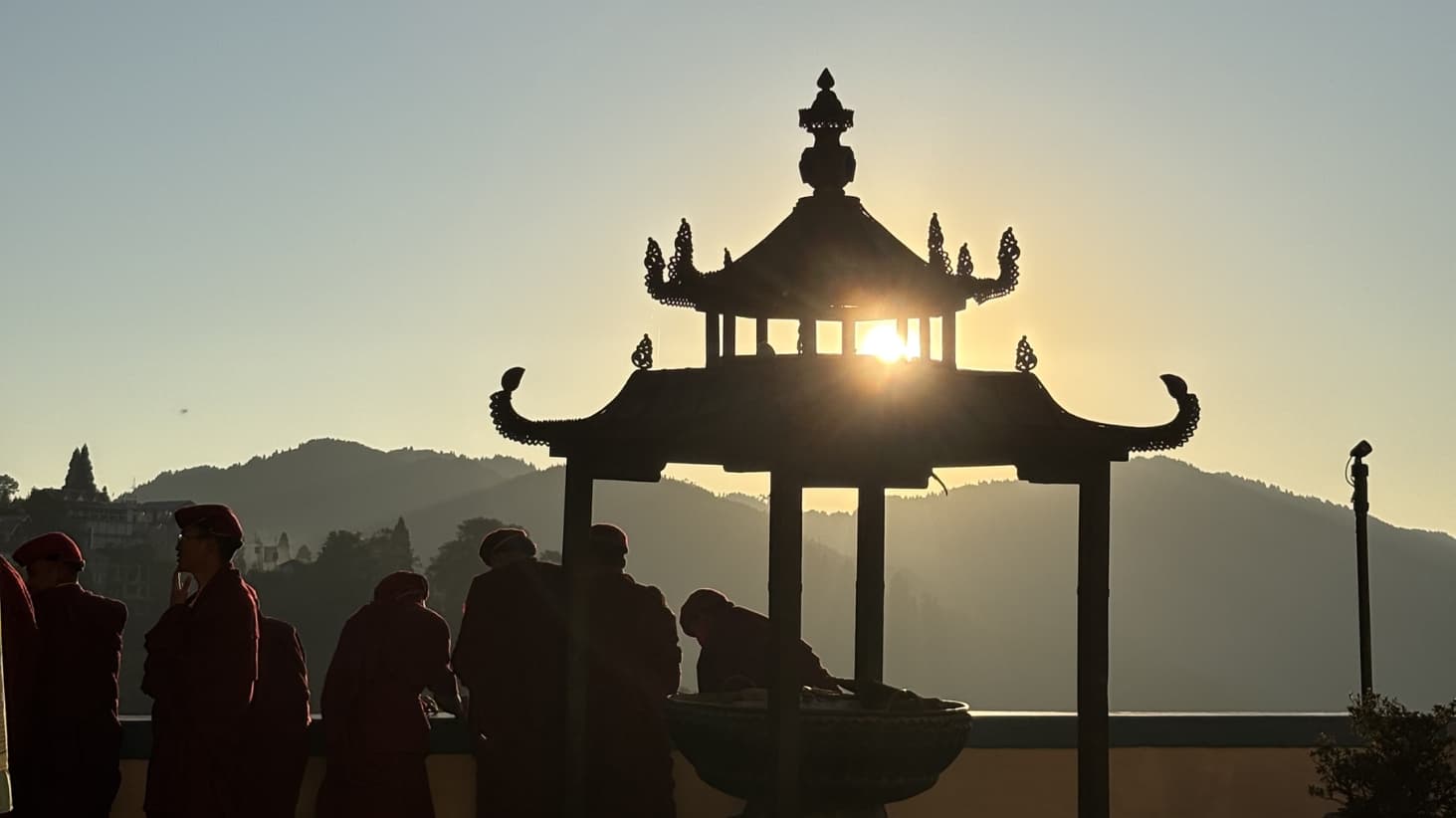
Sunrise filters through the pagoda at the Dali Monastery.
Box: When planning a day of sightseeing in Darjeeling, it often makes sense — both for time and for budget — to group nearby attractions into a single, well-planned circuit rather than visiting them one by one. Local taxi operators offer half-day and full-day packages that allow travellers to cover several of the town’s best-known landmarks in one smooth loop. A popular option is the Tiger Hill sunrise circuit, which usually includes stops at Ghoom Monastery and the Batasia Loop, letting you take in mountain views, heritage and quiet hilltop spaces in a single outing. During peak tourist months, this circuit typically costs between Rs 4,000 and Rs 4,500 for a full vehicle, while in the off-season the same route is usually available for Rs 3,000 to Rs 3,500.
There are other closer-to-town hillscapes and sites, including the Peace Pagoda, which can be made a packaged tour — creating a relaxed half-day itinerary that balances scenery with easy travel. These circuits generally cost around Rs 2,000 to Rs 2,500, making them a practical and pocket-friendly way to see more of Darjeeling without constantly negotiating individual rides.


