



Poila Baisakh on a platter
As Bengal rings in a new year, its cuisine — restless, curious and always hungry for the next idea — reminds us that the most living traditions are the ones that never stand still

 Published on 2026-04-14Updated on 2026-04-14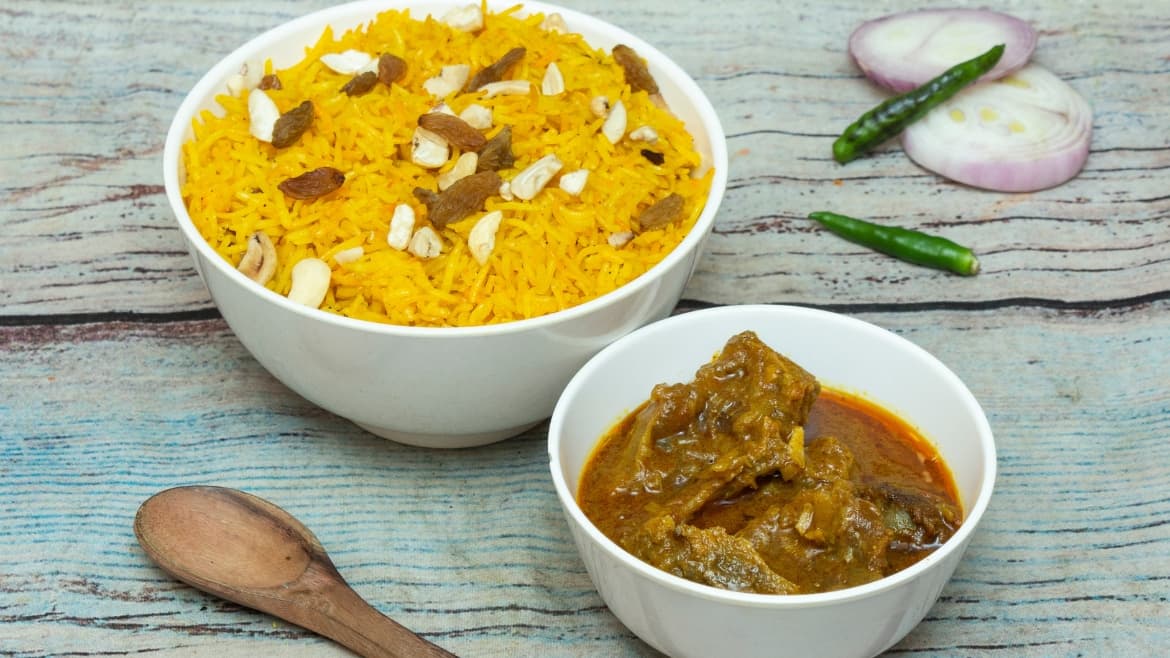
Poila Baisakh is often spoken of as a return — to roots, ritual and the familiar comforts of the Bengali table. And yet, Bengali cuisine has never really been static enough to permit a simple return. Bengal, as both geography and idea, has always been porous. Its rivers have carried not just silt but stories; its ports have welcomed traders, colonisers, migrants and ideas in equal measure. From early mercantile exchanges to the consolidation of power under the East India Company, Bengal has rarely existed in isolation. It has been shaped, continuously, by encounter.
Within this landscape, the Bengali community emerges not as a static cultural block but as a thinking, adaptive collective. Food here has never been merely about sustenance. It is argued over, intellectualised, ritualised and reinvented. This is what defines Bengal’s culinary identity at its core: the presence of the thinking diner. A culture where the act of eating is inseparable from reflection, where taste is debated as seriously as literature, and where ingenuity is born not out of scarcity alone, but out of curiosity.
Reinvention within restraint
One of the clearest historical expressions of this culture-cuisine connection is niramish cooking, shaped in large part by Bengal’s widow communities. Within strict dietary boundaries, where many beloved ingredients were forbidden, these women developed a cuisine defined not by lack, but by invention. What might have been experienced as deprivation became a space for creativity. Dishes like shukto (a medley of vegetables with a hint of bitter and fried lentil dumplings), everyday dals, chochchori (a homestyle dry dish of seasonal vegetables), labra (a mushy mix of vegetables) and even the flavours of Durga Puja bhog (food offered to the deity) reflect this sensibility — restrained, precise, yet deeply satisfying.
That same instinct still shapes how Bengali food evolves today. Poila Baisakh menus may foreground celebration — ilish (hilsa), kosha mangsho (slow-cooked mutton), pulao, chutney, mishti (sweets) — but the deeper logic of the cuisine remains the same. It is not merely abundance that defines the Bengali table; it is thoughtfulness. The ability to create layers of flavour, emotion and identity from what is available, what is allowed and what the moment demands. The festive meal, then, is not a break from Bengali culinary philosophy. It is its fullest expression.
The craft behind the feast
If niramish (vegetarian) cooking reflects how social structures shape cuisine, Bengal’s food culture also reveals a deep respect for craft and technique. One of the most striking examples is the boti — a tool that is as much an extension of the hand as it is of tradition. Whether in domestic kitchens or bustling fish markets, its use reflects an extraordinary level of precision. Fishmongers deftly break down delicate fish like pabda and parshe, while in households, preferences for chhoto machh cuts are highly specific — heads on or off, roe preserved or removed, collars kept or discarded.
This technical sensitivity extends into the home kitchen. Vegetable cuts are not incidental but intentional: the way potatoes are shaped for different dishes, or how vegetables are sliced for chochchori, directly affects texture and taste. Even something as simple as finely sliced onions for slow-cooked meat dishes speaks to a quiet, practised skill.
A similar sophistication appears in Bengal’s sweet-making traditions. Across different schools of mishti, there is a nuanced understanding of heat, time and transformation. In mishti doi, for instance, the characteristic caramel colour often comes not just from jaggery, but from the slow reduction and gentle caramelisation (or the Maillard reaction) — akin to the processes behind kheer or payesh. Variants like kheer doi push this even further, resulting in a denser, more complex flavour. From pantua and Ledikeni to kalo jam and chhanar jilipi, differences in dough composition, frying and syrup absorption create distinct textures and flavours within a shared framework.
What is remarkable is how this technical language continues to evolve. Contemporary iterations, such as baked chhena poda-style desserts or the Baked Rosogolla popularised by Balaram Mullick & Radharaman Mullick, extend these same principles into new forms. The point is not novelty for its own sake. It is that Bengali cuisine remains rooted enough to innovate without losing itself.
Seasonality as memory
Another defining facet of Bengali cuisine is its deep relationship with seasonality, where shifts in weather are closely tied to cultural practice. A well-known example is Choddo Shaak, eaten on the eve of Kali Puja. The ritual brings together 14 varieties of leafy greens, marking the transition from autumn into winter. It reflects both abundance — this is when greens thrive — and a more intuitive understanding of nourishment, with bitter and fibrous leaves often associated with cleansing and immunity.
A lesser-known but equally evocative example is Garur Dal, a dish that almost feels like a fleeting calendar marker. Cooked on the last day of the Bengali month of Ashwin and eaten the next day, it marks the transition from autumn into early winter. It brings together vegetables that are leaving the markets with those just arriving, alongside ingredients like shapla that are available only at this exact moment.
This seasonal intelligence matters when thinking about Poila Baisakh. Bengali New Year is not just a date; it is a seasonal threshold. The meal associated with it carries the brightness, sharpness and hospitality of a new beginning. Raw mango appears in chutneys, lighter vegetables reclaim their place, and even richer spreads are balanced by an instinctive understanding of heat, appetite and climate. The celebration is festive, yes, but never entirely disconnected from the land and the market.
A cuisine that absorbs
When we speak of Bengal’s palate, what stands out is that it has always been evolving. Bengal’s openness — shaped by trade, migration and history — has continually absorbed and reinterpreted influences from elsewhere. Take the phuchka, for instance. While its origins lie in North India, across regions like Varanasi and parts of Bihar, it has been completely reimagined in Bengal, with its sharper tamarind water, spiced potato filling and distinct texture.
More significantly, waves of migration have reshaped everyday eating. The arrival of Wajid Ali Shah in Kolkata brought with it the refinement of Awadhi cuisine, giving rise to the now-iconic Kolkata biryani — subtler, fragrant and marked by the inclusion of potato. Alongside, communities such as Punjabis, Marwaris and Bengali Muslims expanded the city’s relationship with wheat: from tandoor-baked breads like khamiri roti to enriched breads like sheermal, these were not native to a traditionally rice-centric table, yet are now integral to it. Variations of kochuri-torkari across Kolkata, the hybrid history of the cabin and telebhaja shop and even dishes like chicken à la Kiev or chelo kebab tell the same story: Bengal embraces outside influences not by imitation, but by absorption.
And that may be the most fitting way to understand Poila Baisakh today. The Bengali New Year meal is not a museum display of authenticity. It is a living table. One that honours memory, craft, seasonality and ritual, but remains open to reinterpretation.
Shubho Noboborsho and happy eating!
Auroni Mookerjee is a Kolkata-based chef by day and occasional writer by night. His latest culinary endeavour is Yokocho on Kolkata’s Park Street.


