A joint initiative by



 Published on 2026-01-20Updated on 2026-01-20
Long-necked horses, stout elephants, ekchala Durga idols and figures inspired by Hindu mythology sunning in front of huts welcome visitors to Panchmura, the “terracotta village of Bengal”.
Tucked away in the Bankura district of West Bengal, Panchmura is home to 60 to 70 families of kumbhkars (potters) who are keeping alive terracotta art. Terracotta — meaning “baked earth” — is the result of a laborious and meticulous process. Artisans give shape to clay by hand and fire their creations in traditional kilns, using wood fuel or eucalyptus leaves. Natural heat and smoke lend each piece a distinctive hue and texture.
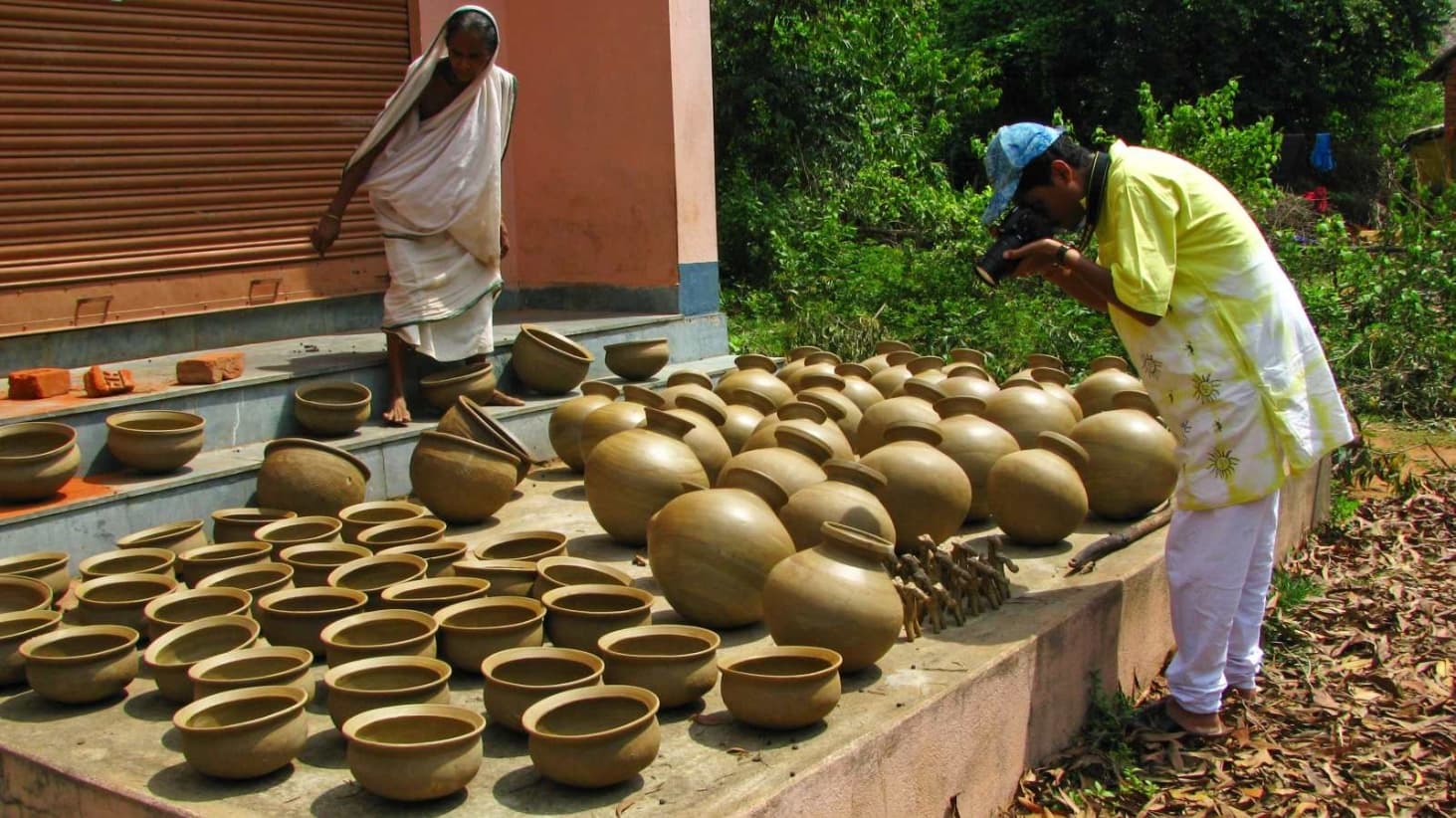
A tourist checks out terracotta pots left to dry naturally in the open.
Panchmura is located 24km south-west of Bishnupur, the famous temple town of West Bengal. Shops selling terracotta artworks abound in Bishnupur but in Panchmura one can watch the artisans at work and choose from a wide variety of artefacts at a more reasonable price. Besides horses and elephants, Manasa chali (idol of Manasa, goddess of snakes), figures inspired by Hindu mythology, shankha and a wide array of decorative objects are also made.
The road to Panchmura is scenic. Driving through a small forest range, crossing the Douni bridge over Mukutmanipur canal, one can reach Panchmura from Bishnupur in an hour. In Panchmura, visitors can walk around the village, where the artisans have terracotta artworks made by them on display outside their homes. The best time to watch the artisans at work is after mid-May. The beginning of the work season is marked by a ritualistic worship of the potter’s wheels, known as chaka puja.
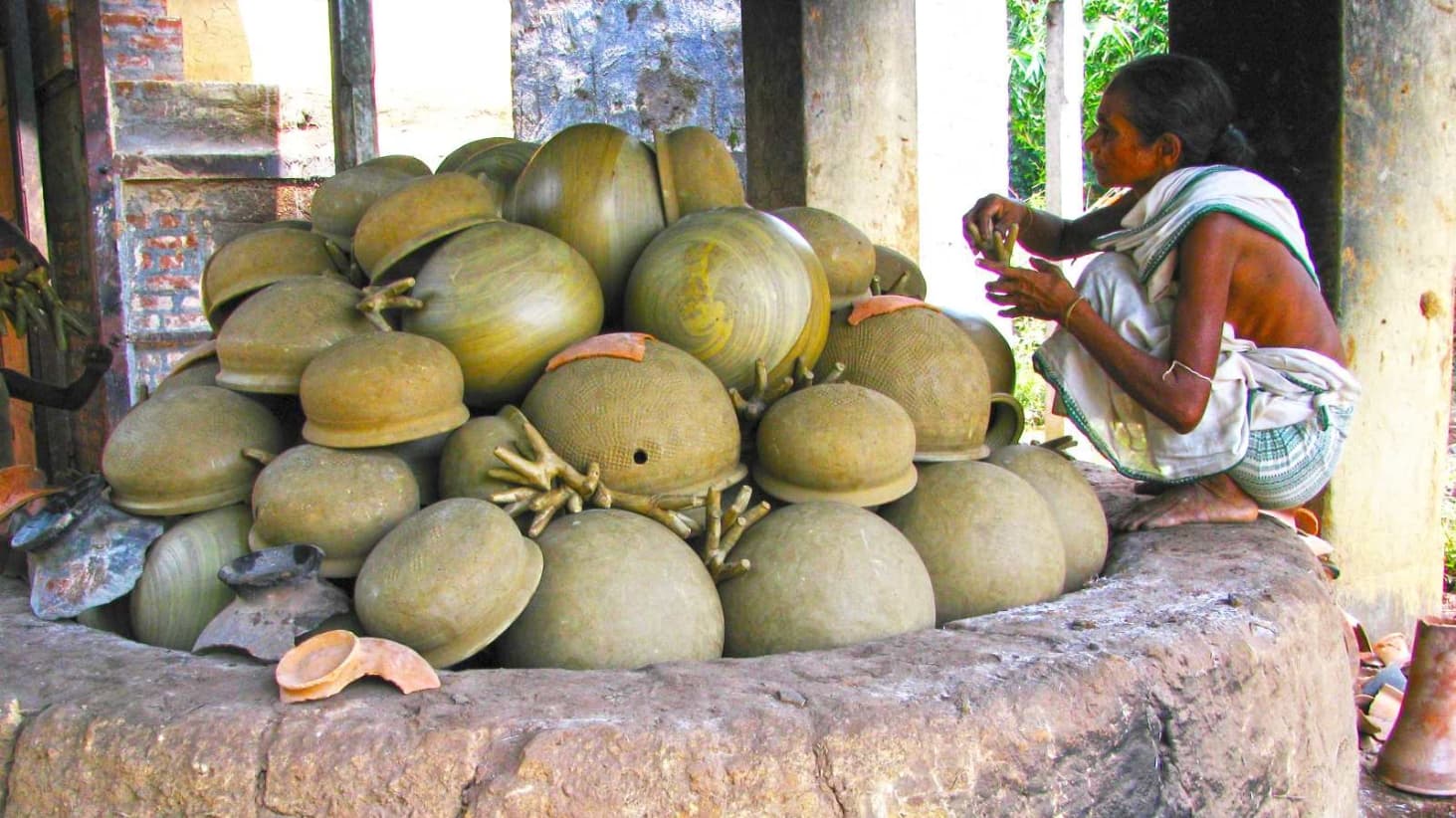
Traditionally, the baking process of clay takes place in a carefully constructed bhati (furnace).
The process of creating a terracotta artwork begins with the careful preparation of materials. Lateritic clay is blended with essential natural additives such as hay, sand and water to achieve the right consistency. The mixture is thoroughly kneaded by hand or foot to ensure perfect binding. Once the clay is ready, skilled hands shape it into basic cone or cylindrical forms on the potter’s wheel and leave it to dry naturally in the open for one to two days. Once the moisture slowly evaporates and the shapes are dry, the parts are carefully joined and assembled to create various shapes and figures. In the final phase, intricate motifs are carved by hand, using traditional tools made of bamboo or wood.
The artefacts are baked in the furnaces dug in the ground and lined with bricks for controlled heating. Natural fuels such as coal, cow dung and dried eucalyptus leaves are used.
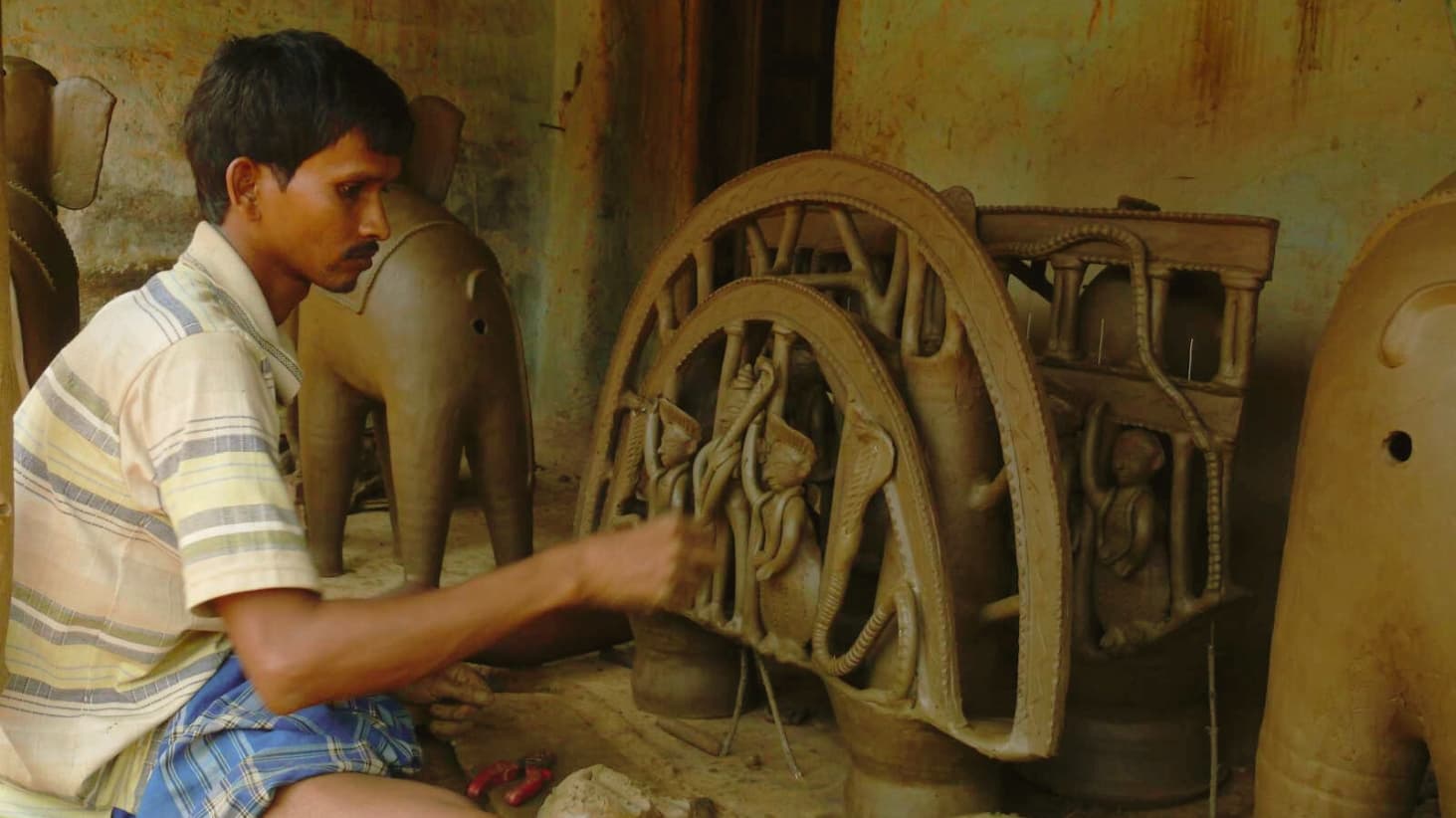
A kumbhakar building a Manasa Chali.
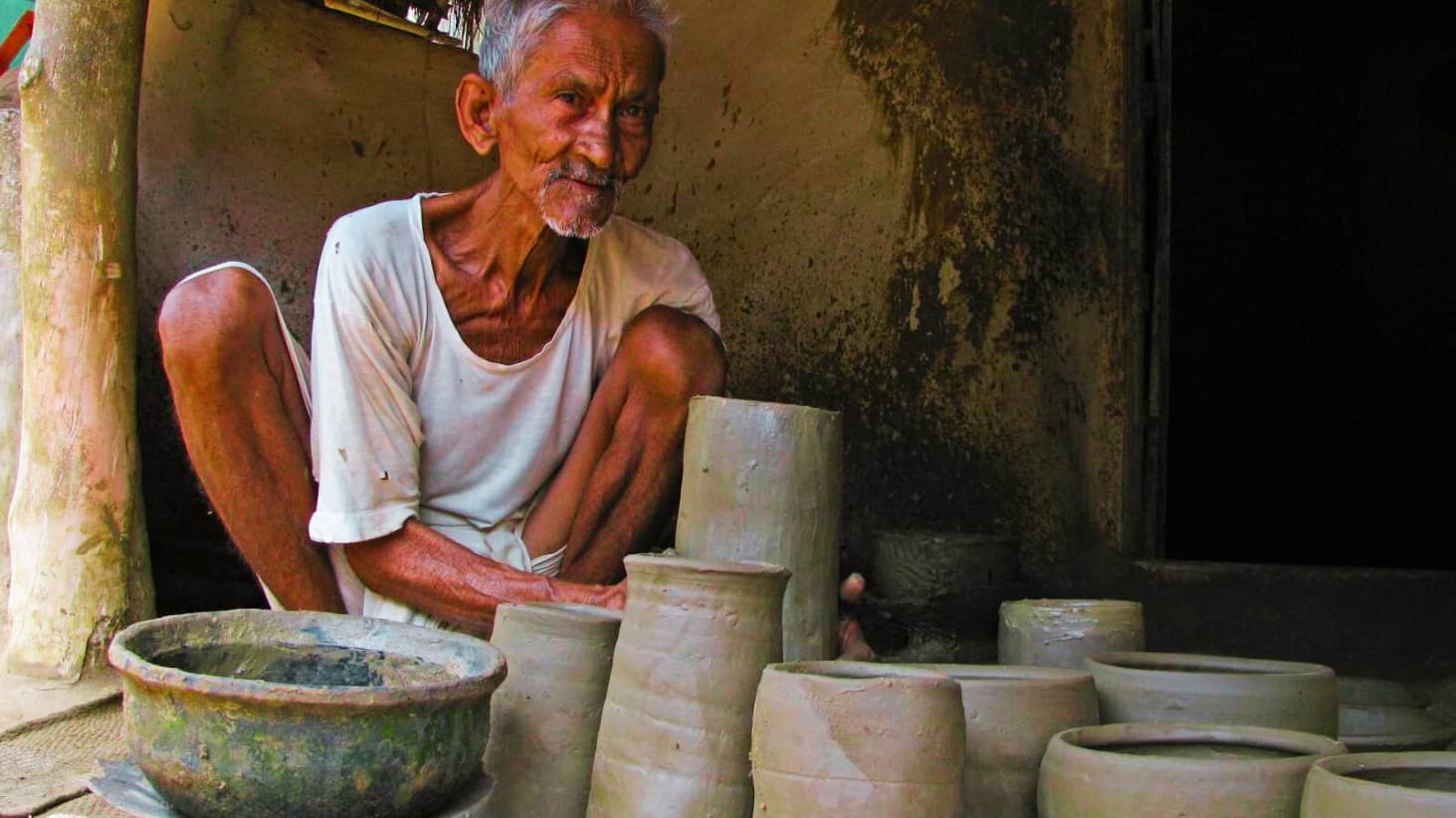
A veteran Kumbhakar making terracotta pots.
Panchmura’s terracotta tradition dates back to the Malla dynasty. In the late 7th century CE, craftsmen started adorning the walls of temples in Bishnupur with intricate terracotta panels, elevating the craft from everyday utility to architectural storytelling. With time, terracotta art has gained international recognition and a Geographical Indication (GI) tag.
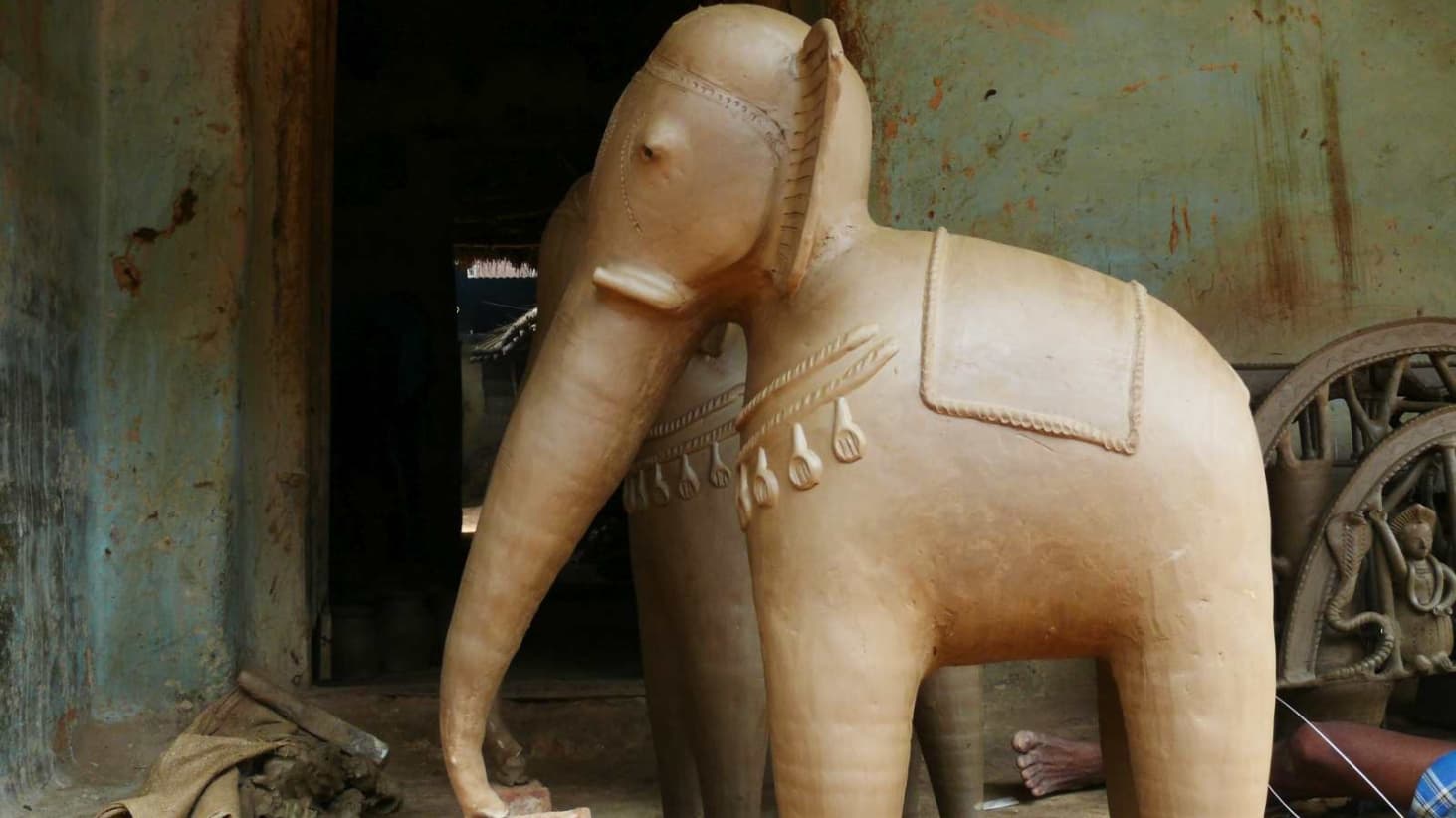
A terracotta elephant left to dry.
The Panchmura Mritshilpi Samabay Samity, a cooperative society based in Panchmura, has been supporting terracotta artisans to help sustain the heritage. Blending tradition with innovation, the Samity recently introduced electric furnaces, marking a significant shift in the craft’s production process. These modern kilns reduce physical labour, save valuable time, allow repeated use and significantly minimise pollution.
A three- to five-day craft fair and folk festival is held in Panchmura every November-December, turning the village into a lively cultural hub.
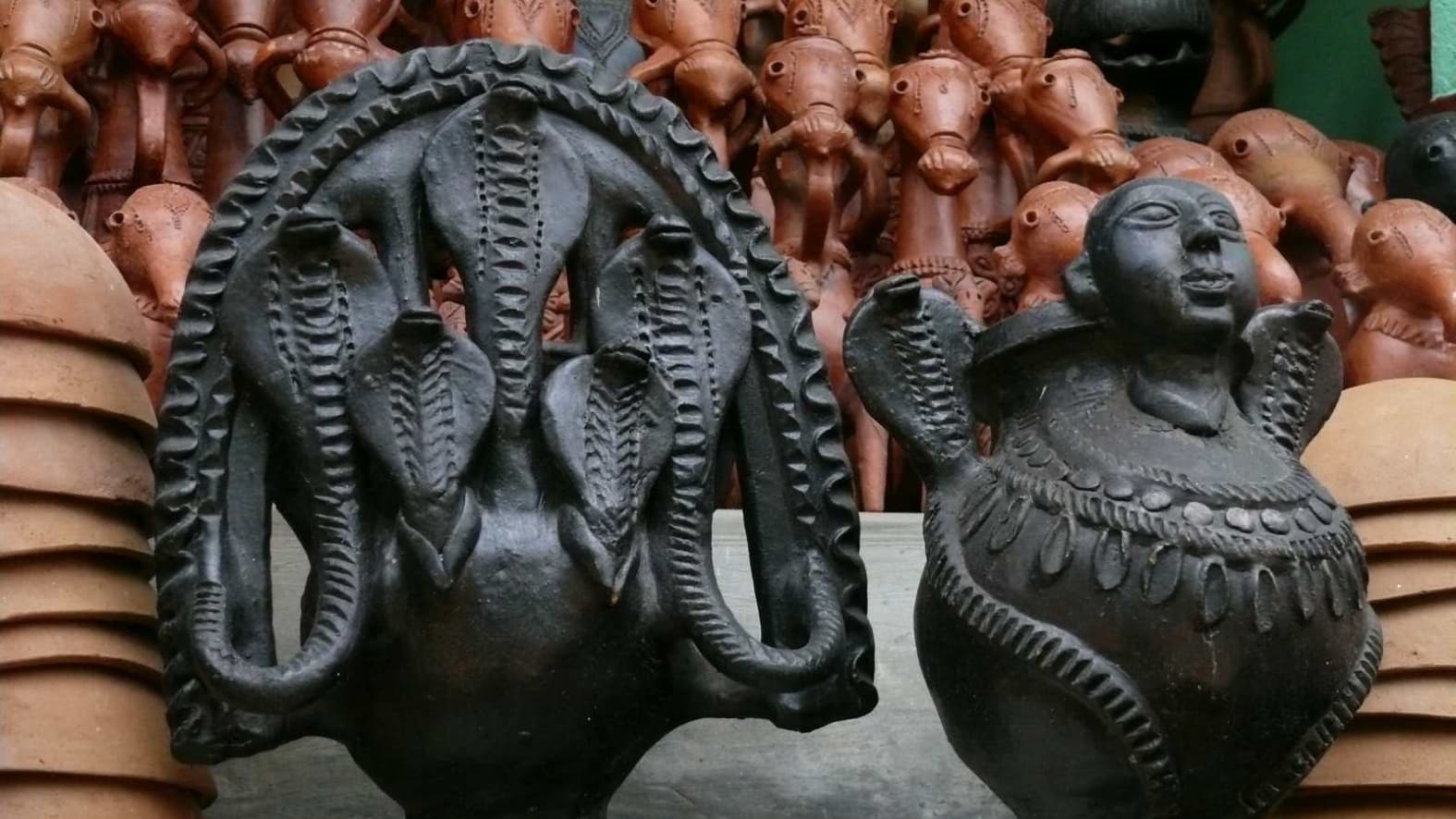
Manasa Chali on display at Panchmura.
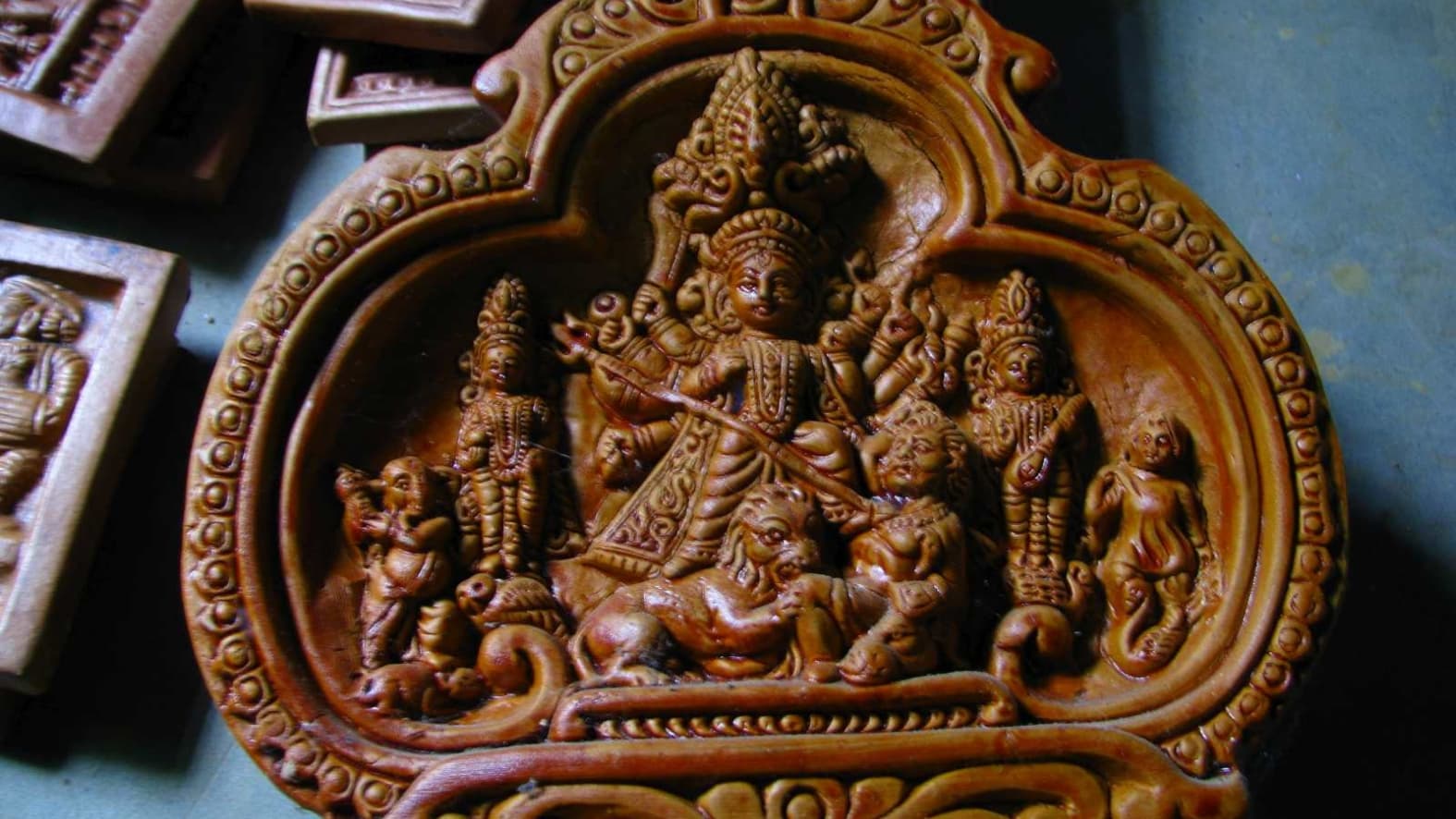
Durga on display.
How to reach
By train: Nearest railway station is Bishnupur
By road: Five-hour drive from Kolkata (around 160km)