
A joint initiative by



 Published on 2026-05-12Updated on 2026-05-12
Few snacks capture the spirit of Bengal as beautifully as jhalmuri. Sold on the streets, railway platforms, bus stops, beaches and even moving trains, this humble puffed rice mixture is woven into the rhythm of Bengali life. It is flavourful, inexpensive and deeply nostalgic. For visitors exploring Bengal, tasting jhalmuri is almost a rite of passage, one crispy bite at a time.

Few snacks capture the spirit of Bengal as beautifully as jhalmuri. (Shutterstock)
The word itself tells the story beautifully: in Bengali, jhal means spicy, while muri means puffed rice. Together, they literally translate to “spicy puffed rice”.
At its heart, jhalmuri is a spicy puffed rice snack that brings together an irresistible medley of flavours and textures. Light, airy muri is tossed with mustard oil, spices, chanachur, roasted peanuts and often sprouted brown chickpeas, creating layers of texture and an earthy depth. Finely chopped red onions, fiery green chillies, boiled potatoes and juicy tomatoes add freshness and substance, while coriander and a squeeze of lime brighten the mix. To finish, many vendors stir in a spoonful of oil from a jar of mango pickle, lending the snack its signature fermented tang and unmistakable kick. The whole thing is tossed together in seconds, tumbling and clattering in the bowl before being scooped into a newspaper cone.
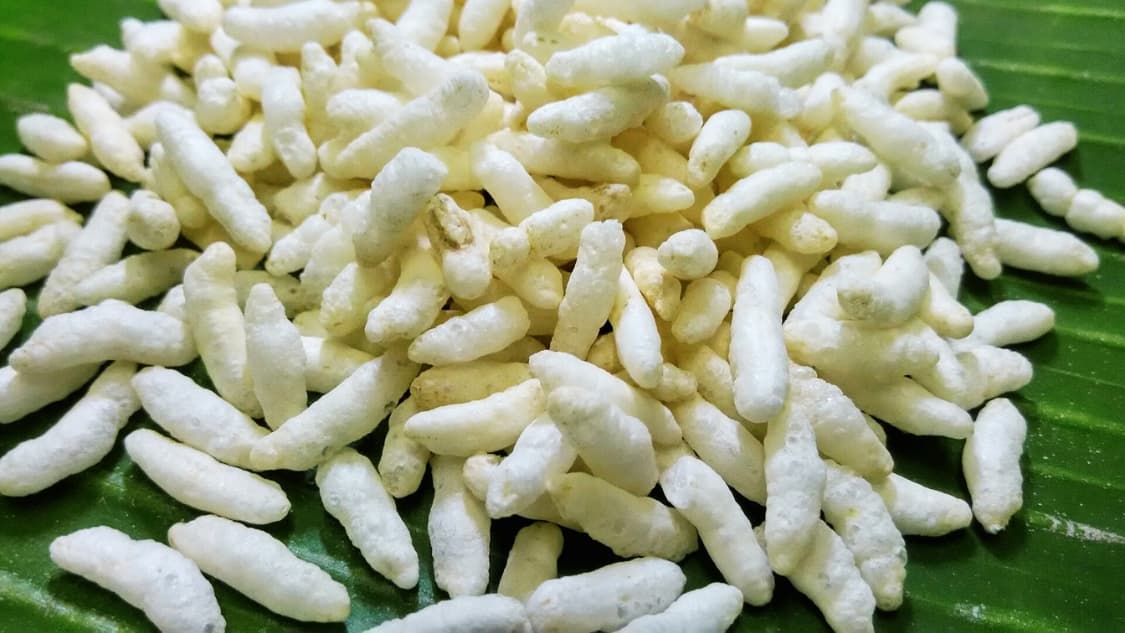
Muri itself has deep roots in Bengali culinary history. (Picture by Thamizhpparithi Maari, Wikimedia Commons)
Muri itself has deep roots in Bengali culinary history. Puffing rice or heating it in hot sand until the grains balloon and crisp is an ancient technique practised across the subcontinent, but few cultures have made it as central to daily life as Bengal. Muri is eaten at breakfast with milk and bananas, crumbled into tea as a quick bite and served alongside tea as an evening snack.
As the spiced, spirited avatar of muri, jhalmuri evolved from a simple snack into an enduring symbol of Bengal’s street-food tradition that has long kept the region’s working population fed, satisfied and fiercely devoted to flavour. Found across West Bengal and much of eastern India, it feels most at home in Kolkata, where it remains deeply woven into the city’s identity.
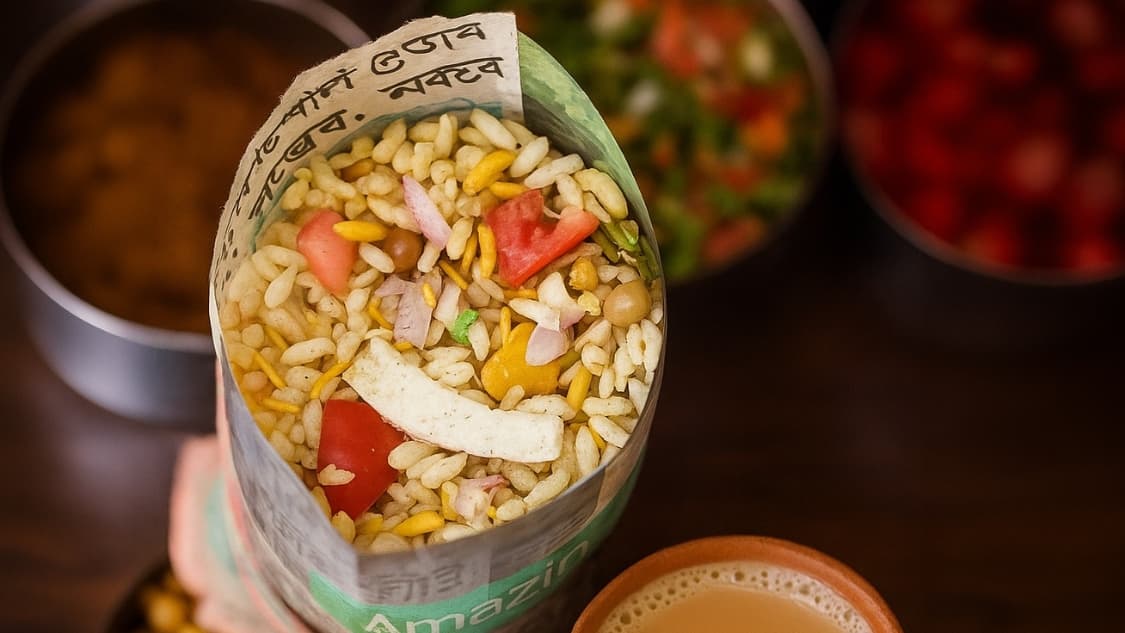
At its heart, jhalmuri is a spicy puffed rice snack that brings together an irresistible medley of flavours and textures. (Shutterstock)
There is no single “correct” version of jhalmuri. Every vendor adds a personal touch and every Bengali family has its own preferred recipe. That is part of the charm.
One of the most fascinating aspects of jhalmuri is its seasonal evolution. In the blistering heat of a Bengali summer, vendors often introduce kaancha aam (raw green mango). The sharp, acidic bite of the mango replaces or augments the lime juice, providing a refreshing tartness that cuts through the humidity. In winter, you might find more fresh coconut slivers or even a bit of ginger to add warmth. During monsoon evenings, the mustard oil may be slightly heavier, adding warmth and richness. At beach destinations like Digha or Mandarmani, vendors sometimes make a sharper, tangier version suited to sea breezes and holiday moods.
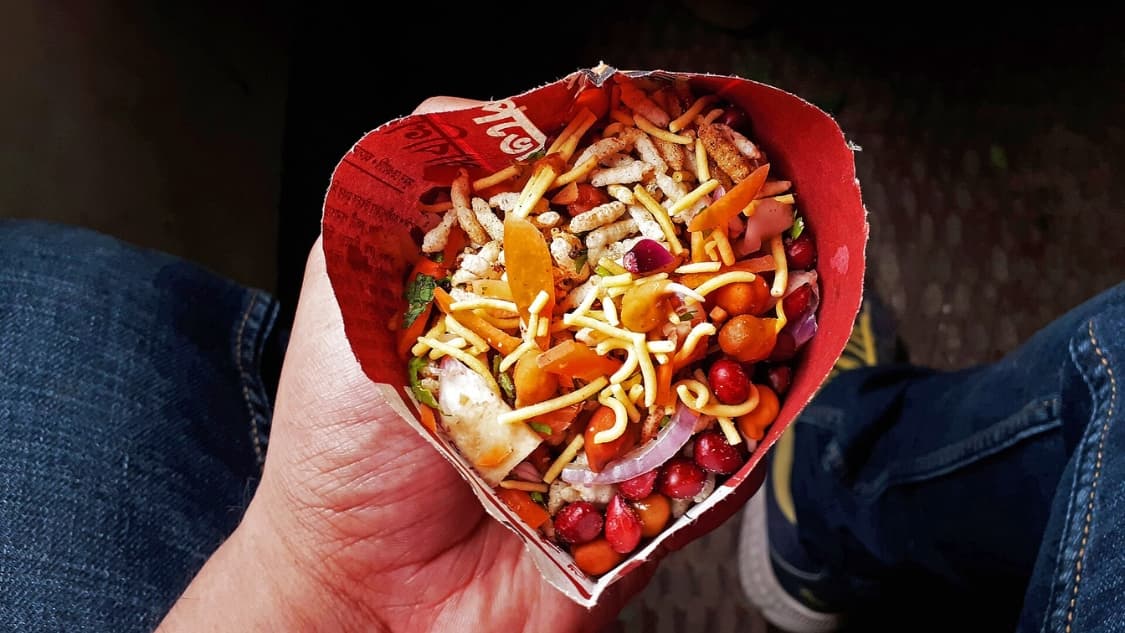
A passenger enjoying jhalmuri during a local train journey. (Picture by Ajaybiswas22, Wikimedia Commons)
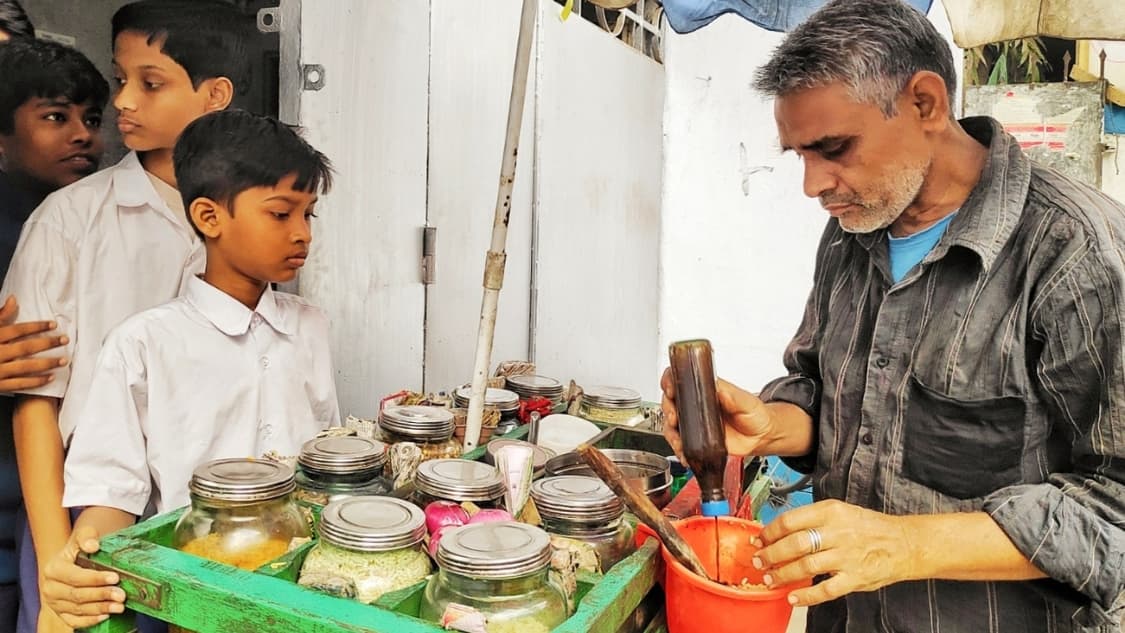
One of the joys of travelling through Bengal is discovering how omnipresent jhalmuri truly is. It waits for you at every corner. Outside schools and colleges. Near tram depots. Beside ferry ghats. At local markets. Along riverside promenades. At bus stops where office-goers gather after work.
But the most magical jhalmuri experience in Bengal is on a train. Long-distance journeys on Indian Railways have their own food culture and, in Bengal, the jhalmuri-wallah walking the aisle of a moving train is a beloved figure. He carries his tin and his bowl, makes your jhalmuri fresh as the countryside rolls past the window and hands it over in a newspaper cone. Watching him prepare the snack fresh inside a moving train is a small performance in itself. Ingredients are added with flair, mixed rapidly in a steel container and served instantly. There is something about eating jhalmuri on a train — the rhythm of the wheels, the open landscape, the shared compartment — that makes it taste better than anywhere else.
Jhalmuri is entirely plant-based, making it naturally vegan-friendly.
Street food and healthy eating do not usually appear in the same sentence, but jhalmuri is an exception. Unlike deep-fried snacks, it is relatively light and low in oil. Puffed rice is low in calories, fat-free and easy to digest, while onions, tomatoes, coriander, chillies, cucumber, peanuts and raw mango contribute freshness and nutrients.
Crucially, jhalmuri is entirely plant-based, making it naturally vegan-friendly. Traditional jhalmuri contains no dairy or meat products, making it one of the easiest Bengali street foods for vegan travellers to enjoy.
Because it is assembled fresh right before serving, the ingredients retain their crunch and brightness. And since it is filling without being heavy, it is the ideal snack for travellers exploring Kolkata’s streets, heritage neighbourhoods, or riverfronts.
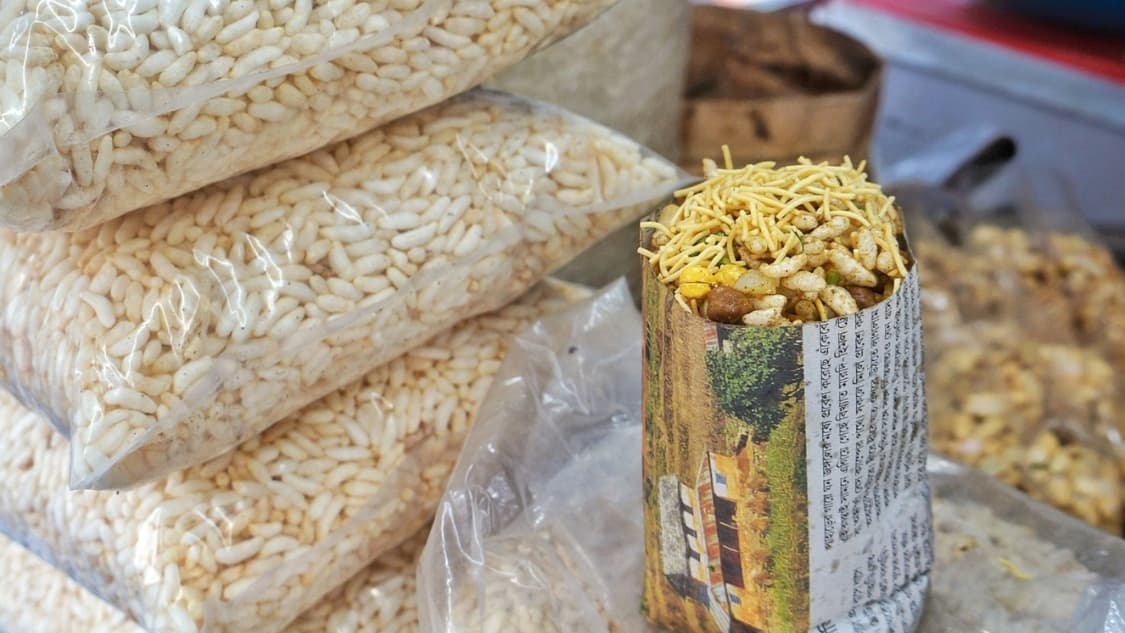
Jhalmuri democratises the culinary experience. (Shutterstock)
Perhaps one of the greatest reasons behind jhalmuri’s enduring popularity is its affordability. Even today, a cone of jhalmuri costs very little, making it accessible to students, office workers, tourists and daily commuters alike. For the price of a few coins (usually ranging from Rs 10 to Rs 20), you get a filling snack. Whether you are a backpacker on a budget or a luxury traveller looking for an authentic bite, jhalmuri democratises the culinary experience.
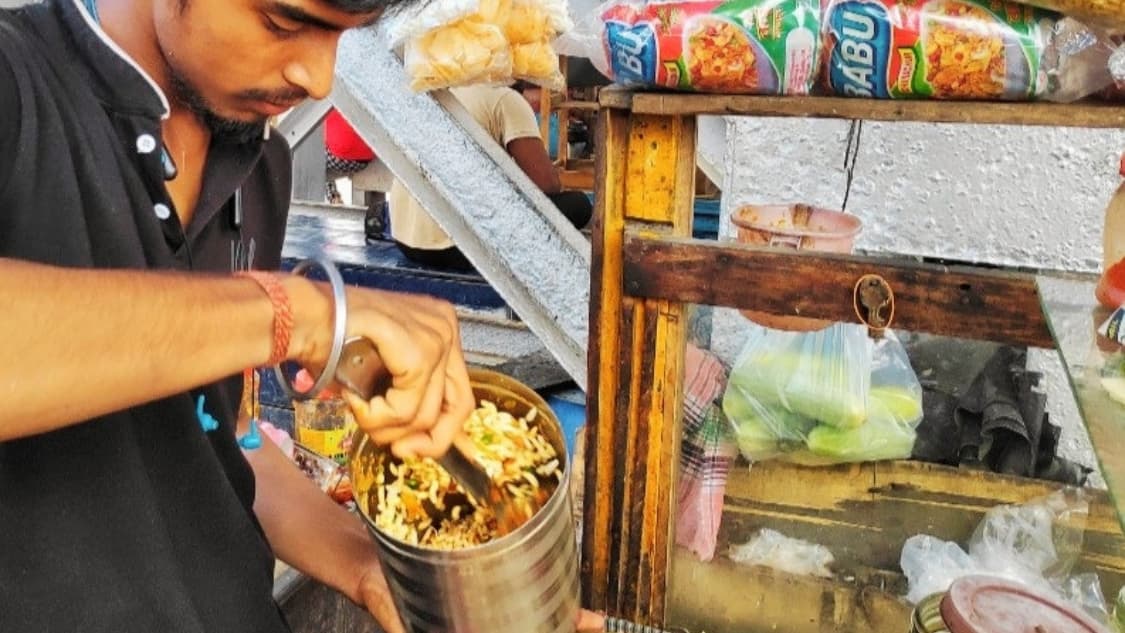
Jhalmuri is incredibly easy to make at home, no cooking or fire required.
Another reason travellers fall in love with jhalmuri is its customisability. You can tell the vendor, "Jhal kom, lebu beshi" (less chili, more lime) or "narkel deben na" (don't add coconut). Some prefer it fiery and intense, others mild and tangy, loaded with chanachur or packed with cucumber and coriander. The snack adapts instantly to mood and taste.
And the best part? It is incredibly easy to make at home, no cooking or fire required.
Once you learn the basics of jhalmuri, the possibilities are endless. You can experiment with roasted chickpeas, pomegranate, sunflower seeds, sprouts, fried coconut, pickles, fresh fruits, or even fusion ingredients from your own pantry. The only real rule is to mix and eat it immediately before the puffed rice loses its signature crunch.
All you need is a bag of puffed rice and a little imagination to create your own take on this beloved Bengali classic.

Kolkata's phuchka stalls are landmarks offering cultural crash course and crunch

Kathi rolls are hand-wrapped parathas filled with seasoned meat or veggies

The music composer looks back on the last leg of his ‘Anantha Yatra’ in Bengal


