
A joint initiative by



 Published on 2025-12-15Updated on 2025-12-15
Sprawled across the Bhagirathi river in Murshidabad stands Hazarduari or the Palace of a Thousand Doors — a striking reminder of Bengal’s layered history.
Built in the 1830s under Humayun Jah, the puppet ruler Nawab of Bengal from 1824 to 1838, and designed by Scottish architect Duncan Macleod, the grand palace embodies the Neoclassical style with Doric elements. It has no connection with the name most often associated with Murshidabad — Siraj ud-Daullah, the last independent Nawab of Bengal.
True to its name, the palace has 1000 doors but only 900 of them are real; the remaining 100 are false doors added to justify the name. Legend goes that the false doors were built to confuse robbers and intruders.
The central portion of the three-storeyed structure is crowned with a triangular pediment supported by eight stately Doric pillars.
The entrance to the palace is from the northern side, where a flight of 37 stairs leads up to the first floor. The base of the staircase is flanked by two stone lions and saluting cannons, which have long been silent.
The interior houses 114 rooms, which once included the durbar hall, ball room, banquet halls and billiard rooms. The palace now houses a museum with 20 galleries that safeguard 4,742 antiquities, of which 1,034 are for public viewing. Unfortunately, photography inside the museum is prohibited. Visitors are, however, free to capture the palace’s imposing facade.
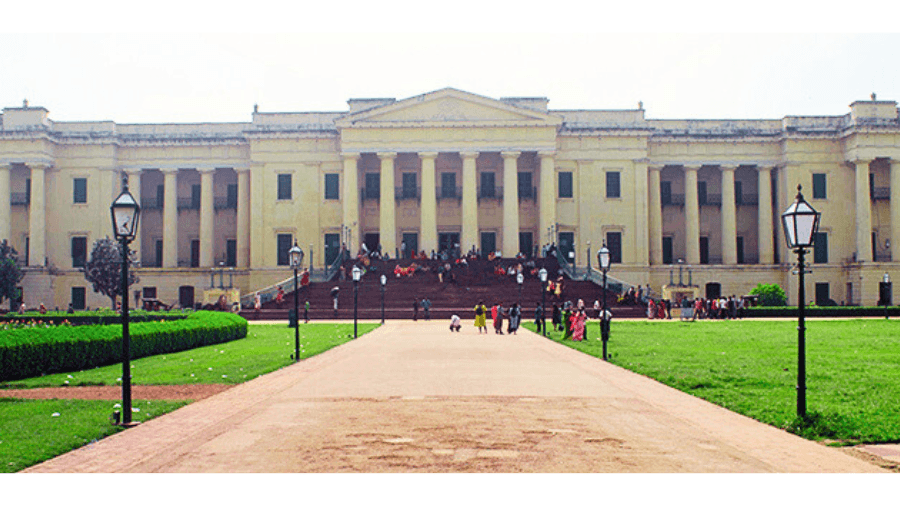
Hazarduari: Palace of a Thousand Doors.
The Hazarduari Palace is part of the Kila Nizamat complex, the name originating from the Nizamat Imambara that stands right opposite. Imambara literally means the house of the imam and serves as a Shia Muslim congregational hall for mourning ceremonies, especially during Muharram. The site once housed the old wooden Imambara built by Siraj ud-Daullah, which was ravaged by fire in 1846 and replaced by the present structure. The present structure was an initiative by Mansur Ali Khan (1838–80), the last Nawab of Bengal and son of Humayun Jah. The new Imambara is 680 feet long, divided into three large quadrangles. The Imambara is usually closed to the public and opened only during Muharram.
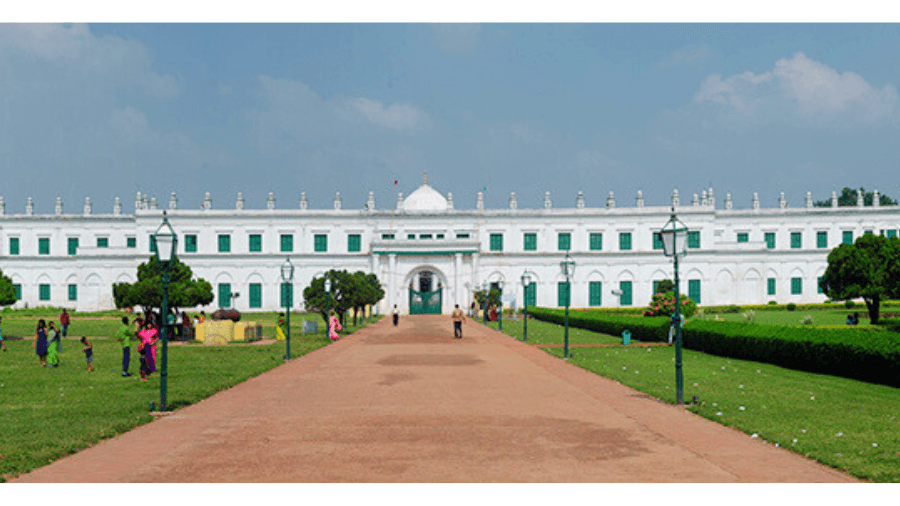
Nizamat Imambara at Kila Nizamat.
A large expanse of manicured lawns and paved pathways are stretched across the open space between Hazarduari and the Imambara. A clock tower or ghanta ghar and Medina Masjid are two landmarks that stand tall on the grounds. The clock tower was built by Sagar Mistri, assistant of Duncan Macleod. The tower has a single-dial clock, which faces west towards the Bhagirathi river. It is topped with a dome with a heavy sounding bell.
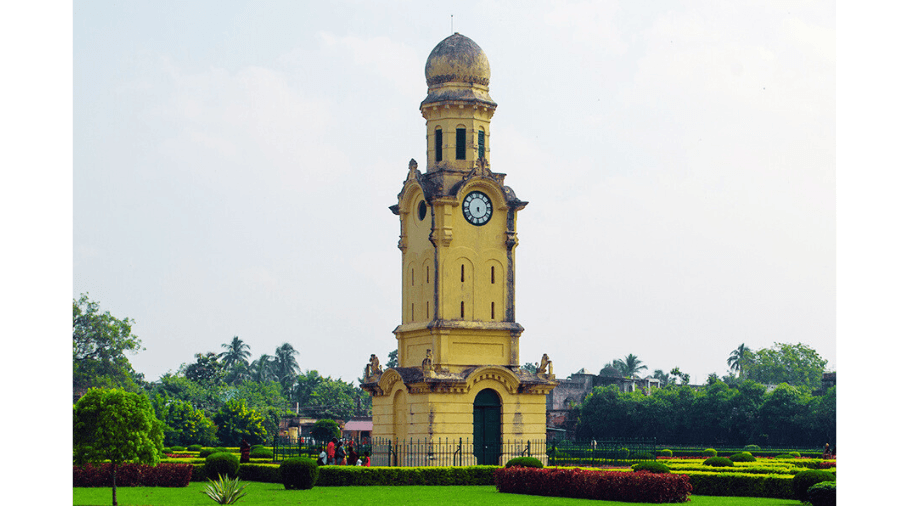
Ghanta Ghar, the clock tower of Kila Nizamat.
The Medina Mosque is a striking milk-white structure built by Mansur Ali Khan along with the new Imambara. The old Medina Mosque once stood inside the old wooden Imambara. It survived the devastating fire of 1846 and stands to this day inside the new Imambara. After the construction of the new Imambara, Mansur Ali Khan constructed a new Medina Mosque on the open grounds of Kila Nizamat complex.
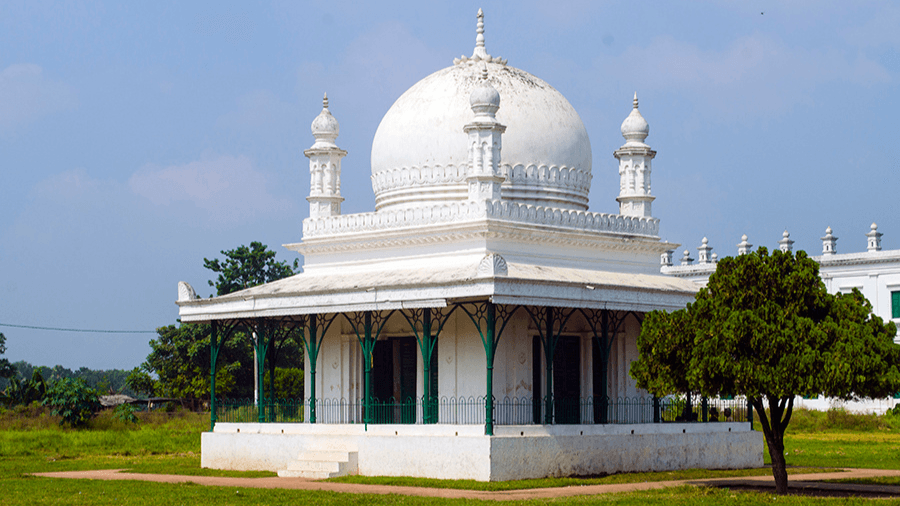
The striking white Medina Mosque.
Next to the Medina Mosque stands the gigantic Bachchawali Top (cannon). It is said to have been fired only once. Such was the roar of the cannon that several pregnant women in the neighbourhood suffered miscarriages — hence the name. Nothing much is known about the original history of the cannon. It is believed that the cannon dates back to the 12th–14th century CE. It has stood at the present location since the construction of the new Imambara and Medina Masjid.
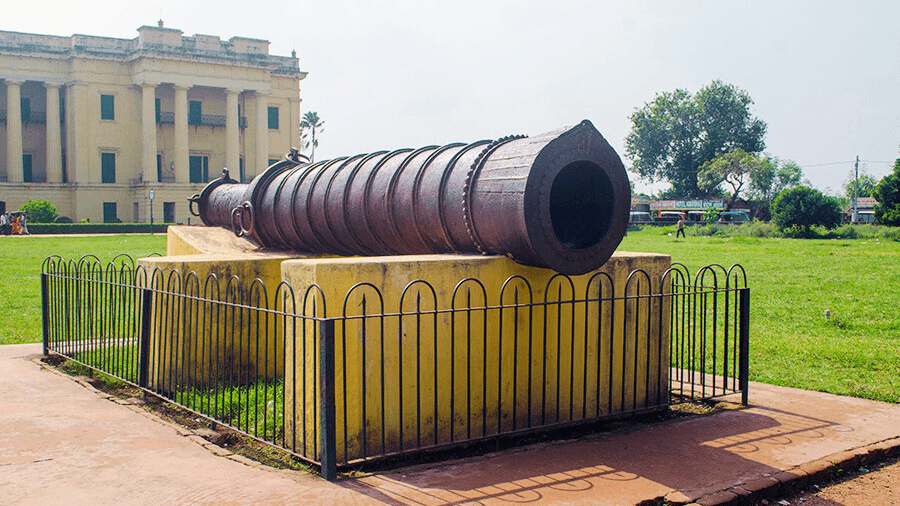
Bachchawali Top has only been fired once.
The Kila Nizamat complex is located on the eastern bank of the Bhagirathi river. Next to the river lies Zurad Masjid, the yellow mosque. The small but elegant three-dome mosque was constructed by Siraj-ud-Daullah. It happens to be the only monument in the complex that predates the Battle of Plassey.
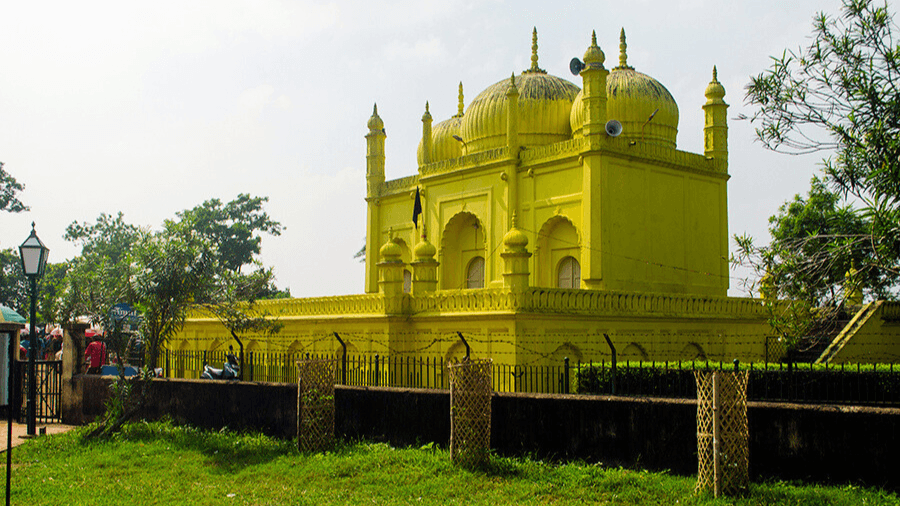
The yellow-hued Zurad Masjid stands by the Bhagirathi river.
Guide to Hazarduari
Glimpses of 12 prominent churches in the state of Bengal
Rani Rashmoni’s vision has become a pilgrimage site of universal faith

Take a journey through the city’s timeless landmarks and living heritage


