
A joint initiative by



 Published on 2026-02-26Updated on 2026-02-26
What does one do with a rare free day?
For us, it began with a conversation about a café inside the old Alipore Jail. A former gaol — now a museum and tourist attraction with a café — it sounded improbable enough to demand a visit.
A swift ride later, we found ourselves on Judges Court Road, staring up at the imposing red-brick façade of what is now the Alipore Independence Museum in Kolkata. The scale of it is arresting. High walls. Watchtowers. An architecture designed not for comfort, but for control.
Built in 1906 by the British crown as a ‘modern’ correctional facility, it replaced the older Presidency Jail of 1864. Unlike its predecessor, this new complex was meticulously planned: a central tower with radiating cell blocks, segregated quarters for Europeans and Indians and further divisions based on categories of prisoners. In 1914, the Bengal Gazetteer described it as an ‘up-to-date jail with modern improvements’.
Modern, perhaps. Humane, far less certain.
Over the decades, the prison housed freedom fighters, later Naxal leaders and countless political detainees. By the time inmates were eventually shifted to Baruipur Central Correctional Home, the site itself had already become a monument to history. Today, it stands transformed — yet its past lingers in the air.
Looking up at its high walls, I felt an absurd hesitation at the entrance and a momentary frisson stilled my steps. What if they didn’t let us out? But the bustling queue of visitors quickly dispelled that childish thought. The ticket counter was brisk, almost anticlimactic in their efficiency. And then we were inside.
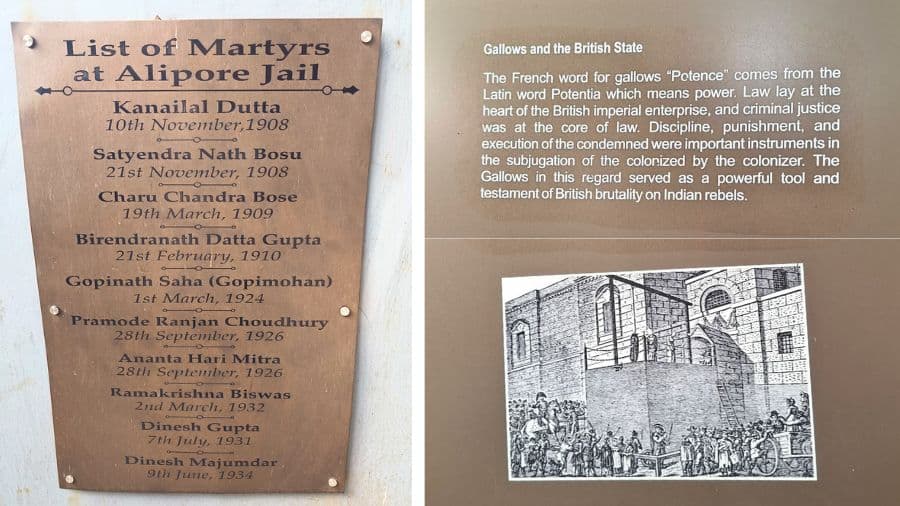
The history and the names of the victims of the gallows at the Alipore Jail. (Pictures by Bishnupriya Banerjee)
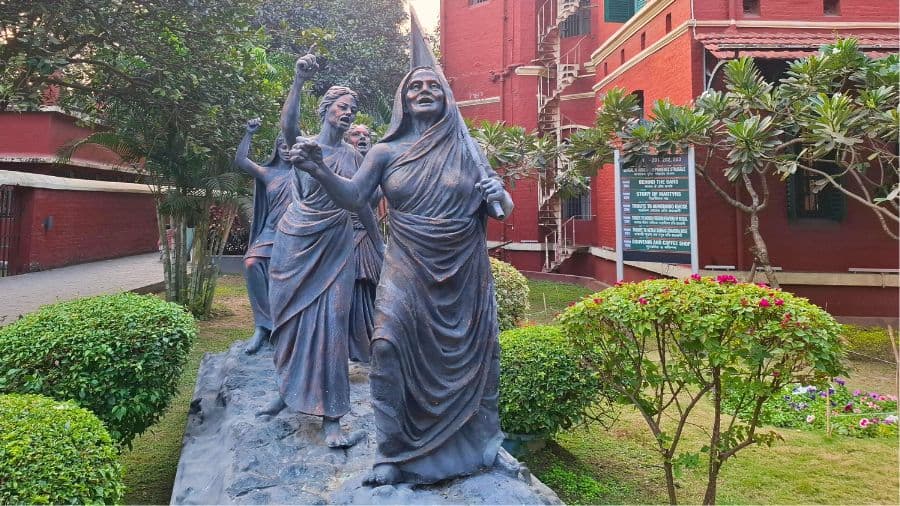
An installation depicts the role of women in the fight for freedom. (Picture by Bishnupriya Banerjee)
Our first stop was the Gallows, a walled section with a raised platform where martyrs proudly sacrificed their lives for a greater cause. The Segregation Ward overlooking it was where those about to be executed were held.
All mirth, gaiety dissipated in moments. Even the most enthusiastic selfie-seekers fell silent as what they saw while reading names hit home. This was no random prison from the past, these high walls imprisoned some of the most luminous figures of India’s freedom struggle — men and women whose sacrifices bought us the precious liberty we take for granted.
Where they were incarcerated and tormented. Yet they continued to protest, sometimes using hunger strikes as the last remaining weapon in their arsenal when everything else, including their liberty, privacy and dignity were stripped away. Nearby, we also saw installations paying homage to the women martyrs of Bengal.
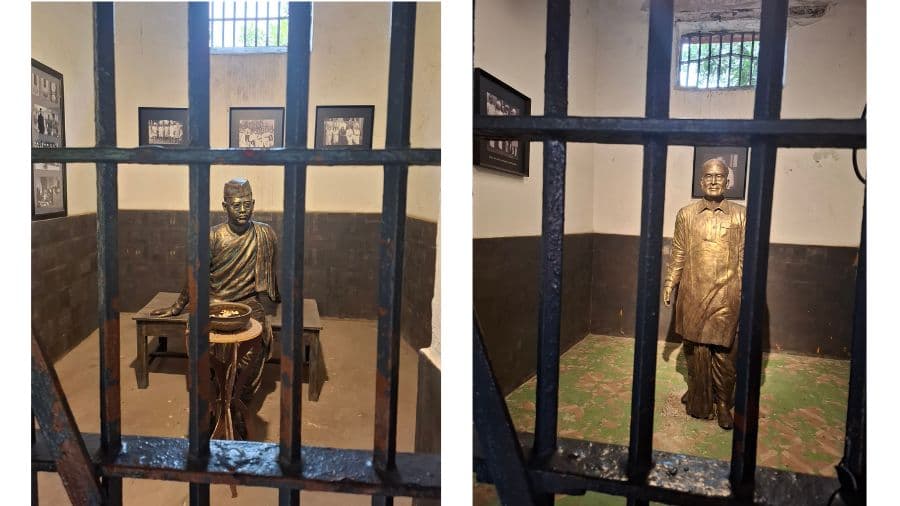
Life-size models of prominent freedom fighters grace the cells where they were originally imprisoned. (Pictures by Bishnupriya Banerjee)
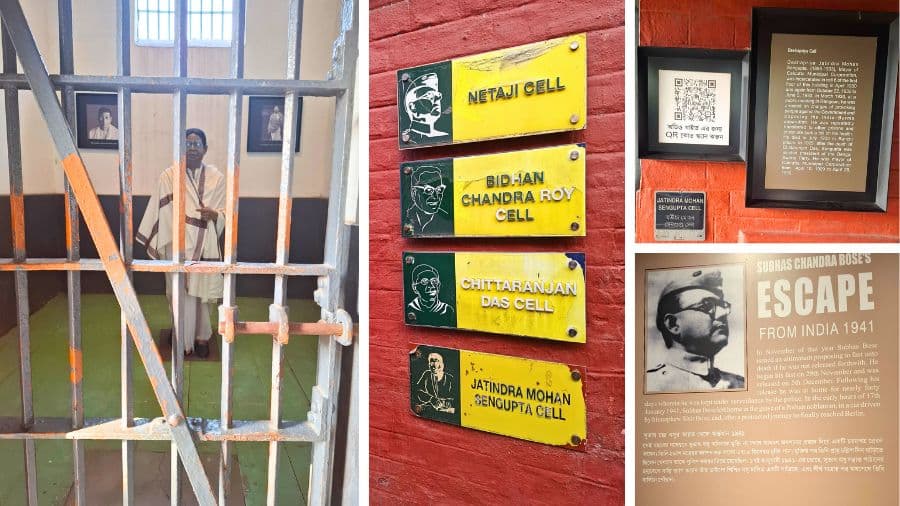
Life-size models of prominent freedom fighters grace the cells where they were originally imprisoned. (Pictures by Bishnupriya Banerjee)
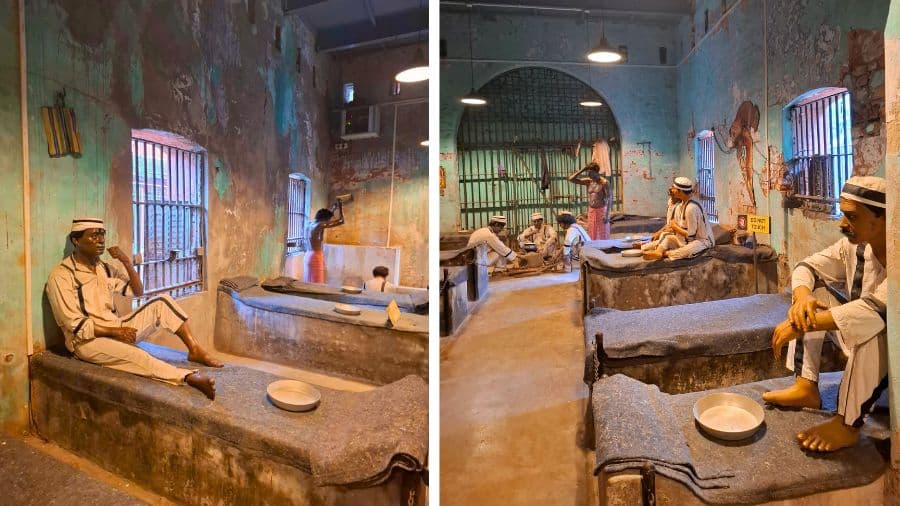
Tableaux depict the dismal plight of imprisoned freedom fighters. (Pictures by Bishnupriya Banerjee)
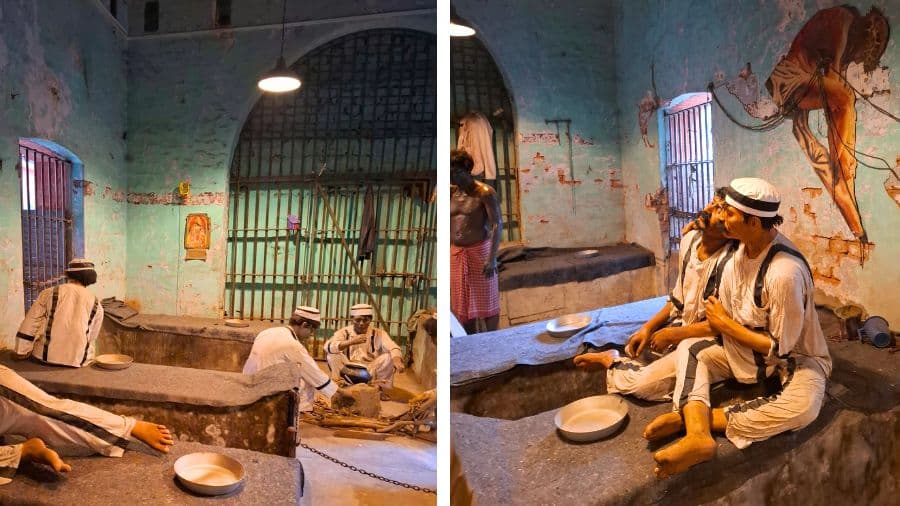
Tableaux depict the dismal plight of imprisoned freedom fighters. (Pictures by Bishnupriya Banerjee)
From there, we walked to the Cell blocks — from chamber to chamber, peering into tiny bricked spaces. Each bore a plaque naming its former occupant next to solid iron grills. Names we had encountered in school textbooks and on street signs: Jawaharlal Nehru, Netaji Subhas Chandra Bose, Sri Aurobindo, Chittaranjan Das, Dinesh Gupta and Kazi Nazrul Islam.
Inside, an exhibition space, the reconstructed tableaux were stark. Two bricks served as a toilet. A raised cement platform as a bed. A scratchy blanket. A single bowl. We read how they spent their days; we saw how they lived, what meagre belongings they were allowed for their most basic needs.
Intellectual giants — caged.
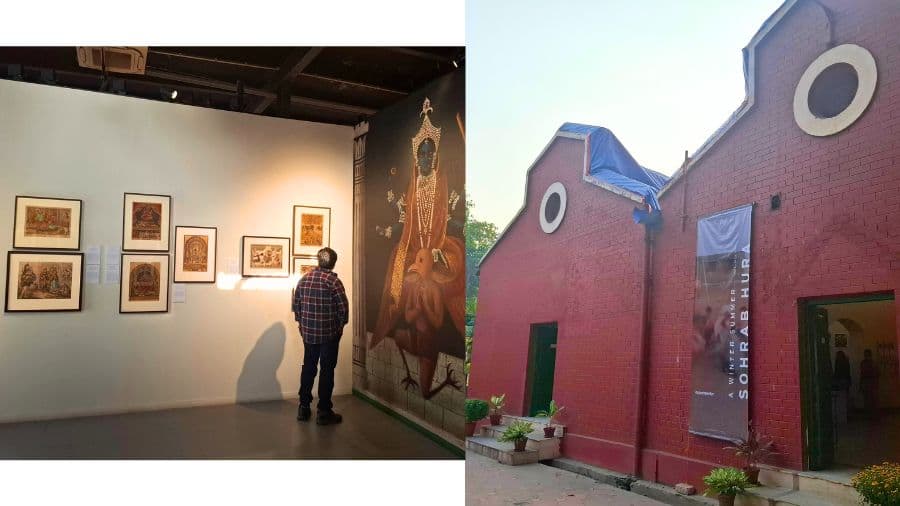
The barn-like structure houses a space for art exhibitions held. (Pictures by Bishnupriya Banerjee)
Stepping out from the cell blocks, we encountered a structure reminiscent of a European barn, now converted into an Exhibition Hall where works by contemporary artists, across all mediums are displayed for viewing. Further along, is a permanent exhibit showcasing traditional Bengali patachitra paintings — oil and gouache on scroll — depicting myths and everyday life from a bygone era. The transition from prison corridors to vibrant folk art felt deliberate, if not stark.
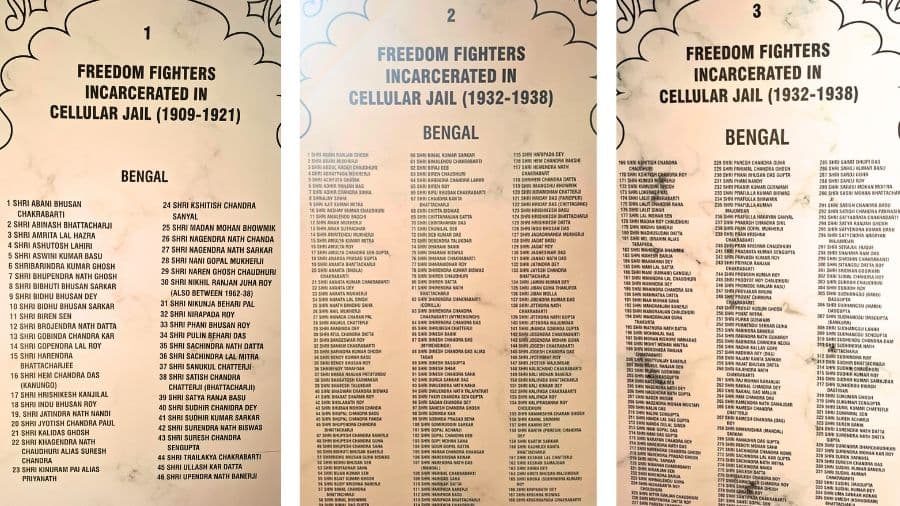
A haunting list of incarcerated freedom fighters. (Pictures by Bishnupriya Banerjee)
As we continued to move through paved pathways flanked by colourful blooms, we noticed the former prison Watch Tower looming.
Now it has been converted into a memorial to the dreaded Cellular Jail of the Andamans, known as Kala Pani. A place of dreaded repute, synonymous with exile, torture, isolation and other untold trespasses on human rights. Where the British administration used to ship off its worst offenders, the ones who were deaf and blind to ‘reason’ — incurably fierce patriots, in other words.
Here, 338 names from Bengal are immortalised on three plaques, accompanied by stark statuary. The scale of suffering is difficult to comprehend. Tortured, experimented upon, brutalised — far from public scrutiny.
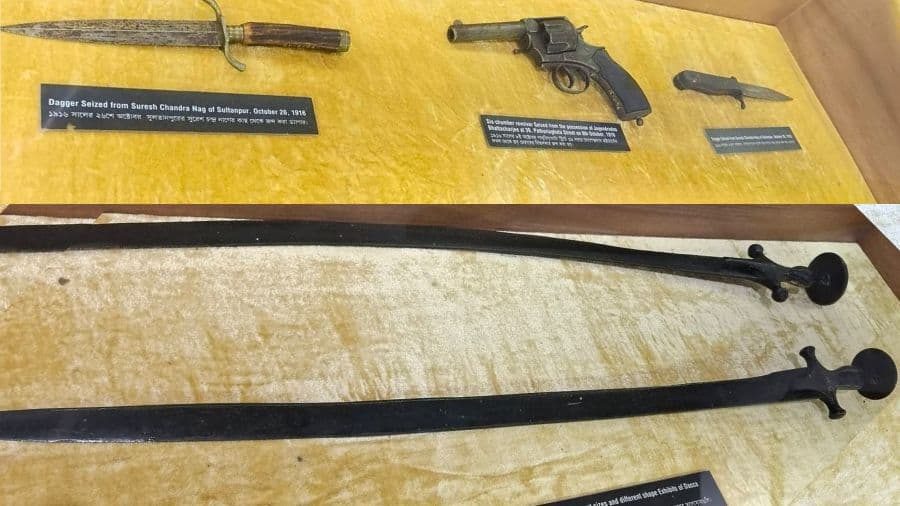
Arms used to fight the might of the British Empire. (Pictures by Bishnupriya Banerjee)
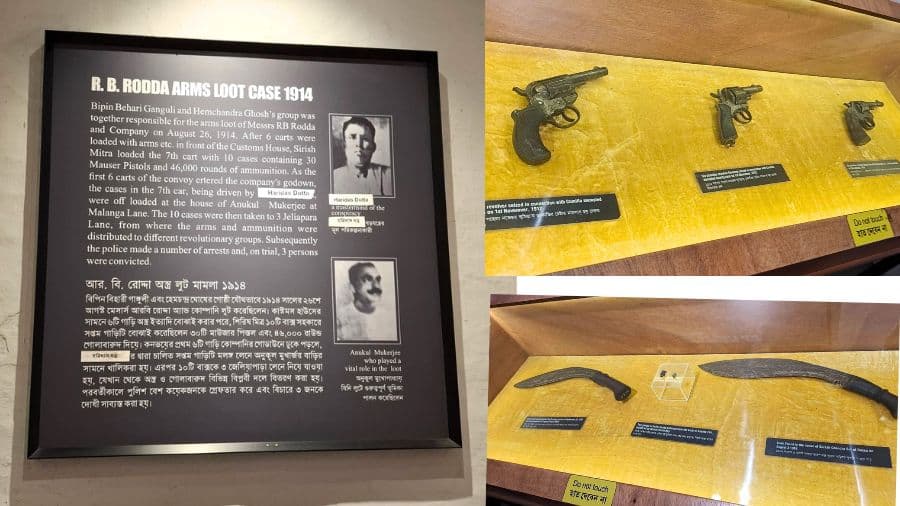
Informative plaques give historical contexts about important events and the weaponry on display. (Pictures by Bishnupriya Banerjee)
One of the most compelling sections of the museum is the arms gallery. Within these former prison chambers are housed a collection of weapons confiscated from revolutionaries: tiny pistols, khukris, swords — almost incomprehensibly modest when compared to the sheer scale of the British regiment and the cannons at their disposal.
Details alongside the glass cases enumerate where these weapons were found and who used them. Another chamber in this section recounts the R.B. Rodda Arms Heist case. There are also references to the Anushilan Samiti and Bengal’s militant resistance.
A third room depicts scenes of the Jallianwala Bagh massacre.
It is sobering to see how modest the tools were with which such an enormous empire was challenged and realise the extent of losses to lives were incurred in the process.
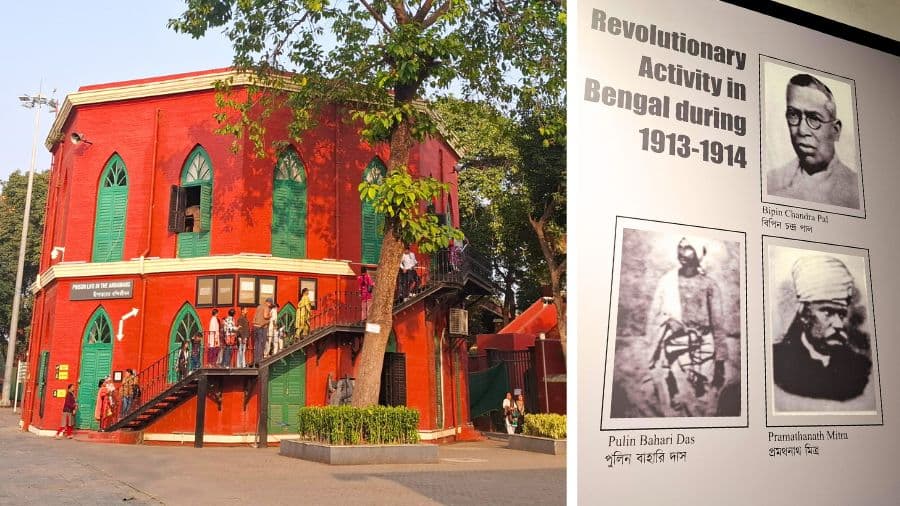
Room after room highlights the atrocities faced by India's freedom fighters. (Pictures by Bishnupriya Banerjee)
After the weapons room, we moved on to the Homage Tower building for another round of history lessons pertaining to Bengal.
The upper floor houses three rooms, each tracing a phase of Bengal’s history under British rule: from the Battle of Plassey in 1757 and the consolidation of Company power, through famine and indigo oppression, to the rise of nationalist thought and the eventual freedom struggle.
From the establishment of Western education to the growth of the Bengali press; the Santhal rebellion and the 25,000 lives lost in it; the partition of Bengal and the birth of the Indian National Congress — each chapter is laid out in a manner that feels almost like walking through a living history lesson. It is comprehensive, sobering and immersive.
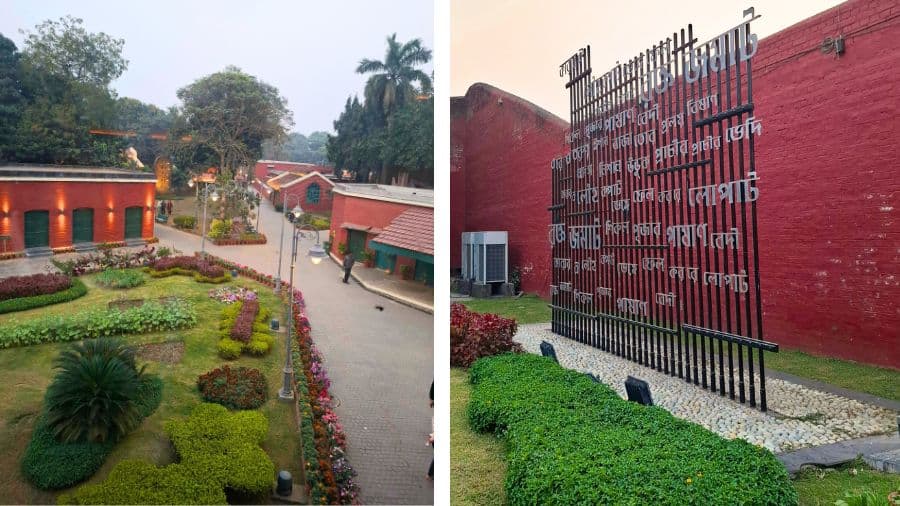
View of the compound from the cafe. (Pictures by Bishnupriya Banerjee)
And then, there is the coffee shop — an outlet of the original India Coffee House.
An airy, well-lit glass-and-brick indoor outlet, built to match the original colonial vibe — the café overlooks the early 20th-century architecture and the manicured gardens. The beautiful view together with the aroma of savouries and coffee filling the air, feels deliberately curated to make it harder to remember what these buildings signified — what gruesome memories echo through those red-bricked halls.
It is impossible not to reflect on the irony. To sit comfortably where others once suffered confinement. For us, it felt like the most expensive meal in the world — the price paid in tears, humiliation and blood of those who built this nation.
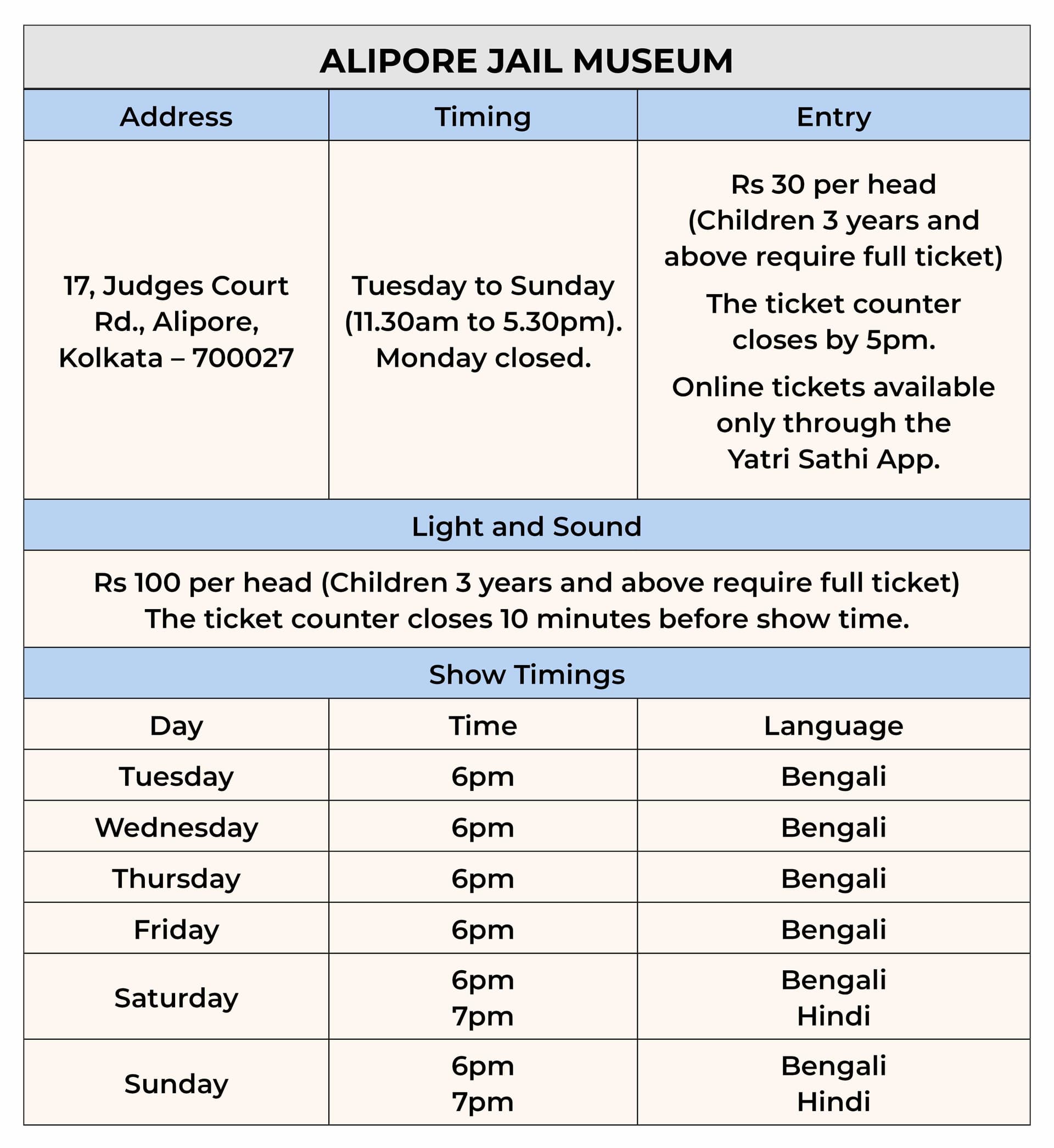
As dusk gathered, families lingered for the light-and-sound show, which highlights the history of the red-bricked halls as well as the lives and struggles of various freedom fighters. Some even headed off to collect tokens and memorabilia from the souvenir shop present on the premises; for us, though, what we carried back was heavy in our hearts and minds.
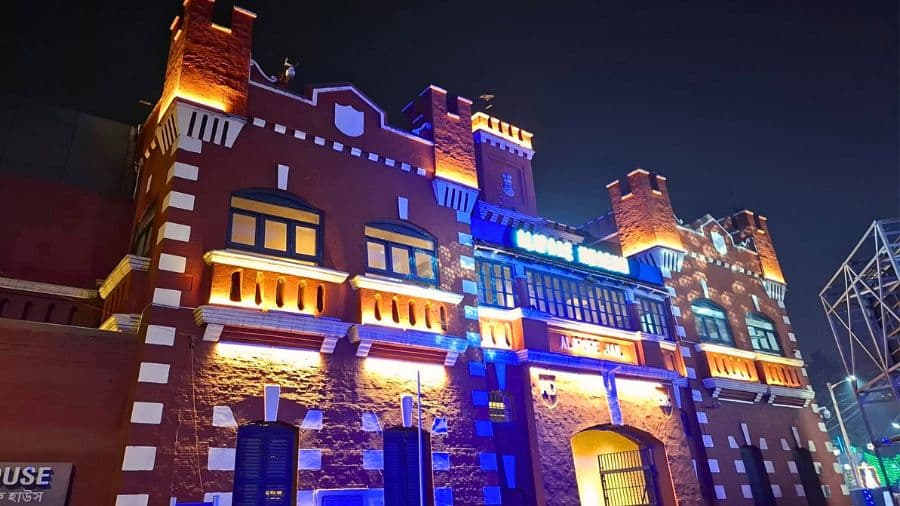
A dark past highlighted in bright lights. (Picture by Bishnupriya Banerjee)
Walking through this stunning, expansive space, one cannot help but feel like they’ve been transported through a portal to witness a slice of the past. The pain, the sacrifice and the fire that burnt in the hearts of the people who were jailed inside those walls continue to linger — hopefully as a learning and a privilege-check for generations to come.
If you are a foreign traveller in Kolkata and happen to be a lover of history, the Alipore Independence Museum should be on your list of stops. And for the rest of us — Indian citizens, young and old, this is a must-visit. For without this perspective, the full picture of India’s struggle for independence would not be complete. It is a stark reminder of what it took to call ourselves an independent nation.
In the Kolkata twilight, as we stood in front of the red brick edifice, now lit up with twinkling lights, one thought rang loud — We'd learnt so much and yet knew so little still. There was so much more for us to appreciate, to inculcate. A single trip wasn't nearly enough.
Take a journey through the city’s timeless landmarks and living heritage
A glowing makeover for Calcutta’s architecture

These two Kolkata museums unlock centuries of history one coin at a time


