
A joint initiative by



 Published on 2026-03-07Updated on 2026-03-07
Travelling and love live music? Kolkata should be on your radar. From open-air festivals and jazz clubs to barge parties on the river, this city has always cherished its live music culture. Whether your taste runs to rock, blues, jazz, Bangla folk-rock or international headliners, Kolkata’s stages deliver.
While there’s no better time of the year to dance to great live music than during winter in Kolkata, when live performances take to the outdoors with makeshift dance floors and open-air festivals, make no mistake — Kolkata’s gigs and live music run year-round, with pubs and clubs continuing to organise parties whenever they can. And when pushed for space, there are parties that have you rolling on the river with barge parties galore. Some or all of the above will feature DJs, solo singers with “tracks”, duos or full live bands with the whole hog of instruments, PA, monitors and sound engineers! Most often the costs decide the music, so some venues keep a tight control over the purse strings while other venues, like clubs, look for sponsors and tie-ups to defray the costs. But if you’re looking for live music, you will find it in abundance here. Let’s walk through.
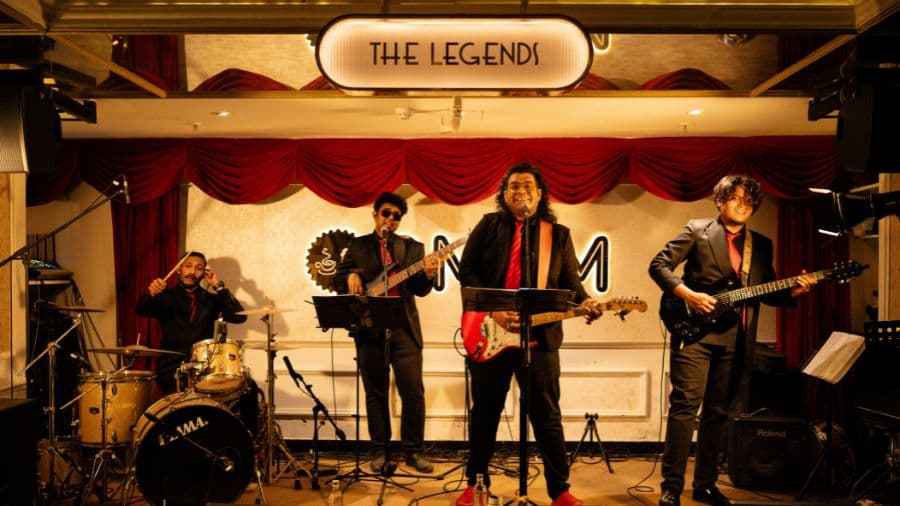
Live music performance at AMPM. (Picture courtesy the venue)
For generations, Park Street has been the city's nerve centre for all things entertainment, especially of the western variety. However, newer venues have opened up alongside the traditional ones. Park Street still has Trincas with a curated live music menu, while round the back you have Someplace Else and its regular retro rock bands. Down the road you have Hard Rock Cafe across the street from AMPM and Boujee House, promoting special music on different days in the week. Free, open-air events like the Kolkata Christmas Festival in Allen Park offer new artistes a platform for expression (and some money). Down Esplanade towards Chandni Chowk, legacy restaurants like Broadway Hotel have live music on Sundays. Small cafés offer live duos or trios to help with audience and sales. Over on the south side, Gariahat has Klubb10 and Miss Ginko. Southern Avenue has Chapter 2; Manoharpukur has Skinny Mo’s Jazz Club. ATM, Little Bit Sober and several other venues promote live music while balancing the books with DJs.
Enterprising musicians who need to make a living from it have taken to tutoring in person or online, or joining schools as music teachers. Whatever is left of their day is dedicated to experimenting with other forms of music — from blues and jazz to rock and newer genres, including original compositions. You simply have to turn up at local gigs to enjoy their sets.
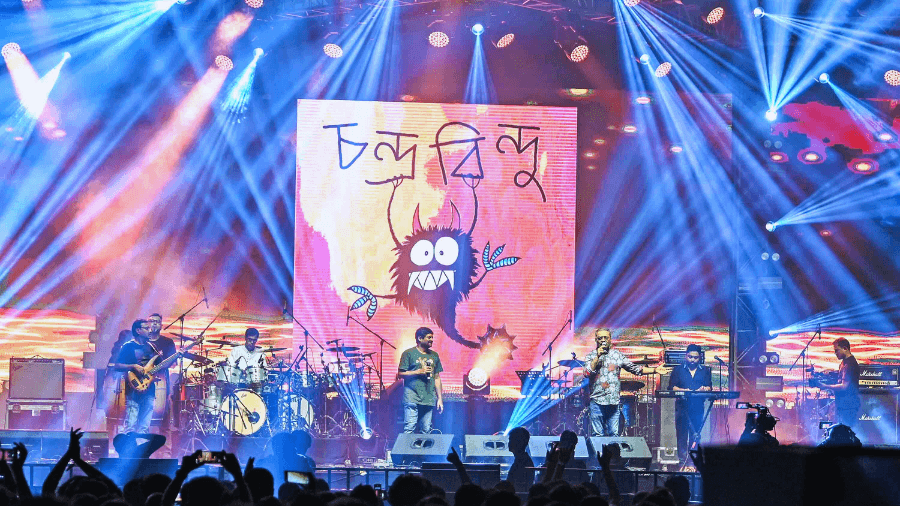
Chandrabindoo commands the stage as a sea of fans reflects the pulse of Bengal’s live music scene.
It’s not just Western or English music. Kolkata hosts a vast variety of bands specialising in homegrown music, particularly Bangla music. Bands play original compositions with tributes to the first-ever Bangla folk-rock band, Mohiner Ghoraguli. These bands include long-term favourites like Bhoomi, Lakkhichhara, Chandrabindoo, Fossils, Cactuss and Krosswindz alongside newer bands like Fakira, Eeshaan, Prithibi, Hooli Gaan Ism and Kaya. These bands find expression on stages across the state, including smaller towns and venues in the Himalayan foothills, while continuing to tour Europe and North America to perform at Puja celebrations organised by the diaspora.
Opportunities have also been created locally by organisers of high-energy events like Unity Concert, Kolkata International Drum Festival, Nijer Gaan Banglay Gaan and Kolkata Cold Wave Music Festival, among others. All these events are packed, witnessing the love for local, live music.
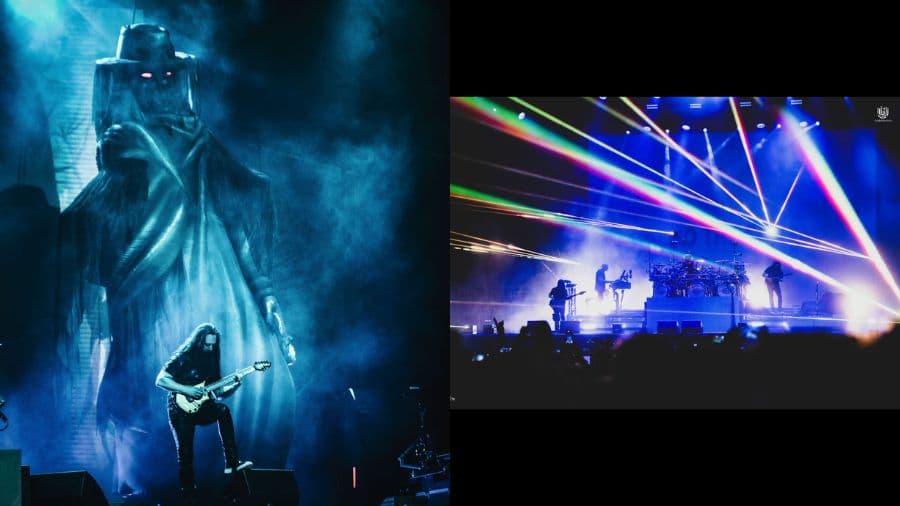
Dream Theater chose Kolkata as one of its destinations during the 2026 tour. (Picture by Clockwork AV)
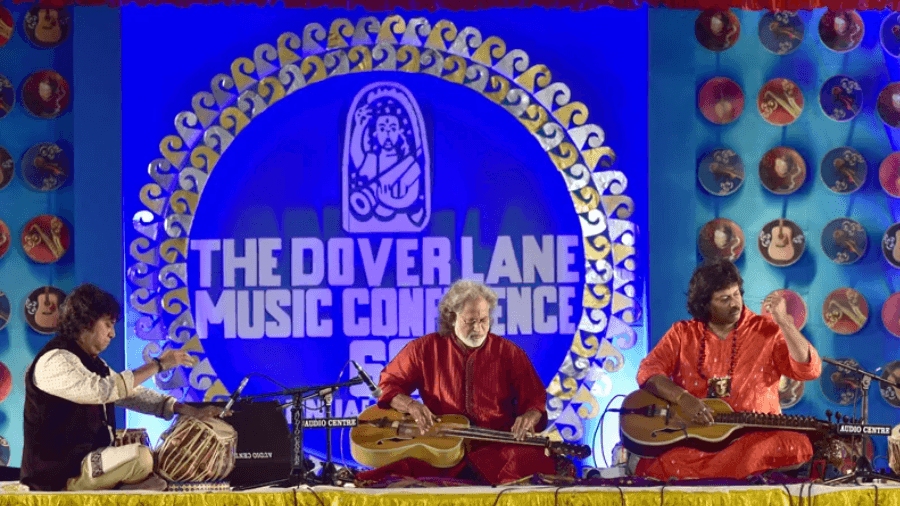
The Dover Lane Music Conference has brought global and national music artistes to the city for decades. (Picture by https://doverlanemusicconference.org)
Long-running annual events like the JazzFest Kolkata and the Dover Lane Music Conference bring large numbers to the city to listen to live musicians. Kolkata has also started featuring on the map for international superstar acts such as Steve Vai, Steven Wilson and Bryan Adams, the most recent being Dream Theater. One can witness hordes of music lovers throng the festivals in support of visiting musicians — perhaps to learn!
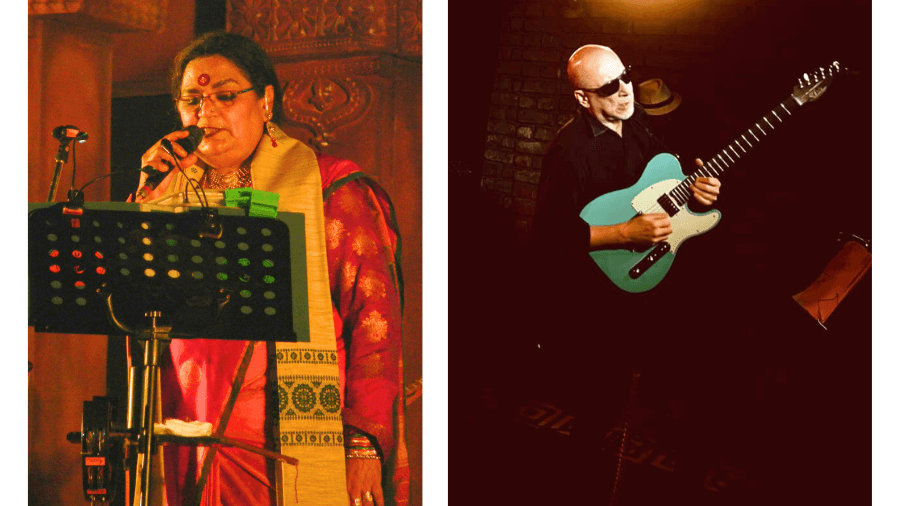
Usha Uthup has always been Kolkata live music's shining star. (Picture by Krupasindhu Muduli, Wikimedia Commons); Amyt Datta is another well respected name in the live music scene. (Picture by the venue)
A little history would aid understanding. At one point Calcutta was well-known for its music scene, every restaurant in the showbiz area and in star hotels had a house band playing nightly, top quality singers and musicians came from all over the country to perform here. However, in the late 1970s, the live western music scene here took a beating. Political views, regulations and new taxes ensured a well-documented exodus of musicians from the city. In a very short time, “live” music was on life support. The top musicians migrated to Mumbai and Delhi, joined the film industry, worked as session musicians, produced ad-film soundtracks and grew rich. Those who could not do music full-time hung on to their day jobs — many of them worked in commercial houses or as school teachers. This often meant a punishing schedule of popping into formals early in the morning, taking classes till the afternoon, managing a few after-school extracurricular activities, then rushing home for a quick rest. The evening involved dressing up in evening wear and lugging your instruments to the nightclub or five-star hotel where you entertained the guests, gobbled a cold dinner and rehearsed a few new songs before heading home.
The social clubs continued to have their annual dances but cut down on the regular monthly programmes. The bands were limited to a few well-known performers who were aligned to specific venues and who played on a regular basis, usually in five-star hotels. Performers such as Usha Uthup and Don Saigal kept Calcutta on the map while the newer dance bands kept the music going at weddings and private parties.
That eventually changed with the new administration and policies and the music returned with a smile!
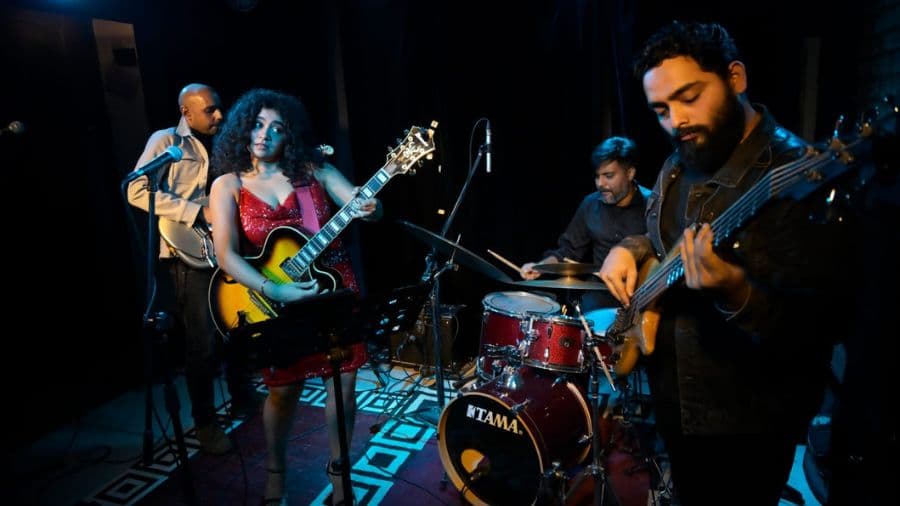
The Big Family performing at Skinny Mo's. (Picture by the venue)
During the last four decades, however, some regular western bands survived the test of time — they were nicknamed the Anglo-Indian bands, though they comprised diverse communities. They were probably named after the music that they chose to play, which appealed to the community that flocked to the “shows”. There were some songs — a.k.a. ‘numbers’ — that were essentially on everyone’s list. The formula helped: some ballroom dancing, a lot of rock ‘n’ roll and jive, followed by the ‘slow dancing’ which invariably had couples clinging to each other as the lights dimmed to help ‘make it through the night’.
Other than the shows that dotted the calendars of the social clubs, some railway towns like Kharagpur and Santragachi imported the Calcutta bands for their Institute get-togethers and weddings. But money was tight and getting bandspeople to rehearsals, away from their day jobs, turned out to be challenging. Eventually, easy access to the internet, a purchased tablet or iPad and lots of bootleg karaoke tracks freely available, gave rise to individual singers who began carrying their own bands in their pockets!
But if singers were scarce, the DJs came into their own with pulsating sound, disco lights and some unintelligible yells directed at the frenzied audience every now and then. The DJs also made it easy to slip between mashups of English, Latin, Hindi, Bengali and Kolaveri Di!
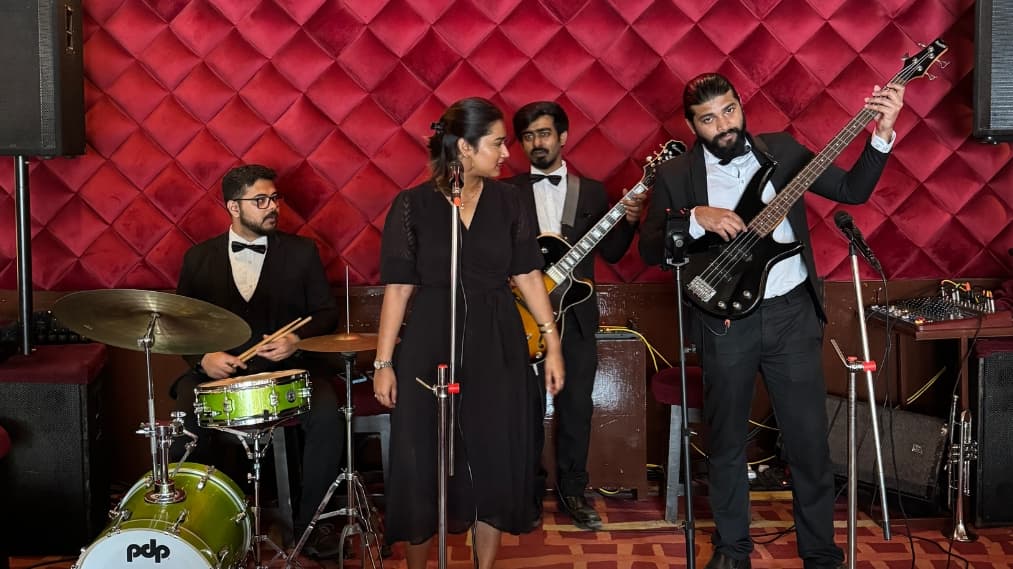
The Red Velvet Jazz Quartet performing live. (Picture by the venue)
Band loyalty was a big thing way back. Musicians were defined by the band for which they played — not any more. You will hear older musicians talk in terms like “we played together for 17 years”. Hence, often bands could not take on shows because the drummer or singer was busy or ill. Some bands survived as units — like Blue Mist, Hereafter, Krosswindz and Disco Inferno, to name a few. Some came back, like Crest. And some formed new alliances like ENRICH, Generations Apart and Switch. But many Calcutta musicians chose to remain ‘fluid’ and appear as individuals in different projects or collectives, tailoring their music to the genre they have chosen to play.
Today, like in most cities, the ‘subbing’ culture takes precedence — if you are not available, get a substitute and manage. Very subtly, the “shows” of yore have given way to “gigs”. A very rough definition equates gigs with food delivery boys — if you can’t use your regular musician, anyone will do, as long as the music is delivered. On the plus side, a growing, versatile set of musicians ensures flexibility and experimentation with different forms of music.
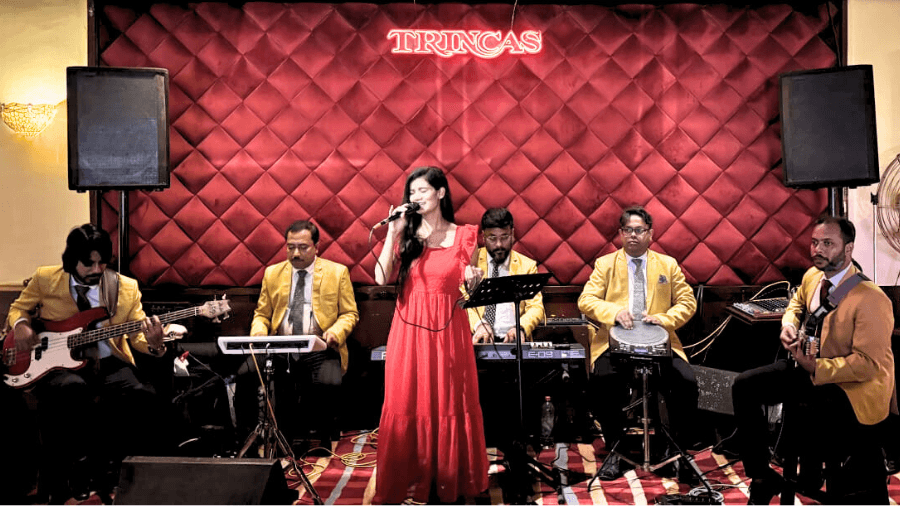
Another city band Kalash performing live at Trincas. (Picture by the venue)
The Covid pandemic took a lot and gave us a lot. The forced lockdown gave birth to a number of lockdown stars. Facebook led the charge with regular programmes inviting singers to stay at home, dress up and belt out “covers” with accompaniment on tracks. After Covid, some of the Kolkata stars shifted from screen to stage. Amber Pereira and Mario Peter Periwal appeared alongside the well-known regulars like Shayne Hyrapiet, Rodney Rodrigues, Mishtie, Diya and others. Other tech advancements allowed musicians to “collaborate” and produce music across cities and continents.
But what really gave a fillip to music was probably the free availability of both time and online tutors. Highly accomplished musicians emerged from every corner. Calcutta 16, a.k.a Park Street, was not the cradle of music any more. Dedicated, high-quality guitarists, keyboardists and drummers now emerge from local trains and head to jampads for rehearsals or gigs in town. And though the venues at Park Street still run packed, live music has bounced back all over town!
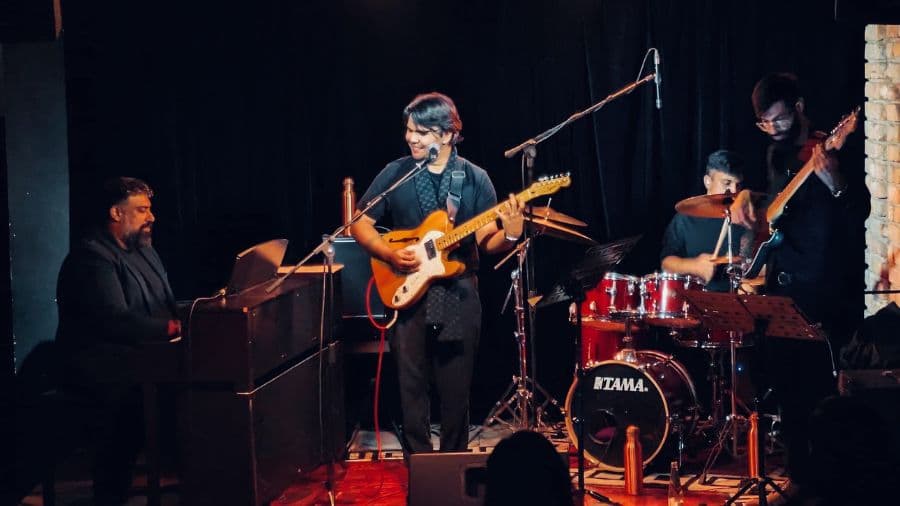
Aamir Rizvi and band play at Skinny Mo's. (Picture by the venue)
The lesson learnt here is that this city still enjoys seeing musicians strut their stuff on stage. The flexibility of extending a guitar solo that is going well, catching a drummer off guard with an impromptu fill, or just stretching a song that has the audience dancing, cannot be easily replaced by a pre-recorded track. It is probably this human factor that has contributed largely to the return of live band music, warts and all.
Whether it is a jazz set at Skinny Mo’s, a rock concert at Aquatica or a Bangla folk-rock act at the Rabindra Sarobar stadium, the city has a lot to offer. So add in experiencing the live music scene to your Kolkata travel itinerary.
Pro-tip: Kolkata’s live music season peaks during the cooler months, making it the perfect time for a visit. The chance to catch the Christmas Carnival only sweetens the deal.


