
Calendar
Weather
Bengal Logo
A joint initiative by

Experiences
CultureFoodHeritageReligionShoppingTrails
Events
DayWeekMonthDon't MissEvergreen
Stories
Known NamesLong ReadsShort ReadsPhoto GalleryVideo Stories
Search
search
Experiences
CultureFoodHeritageReligionShoppingTrails
Events
Stories
Privacy Policy | Terms of Service | Disclaimers
Footer Logo

Discover the soul of Bengal through curated experiences, rich stories, and authentic cultural encounters.

Explore Bengal

  • Experiences
  • Upcoming Events
  • Travel Stories

Experiences

  • Food
  • Heritage
  • Trails
  • Shopping

Events

  • Today
  • This Week
  • This Month
  • Don't Miss
  • Evergreen

Stories

  • Known Names
  • Short Reads
  • Photo Gallery
  • Video Stories

Get in Touch

  • icon

    bengal.soulfully.yours@gmail.com

© 2025 Bengal Soulfully Yours | All Rights Reserved

Privacy Policy | Terms of Service | Disclaimers
HomeHomeExperiencesExperiences
Bengal
EventsEventsStoriesStories
  1. /
  2. Stories
  3. /
  4. Tracing time through coins

Tracing time through coins: Kolkata's numismatic treasures

From uninscribed punch-marked pieces to Mughal gold, these Kolkata museums house coins that tell India’s story better than any textbook.

Snehal Sen
Snehal Sen
Published on 2025-11-19
Updated on 2025-11-19
6-min
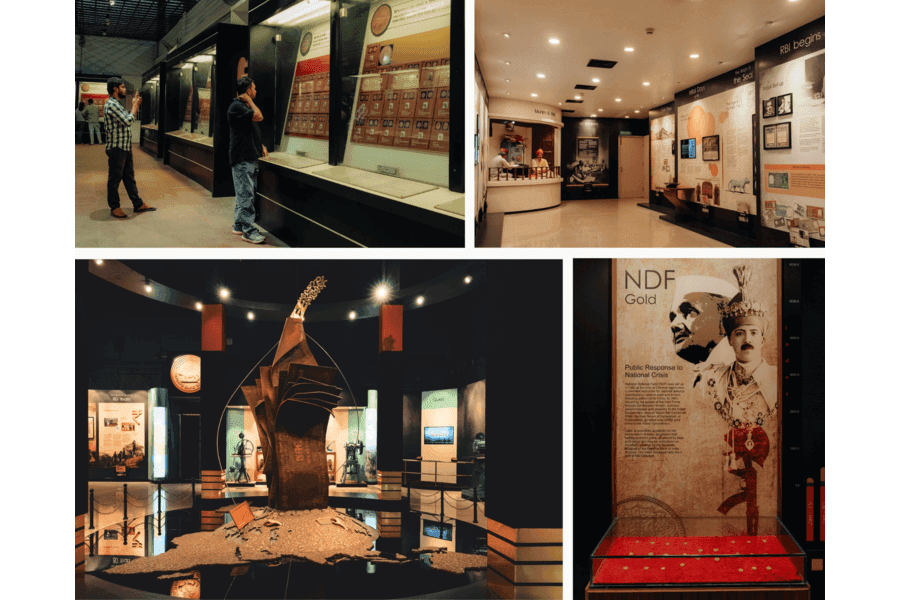
Coin samples at the RBI and Indian museums in Kolkata. (Pictures by Krishnungshu Gangopadhyay)

Across the ages, only a handful of things have managed to hold on to their original purpose, standing largely unchanged as silent witnesses to the passage of time. Coins happen to be one of them. Used as currency across centuries, coins still retain their original purpose and significance, even though the world has largely moved on to electronic money.

Hence, nothing can transport you back in time or immerse you in history as coins do.

You see, Kolkata — once the capital of British India — is a city synonymous with heritage and old-world charm. No surprise then, that beyond its well-known architectural marvels, from the Mughal-style Nakhoda Masjid and Tipu Sultan Mosque to the grand dome of the Victoria Memorial capped by the 16-foot-high Angel of Victory, the city also preserves an intriguing numismatic history.

So whether you are a coin collector, a history buff or simply a curious visitor seeking insight into the past through artefacts, Kolkata has two special places where coins can transport one through the annals of history — The Indian Museum and the Reserve Bank of India (RBI) Museum.

Here's what you can expect to find inside: 
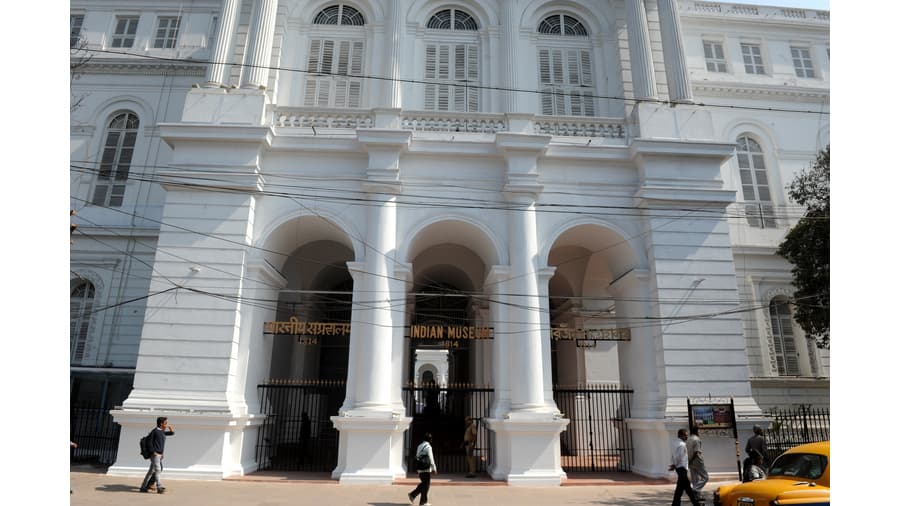
Indian Museum

<p>The Indian Museum is one of the oldest and largest museums in Asia.</p>

The Indian Museum is one of the oldest and largest museums in Asia.

Address: 27, Jawaharlal Nehru Road, Park Street, Kolkata, West Bengal 700016
Nearest Metro Station: Park Street
Access: Easily reachable by bus, taxi, or online cab services from across the city, including from the airport, Howrah and Sealdah stations.

Tracing back its roots to 1814, the Indian Museum is the earliest and largest multipurpose museum in the Asia-Pacific region. Its Coin Gallery holds more than 50,000 coins from across South Asia, dating from roughly the 5th/4th century BCE to the present. Inside the gallery, rows of coins are displayed in glass-covered stands, each accompanied by descriptions that indicate their period and origins.
Highlights of the Indian Museum collection
 

  • Early Indigenous, Uninscribed Coins: The first coins that greet visitors are early indigenous uninscribed pieces, dating from around the 5th century BCE to the 2nd century CE. These — usually simple ones, including small pieces of silver, or punch-marked coins — are some of the oldest known in the subcontinent. The latter, as the name suggests, had designs “stamped” on to them using small punches and were flat and irregularly shaped since they were not cast in moulds. 
    Almost every other coin bears symbols such as bulls, fishes, waves, etc., which reflect the high level of craftsmanship for their time. One particularly striking silver coin from this era features a solar symbol, an elephant, a fish, a lotus stalk, and a human torso.
  • Early Local and Tribal Coins: The gallery also includes coins issued by local authorities and tribal groups, including regions such as Taxila and Ayodhya. These coins, made from copper and silver, are more refined with clearer inscription than the punch-marked ones. Several were issued by the Kuninda dynasty.
  • Greek and Bactrian Coins: There is a collection of coins issued by Greek kings. One notable silver coin shows Alexander the Great brandishing a lance on his horse Bucephalus, pursuing King Porus, who rides an elephant. The reverse side features the Greek god Zeus holding a spear in his left hand while hurling a lightning bolt with his right. These coins are a testament to a time when Indo-Greek contact flourished in Central Asia and northwestern India after Alexander the Great’s campaign.
  • Coins of the Gupta Period: This section is visually arresting: gold coins interspersed with copper ones make it stand out — attracting a steady stream of awe-struck visitors. Gupta-era coins, including those of Samudragupta and Chandragupta I, are on display. More than the stunning allure of the gold, it is their craftsmanship that make them exemplary. One coin depicts Samudragupta seated on a high-backed couch, playing a lyre, with his name and epithets inscribed in Brahmi script.
  • Coins from the Mughal Era, the Delhi Sultanate and Independent States: There is also a sizable section dedicated to coins from the Delhi Sultanate and the Mughal Empire. Rulers represented include Muhammad bin Tughlaq, Akbar, Jahangir, Shah Jahan, and Aurangzeb. Noteworthy among them is a gold mihrābī coin from Akbar’s reign. The hexagonal shaped coin bears the names of the four caliphs in Arabic with the date 981 A.H. on the front while the reverse has Akbar’s name and titles and the mint “Badlat-Agra”.
  • Colonial and European Coins: The final section includes Indo-European coins — Portuguese, Dutch, French, British — with a strong focus on East India Company and British colonial coins. Portraits of Queen Victoria, King George V, and King Edward and other monarchs appear on many. The gallery also underscores Calcutta’s role as a colonial capital and trading powerhouse. Interestingly, the East India Company’s first mint in India was established here in 1757.


RBI Museum

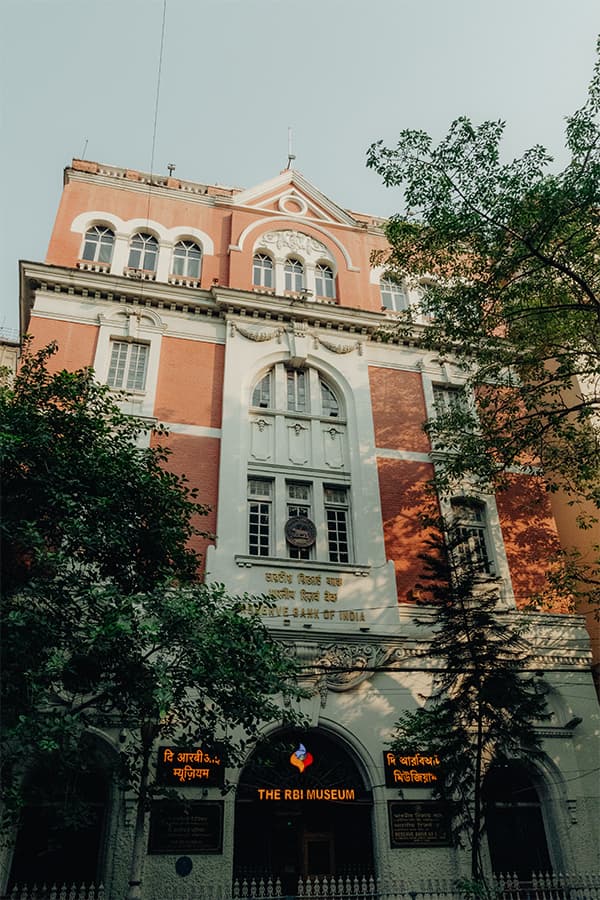
<p>The RBI Museum inaugurated its coin gallery in 2019.</p>

The RBI Museum inaugurated its coin gallery in 2019.

Address: 8, Council House Street, Lal Dighi, B.B.D. Bagh, Kolkata, West Bengal 700062
Nearest Metro Stations: Mahakaran and Esplanade
Access: The museum is centrally located and reachable by bus, taxi, and online cab services from across Kolkata.

Housed in a historic building that once served as the RBI’s Kolkata office (built in 1935), the RBI Museum opened a dedicated coin gallery in 2019. The museum’s mission is to document and preserve India’s monetary heritage, showcasing coins, currency, gold and other economic curiosities.
Highlights of the RBI Museum Collection
 

  • Commodity Currency: One of the most interesting sections in the museum is the segment displaying unusual items used as currency through history. These include salt, cowrie shells, wampum (clam-shell beads used in Northeast America and Canada over a period spanning 1500–1600 CE), and even cheese!
  • Unlikely Coins: The exhibits include Chinese “boat money” from the 14th century CE and Thai phot duang coins (also known as “bullet bahts”), taking us back in time and providing an insight into the culture of the time.
  • Ancient and Medieval Coins: There are ancient punch-marked coins (among the earliest in recorded history), as well as coins from the medieval era kingdoms including the Delhi Sultanate and Vijayanagar.
  • Princely State Coins: Several coins from 16th-century CE princely states in India, including that of Mysore, are on display at the museum.
  • National Defence Fund (NDF) Gold Coins: These are, perhaps, the most striking exhibits in the museum. The Government of India set up the National Defence Fund in 1962, during the Chinese transgression, to mobilise resources for national defence. In 1965, Mir Osman Ali Khan, the then Nizam of Hyderabad donated over 33,000 gold coins to the NDF. The RBI museum in Kolkata displays some of these coins with pride.
  • Commemorative Coins: The gallery also houses a variety of rare RBI-issued commemorative coins in silver, copper-nickel, and other metals, marking key events in India’s history, including its independence. 
     
<p>The museums also has life-size models depicting past processes related to currency-making and art installations to explore.</p>

The museums also has life-size models depicting past processes related to currency-making and art installations to explore.

While walking the halls in the coin galleries of these museums one is reminded that currency is far more than metal. Each piece carries the imprint of its era: its rulers, its trade routes and the impact it had on countless lives. Together, the coin collections at the Indian Museum and the Reserve Bank of India Museum offer us a tangible glimpse of the subcontinent’s past, inviting us to find our place in it.