




Walls that tell Kolkata’s stories: The murals of Deodar Street
How this narrow South Kolkata lane turned everyday Kolkata into art

 Published on 2026-02-10Updated on 2026-02-10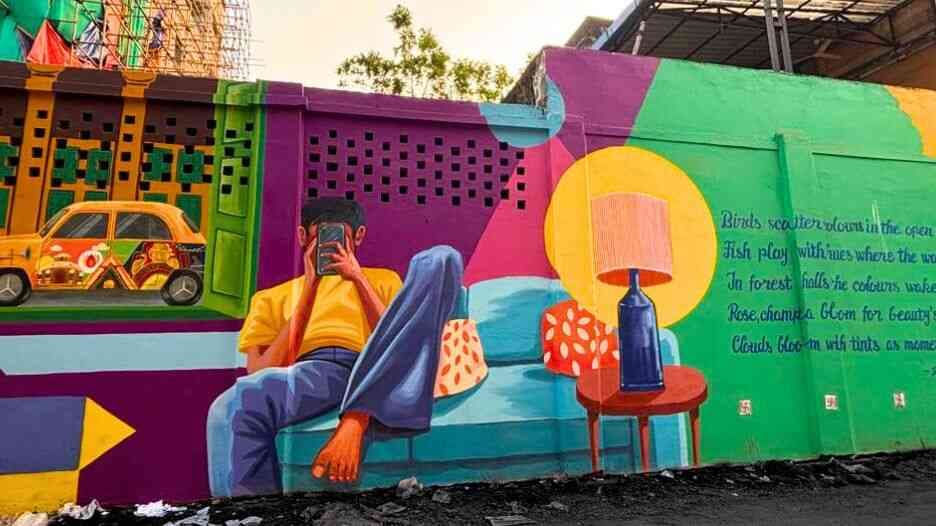
The most recent Kolkata location where street art has lent beauty to the mundane. (Pictures by Snehal Sen)
On Deodar Street in Ballygunge, a largely residential neighbourhood in south Calcutta, a short stretch of road has been quietly transformed into a public art gallery. What had been an unremarkable street — dimly lit in the evenings — easily passed without a second glance, slowly began to take on colour, shape and purpose towards the end of November 2025. By December, the entire series of murals had been completed, turning the lane into a vivid open-air gallery.
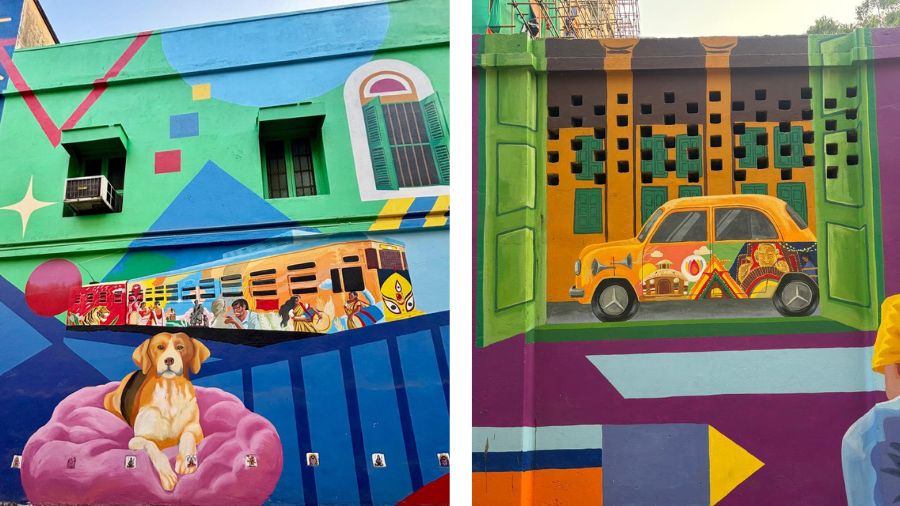
Kolkata's iconic tram and yellow taxi share space on the wall.
The 500 metre stretch of the road is particularly suited to this kind of treatment, flanked as it is by high boundary walls on both sides. The project was initiated by St+art India Foundation with support from a popular paint company and was sanctioned by the Kolkata Municipal Corporation.
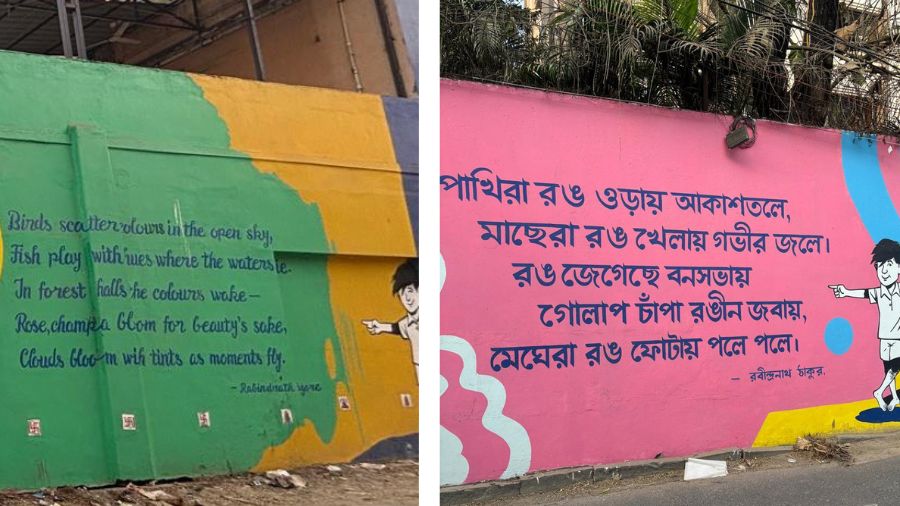
A fitting quote by Tagore on the beauty and prevalence of colours in nature finds place of pride.
Helmed by local artist Sayan Mukherjee, whose earlier public works include large-scale projects at Eden Gardens and the New Town underpass below Kolkata Gate, the walls were first whitewashed. Under his meticulous brushstrokes they then blossomed with a continuous series of murals, rendered in more than 5,300 shades of colour.
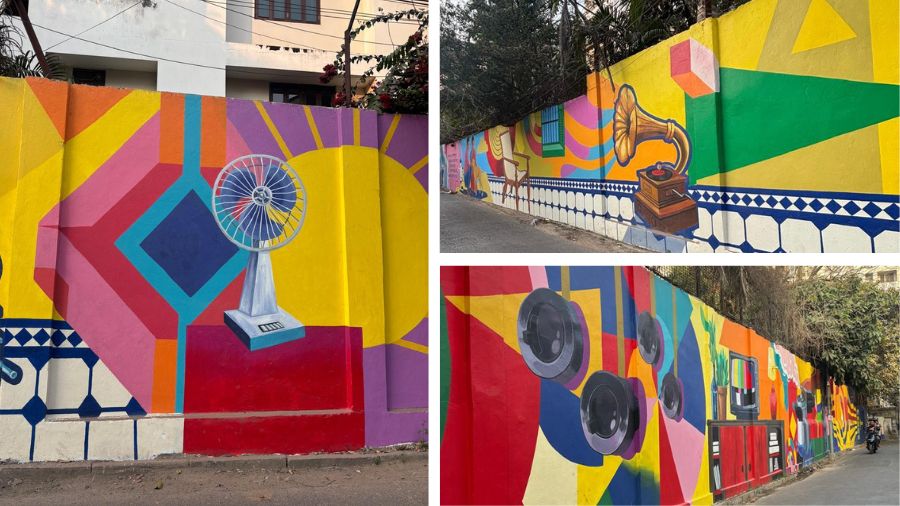
Glimpses of books, table fans, gramophones, khorkhori janalas, favourite foootball team colours and more strike a chord of familiarity.
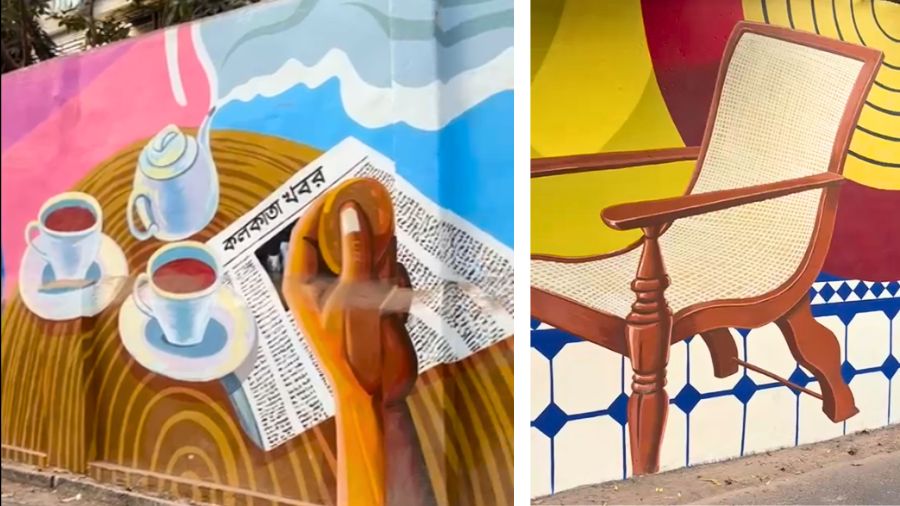
A quintessential old-world Kolkata morning scene: 'aram-ke-daray' (armchair), cups of tea with biscuits and crisp newspaper loaded with local 'khobor'.
Together, they depict scenes instantly recognisable to anyone familiar with the city, drawing from its history, daily life and shared cultural memory.
Rather than standing as isolated artworks, these murals form a single, unfolding narrative. An iconic yellow Ambassador taxi appears before a tram, capturing a city that moves at its own pace and where public transport has become part of its visual identity. A mural depicting a Durga Puja pandal shows Mahishasura locked in his eternal defeat, watched by a father and son — a scene that instantly resonates with the City of Joy.
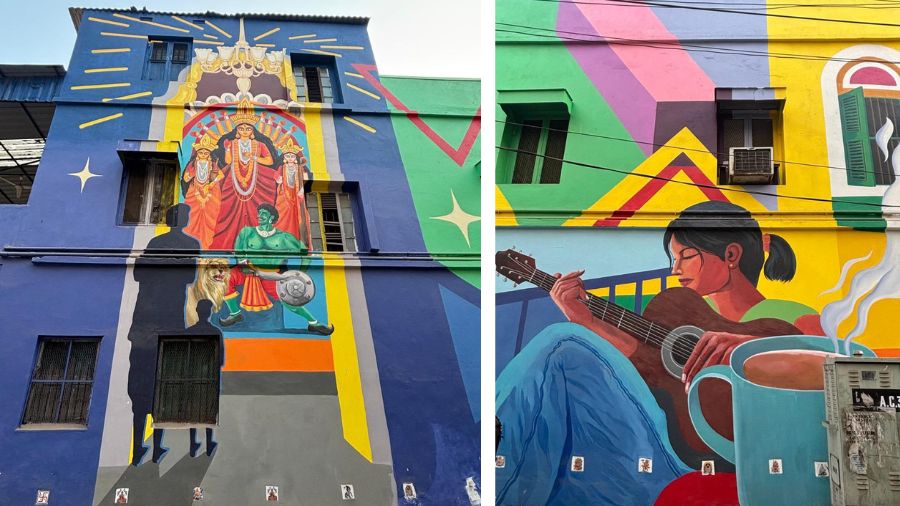
Durga Puja meets urban café culture and Bangla rock.
Elsewhere, an elderly man is absorbed in a tense game of chess against an unseen opponent as a young boy looks on, while a gramophone recalls an earlier era of sound and leisure. A touch of Tagore adds a quintessential poetic touch; a young woman playing the guitar in front of a steaming cup of a hot beverage adds a contemporary note — reflecting the city’s constant reinvention and the café culture that thrives in this part of Kolkata.
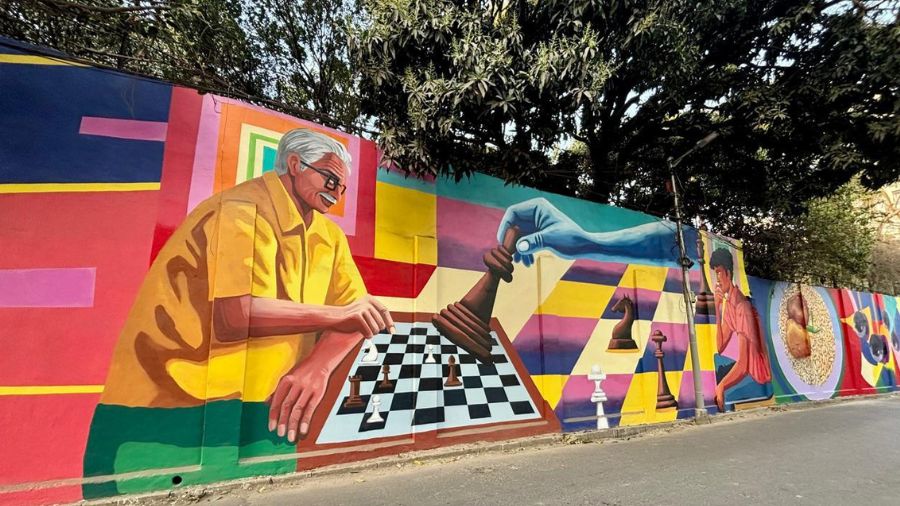
A familiar sight at home and a long-standing tradition under certain South Kolkata flyovers.
As pedestrians and motorists move down Deodar Street, they encounter not spectacle but familiarity—a visual record of the city’s everyday moments, painted into the fabric of the neighbourhood itself.
Since its completion, the stretch has been catapulted into the limelight through social media and now draws a steady stream of visitors. Passers-by pause to take photographs, selfies and group shots, while reel-makers and content creators use the street as a popular backdrop.
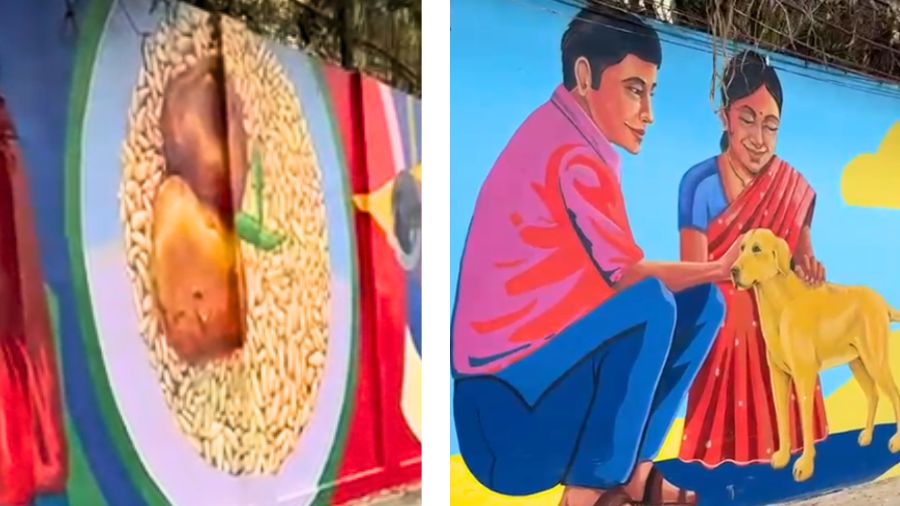
Panels depicting a bowl of muri (puffed rice) with aloo (potato) and kancha lonka (green chilli) — the holy trifecta of Bengali evening snack — and Kolkata's love for strays.
As evening falls now, the street no longer disappears into shadow. What was once a dark, overlooked stretch of road has become a place of curiosity and connection — proof of how thoughtfully placed art can change a space.
Related Posts
Greatest street art festival
Durga Puja is a time for breathtaking pandals and spectacular idols
The Street Art and Design Festival 3.0
Art, food and music stalls took over Hindustan Park lanes
Cycling through Bengal changed Shantanu Moitra
The music composer looks back on the last leg of ‘Anantha Yatra’ in Bengal