
A joint initiative by



 Published on 2026-04-30Updated on 2026-04-30
In most cities, a filmmaker's legacy lives in archives and retrospectives. Kolkata does things a bit differently.
More than three decades after the passing of Satyajit Ray — one of the world’s greatest storytellers — his presence in Kolkata, where he lived and breathed his craft, is not a matter of monuments and plaques. It’s something more lived in. Film clubs still screen the Apu trilogy. Feluda and Professor Shonku continue to be read, translated, adapted into films and television series that draw new audiences every year. The respect is generational — passed from grandparents who watched Pather Panchali in cinemas to children who discover Feluda on streaming platforms.

However, one of the more innovative forms this has taken can be found in New Town, Kolkata’s planned satellite township. Here, three public parks have been designed around Ray’s most beloved creations. They are not museums or ticketed attractions. They are regular neighbourhood parks where families walk, children play and Ray’s characters stand quietly among them.
Here’s what they have in store.
Tucked among residential high-rises in New Town, Apur Sansar Park is a tribute to Ray’s Apu trilogy — Pather Panchali (1955), Aparajito (1956) and Apur Sansar (1959) — drawn from Bibhutibhushan Bandyopadhyay’s novels.
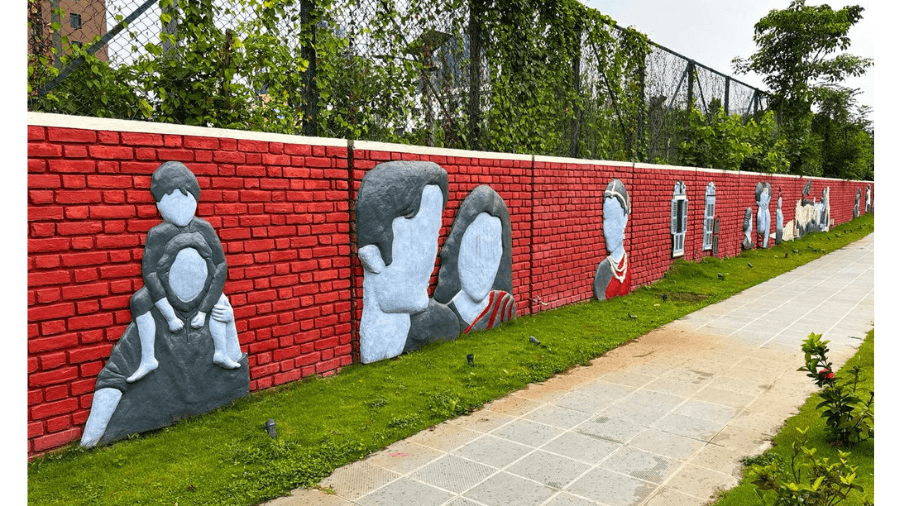
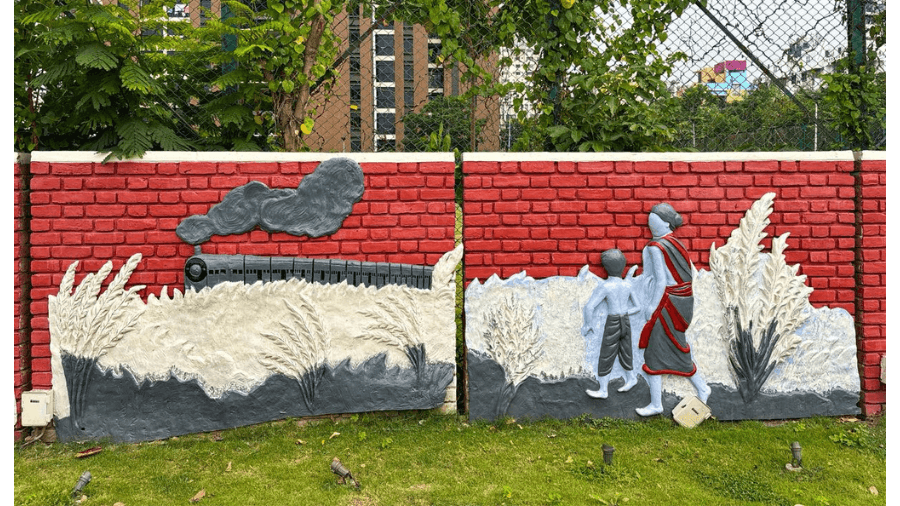
The park spreads across nearly two acres. Along its perimeter, the boundary wall serves as a continuous visual narrative: panels and murals depict moments from the films, with recurring glimpses of Apu and Durga. One wall mural shows the iconic scene from Pather Panchali where Apu and Durga race through a kashbon to catch sight of a steam-engine train. Another section traces different stages of Apu’s life across a series of panels.
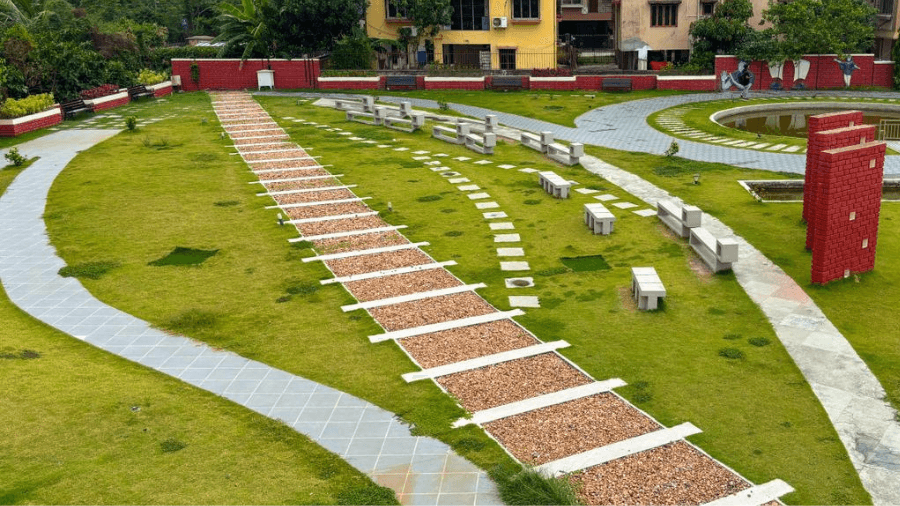
One of the central features is a railway-tracked walkway that cuts through the park — a nod to the train imagery that runs through Ray’s trilogy. The biggest installation is a two-storey structure created as a nod to Apu’s house in the films. Inside, there are still photographs from Ray’s work and a room upstairs with a pair of small cots and a work table.
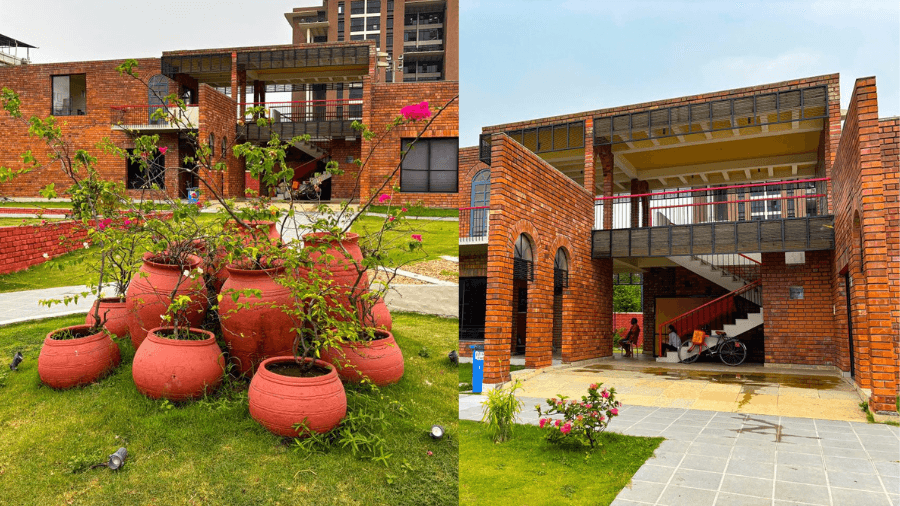
Near the entrance, a glass-walled structure houses murals modelled on Soumitra Chatterjee, who played Apu in Apur Sansar.
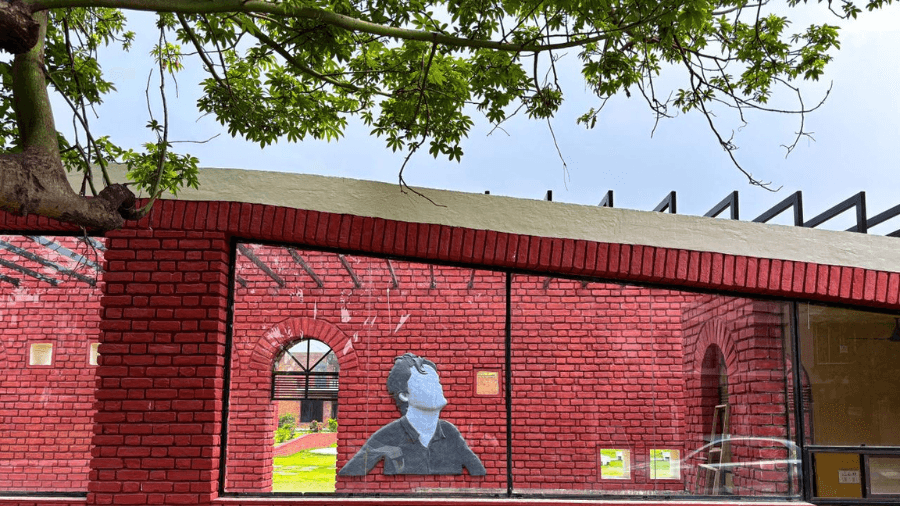
Timings: Open daily, 5am – 8pm
Entry: Free
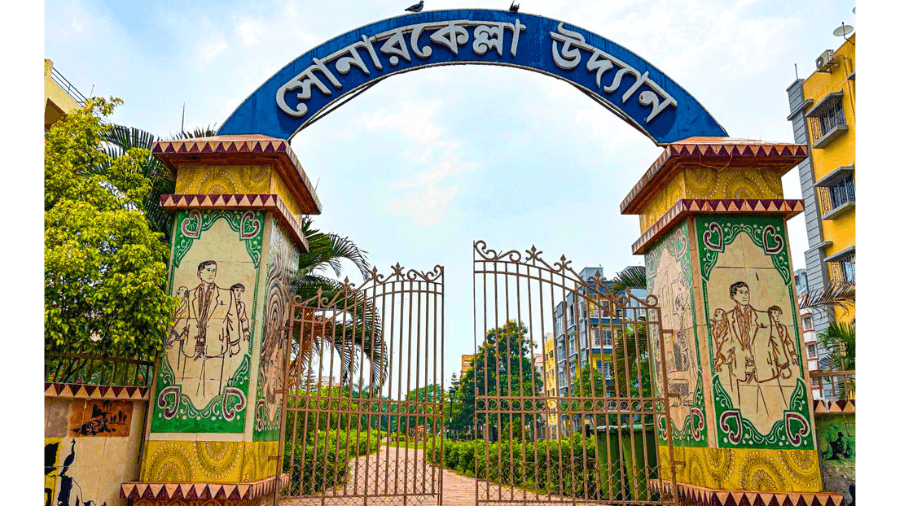
Named after Ray’s detective thriller Sonar Kella (1974), this park sits in New Town’s BA block, Action Area I, and spreads across 3.65 acres. The main gate of the nine that allow visitors to access different sections of the park greets visitors with murals based on Ray’s own sketches of Feluda, everyone's favourite Bengali supersleuth.
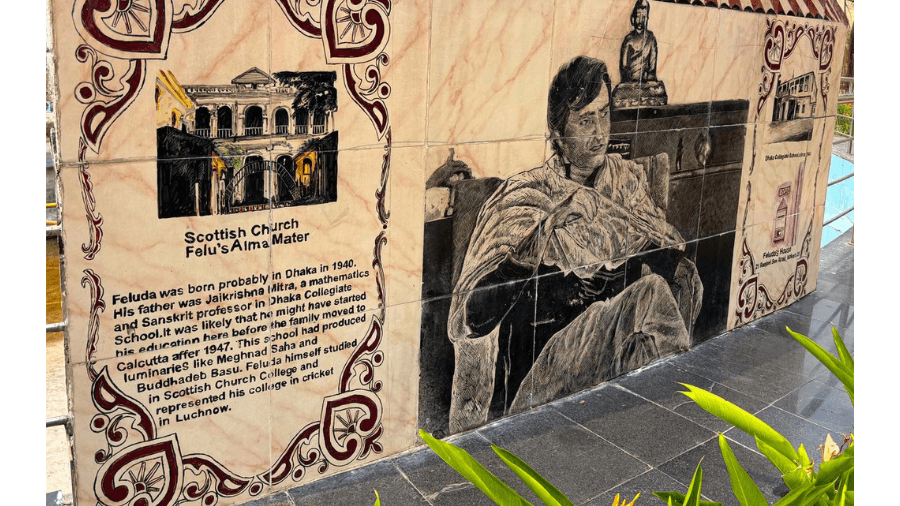
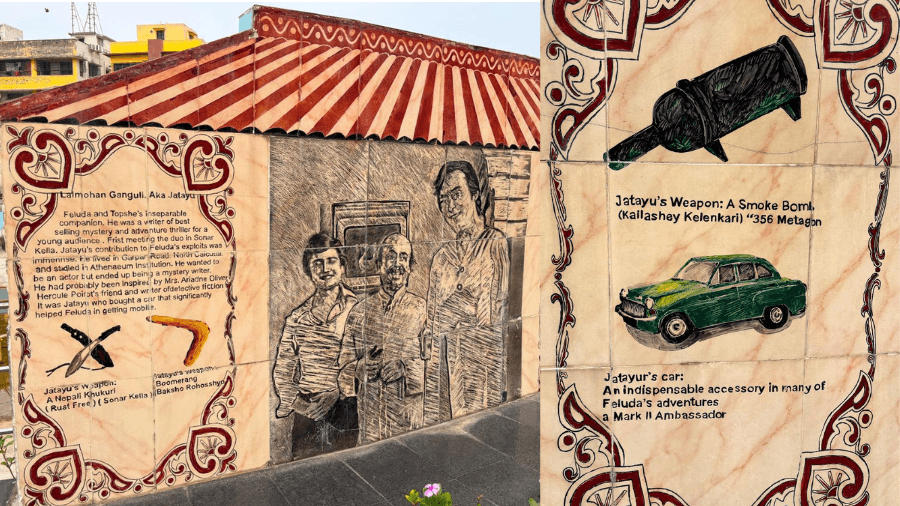
The base of the park’s central fountain carries panels about characters from the Feluda books. While a main one lists details about Pradosh Mitter, including his schooling and home address, another is dedicated to the beloved character of Lalmohan Ganguli aka Jatayu. His panel has details about him along with descriptions of his weapons, including his rust-free khukri and boomerang and his iconic green Ambassador Mark II.
Since the lush green park is quite a contrast to the book-turned-film's desert setting, the park evokes its plot through carefully placed installations rather than trying to recreate Rajasthan’s landscapes. The most striking of these are three sculptural models depicting Feluda, Topshe and Jatayu crossing the desert on camelback.
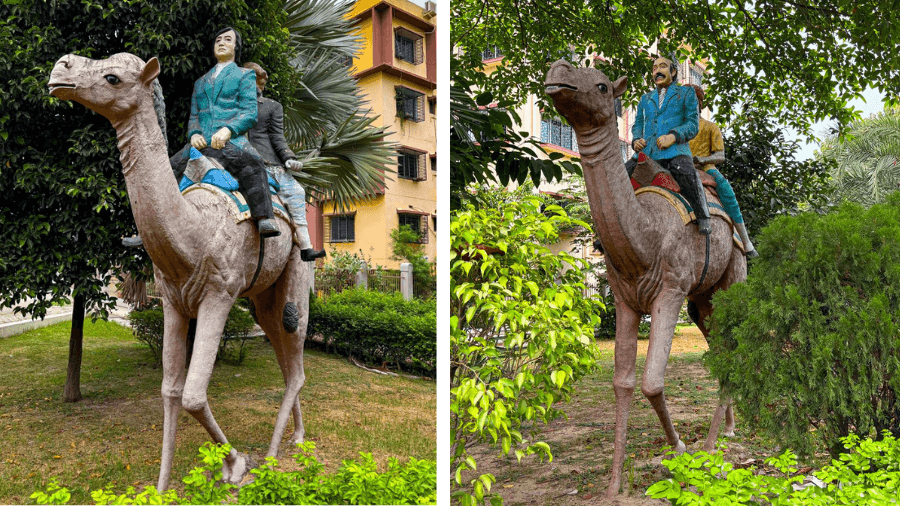
Timings: Open daily, 5am – 8pm
Entry: Free
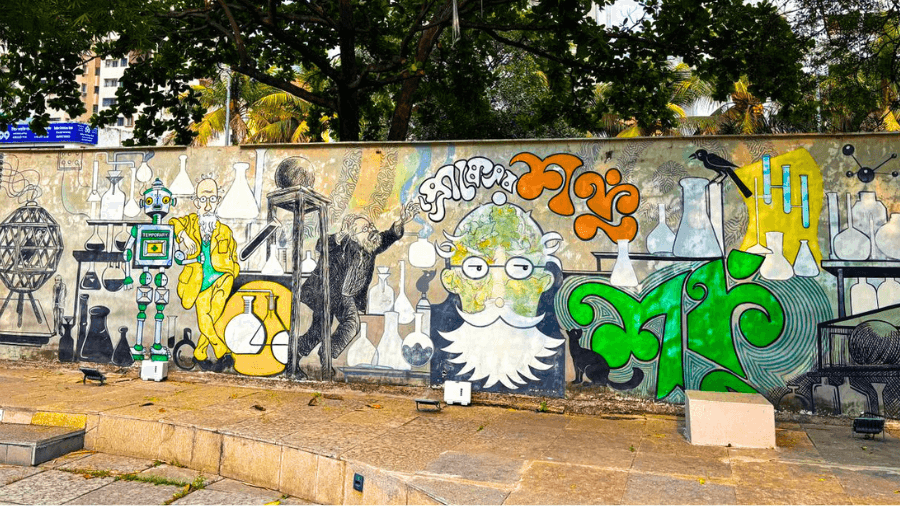
A stone’s throw from City Centre II in Action Area II, this is the most detailed of the three Ray-themed parks. This pays tribute to another of Ray’s beloved creations — Professor Trilokeshwar Shonku — eccentric inventor, scientist and resident genius of Giridih.
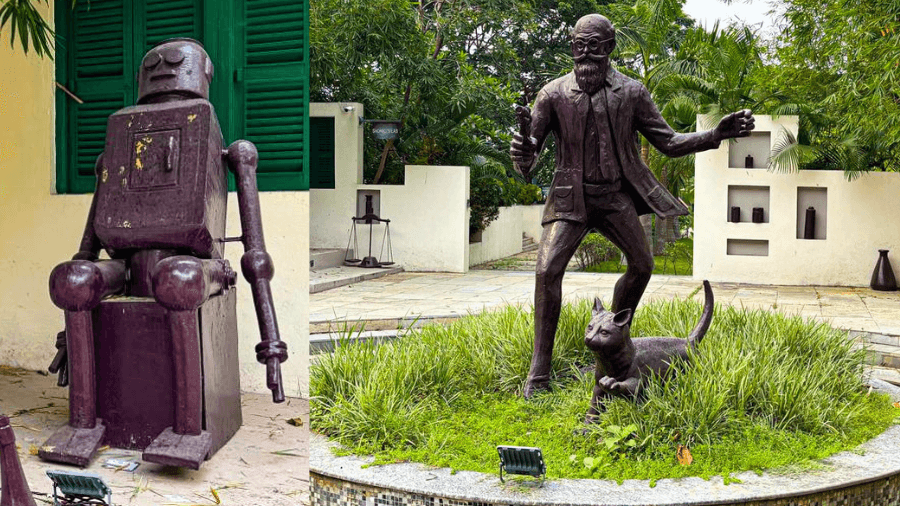
At its centre stands a 10-foot statue of Professor Shonku within a fountain, armed with Annihilin — a pistol capable, in Ray’s stories, of obliterating any living thing — and accompanied by Newton, his pet cat.
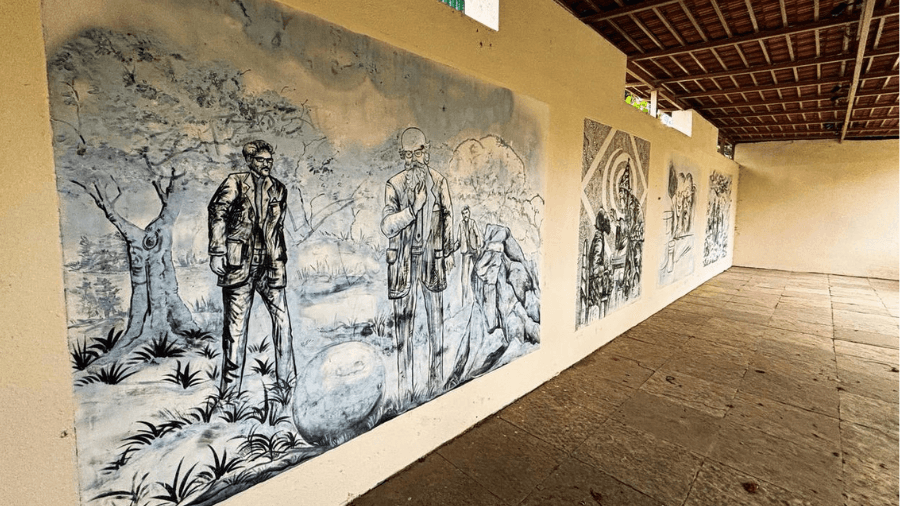
To the left, a partially enclosed structure recreates the atmosphere of Shonku’s laboratory. Scientific instruments — a microscope, beakers, weighing scales — are embedded into recesses in the walls. In one corner sits Bidhusekhar, the professor’s all-knowing robot that can put any AI-powered search engine to shame. To the right is a wall composition that draws from Ray’s original sketches for the Shonku stories.
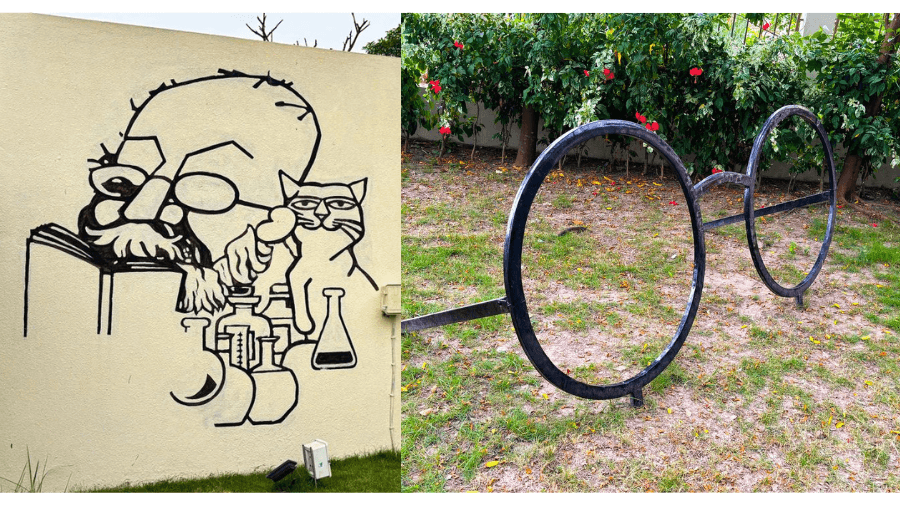
But the installation that will catch your eye is the giant replica of Shonku’s Omniscope. In Ray’s stories, this deceptively simple pair of spectacles functions as telescope, microscope and X-ray viewer all at once. Here, enlarged to architectural scale, it works as both sculpture and symbol — a fitting tribute to a curious mind’s boundless capacity to imagine, invent and innovate.
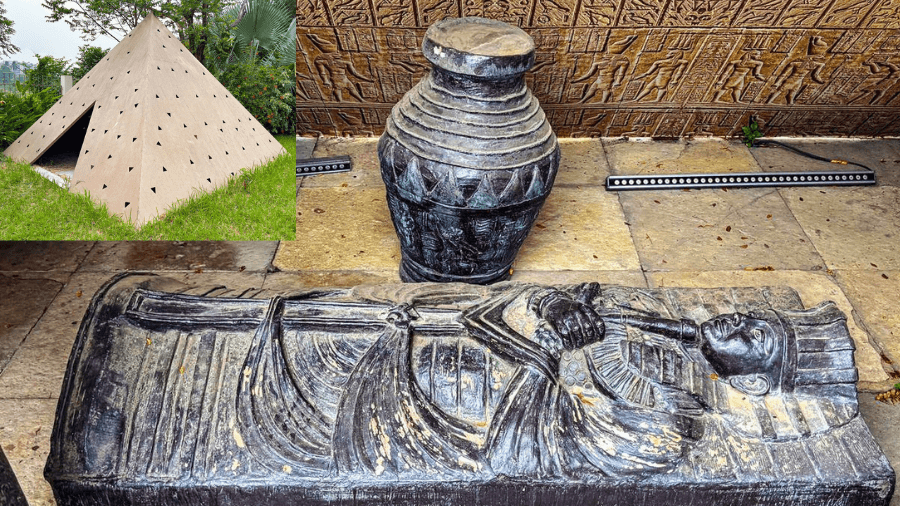
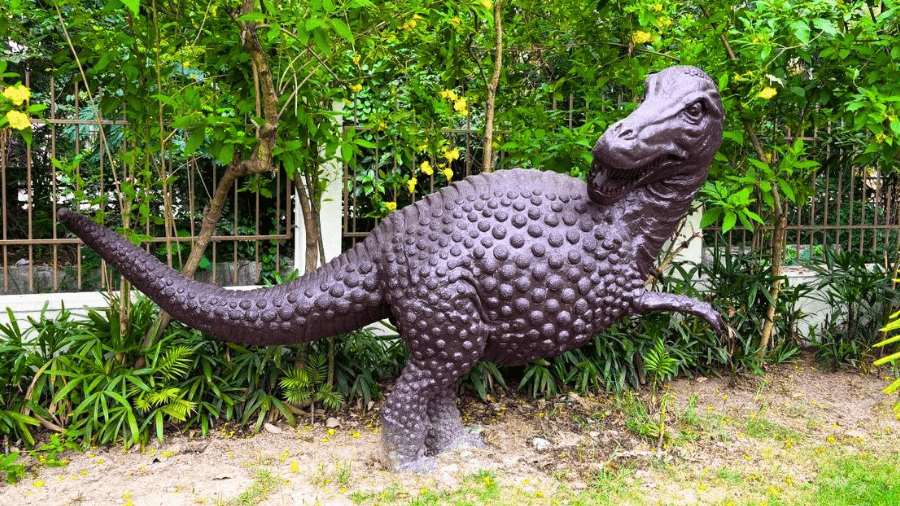
Elsewhere in the park you can spot a mummy and a pyramid as nods to Egypter Atonko, a giant T-Rex that Shonku saw on one of his travels, walls adorned with paintings, sketches and metalwork that depict the professor on his numerous adventures — all drawn from Ray’s original artwork.
Timings: Open Tuesday to Sunday, 2:30pm – 8 pm
Entry: Rs 10

What makes these parks worth visiting isn’t the scale or the details of the installations. It’s where they can be found: in an everyday neighbourhood, surrounded by apartment blocks and morning walkers. Children take delight in the camel and T-rex sculptures, get intrigued by the scientific instruments and run around the train-track paths without knowing who Feluda or Shonku is yet. Families spread out mats near the Omniscope and go read up on characters known and unknown.
The parks don’t ask visitors to be Ray fans first — they pique your curiosity, immerse you in Ray’s world and then let the stories and Satyajit Ray’s mastery find you.


