
A joint initiative by



 Published on 2025-11-08Updated on 2025-11-08
Kolkata has a long and rich history, which is deeply intertwined with the country's colonial past. It is also home to revolutionaries and visionaries who have left their marks on this nation and the world. The city is, therefore, home to monuments and heritage buildings that speak of that layered history – from the General Post Office, Currency Building and Lok Bhavan in the office para to Jorasanko Thakurbari and Nakhoda Masjid in central Kolkata. Here's a list of a dozen must-visit monuments in Kolkata.
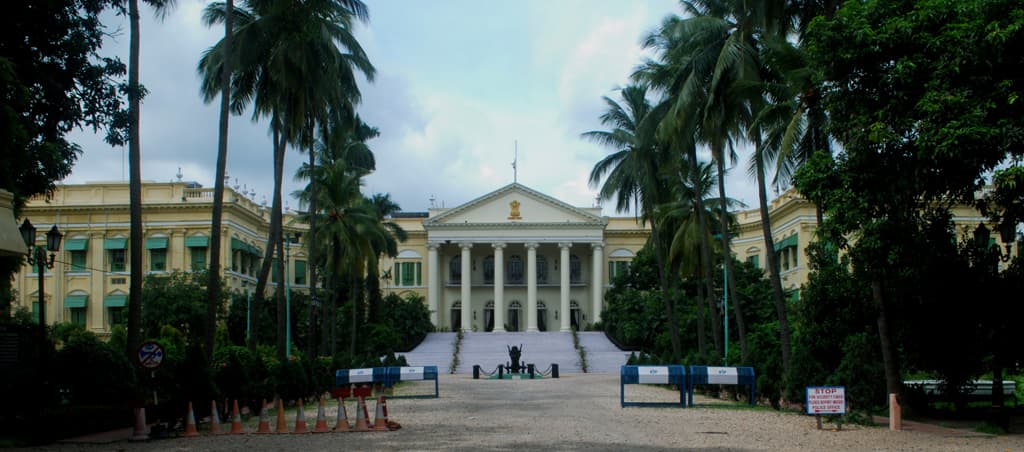
The grand pillared entryway of the Governor House. (Picture by Rangan Datta, Wikimedia Commons)
Built in 1803 by English architect Charles Wyatt, Lok Bhavan or Raj Bhavan was originally called the Government House. It is now the official residence of the Governor of West Bengal and is located in the BBD Bag area.

The GPO clock, imported from England, was made by the makers of London’s Big Ben. (Picture by Rangan Datta, Wikimedia Commons)
Locally known by its abbreviation GPO, the General Post Office in Kolkata was the first post office of India designed by Englishman Walter B. Grenville. It has stood tall with its magnificent dome and tower since 1868 inside the south-east bastion of the Old Fort William. The GPO, famed as the birthplace of the country’s first postage stamp, is currently the office of the Post Master General. It celebrated its 250th anniversary in 2024.
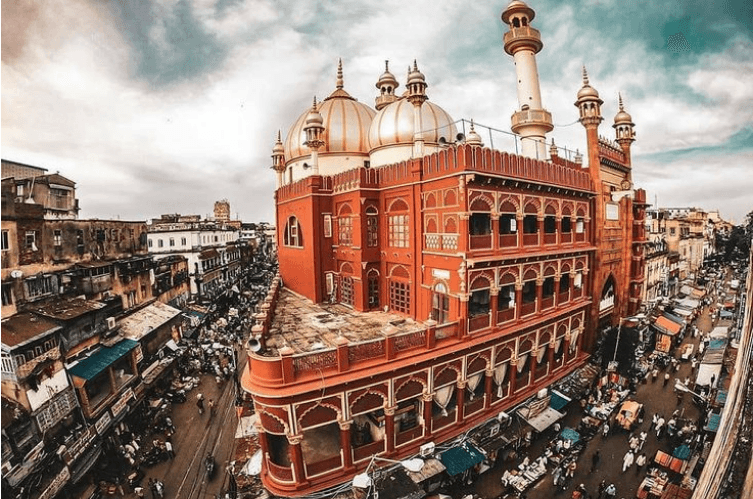
The Nakhoda mosque is a grand and imposing monument. (Picture by West Bengal Government Repository)
The largest mosque in West Bengal, Nakhoda Masjid features three domes, 27 minarets and a capacity to house over 10,000 devotees. Built by Kutchi Memon Jamat in 1935, it was a brainchild of Haji Zakariah, a merchant, businessman and a respected member of the city’s Muslim community. Another Kutchi Memon devotee, Abdul Rahim Osman, also contributed to its development.
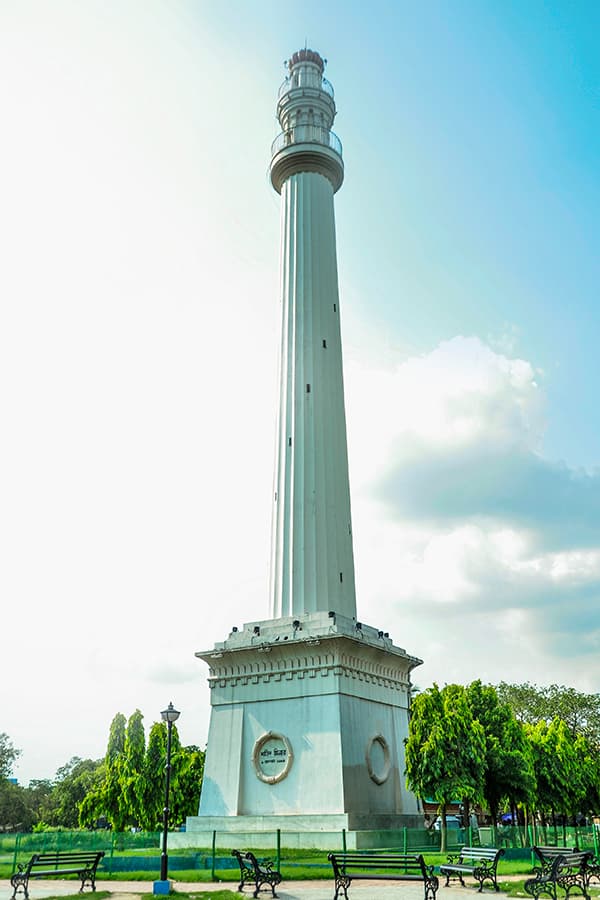
The Shaheed Minar was originally named the Ochterlony Monument. (Picture by Ushnish Jana, Wikimedia Commons)
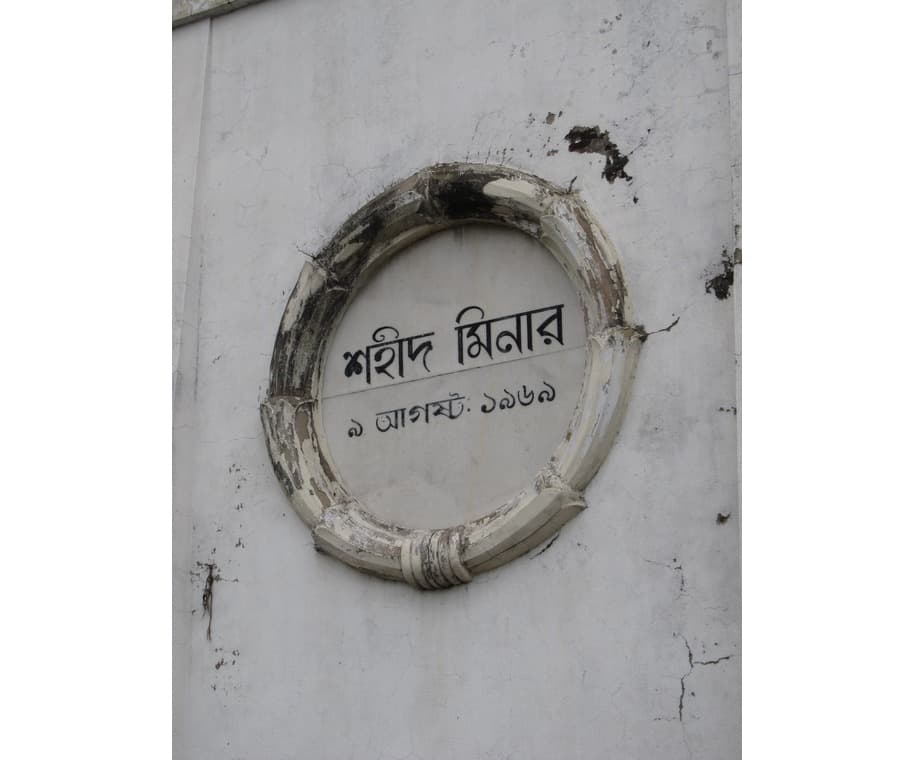
The Ochterlony Monument was renamed Shaheed Minar in 1969. (Picture by Biswarup Ganguly, Wikimedia Commons)
During Mark Twain’s Kolkata visit, he called the Shaheed Minar, standing in present-day Esplanade, a “cloud-kissing monument”. It was built in 1828 in the memory of Sir David Ochterlony, a commander of the British East India Company. Today, the monument is dedicated to the martyrs (‘shaheed’) of the Indian freedom movement.
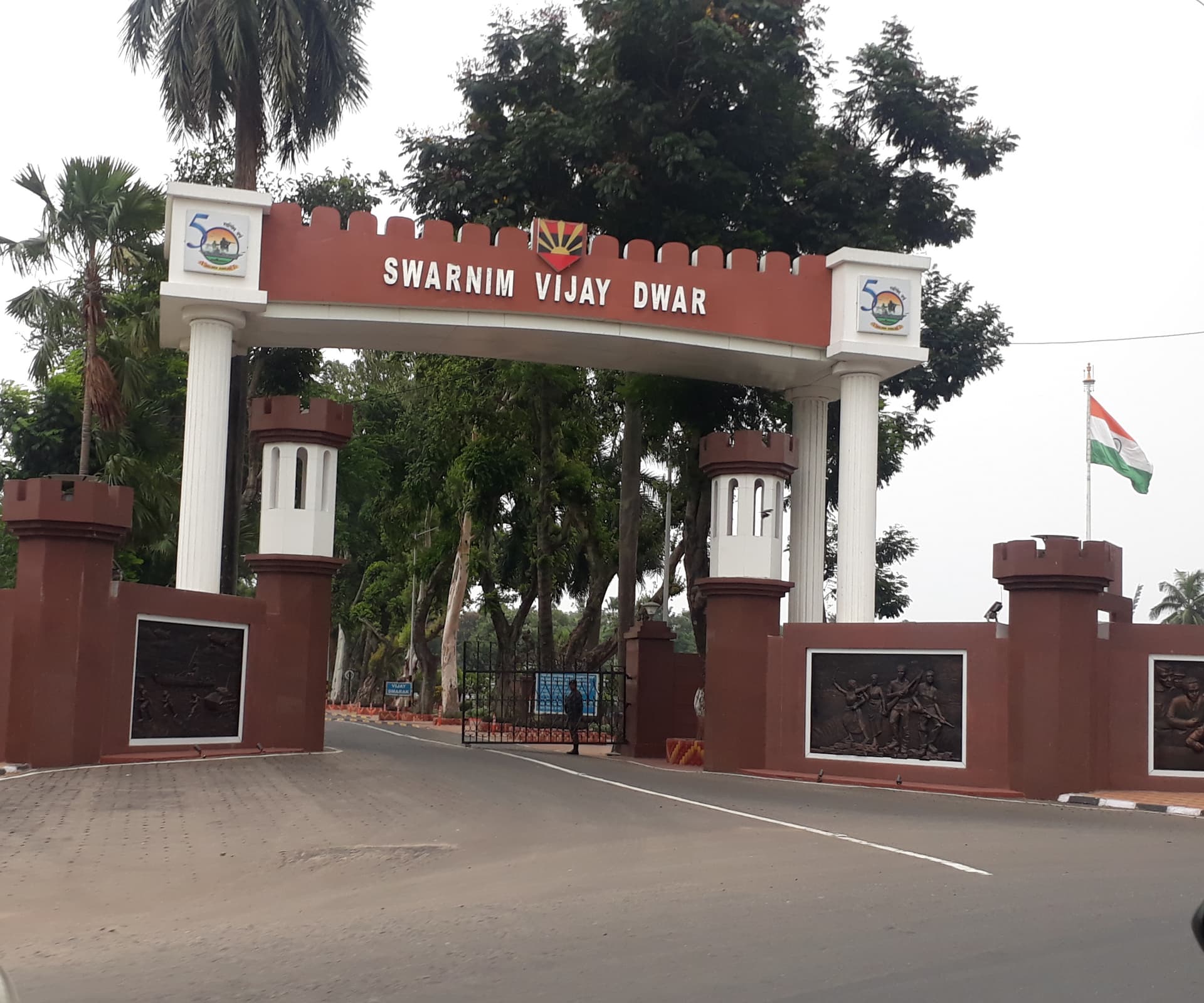
One of the grand gates of Fort William in Kolkata. (Picture by Pinakpani, Wikimedia Commons)
Now, the military headquarters of the Eastern Command of the Indian Army, Fort William is the only fort in the world that has never been besieged, nor has a single shot been fired from its premises. Originally built in 1696 as a guard room, it was demolished during the Black Hole tragedy in 1756. It was rebuilt in 1757 by Sir Robert Clive and dedicated to King William III of England.

The sprawling expanse of the Writers’ Buildings is a sight to behold. (Picture by Paul Hamilton, Wikimedia Commons)
This red landmark in BBD Bag was built by Thomas Lyon and commissioned by Richard Barwell over 242 years ago. It was originally built as a boarding house for junior staff, aka ‘writers’ (hence the name), it was later the HQ of the East India Company and Warren Hastings’ administrative office. At one point, it also housed the Fort William College.
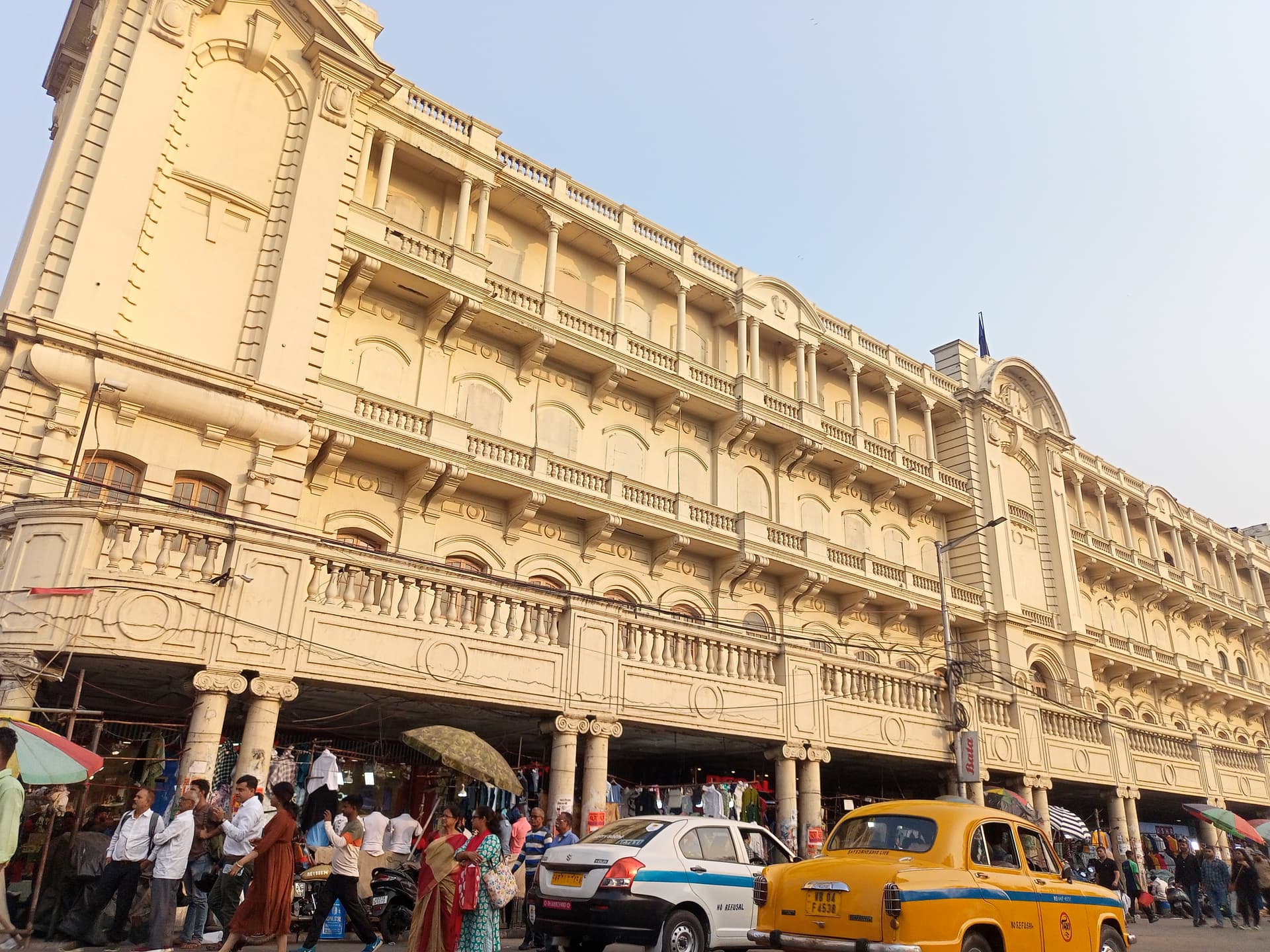
The Grand and the Great Eastern hotels have stood steadfast in ever-changing Kolkata. (Picture by Aashaa, Wikimedia Commons)
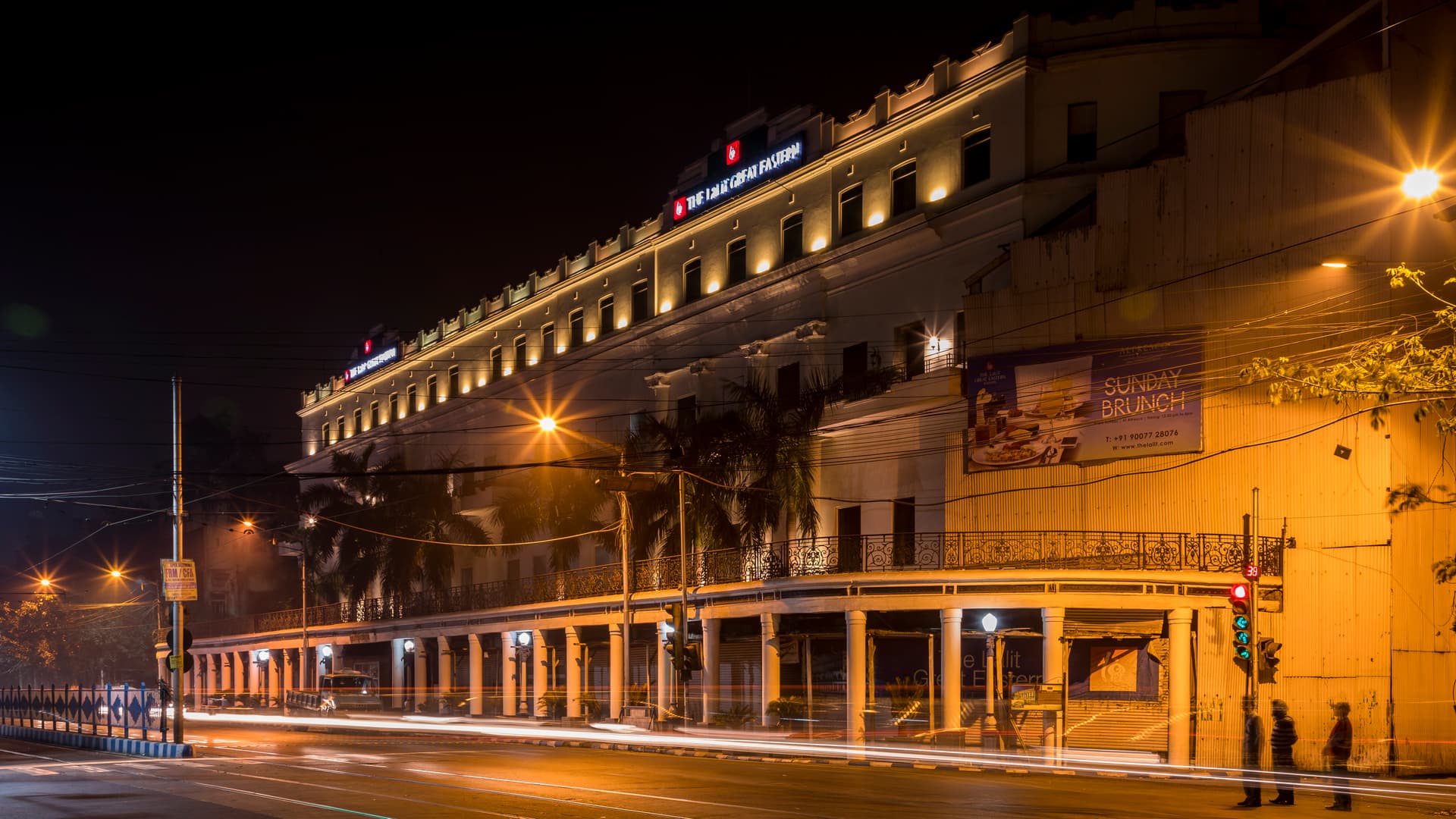
The Grand and the Great Eastern hotels have stood steadfast in ever-changing Kolkata. (Picture by Deepanjan Ghosh, Wikimedia Commons)
These two popular heritage hotels in Kolkata continue to evoke the city’s old-world charm.
The Grand at the Esplanade–New Market intersection was built by Armenian real-estate tycoon Arrathoon Stephen in 1890. The Great Eastern was constructed as Asia’s first luxury hotel in 1840 by David Wilson. It was originally named the Auckland Hotel, after the British Governor General, Lord Auckland.
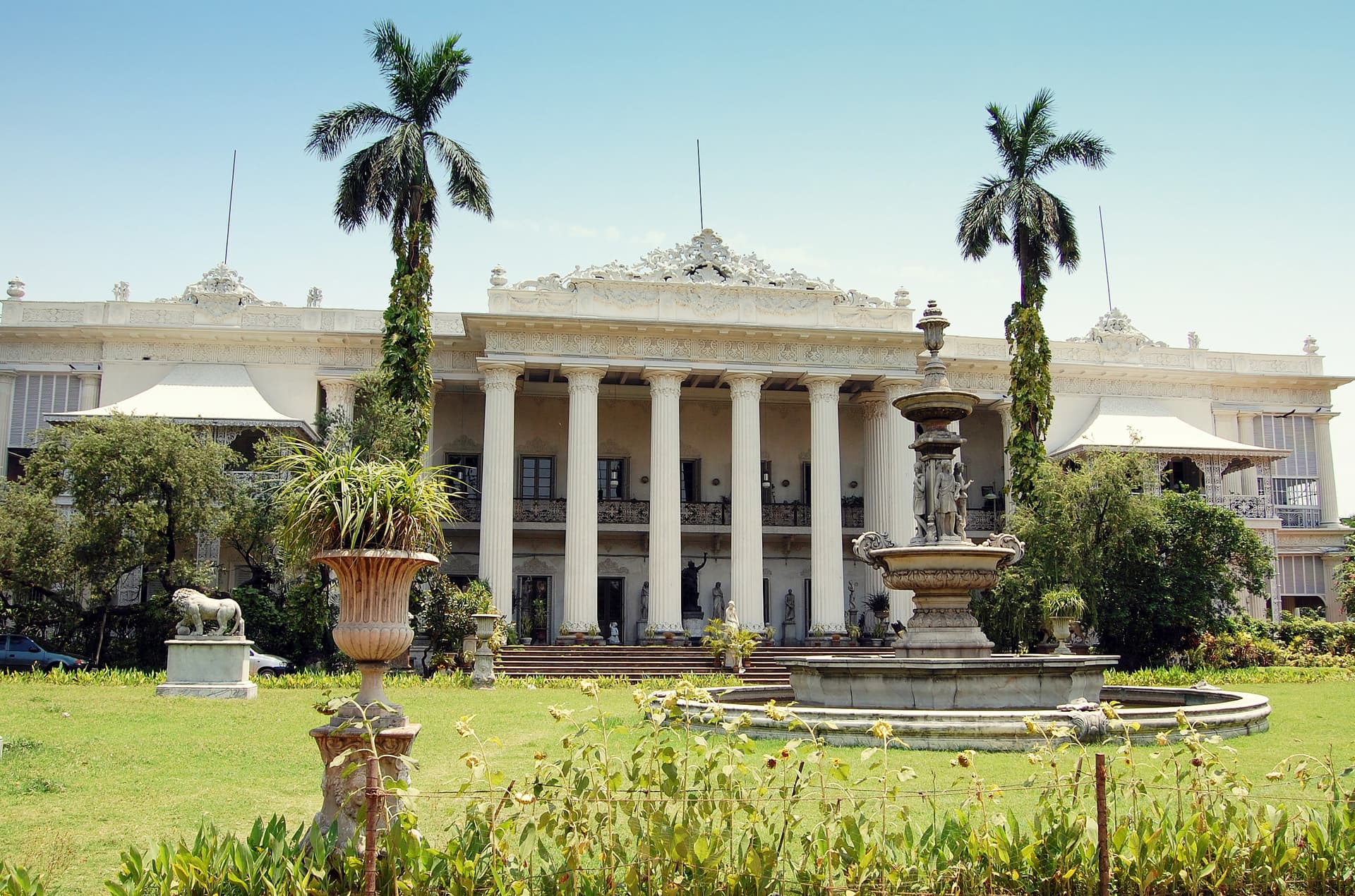
The stately pillars and the lush gardens of the Marble Palace. (Picture by Kanad Sanyal, Wikimedia Commons)
Built by Rajendra Nath Mullick between 1835–1840; this is a quintessential example of Kolkata’s neo-classical architecture. As the name implies, it is made purely out of marble. In fact, more than 90 types of marble were used for its walls, ceilings, floors, furniture, chandeliers and sculptures (spread across its five rooms: the Reception Hall, Painting Room, Sculpture Room, Billiards Room and the Thakur Dalan–an open courtyard).
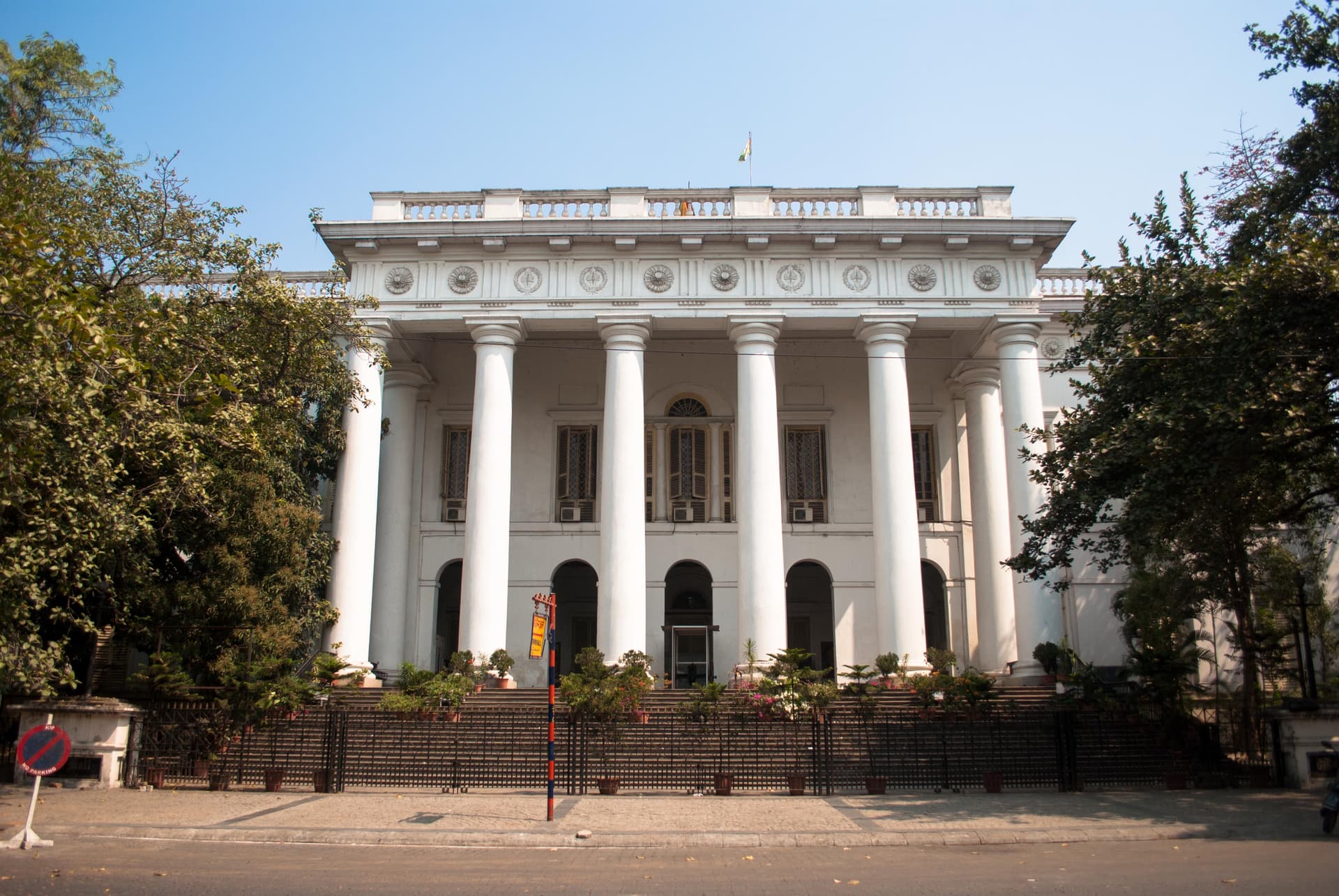
The Town Hall hosts seminars, cultural events and exhibitions. (Picture by Sujay Chandra, Wikimedia Commons)
Another example of a colonial architectural marvel, the majestic white Town Hall was designed by British architect Colonel John Garston in 1807 and was commissioned by Lord Minto. Originally meant as a venue for British social gatherings and cultural events, today it continues to play host to seminars, conferences, lectures, media events, public gatherings and exhibitions.
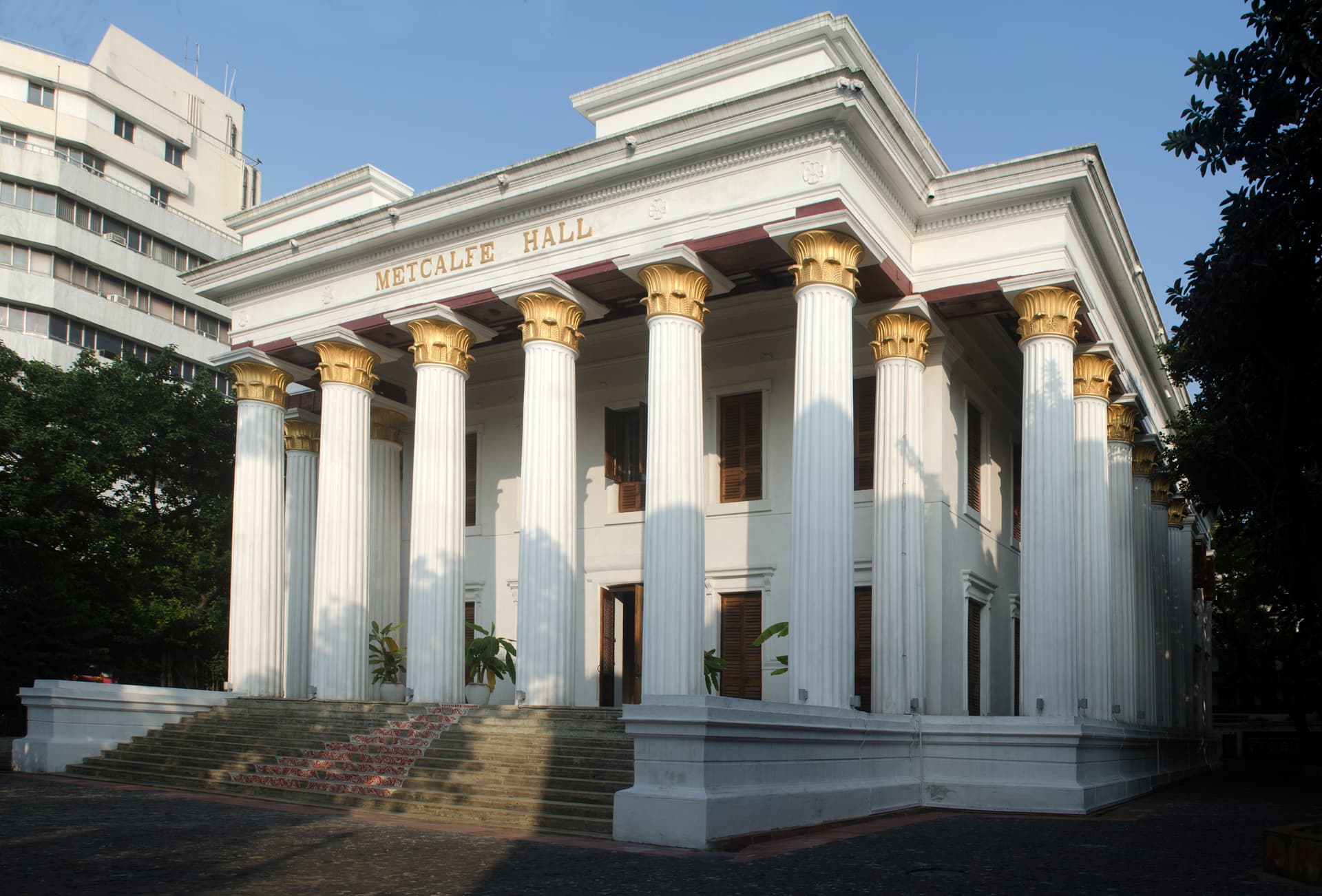
Pillared grandeur of Metcalfe Hall. (Picture by Rangan Datta, Wikimedia Commons)

An interior shot of the Metcalfe Hall. (Picture by Pinakpani, Wikimedia Commons)
Named after Governor-General Sir Charles T. Metcalfe, this imperial structure resembles ancient Greek temples and was built in 1844 as a public library and later housed the Imperial Library. Today, it is a popular art museum with a gallery and sales counter run by the Archaeological Survey of India (ASI).
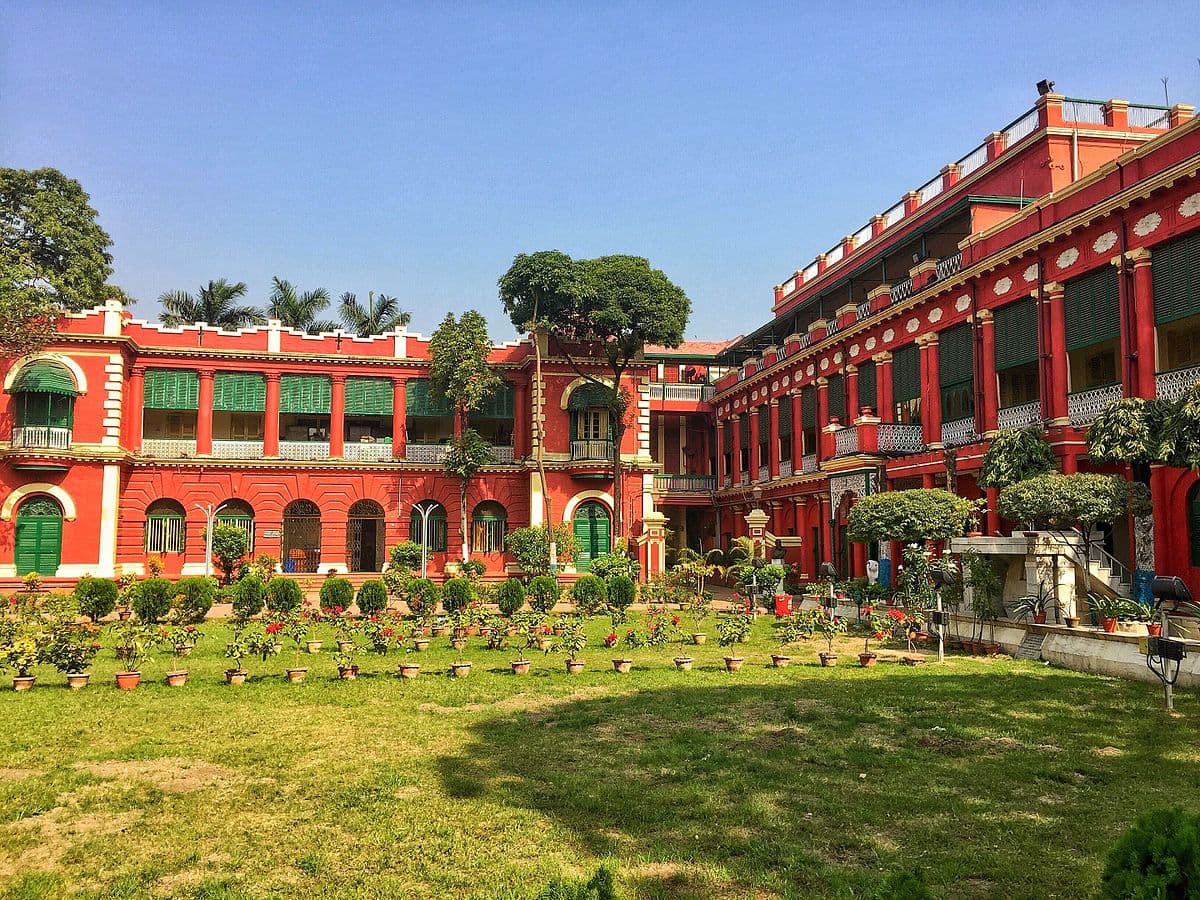
The halls of Jorasanko Thakurbari have always been steeped in culture and progressive thought.
The birthplace of Rabindranath Thakur (Tagore), Jorasanko Thakurbari is also the ancestral home of the Tagore family. It is now a museum showcasing their cultural, literary and artistic legacy. The red-bricked, 18th-century mansion was once the centre of the Brahmo Samaj, the Bengal School of Art and the Bengal Renaissance movements.
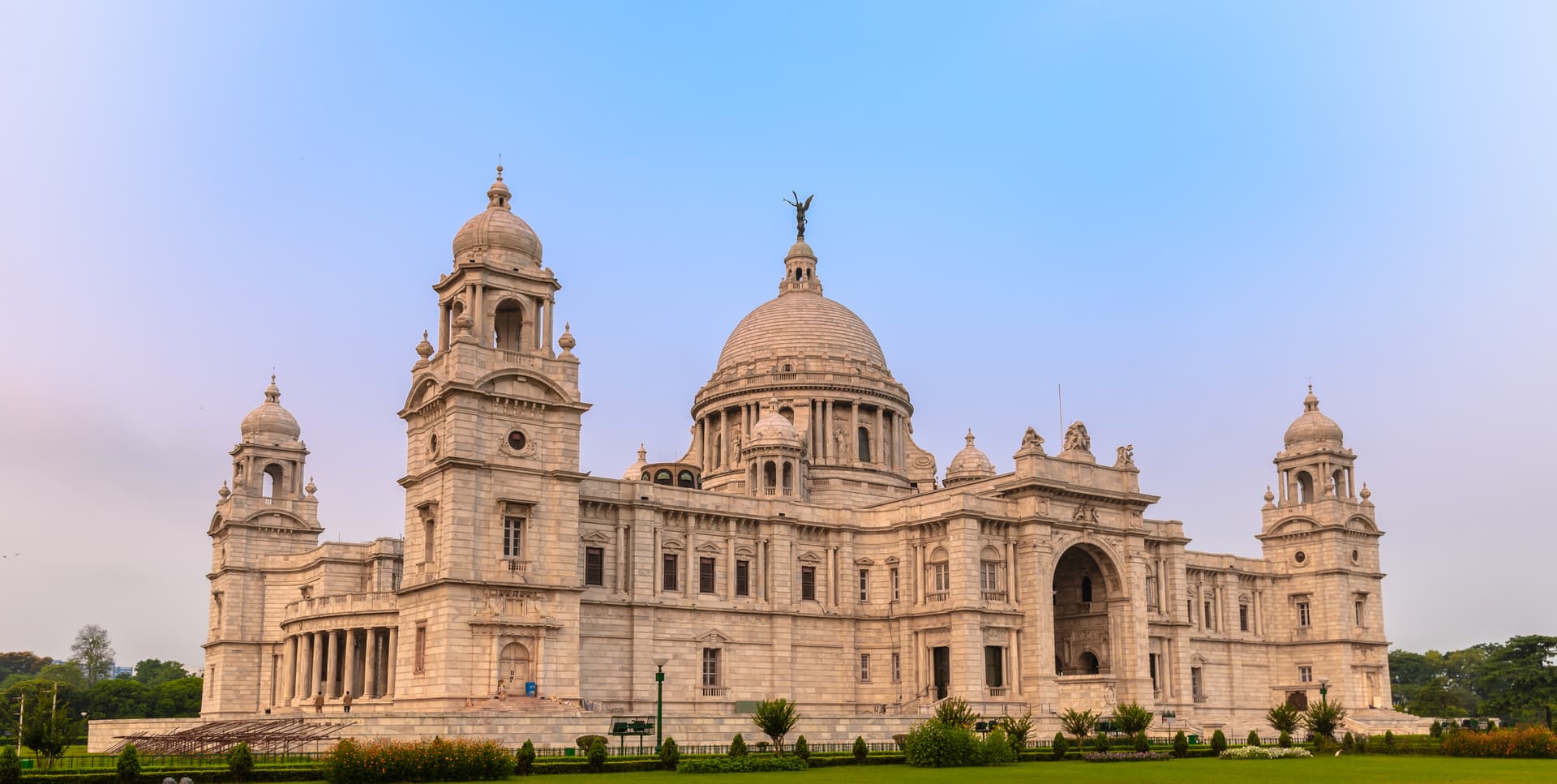
Kolkata’s skyline is defined by the majestic domes of the Victoria Memorial.
This majestic marble landmark near the Maidan was inaugurated in 1921. It was designed by William Emerson and Vincent Esch at the order of Lord Curzon, to mark the memory of Queen Victoria. It now draws over 5 million annual visitors both for its 64 acres of gardens (a beloved weekend adda spot) and it's 25 galleries with 50,000+ artworks and artefacts.


