



Five reasons to take your children to Darjeeling right now
From a century-old steam train that spirals up through the clouds to pandas, snow leopards and a cable car above tea gardens — the Queen of the Hills was practically made for families
 Published on 2026-04-08Updated on 2026-04-08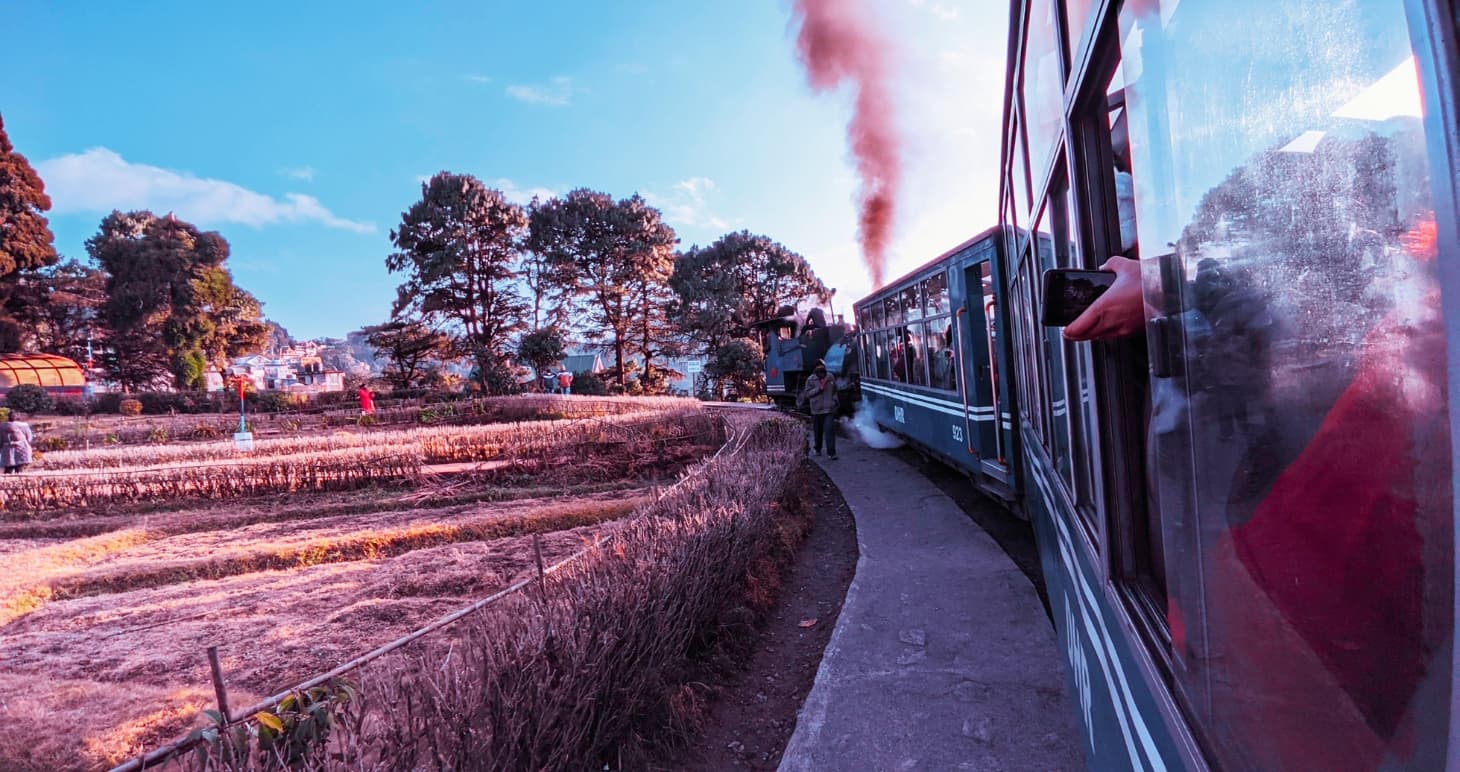
There is a moment that every parent who has visited Darjeeling with children will remember. It might be a small hand gripping yours in an open cable car as the valley drops away below. It might be the shriek of delight at a red panda gazing back with total indifference. Whatever it is, Darjeeling has a way of becoming the trip your children will talk about for years. Here, in order of discovery, are the six experiences that make it so.
1. Toy Train: Darjeeling Himalayan Railway
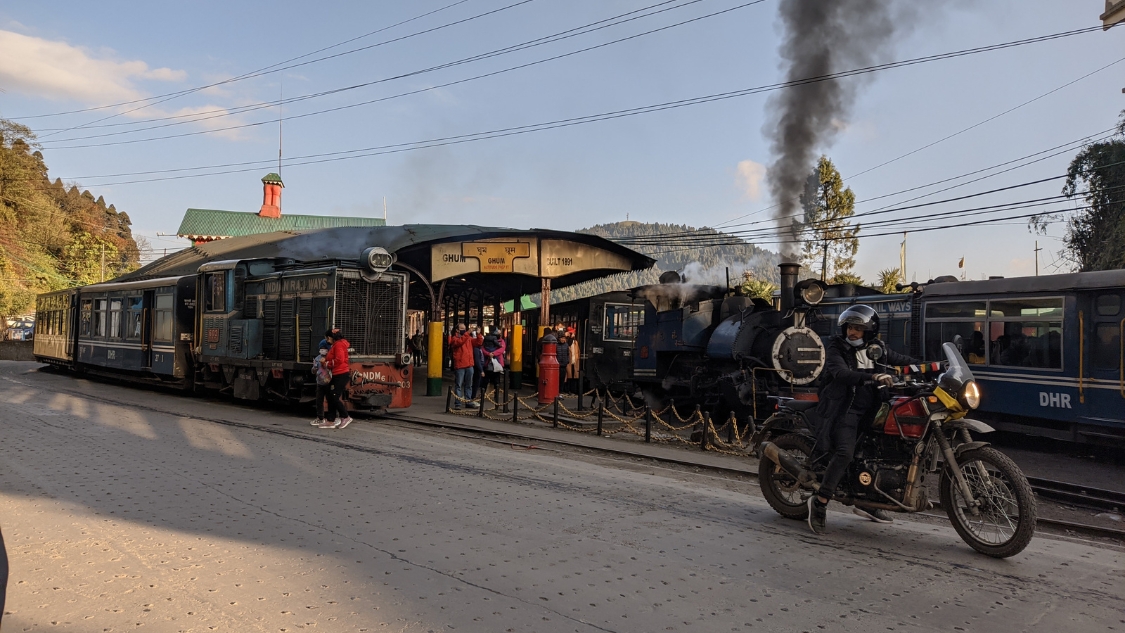
Imagine a narrow-gauge track only two feet wide, where 100-year-old B-Class steam locomotives, originally built by Sharp, Stewart & Co. in Glasgow, still chug along the mountainside. The Darjeeling Himalayan Railway was born in 1878 out of the necessity of the booming tea industry, and in 1999 it was rightfully declared a UNESCO World Heritage Site.
The railway offers two distinct experiences: the long-haul journey from the plains and the famous local Joyride. The Joyride includes a 30-minute stop at the Ghoom Railway Museum, located at India's highest railway station. Its highlight is the Batasia Loop, an ingenious spiral track designed to ease the steep gradient of the ascent, where the train curves gracefully against a sweeping 360-degree panorama of the Himalayas.
Schedules and costs:
- NJP–Darjeeling diesel service (New Jalpaiguri to Darjeeling, 7–8 hours): Rs 1,400 first class / Rs 1,500 AC.
- Steam Joyride (Darjeeling–Ghoom–Darjeeling, 1 hour 45 minutes): Rs 1,500–1,600.
- Diesel Joyride (same route): Rs 1,000.
Up to 12–18 joyrides, with the earliest around 8.50am, run during peak periods.
Pro tip: Advance booking via the official IRCTC website is highly recommended especially during peak season since seats sell out fast.
Pony Ride at Chowrasta
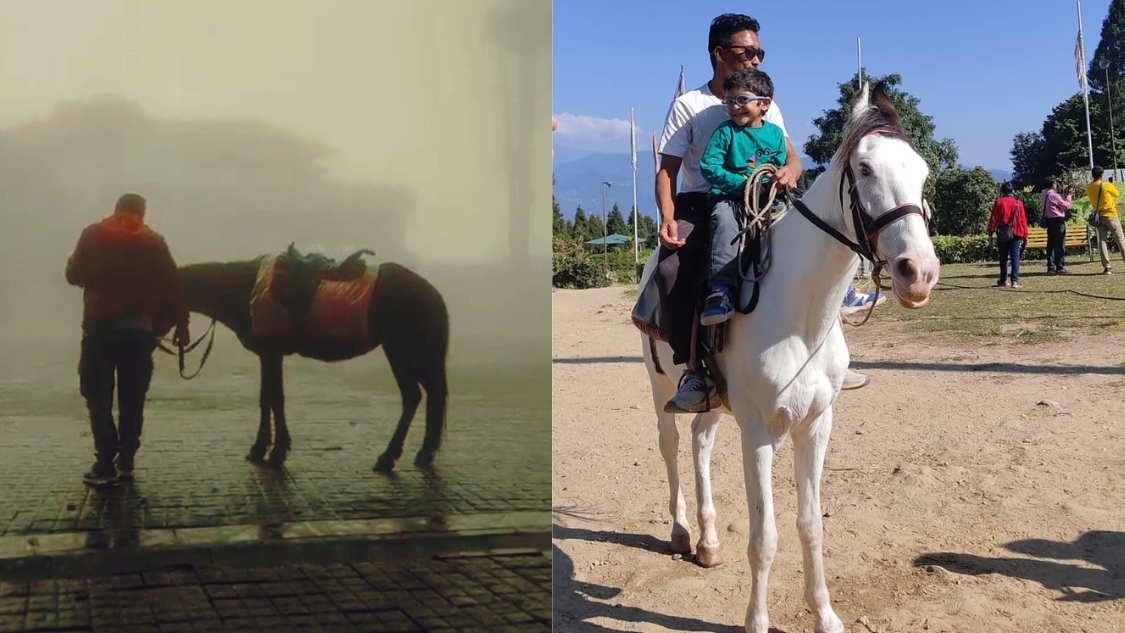
One of the most beloved traditions in Darjeeling is hopping on a pony at Chowrasta. It is an iconic, family-friendly activity that offers a unique vantage point of the town's bustling heart and the surrounding Himalayan scenery. Whether you have a toddler wanting their first taste of adventure or an adult wanting to take in the views at a slower pace, it is a genuine Darjeeling ritual.
The pony owners are stationed at intervals around the square, or you can head directly to the horse stable area where the ponies rest between trips. There is no advance booking, simply approach an owner directly to arrange your ride.
Timings: Early morning until late evening.
Cost:
Short circuit (half-loop around the central area): Rs 100–200
Full circuit (complete mile-long loop, Mall Road West to East): Rs 400
Small kids ride (very short introductory loop for toddlers): Rs 50.
While rates are generally fixed, there may be some room for negotiation on longer circuits or group rides.
Note: Do not touch or pet a pony without the owner present, and avoid standing too close for photos, they can occasionally become overstimulated by crowds. Pony rides are generally unavailable during rainy spells.
Padmaja Naidu Himalayan Zoological Park
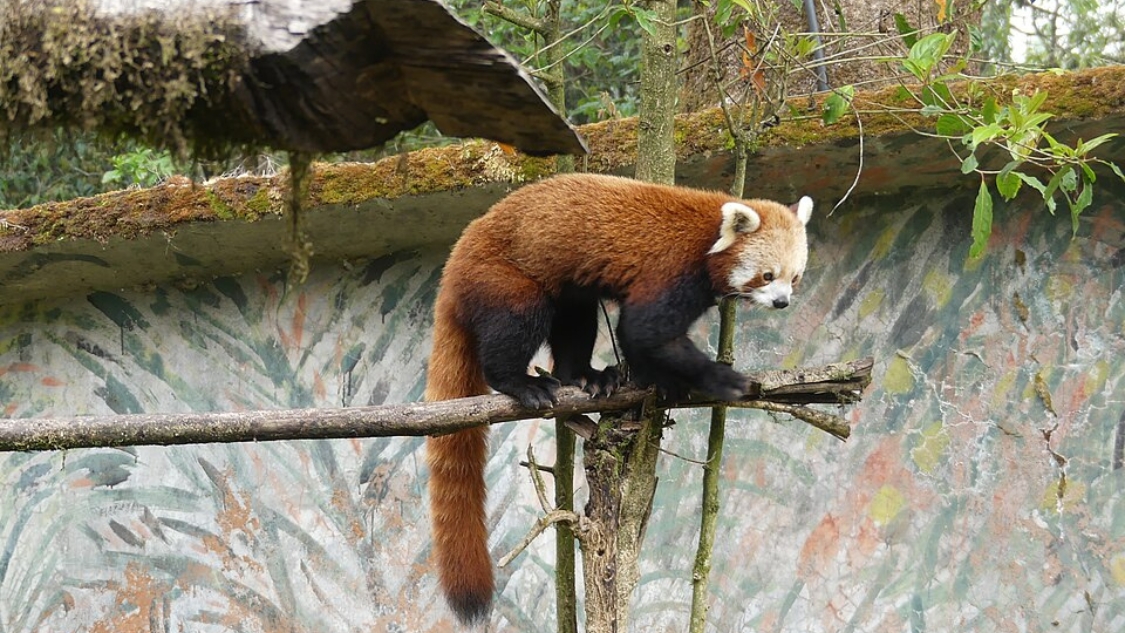
Imagine this: soft morning light slipping through pine trees, your child’s face brightening at the sight of a red panda curled up on a branch, a snow leopard on the move and distant tiger calls echoing through the hills. Set nearly 7,000 feet above sea level, Darjeeling Zoo is far from a typical animal park. The animals thrive in the cool mountain air, making them more active and surprisingly easy for children to spot — a black panther basking nearby, a Royal Bengal tiger patrolling the slopes, Himalayan black bears wandering freely, and blue sheep navigating steep rocky cliffs with ease. The paths weave through real forest, turning the experience into something closer to an enchanted woodland walk than a zoo visit, with Kanchenjunga peeking through the trees on clear days and the cries of scarlet macaws and golden pheasants echoing from the aviary above.
The space also functions as a botanical haven, home to hundreds of native Himalayan plants, from around 60 varieties of orchids to oak trees that are more than a hundred years old. Be sure to step into the Bengal Natural History Museum within the same complex, its displays on local birds, butterflies, mammals, and geology offer children a deeper glimpse into the Himalayan ecosystem beyond what they see in the enclosures.
Entry fee: Rs 110 for Indian and SAARC visitors, Rs 180 for foreign nationals, free for children under 6.
Timings: 8:30am to 4:30pm in summer, until 4pm in winter. Closed every Thursday.
How to get there: A scenic 30-minute walk from Chowrasta or a short taxi ride. Note that vehicles cannot drive directly to the entrance. Expect a short uphill walk, though battery-operated carts are sometimes available between certain points.
Best time to visit: March to June or September to January.
Pro tip: Start early, around 9am, when animals are most active and before the biggest crowds arrive. Your entry ticket is a three-in-one pass covering the zoo, the Himalayan Mountaineering Institute and the Bengal Natural History Museum — excellent value for a full day of adventure.
Himalayan Mountaineering Institute
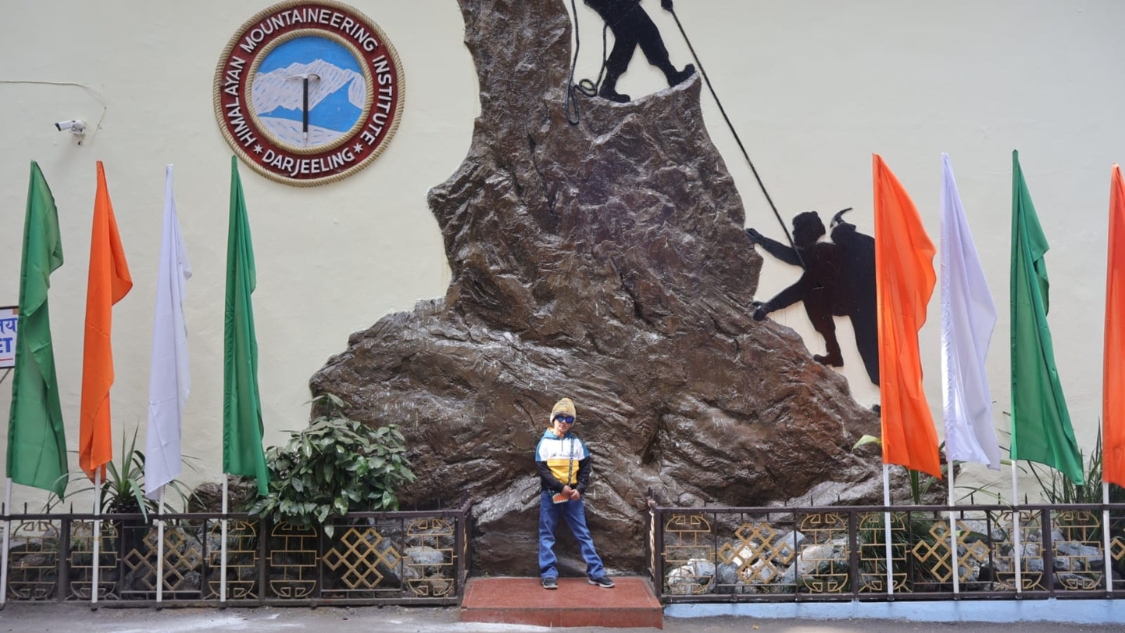
Your zoo ticket also grants entry to one of India’s most iconic institutions: the Himalayan Mountaineering Institute, established in 1954 after the first successful Everest expedition. For older children with a sense of adventure, it’s an eye-opener.
The museum here displays original equipment used by early Everest climbers — ropes, boots, oxygen cylinders, and personal belongings of some of the world’s most renowned mountaineers. There’s something deeply moving about being so close to the very tools that enabled one of humanity’s greatest feats. It’s the kind of place where children of all ages feel like intrepid adventurers and explorers.
Entry: Included in the zoo combo ticket (Rs 110 for Indian and SAARC visitors).
Timings: Same as the zoo — 8.30am to 4.30pm, closed Thursdays.
Rangeet Valley Passenger Ropeway
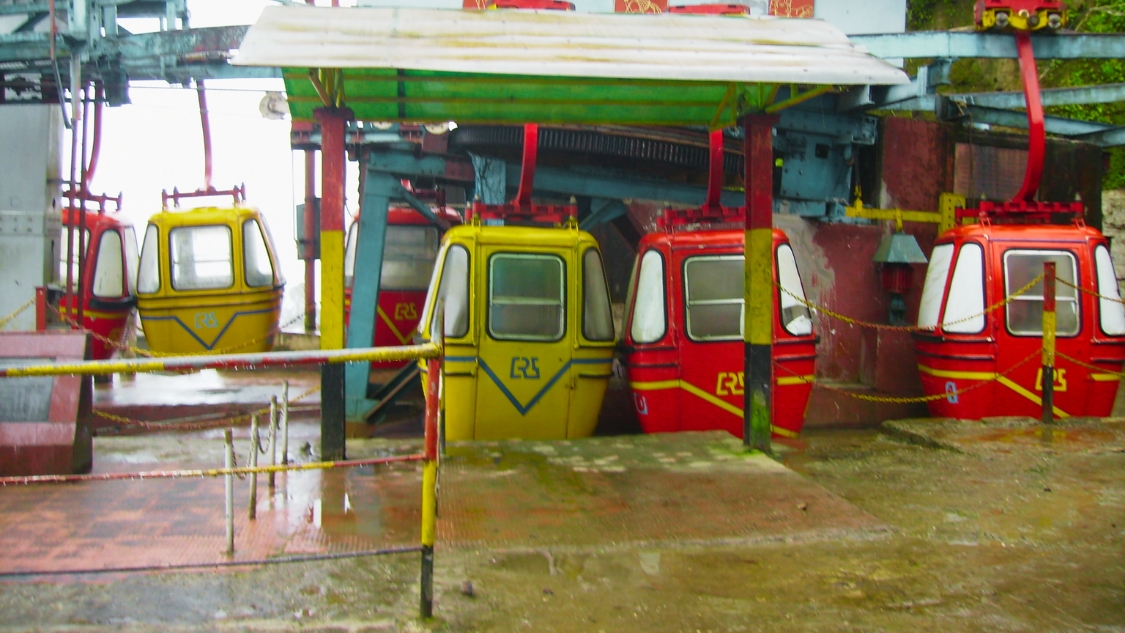
For a view of Darjeeling that no road or trail can offer, the Rangeet Valley Ropeway is unmissable. It began in 1968 as a single car running one way to serve the tea gardens of the valley. Today, 16 cable cars make the journey from North Point in town down to Singla on the banks of the Ramman River — a spectacular 5-kilometre ride each way.
The cars pass over dense forests, mountain ridges, waterfalls, flowing rivers and the lush green carpet of tea gardens that Darjeeling is so famous for. Below, the Little Rangeet river winds through the Bijanbari valley. It is an ideal spot to watch the whole of Darjeeling from a thrilling elevation, with birds and butterflies visible from the windows.
Timings: 9:30am to 4pm in regular season, 10am to 2pm during peak season. Closed on the 19th of every month for scheduled maintenance.
Ticket price: Approximately Rs 200 per adult and Rs 100 for children.
Pro tip: Clear mornings give the best views before valley mist rolls in. The ropeway is not for the faint-hearted but for most children, that is precisely the point.