
A joint initiative by



 Published on 2025-12-23Updated on 2025-12-23
The hustle and bustle of a city never truly stops and Calcutta is no different. However, just beyond the city's humdrum lies a sprawling oasis where the sunsets are breathtaking, flowers bloom in abundance and the expansive greens instantly transport one into another world altogether.
Nestled in New Town, Eco Park is one of Calcutta's most sought-after destinations for locals and tourists alike. Spanning over 480 acres with a 110-acre waterbody in the middle, this park is a carefully curated universe of greenery, lakes, cultural installations and recreational experiences — all designed to offer a refreshing pause from urban life.
Whether one wants to spend some "me" time, take a leisurely stroll, enjoy a picnic or try adventure activities, this park has something for everyone and does not disappoint even the most discerning travellers. It offers an extensive list of curated zones and activities.
Here’s a look at some of the experiences you can enjoy at Eco Park:
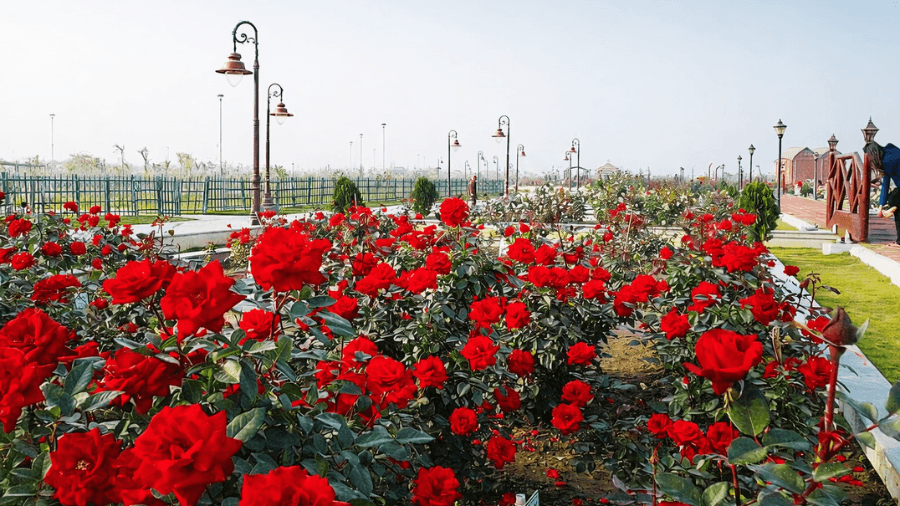
The Rose Garden at Eco Park is awash in fragrant, colourful blooms. (Picture by Sayandeb5152, Wikimedia Commons)
The Rose Garden, as the name suggests, is filled with rose bushes and is located between Gate Number 2 and Gate Number 3 of the park. This garden of colour and fragrance is home to 96 varieties of roses — from ruby reds to rare speckled whites and even black roses.
The wide, paved pathways invite leisurely walks, while fountains, sculptures and well-placed benches provide the perfect setting for an adda session. Photography enthusiasts will be spoilt for choice as the roses offer the perfect backdrop for portraits, selfies and groupfies.
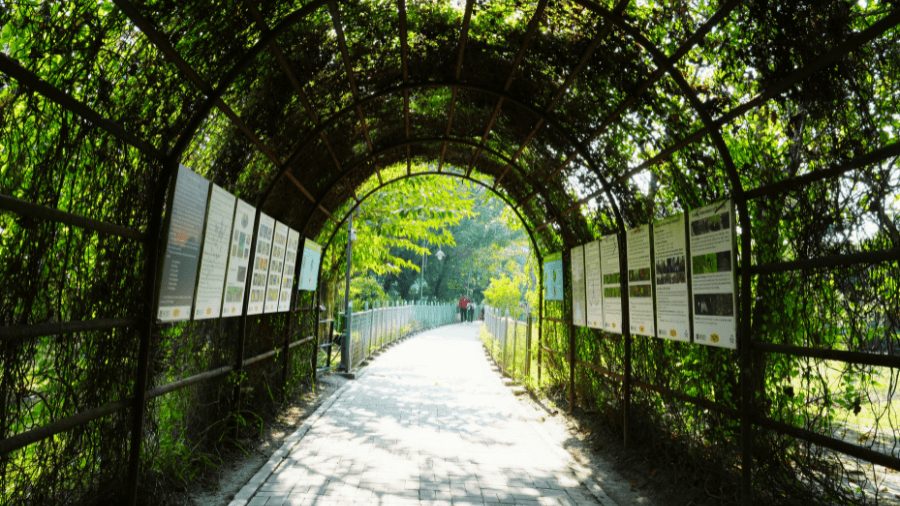
A canopied archway welcomes visitors to the Butterfly Garden. (All pictures by Krishnungshu Gangopadhyay)
Informative displays and signs educate visitors on butterfly metamorphosis and habitat preservation.
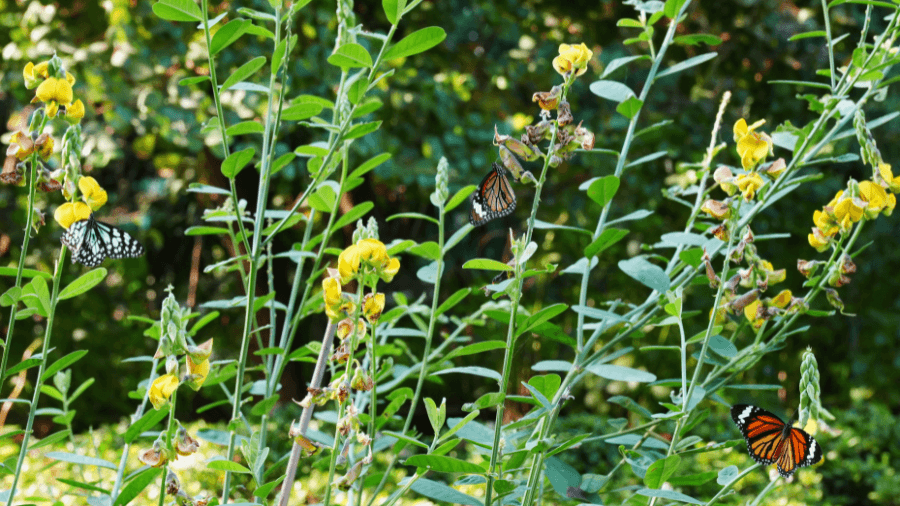
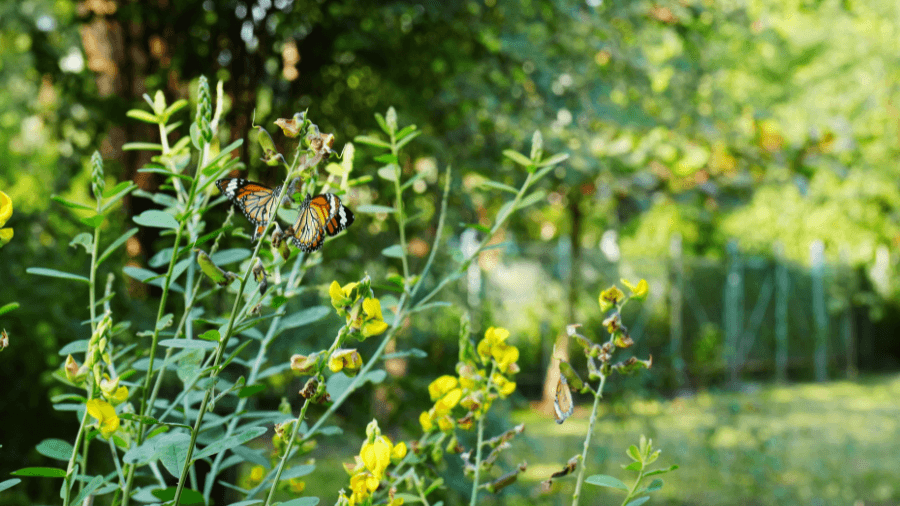
Butterfly species such as the Common Crow, Striped Tiger, Lemon Emigrant, Indian Jezebel, Blue Tiger and Plains Cupid are commonly spotted here.
A garden planted with flowers and plants that specifically attract butterflies, it is easily spotted from a distance due to its colourful gate resembling a butterfly.
Once inside the dome near Gate Number 4, hundreds of fluttering butterflies can be seen in their natural habitat. Butterfly species such as the Common Crow, Striped Tiger, Lemon Emigrant, Indian Jezebel, Blue Tiger and Plains Cupid are commonly spotted here.
A combination of flowering plants, damp soil and a small water feature creates a miniature rainforest alive with delicate wings. Educational displays and signage teach visitors about metamorphosis and habitat conservation, making it an enriching stop for families and nature enthusiasts alike.
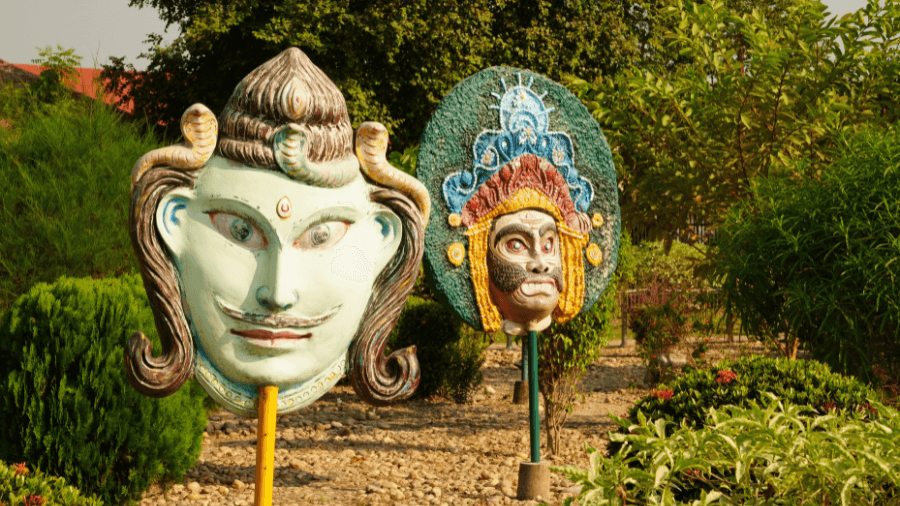
The Mask Garden makes for a stunning photo backdrop.
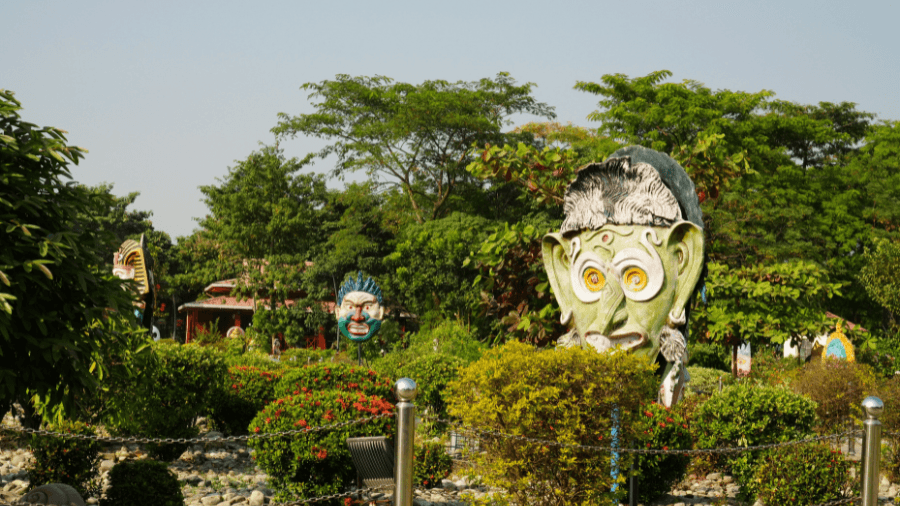
The Mask Garden houses masks from across India and across the world.
A short walk away lies the Mask Garden, an open-air gallery of vibrant masks from India and beyond. Masks from Purulia, Bankura, Arunachal Pradesh, Manipur and international pieces from Africa, Egypt and Norway line vertical stands, each telling a unique cultural story. These masks form striking photo backdrops while offering insight into their regions' heritage.
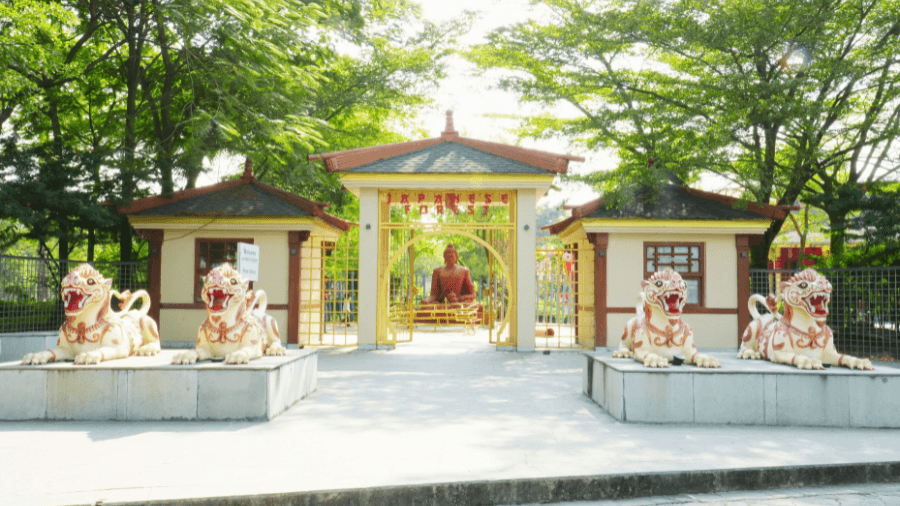
A Buddhist sculpture within the Japanese Garden.
A 12-minute walk from Gate Number 1, the Japanese Garden is located on the bank of the park's 110-acre main waterbody. Bamboo groves, stone lanterns, a serene Buddha and a gentle semi-circular bridge embody traditional Japanese aesthetics. The walkways are made of interlocking stones.
Spread over 3.5 acres, this garden features Torii lanterns and a replica of the Torii series used in the film Memoirs of a Geisha. According to a HIDCO official, a Buddha sculpture found at the site by workers inspired the creation of the Japanese Garden. The star attraction is a replica of a Japanese temple with a centrally located pagoda.
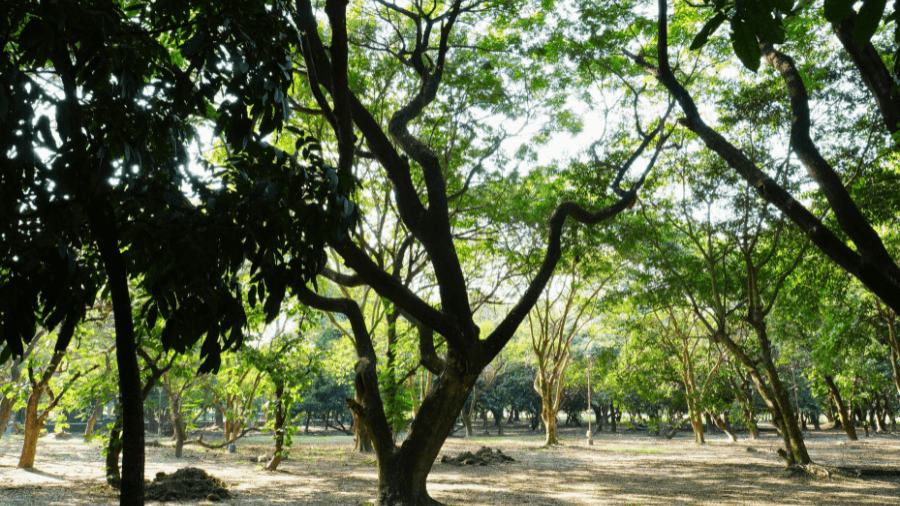
Dense foliage and shaded pathways greet visitors at the Tropical Rainforest zone.
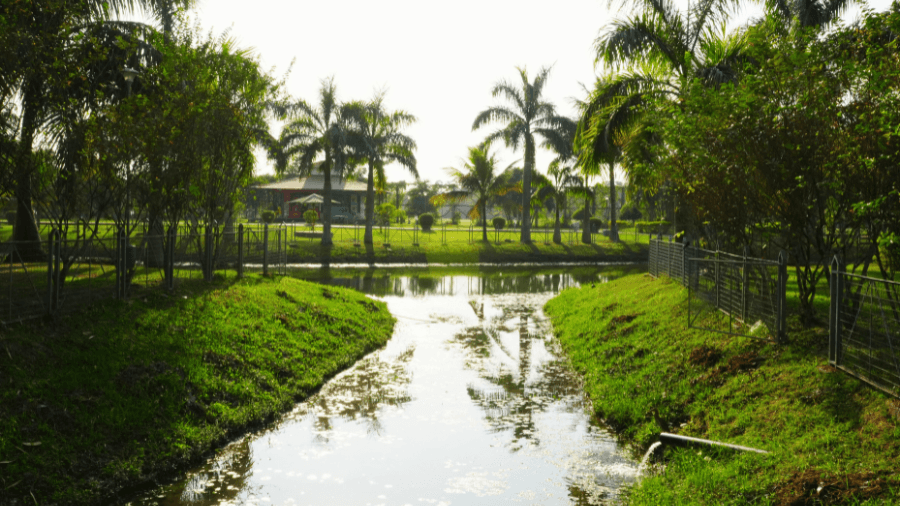
The Rainforest is a lush green escape from the city's hustle and bustle.
Eco Park's Tropical Rainforest surprises visitors with its dense foliage and shaded pathways. Native trees — Shimul, Palash, Chalta, Kathbadam, Chhatim and Kadam — form layered canopies that filter sunlight into soft green hues. Birdsong fills the air, creating a peaceful escape from city life while offering a rare opportunity to learn about Bengal's flora.
Inside, it becomes hard to believe one is still within the city, as the forest cuts off all noise, including the engines and horns of vehicles on the Major Arterial Road beside the park.
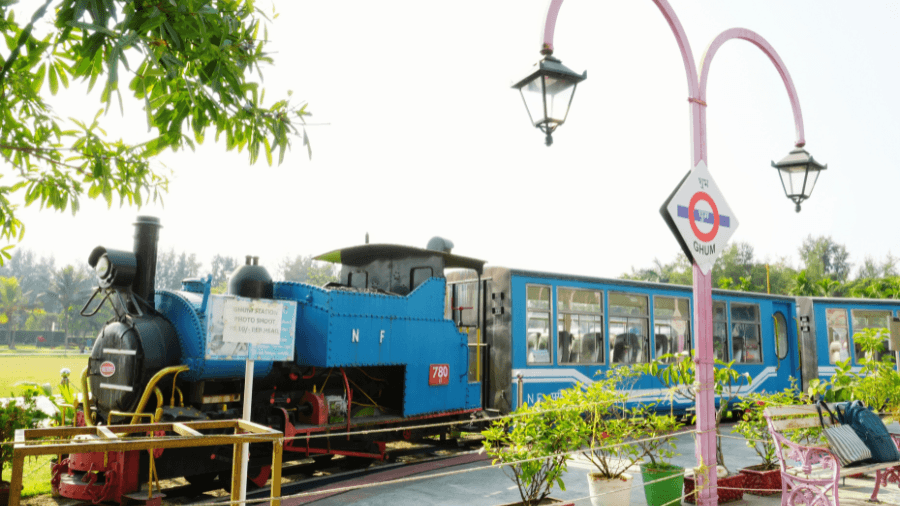
The replica of the Ghum Railway Station.
A replica steam engine with coaches of the Darjeeling Himalayan Railway (DHR) and a mini station resembling West Bengal's highest railway station — the Ghum railway station — draws a steady stream of visitors. The station evokes nostalgia for hill holidays in Darjeeling, especially among those from this region.
Right beside the station stands a wooden building resembling a manager's bungalow at a North Bengal tea garden, completing a landscape inspired by the Queen of the Hills.

Paddle boating is a popular activity at the Park.
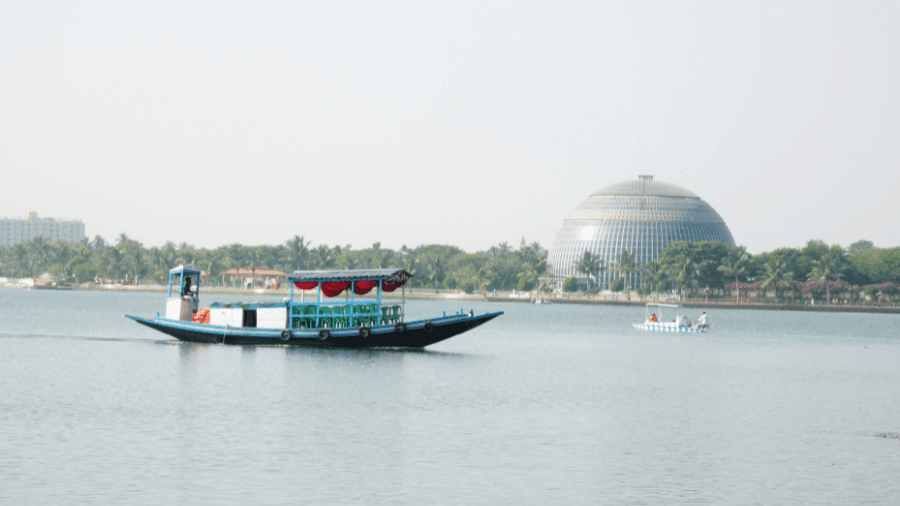
Shikara rides are the best way to enjoy stunning Kolkata sunsets.
Eco Park is not just scenic; it also offers a host of activities for all age groups. From paddle boats to zorbing, this park has it all.
Paddle boats: Relaxed four-seater paddle boats allow visitors to glide along the lake. The boats are sturdy and regularly maintained. All passengers are provided with life jackets. A half-hour paddle boat ride costs Rs 200.
Shikara rides: Inspired by the shikaras of Kashmir's Dal Lake, these wooden boats are rowed by a boatman. Ideal for couples, the twin-seater shikaras are perfect for watching sunsets in the park. The charge for a 30-minute ride is Rs 300.
Zorbing: Land and water zorbing allow riders to climb inside a zorb — a large inflatable plastic ball or cylinder — which is then released onto water or pulled along the lawns. Both children and adults can enjoy zorbing here. Land zorbing is Rs 150 for half an hour and water zorbing costs the same for 10 minutes.
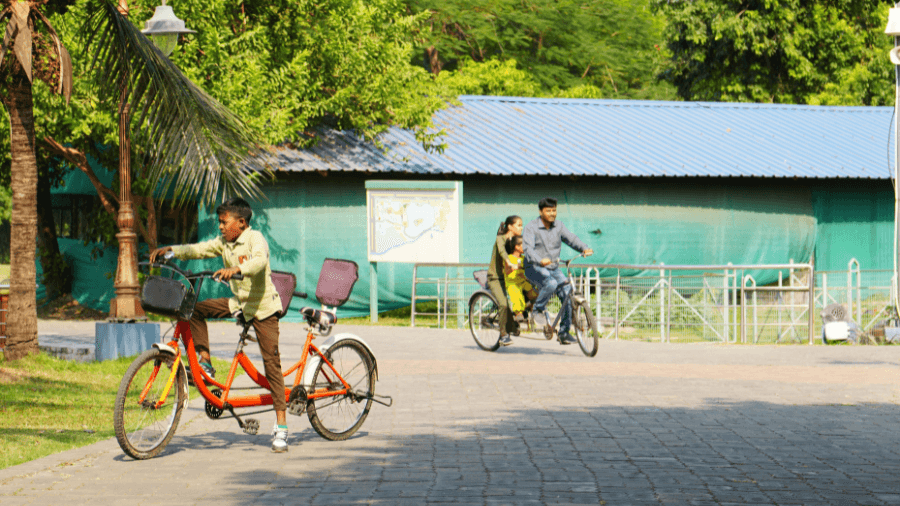
Duo cycling is a popular family and couple activity.
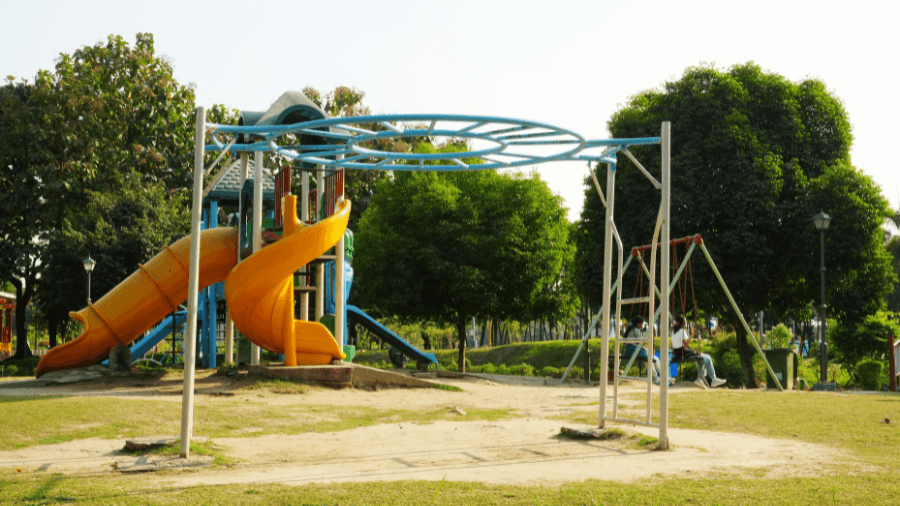
Children get to let loose and enjoy themselves in the many play zones at their disposal.
Duo cycling: Two-seat tandem cycles let friends, couples or parents and children pedal together along the park's central walkway. For those who don't want to walk the entire length of the park, these cycles are a great option. Two people can enjoy 30 minutes of duo cycling for Rs 150.
Archery: The archery zone provides safe, lightweight bows and arrows for beginners and children. Instructors ensure that the arrows are released safely. Budding archers can try their hand with five arrows for Rs 70.
Children's play zones: Slides, swings, climbing frames and open lawns keep children and even young adults busy for hours. Those not keen on the rides can relax on the benches.
Wooden skywalk: The Wooden Skywalk lets visitors climb about 15 feet above the ground and offers panoramic views of the play area and the Seven Wonders Park.
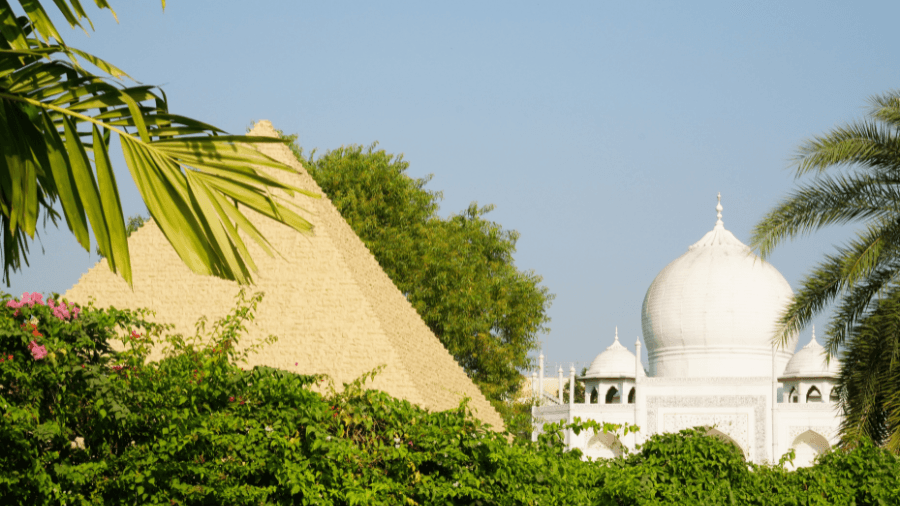
A replica of the Egyptian Pyramids in front with the Taj Mahal gleaming in the background.
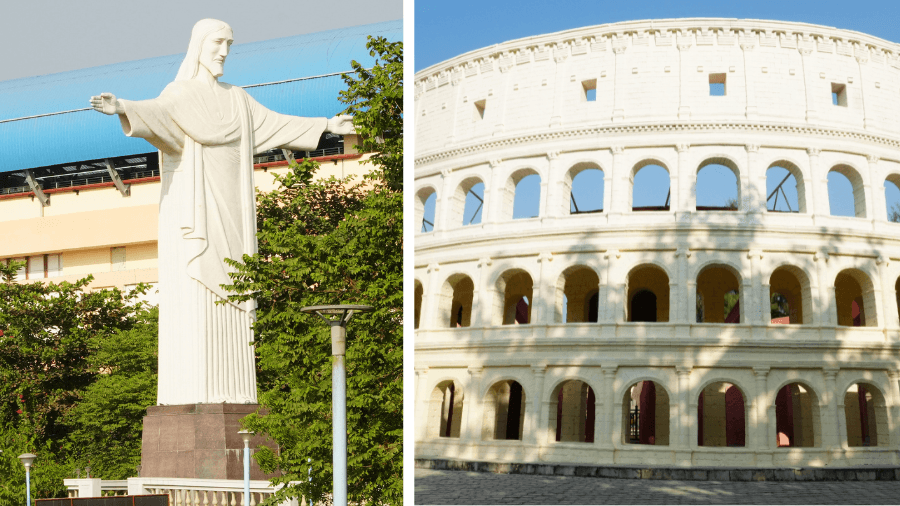
(left) Replicas of Christ the Redeemer in Brazil and (right) the Roman Colosseum.
One of the most photographed zones, the Seven Wonders Park features miniature replicas of global landmarks including the Taj Mahal, the Colosseum and Christ the Redeemer. Visible from the Major Arterial Road, this zone is located near Gate Number 4. Aside from Eco Park's entry fee, the Seven Wonders Park has a separate entry fee of Rs 30.
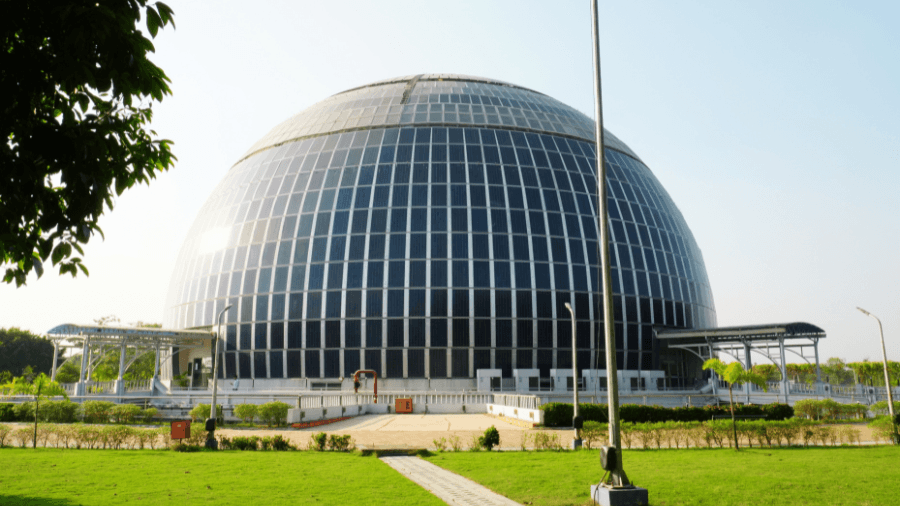
The Solar Dome towers over the Park.
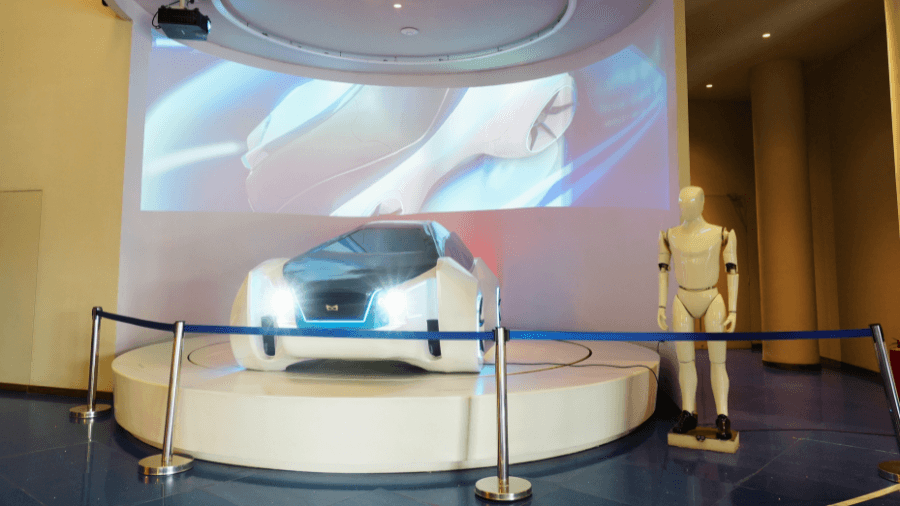
An autonomous electric car model and a robot greet visitors at the Solar Dome's entrance level.
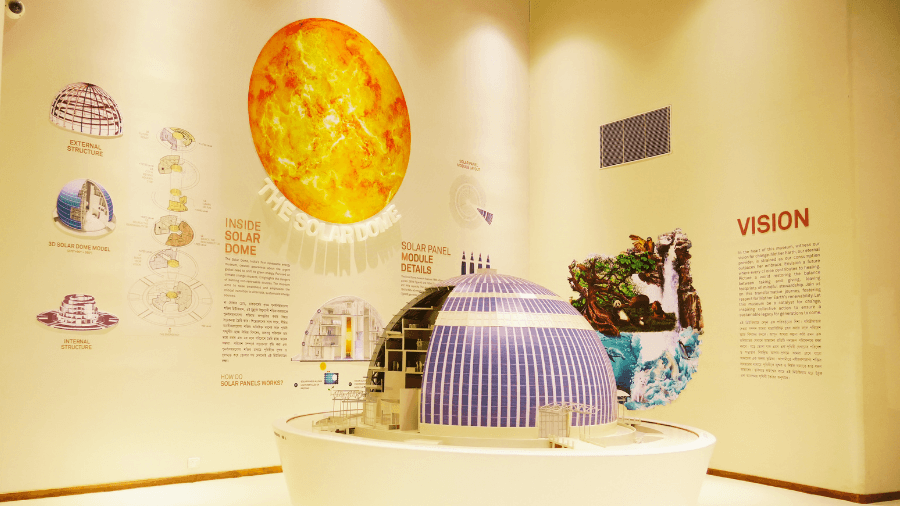
A detailed model of the Solar Dome illustrates how solar panels and sustainable design work together to power the structure.
A glassy orb inside the park immediately catches the eye even from a distance. Set up near Gate Number 6, the Solar Dome towers nearly 27 metres high and spans about 45 metres across. The curved outer shell is fitted with 1,986 photovoltaic panels that together produce roughly 180 units of electricity each day — enough to run the dome's systems and illuminate nearby walkways.
Inside, the dome houses a museum on climate change and clean energy solutions. Three ascending levels can be accessed via a spiral walkway. A lift is available, though the museum is best experienced on foot. At the entry level, visitors are greeted by a model of an electric car with autonomous capabilities and a robot that welcomes guests upon stepping onto a designated area.
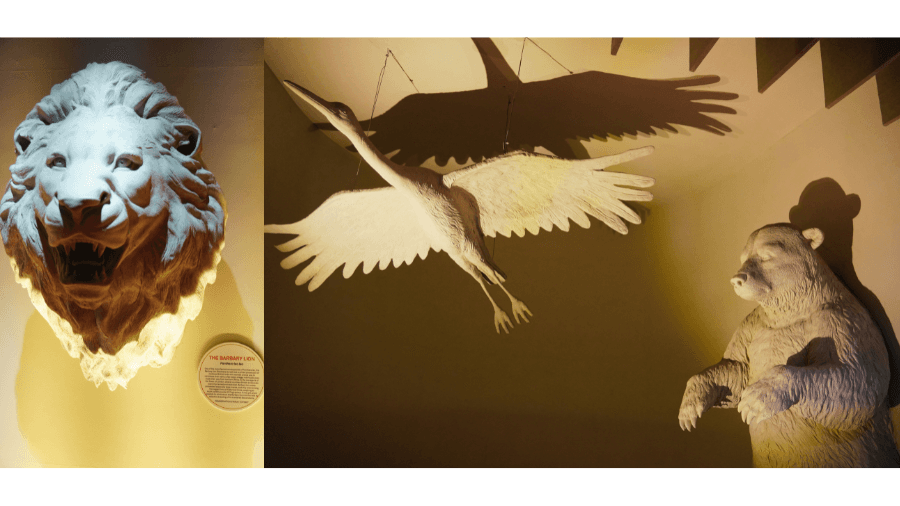
Models of endangered and extinct species serve as stark reminders of environmental change's impact on wildlife.
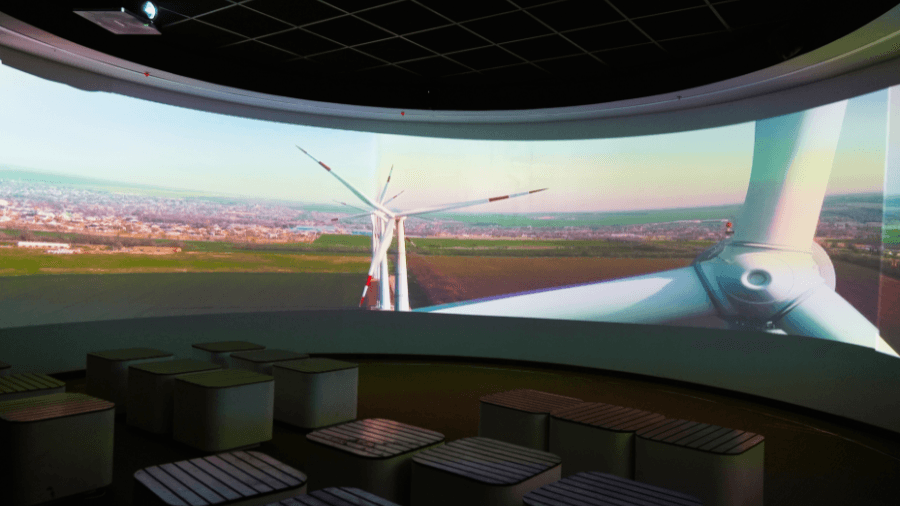
One of the Solar Dome's mini theatres immerses visitors in panoramic films about renewable energy and climate solutions.
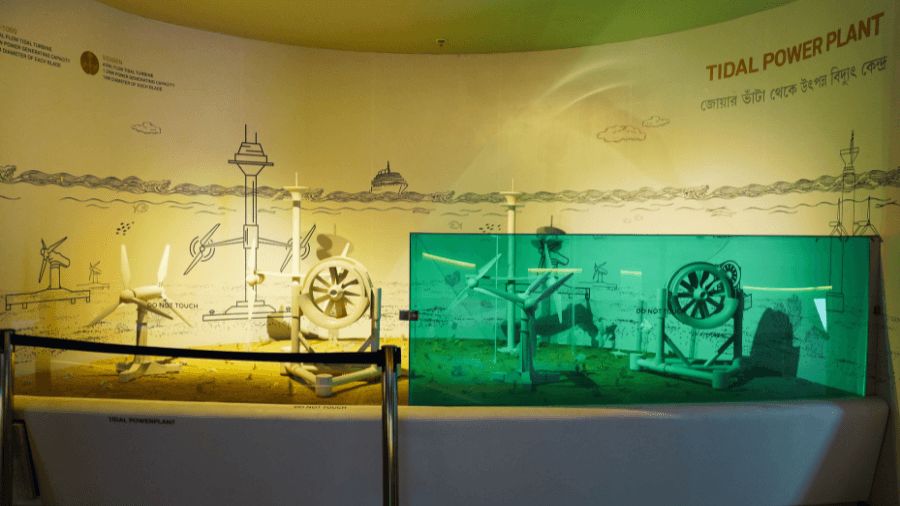
Interactive displays showcase tidal power technology, illustrating how ocean currents can be converted into renewable energy.
Each floor reveals a different aspect of the energy story, featuring multiple LED tunnels, digital screens, sweeping projections and interactive robots. The LED screens at the start showcase ecological disasters such as the oil spill in Brazil, a heat wave in India, floods in Dubai, a cyclone in Madagascar and wildfires across the globe. Six curved LED tunnels arch overhead, immersing visitors in dramatic scenes of melting ice, raging fires and spreading oil slicks — stark reminders of the forces fuelling today's climate crisis.
The displays explore energy sources such as solar, wind, hydro, tidal and geothermal power, turning complex concepts into engaging visual experiences. Models of wind farms, hydroelectric projects, solar power plants and tidal energy systems are on display.
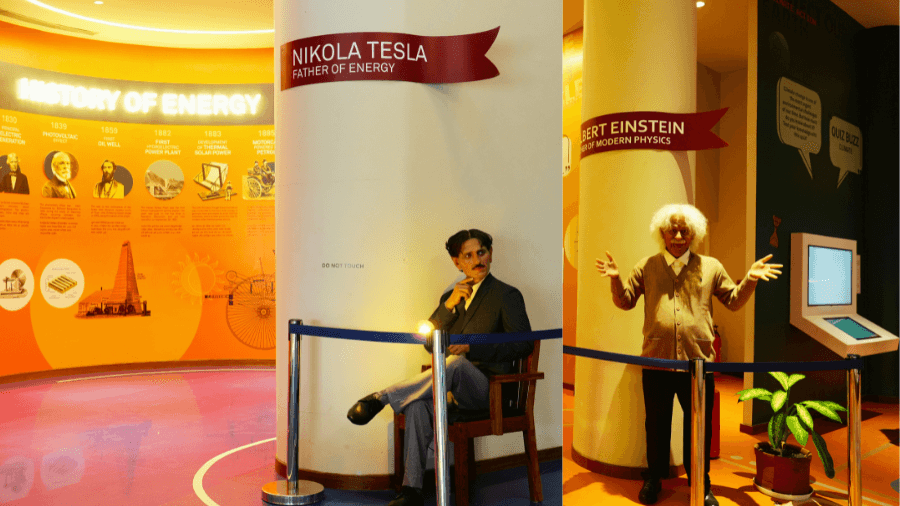
Life-sized figures of Nikola Tesla and Albert Einstein stand alongside exhibits tracing the history of energy innovation.
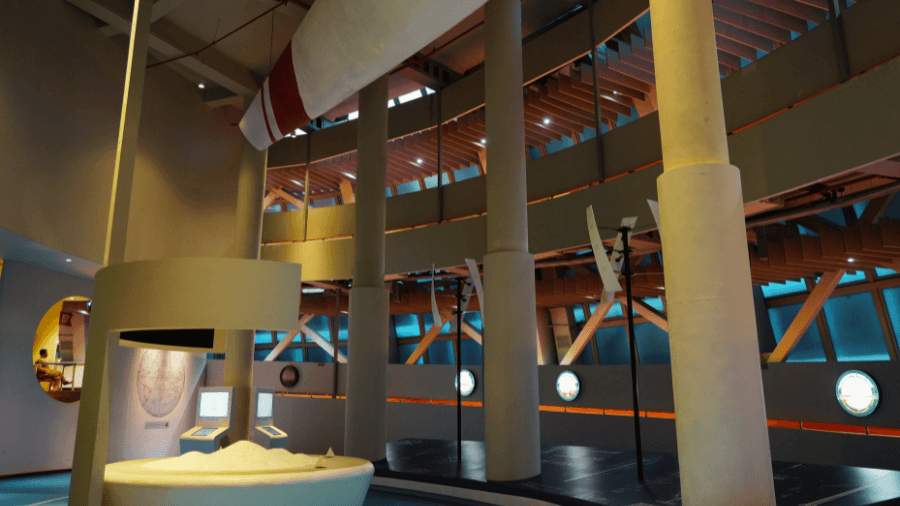
The museum's multi-level design features exhibits on wind energy and other sustainable power sources.
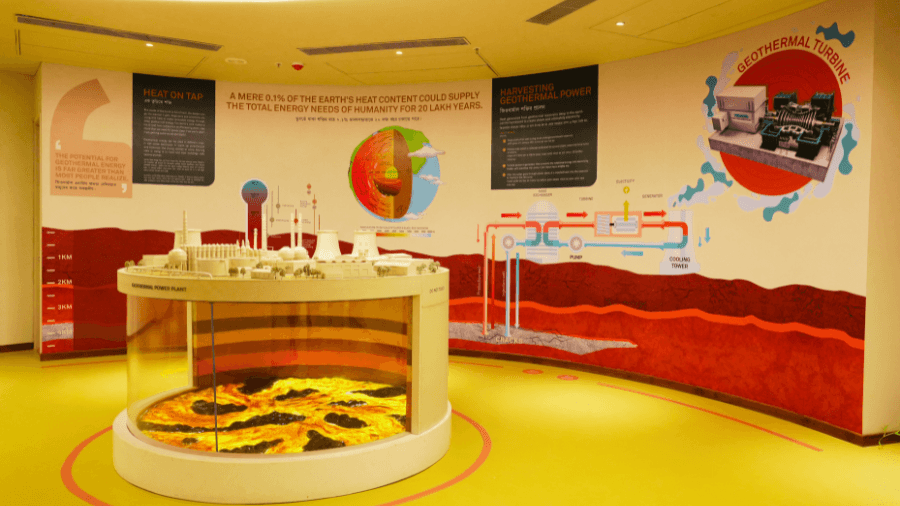
Geothermal energy exhibits reveal how Earth's internal heat can provide sustainable power for generations.
Life-sized models of scientists such as Albert Einstein and Nikola Tesla line the galleries. Four mini theatres play films on climate change in English and Hindi at regular intervals.
Along the walkway are models of animals that are critically endangered or extinct due to environmental change. These include the Bali tiger, extinct since 1937 and the Sphinx's macaw, now surviving only in captivity. A gaming zone tests visitors' knowledge of environmental issues. The uppermost viewing gallery offers sweeping views of the park and lake. The entry ticket for the museum as well as the dome is Rs 200 per person.
Accessible by boat or via a wooden walkway near the Eiffel Tower, Eco Island houses two restaurants. It also contains the Utsari Glass House, which can only be booked for events and is not typically open to regular visitors. The restaurants — Café Ekante — serve a mix of Indian, Asian and European cuisine.
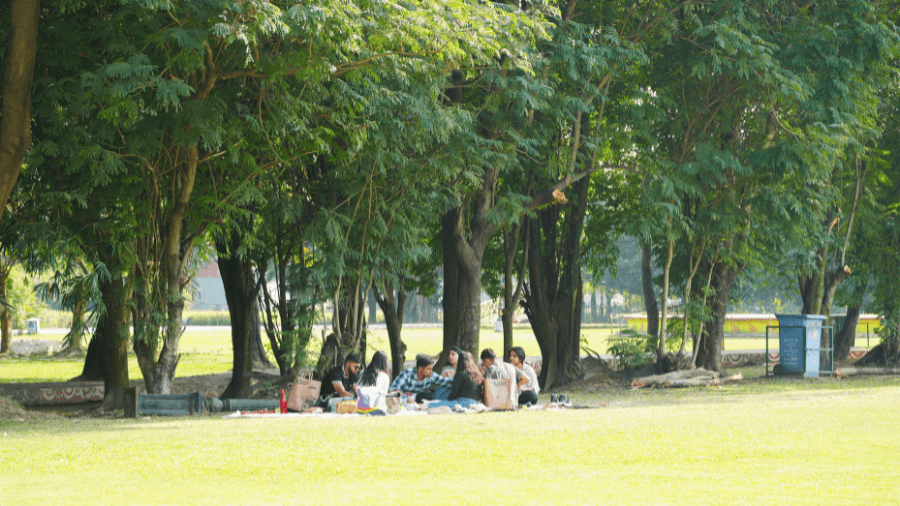
Visitors spread out blankets and enjoy leisurely picnics across Eco Park's lush, open grounds.
Eco Park has multiple food kiosks and restaurants along the waterfront that offer budget-friendly options ranging from snacks like sandwiches to full meals. Visitors are spoilt for choice, with many eateries offering rooftop seating that overlooks the vast waterbody. Prices start as low as Rs 30 for an egg chop.
Entry and Timing:
Eco Park: Rs 30 Entry Fee; Open Tuesday to Sunday, 11am–7.30pm; Closed on Monday
Boating & Activity Zones: Usually open from 3pm–7.30pm, depending on weather and crowd
Beyond what's covered here, Eco Park has plenty more to discover. Those planning a visit can check the official website at https://ecoparknewtown.com/ for updated information on activities, timings and special events.


