
A joint initiative by



 Published on 2026-03-09Updated on 2026-03-09
Long before Kolkata gave its own twist to Chinese cuisine with chilli chicken and almost every neighbourhood in the City of Joy sprang up its own “Chaineej” eatery, when Chinese shoe shops and salons were yet to become familiar haunts, a businessman from China set up a sugar mill in one corner of Bengal during the late 18th Century under British rule.
With time, the area came to be known as Achipur, after Achi — as Atchew was called locally. The small village near Pujali, around 5km west from Budge Budge railway station, looks nothing like a tourist destination.
To reach Pujali, one has to take a narrow road from Budge Budge Trunk Road flanked by markets on both sides. Drive down 1.5km along the road and a “Chinese temple” appears on your right, almost unexpectedly, like a quiet riverside secret waiting to be discovered. The hidden gem is set in an ambience that is both serene and steeped in history. A couple of kilometres from the temple lies Achew’s grave.
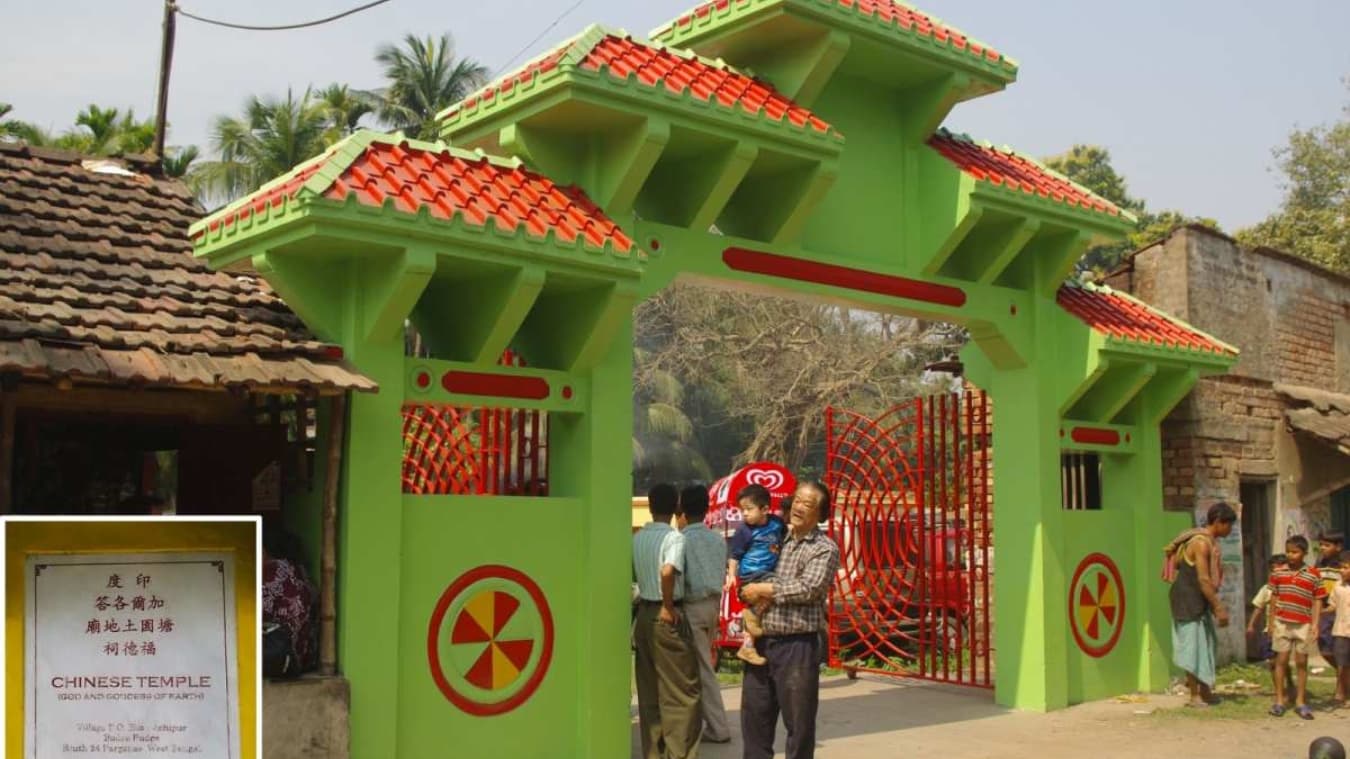
The back gate of the Achipur Temple Complex.
The place is locally known as Chinamantala (place of the Chinese), though no Chinese families live in Achipur anywhere, the community having moved to Kolkata soon after Achew’s death.
Quiet around the year, it gets busy around Chinese New Year when people from the Chinese community in Kolkata visit the temple and the grave. The ritual has been going on for a long time, but the advent of social media has turned it into a tourist attraction over the past decade.
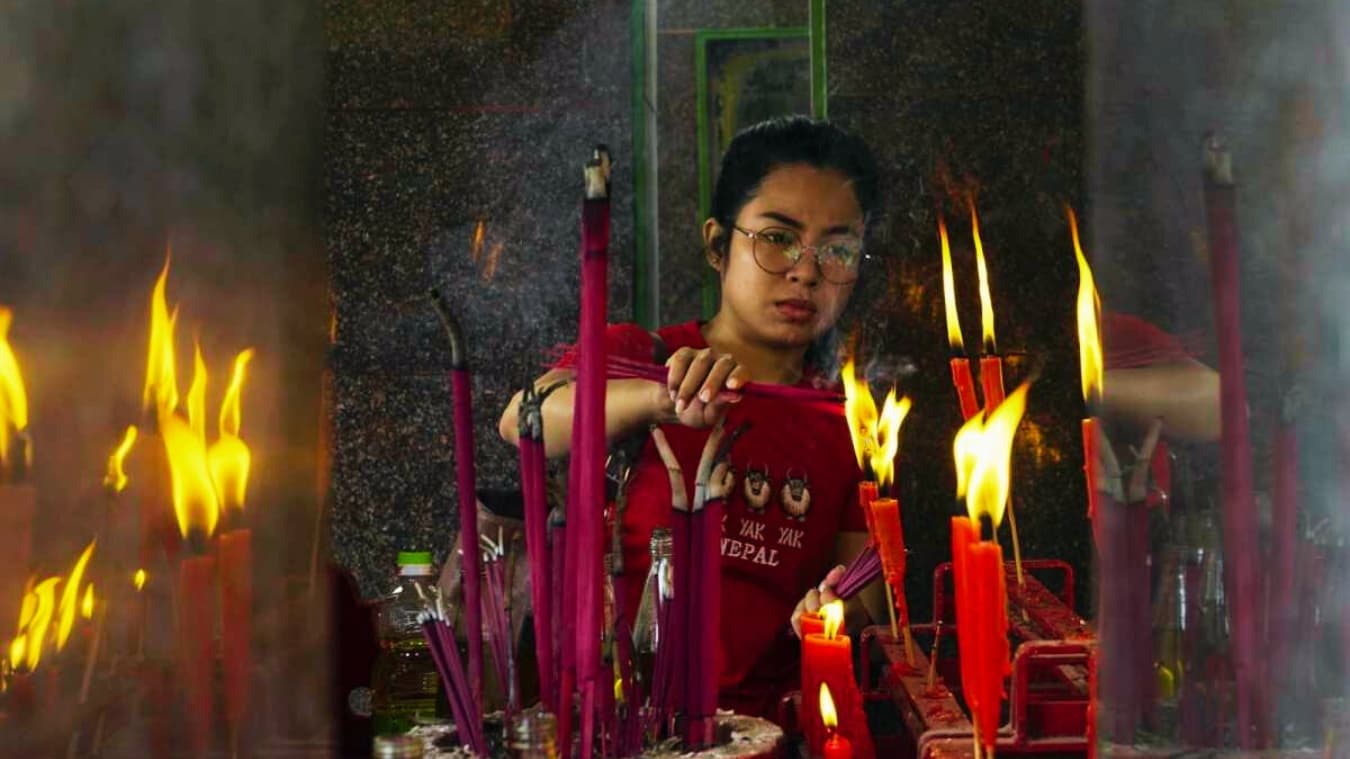
Chinese devotees lighting incense sticks during their visit to the Achipur Chinese Temple.
To dig into the history of Achipur, one has to go back in history when the British had just settled in India for about three decades. The time frame is later part of the 18th century, close to 1780 when some Chinese people started settling in Bengal. It is not clear when the first Chinese people settled down in Bengal, but various accounts and oral narratives put it at around 1778. A businessman called Yang Da Zhao, pronounced by many as Yang Tai Che or Tong Atchew or the more popular Achhi, was the first one to set foot.
In the article “A bygone Chinese colony in Bengal” written by Basanta Kumar Bose of Imperial Record Department, Calcutta, published in the magazine Bengal Past and Present (April-June 1934 issue), it is mentioned that as per records of the Imperial Record Department, “during the Governor-Generalship of Warren Hastings, Tong Atchew was given a grant of land about 650 bighas in area in the district of 24-Parganas which was situated nearly 6 miles south-west of Budge-Budge at the yearly rent of Rs 45. The reason why this land-grant was made to him by the Governor-General is not apparent from the records which have so far been unearthed”. The article also mentions that “These documents further inform us that Tong Atchew after the receipt of this land established a Chinese colony and a sugar manufactory there which subsequently developed into a town and came to be known as ATCHEPUR after him in his honour”.
Another writer, Zhang Xing, hinted in his article “The Bowbazar Chinatown” published in the India International Centre Quarterly (Vol. 36, No. 3/4, 2009-2010) that Atchew procured the huge land grant from Warren Hastings in exchange for tea he brought from China.
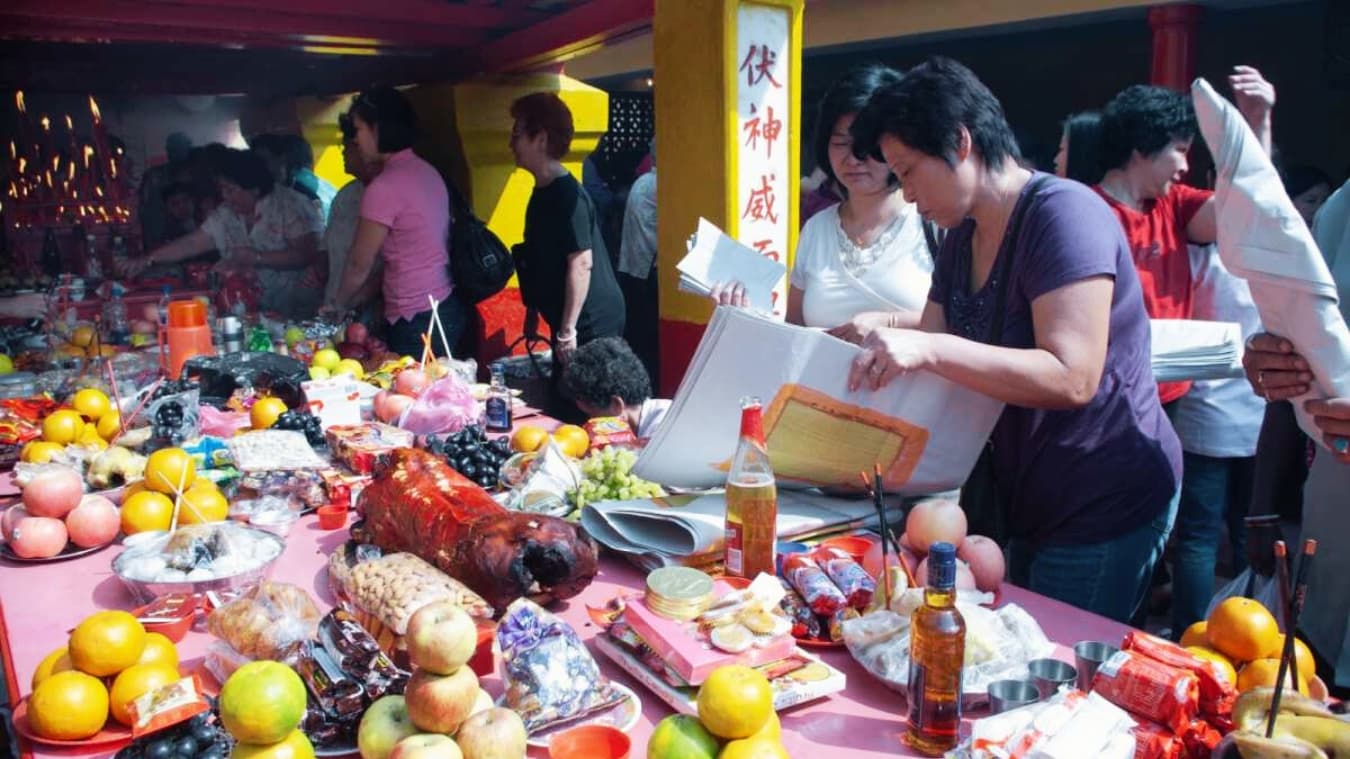
Food offerings brought by Chinese families who travel from Kolkata to visit the temple during Chinese New Year.
There is no documented evidence so far about the year of Atchew’s arrival in Bengal, but the first written document available in public domain about the presence of Chinese people in Bengal is a letter dated October 29, 1781, written by Atchew to the British Supreme Board. Here, he bitterly complains that the labourers he had requisitioned from China at a great expense and trouble to work in his sugar mill were being enticed away by the Chinese sailors of Calcutta. Atchew received assurance from the British Supreme Board that the people disturbing him would be found and duly punished. Another letter of February 1782, signed Yong Atchew, indicates that he was in huge debt where he signs his name as Yong Atchew Chinese.
Atchew died around 1783 but his sugar manufacturing unit continued operation till 1804. An advertisement in the Calcutta Gazette of November 1804 announced the auction of the mill, along with all equipment, marking the end of the sugar enterprise after scarcely 25 years of operation.
In its place today stands the temple. The gates of the temple declare its establishment date as 1718, but the date seems implausible.
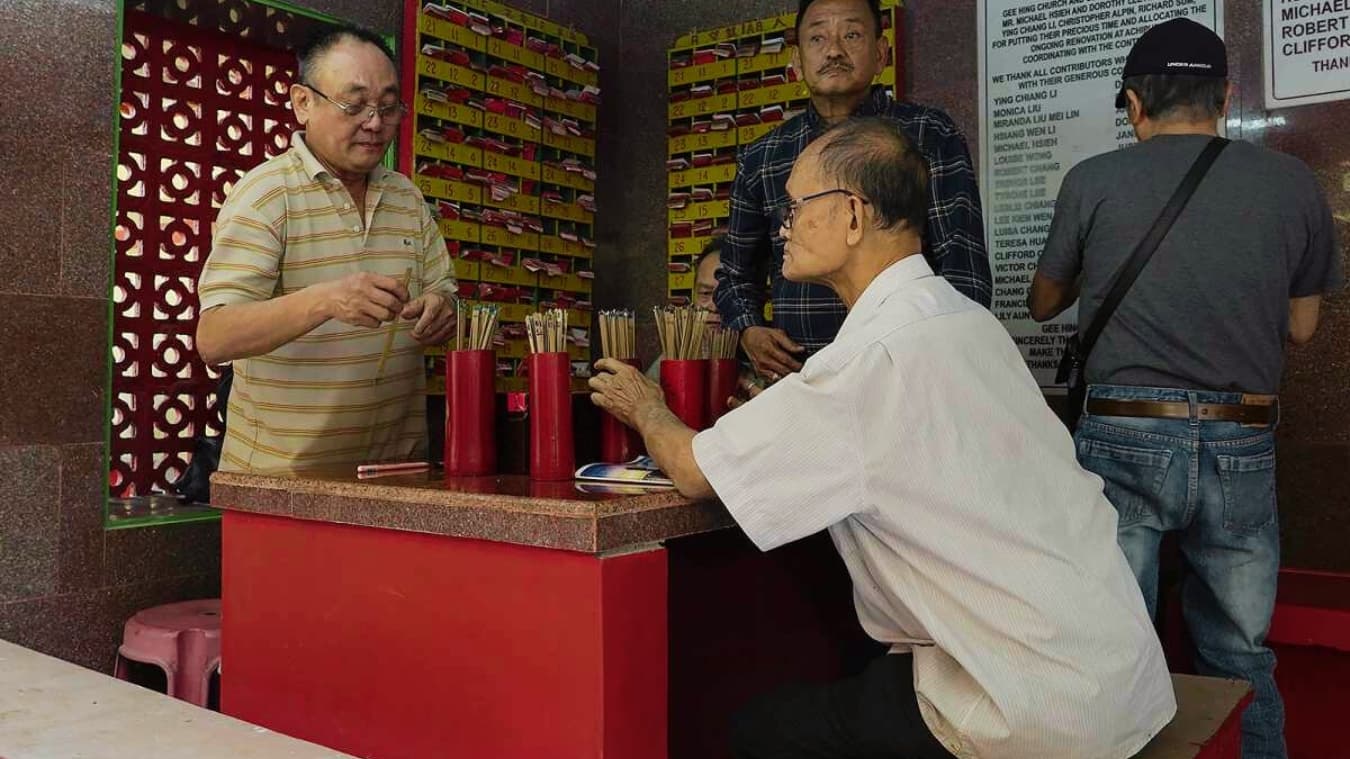
Devotees practicing kau cim, the ancient art of fortune-telling.
Stepping in through the main gate of the temple with its sweeping eaves and scarlet flourishes, unmistakably Chinese in character, a huge open space awaits. A signage engraved on the gate in recent times says “Chinese Temple (God and Goddesses of Earth)”. It also mentions that the temple is maintained by Gee Hing Church and Club located in the Blackburn lane of Tiretta Bazar in Kolkata. The rear gate of the temple complex has been freshly painted with the year 1718 engraved on its top.
To the right stands the principal temple compound, discreet yet dignified. A smaller gateway ushers you inside, where a modest chamber on the left enshrines the image of the Emperor God, quietly presiding over the complex.
Legend has it that when Atchew journeyed from China to Bengal’s riverine edge, he carried with him two unassuming pieces of wood. That wood was used to carve the temple’s presiding deities, known locally as Khuda and Khudi. Within the Chinese tradition, however, they are venerated as Tudigong (Thu Tai Kung) and Tudiphow (Thu Tai Phow). Tudigong, the “Lord of the Soil and the Ground,” embodies guardianship over land and livelihood; Tudiphow, his consort, completes the sacred dyad.
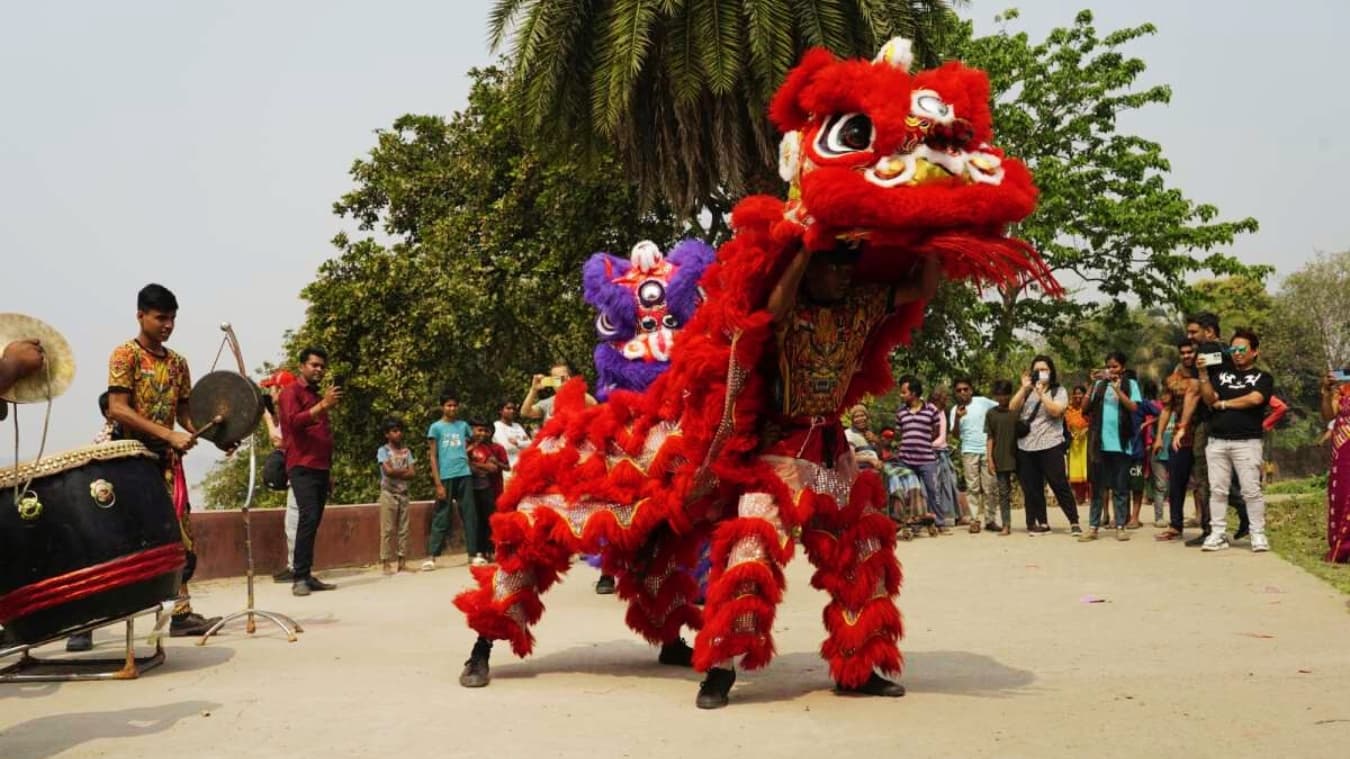
Lion dancers performing in front of the banks of the Hooghly.
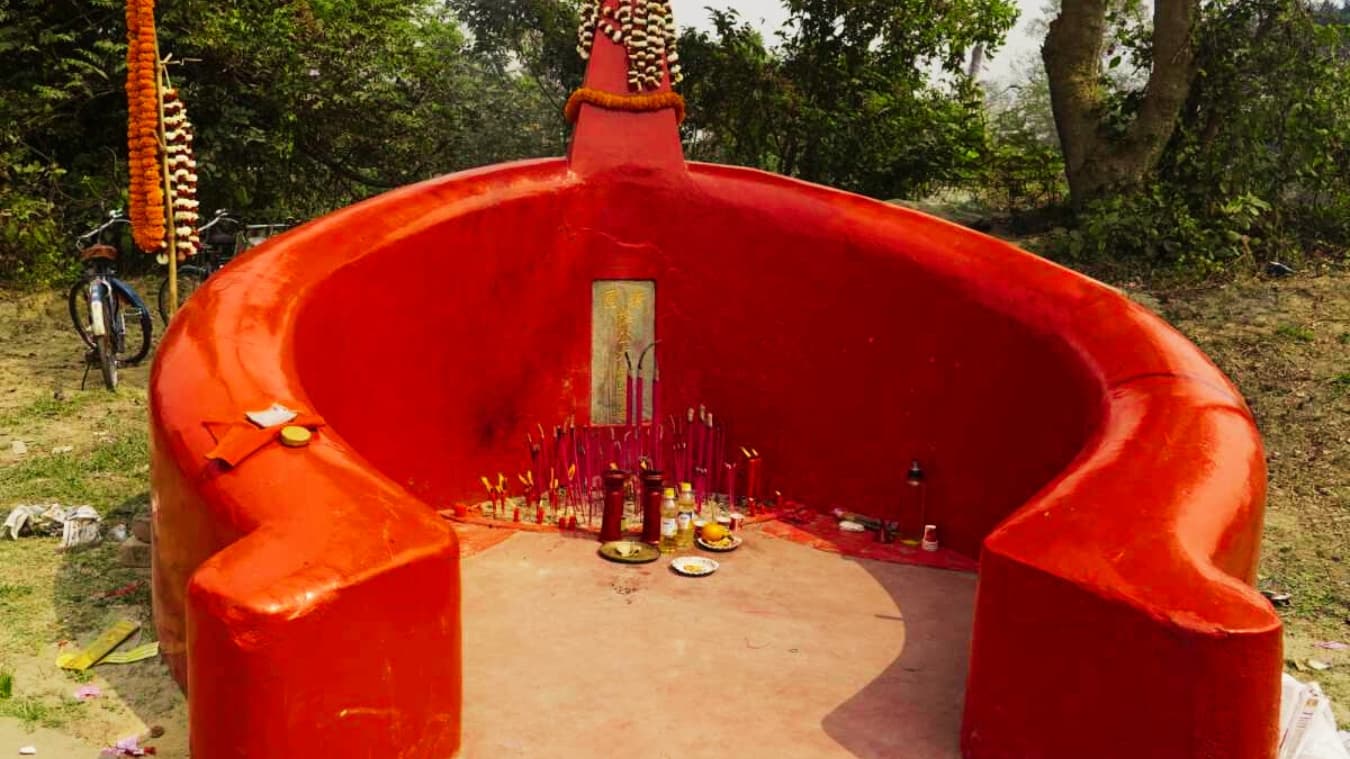
Horseshoe-shaped grave of Atchew on the banks of the Hooghly.
The temple complex hosts the Chinese New Year celebrations complete with the colourful lion dance. A long wooden table in the main courtyard transforms into a lavish altar, during the Chinese New Year. Whole roasted pigs, pyramids of fruit, bottles of rice wine and spirits, offerings from families who come here to pay homage, are laid out on the table.
Chinese people gather inside the principal shrine to pray. Unlike the surrounding architecture that have been repaired and renovated, these sacred figures remain unchanged since the temple’s inception. Candles glow inside the shrine and devotees light incense sticks. An interesting ritual involves burning offerings, including symbolic paper money, in the belief that ancestors will receive them in their afterlife.
To the right of the courtyard is a quieter ritual space, where devotees practise Kau Chim, the ancient art of fortune-telling. A worshipper bows and gently shakes a bamboo cylinder filled with slender sticks. One slips forward — the chosen oracle — its numbered verse believed to foretell the fortunes of the coming year.
Behind the main shrine is a small Hindu shrine and visitors pay their respect here as well.
On the bank of the Hooghly river, around a kilometre from the temple, stands a horse shoe-shaped memorial to Atchew. Visitors to the temple also stop by here to offer prayers. A memorial plaque bears the name Yang Da Zhao — the actual name of the man remembered as Atchew.
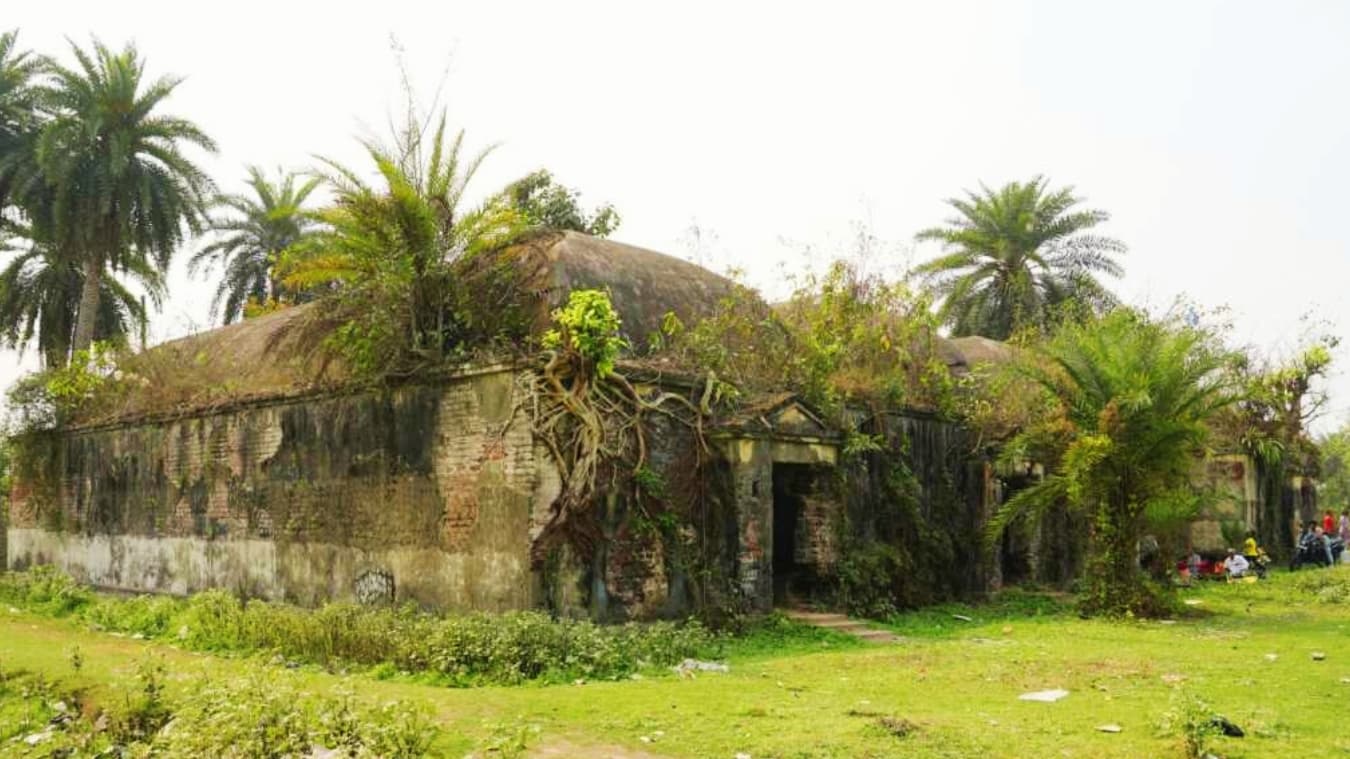
The ruins of Moyapur Gunpowder Magazine, located 1.5 km from Achipur.
A tour of Achipur will remain incomplete without a visit to the Moyapur Barood Ghar or Gunpowder Magazine House located 1.5km south of Atchew’s grave. Locally known as Achipur Barood Ghar, this 18th-century colonial-era ruin was used by the British to store excessive gunpowder from ships approaching the Kolkata Port. Ships, responsible for their own safety against pirates, carried cannons and stored gunpowder on board. However, the river ports were among the most crowded spaces of the time, where vessels anchored almost touching each other. The situation was perilously vulnerable and a single stray spark could reduce the entire harbour and its ships to ashes. To avert such catastrophe, the Calcutta port authorities mandated that vessels deposit their gunpowder at a magazine further down the river before docking, permitting only 100 lbs to remain on board for emergency signalling.
Dome-shaped godowns, a guard house, a one-storey building and a two-storey building, the latter probably being a residential building for the officers, remain.
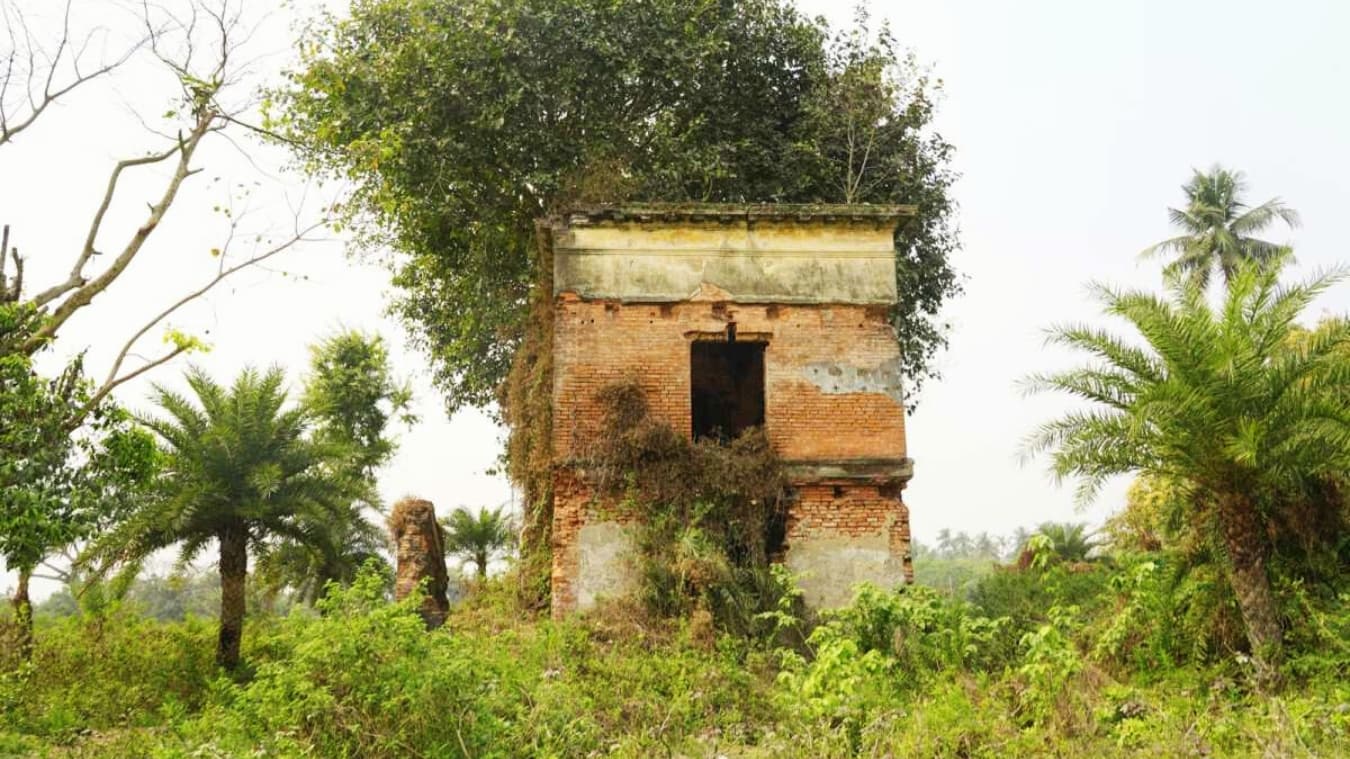
Ruins of what were likely the officers’ quarters at the Moyapur Gunpowder Magazine.
How to get there
Distance from Kolkata: One and a half hour drive
By road: Drive to Budge Budge via Taratola, take the Sampriti Flyover and head towards Pujali. Turn left about 500 metres before reaching Pujali and drive for 1.5km through a narrow crowded road to reach Achipur.
By train: Take a train to Budge Budge and from the station take a shared auto or motorised van to Pujali.
Note: Carry food as there are no eateries near the temple.
Savour fresh and steaming Siu Mai, pillowy soft Tai Pei or a nourishing bowl of ...
Kolkata’s Chinese community ushers in the Lunar New Year

The music composer looks back on the last leg of his ‘Anantha Yatra’ in Bengal


