
A joint initiative by



 Published on 2025-09-15Updated on 2025-09-15
When you picture Rio de Janeiro, you probably think of feathers and samba. When you imagine Spain, the image of flying tomatoes as kinetic chaos is never far away. When you think of Kolkata and West Bengal, you can’t not think of Durga Puja.
Each autumn, the roll-call of great cultural spectacles reaches the shores of West Bengal through a festival that transforms an entire state and in particular Kolkata, into a walk-through museum of unique artistry. Durga Puja is at once a state-wide gallery of installations, a peak tourist attraction and an economic juggernaut worth billions. No surprise, then, that UNESCO has immortalised it as an Intangible Cultural Heritage of Humanity.
In just one Puja week, Kolkata transforms into a river of humanity. The Metro system alone — already one of India’s busiest — moved more than four million passengers across five days in 2023, with most of the journeys squeezed into the peak evenings of Saptami and Ashtami. That’s a surge comparable to London’s Notting Hill Carnival, where one to two million revellers pack the streets over a weekend, or Munich’s Oktoberfest, which typically lures more than five million visitors to its beer-soaked tents.
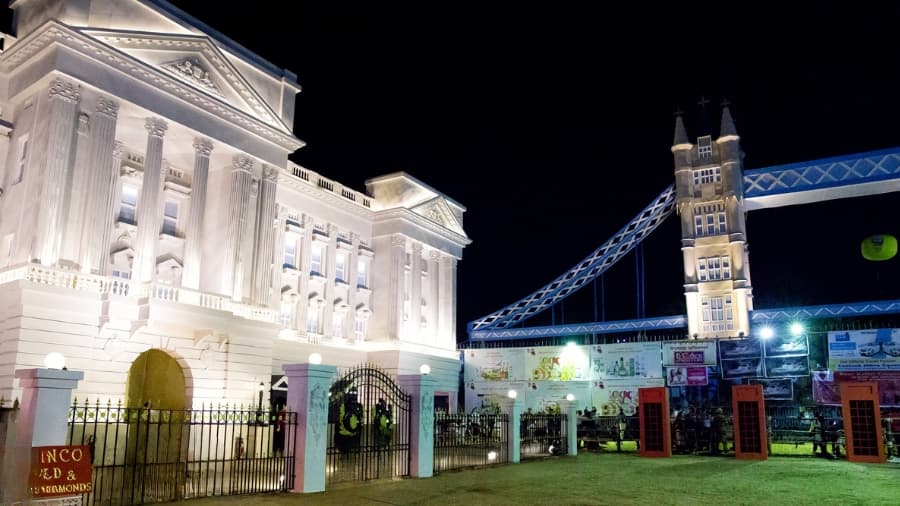
One of Kolkata’s most iconic pandals at the Sreebhumi Sporting Club in Lake Town.
Even the Edinburgh Festival Fringe, which sold more than two million tickets in August 2025, looks modest by comparison. The Rio Carnival may defy exact headcounts, but there is no doubt that Durga Puja now belongs on the same planetary scale of crowd magnetism.
In 2019, a British Council study pegged Durga Puja’s value at a jaw-dropping Rs 32,377 crore (US$4 billion) — 2.58% of West Bengal’s GDP. Puja fuels everything from idol-makers in dusty Kumartuli workshops to hotel lobbies, taxis and late-night biryani joints. That’s more than Mardi Gras in New Orleans, which clocks in under US$900 million and considerably higher than Notting Hill, valued at close to £400 million. Even Oktoberfest’s €1.5 billion haul is smaller.
But that’s not the only difference. In Bengal, the spoils aren’t pocketed by a few sponsors — they are diffused across thousands of artisans, vendors and neighbourhood committees.
Another aspect that sets Durga Puja apart is its artistry. Picture this: a bamboo skeleton becomes a Gothic cathedral draped in jute. A climate allegory emerges in recycled scrap metal. A dreamscape folds the laws of perspective. Inside each structure, the goddess Durga looms, sculpted by the hereditary kumors of Kumartuli. The result is an unparalleled explosion of thousands of ephemeral art installations, each free to enter, each gone in 10 days. It’s like Venice’s Biennale, which attracts 700-800,000 visitors over seven months — but multiplied by a thousand and transplanted onto public streets.
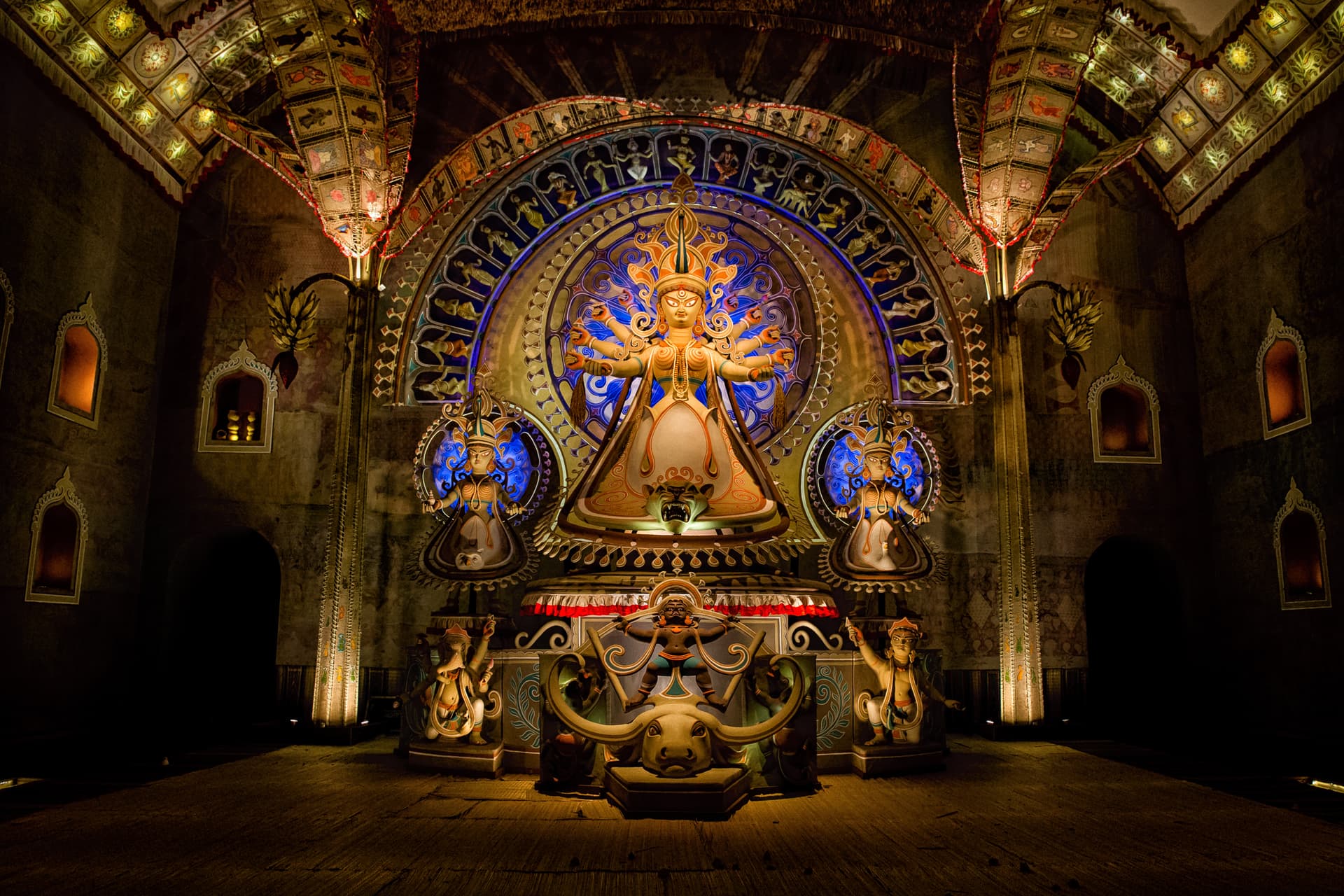
Durga Puja is the only festival in the world where you will find monumental pieces of art at every corner, all for free.
Elsewhere, the spectacle wears different faces. Rio’s Carnival dazzles like haute couture, with samba schools parading sequins and feathers through the Sambadrome’s 90,000 seats. Spain’s La Tomatina is joyful anarchy, with thousands of ticket-holders hurling hundreds of tonnes of tomatoes in delirious bursts. London’s Carnival thrums to steelpans and sound systems. But nowhere else do you find thousands of one-season-only, monumental art pieces offered up for free, every corner a revelation. Puja is as democratic as street art, as ambitious as fine art — and larger than both.
This is why UNESCO honoured Durga Puja in 2021 — not just for sheer crowd size, but for the way sculptors, lightmakers, carpenters and committees reinvent their streets each year, leaving behind nothing but memories and the promise of next year. Mardi Gras defines New Orleans, Notting Hill defines London, Rio defines Brazil. Durga Puja doesn’t just define Kolkata and Bengal — it rewrites it annually, a civic rebirth on bamboo stilts.
For travellers, it’s intoxicating and accessible. The dates — late September or October, depending on the moon — are easy to plan around. The nights between Sasthi and Dashami are when the city doesn’t sleep and when most public transport runs until dawn for pandal-hoppers.
On one side, bonedi bari pujas unfold in decadent mansions; on the other, avant-garde pandals compete for design prizes. All you need are sturdy shoes, street-food stamina and a willingness to walk among millions.


